
- About People Helping People
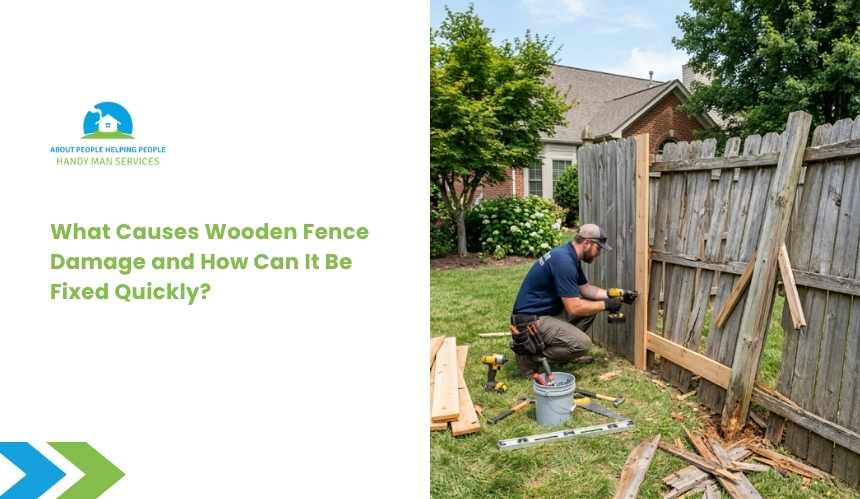
What Causes Wooden Fence Damage and How Can It Be Fixed Quickly?
Quick Answer: Wooden fence damage is most commonly caused by moisture exposure, weather conditions, pest activity, and ground instability. These factors weaken wood over time by breaking down its structure, loosening connections, or shifting its alignment. In most cases, quick fixes involve replacing damaged sections, reinforcing weak points, and treating the underlying cause to prevent further deterioration. The most common causes and quick fixes include:
Did You Know? Important Insight: Key Takeaway: |
Wooden fence damage often seems to appear overnight. A fence that looked stable a few weeks ago may suddenly show leaning sections, cracked panels, or signs of decay. This raises immediate concern, especially when the structure begins to affect security, privacy, or the property’s overall appearance.
The real issue is that most damage does not happen instantly. It develops gradually beneath the surface through moisture absorption, temperature changes, soil movement, or hidden pest activity. By the time visible signs appear, the underlying problem has already progressed, making the damage feel sudden and more severe than it actually is.
Did You Know?
Wood begins to weaken internally long before surface damage becomes visible. Early-stage rot, loose joints, or soil instability can go unnoticed until the fence begins to shift or break.
This is where quick action becomes important. Delaying repairs allows damage to spread to connected components such as posts, rails, and panels. On the other hand, identifying the cause early and applying the right fix can restore strength quickly without needing major reconstruction.
This guide explains the most common causes of wooden fence damage, how each problem develops, and the fastest ways to fix it before it turns into a larger structural issue.
Why Does Moisture Cause the Most Fence Damage?
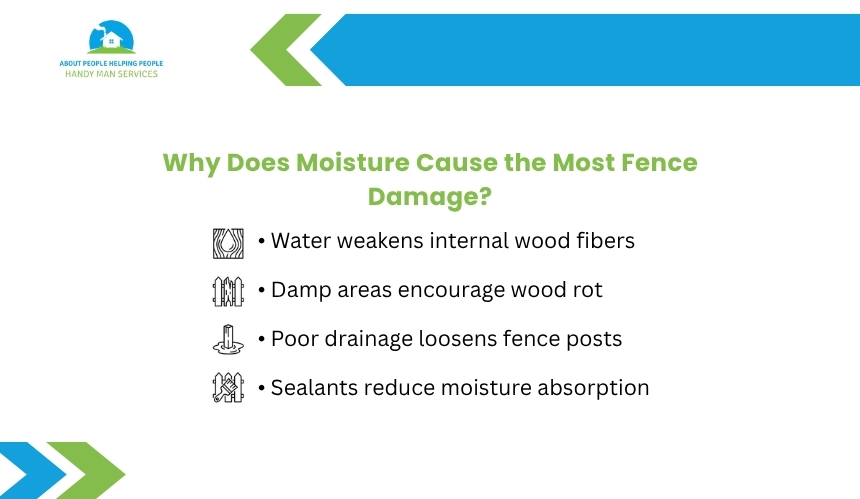
Moisture is the most consistent and damaging factor affecting wooden fences because it directly alters the wood’s internal structure. Unlike surface-level damage, water penetrates fibers, weakens bonding, and creates conditions for decay. Over time, repeated exposure leads to a gradual breakdown that affects both appearance and strength.
How Water Exposure Leads to Wood Rot
Wood naturally absorbs moisture from rain, humidity, and contact with the ground. When this moisture does not dry properly, it creates an environment where fungal growth begins to break down the wood fibers. This process reduces density, causing the wood to soften, discolor, and eventually lose its load-bearing capacity.
Rot often starts in hidden areas such as the bottom of posts or joints where water tends to collect. Once it develops, it can spread to nearby sections if not addressed early.
Did You Know?
Wood rot is not caused by water alone but by fungi that thrive in damp conditions. Without sustained moisture, rot cannot develop or spread.
Why Poor Drainage Weakens Fence Posts
Fence posts are especially vulnerable because they remain in constant contact with soil. When drainage is poor, water accumulates around the base, keeping the wood saturated for long periods. This weakens the foundation and reduces the post’s ability to hold the fence upright.
As the soil softens, posts begin to shift or lean, even if the upper structure appears intact. Over time, this instability can affect connected panels and rails.
Important Insight:
Most fence instability starts below ground level. A strong-looking fence can become unstable if the post foundation is compromised by excess moisture.
How to Fix Moisture-Damaged Sections Quickly
Addressing moisture damage requires both removing affected material and stopping further water exposure. The quickest effective fix focuses on isolating the problem and reinforcing the surrounding structure.
- Replace rotted sections before decay spreads to adjacent wood
- Apply sealants or protective coatings to prevent further moisture absorption
- Improve drainage around fence posts to reduce water retention
In cases where posts are affected, resetting them with proper support and drainage correction restores stability without requiring full replacement.
How Do Weather Conditions Damage Wooden Fences?
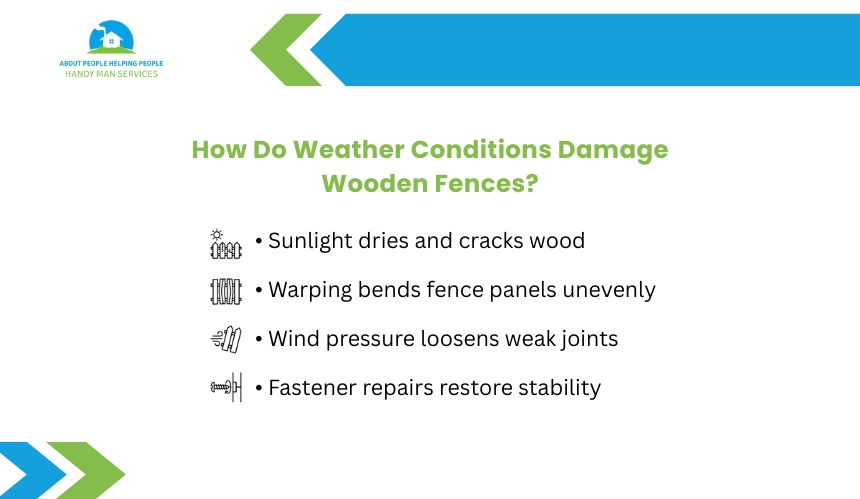
Weather exposure constantly affects wooden fences, even when no immediate damage is visible. Sunlight, wind, and temperature fluctuations gradually weaken the material by drying it out, stressing connections, and reducing flexibility. Unlike moisture damage, which softens wood, weather-related damage often makes it brittle and prone to cracking or shifting.
How Sunlight Causes Cracking and Warping
Continuous exposure to sunlight breaks down the natural oils within wood, causing it to dry out over time. As the moisture inside the wood evaporates, the material begins to shrink, leading to surface cracks and uneven shapes.
Warping occurs when different parts of the wood dry at different rates, creating internal tension. This results in bending or twisting, especially in fence panels that receive direct sunlight throughout the day.
Did You Know?
Ultraviolet rays from sunlight gradually degrade wood fibers, which is why untreated fences tend to fade, crack, and weaken faster in open areas.
Why Wind Pressure Leads to Structural Stress
Wind does not always cause visible damage immediately, but repeated pressure can strain joints, loosen fasteners, and shift panels out of alignment. Over time, this stress accumulates, especially in fences with minor weaknesses.
Strong winds can also amplify existing issues such as loose posts or weakened rails, turning small defects into larger structural problems.
Important Insight:
Wind damage often interacts with other factors. A fence weakened by moisture or age is far more likely to shift or break under pressure.
What Quick Repairs Restore Weather-Damaged Fences?
Fixing weather-related damage involves restoring both the shape and strength of affected components. Unlike moisture damage, the focus is on reinforcing weakened or dried-out sections.
- Replace severely cracked or warped boards to restore alignment
- Tighten or replace fasteners to stabilize loose connections
- Apply protective sealants to reduce further exposure to sunlight and weather
In cases where panels have shifted due to wind stress, realigning and securing them quickly restores the fence’s structural balance.
What Role Do Pests and Termites Play in Fence Damage?
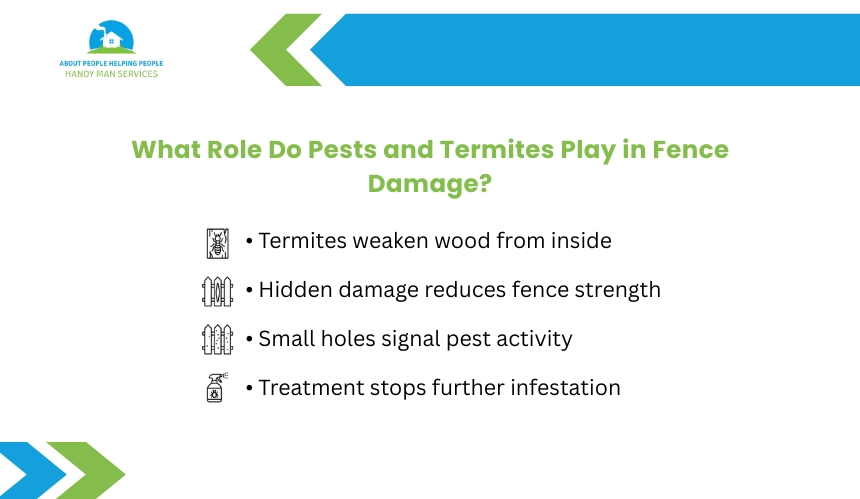
Pest activity, especially from termites, affects wooden fences by weakening the material from the inside rather than the surface. Unlike weather or moisture damage, which is usually visible early, pest damage often develops unnoticed until the structure begins to lose strength. This makes it one of the more deceptive causes of fence deterioration.
How Termites Break Down Wood Structure
Termites feed on cellulose, which is the main structural component of wood. As they consume it, they create hollow channels inside the material, reducing its density and load-bearing capacity. The outer surface may appear intact, but the internal structure becomes fragile and prone to breakage.
Over time, this hidden damage spreads through connected components such as panels and rails, especially if conditions remain favorable for infestation.
Did You Know?
Termite damage often follows a pattern where the outer layer of wood remains untouched while the inside is significantly hollowed out. This is why fences can suddenly collapse without obvious warning signs.
Why Pest Damage Often Goes Unnoticed
Pests typically operate in concealed areas such as inside wood fibers, beneath surfaces, or near ground contact points. Because of this, early damage does not produce clear visual indicators, such as cracks or rot.
Signs such as small holes, fine dust-like residue, or weakened sections may only appear once the damage has progressed. By that point, the affected area may already require immediate repair to prevent further structural impact.
Important Insight:
Pest damage is often mistaken for natural aging or moisture-related wear. Without proper inspection, the root cause may remain untreated, allowing the problem to persist.
How to Repair and Treat Affected Areas Quickly
Addressing pest damage requires both restoring the affected wood and eliminating the source of the problem. Quick fixes focus on removing compromised sections and reinforcing the surrounding structure.
- Replace damaged wood where internal weakening has occurred
- Apply appropriate treatments to stop further infestation
- Strengthen nearby components to restore stability
In cases where damage is limited, targeted repair can fully restore the fence without needing replacement. However, untreated pest activity can quickly spread, making early intervention essential.
Why Do Fence Posts Lean or Become Unstable?
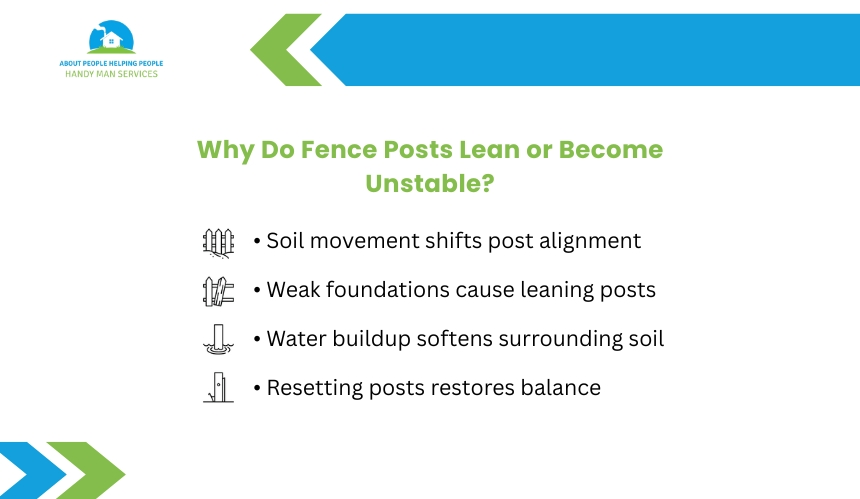
Leaning or unstable fence posts are among the most noticeable signs of damage, but the issue usually originates below ground rather than in the visible structure. Fence posts act as the foundation, and when that foundation is compromised, the entire fence begins to shift out of alignment.
How Soil Movement Affects Fence Alignment
Soil is not a fixed base. It expands when wet, contracts when dry, and can shift due to natural settling or external pressure. These changes gradually loosen the grip around fence posts, reducing their ability to stay upright.
As the soil weakens, posts begin to tilt slightly at first, which may go unnoticed. Over time, this small movement affects connected panels and rails, causing visible misalignment across sections of the fence.
Did You Know?
Even minor seasonal changes in soil moisture can cause repeated expansion and contraction, which slowly push fence posts out of position over time.
Why Weak Foundations Cause Leaning
Fence posts rely on a stable base to support the weight and tension of the entire structure. If the original installation lacked proper depth, compaction, or support material, the post becomes more vulnerable to movement.
Water accumulation around the base can further weaken this foundation by softening the surrounding soil. Once the support weakens, the post can no longer resist external forces such as wind pressure or the weight of attached panels.
Important Insight:
A leaning post is rarely just a surface issue. It often indicates that the support system beneath the fence has weakened and needs reinforcement.
How to Stabilize Fence Posts Quickly
Fixing an unstable post involves restoring the strength of its foundation rather than just adjusting its position. The post must be reset into a stable base so it can support the structure effectively again.
This process typically includes realigning the post, reinforcing it with a stronger foundation, and correcting any drainage issues that may have contributed to the problem. Once stabilized, the surrounding fence sections regain their alignment and structural balance.
What Are the Fastest Ways to Fix Common Fence Problems?
Quick fence repairs are most effective when they first stabilize the structure and then restore damaged components. Instead of attempting full restoration immediately, fast fixes aim to stop further deterioration, secure weak areas, and bring the fence back to a functional state as quickly as possible.
How to Fix Loose or Broken Panels Quickly
Loose or broken panels are usually caused by weakened fasteners, exposure to weather, or minor impact. These issues affect appearance and stability but are often limited to specific sections.
The fastest solution is to resecure or replace the affected panel while ensuring that the surrounding connections remain tight. Reinforcing attachment points helps restore alignment and prevents additional stress from spreading to nearby sections.
Did You Know?
Loose panels often indicate stress at connection points rather than failure of the entire structure. Fixing these joints early can prevent larger sections from becoming unstable.
How to Reinforce Weak Fence Sections
Some areas of a fence may feel unstable even without visible breakage. This usually happens when internal strength has been reduced due to moisture, age, or repeated stress.
Reinforcement involves strengthening these weak points so they can handle normal loads again. This can include securing joints, stabilizing rails, or supporting sections that have started to shift. Once reinforced, the fence regains its balance without requiring major reconstruction.
Important Insight:
Weak sections often develop before visible damage appears. Reinforcing them early helps maintain structural integrity and prevents sudden failure.
When Temporary Fixes Can Prevent Bigger Damage
Temporary fixes play an important role when immediate repair is not possible. Securing a leaning section, tightening loose components, or supporting weakened areas can prevent the damage from worsening.
These short-term solutions reduce stress on the structure and buy time for a more permanent repair. Without them, ongoing exposure to wind, moisture, or movement can quickly turn a minor issue into a major structural problem.
How Can Future Fence Damage Be Prevented?
Preventing damage to a wooden fence is less about reacting to visible issues and more about controlling the conditions that cause deterioration in the first place. Since most damage develops gradually due to environmental exposure and structural stress, consistent maintenance is key to preserving strength and appearance over time.
Why Regular Maintenance Reduces Damage Risk
Routine inspection allows early detection of small issues such as loosened joints, minor cracks, or early-stage decay. These problems are easier to fix when they are still localized and have not affected surrounding components.
By addressing these signs early, the fence remains structurally balanced and less vulnerable to external forces. This approach reduces the likelihood of sudden failures and minimizes the need for major repairs.
Did You Know?
Most visible fence damage results from issues that have been developing for months. Regular checks help identify these hidden problems before they become noticeable.
How Sealing and Treatment Protect Wood
Wood is naturally porous, which means it absorbs moisture unless protected. Applying sealants or protective treatments creates a barrier that limits water penetration and reduces the effects of sunlight exposure.
This protection helps maintain the wood’s internal strength by preventing both decay and excessive drying. Treated surfaces are also less likely to crack, warp, or weaken under changing weather conditions.
Important Insight:
Protective treatments do not just improve appearance. They directly influence how well the wood resists environmental stress and how long it maintains its structural integrity.
What Environmental Factors Should Be Managed
External conditions, such as drainage, soil stability, and nearby vegetation, directly impact fence performance. Poor drainage can lead to moisture buildup, while unstable soil can affect post alignment.
Managing these factors ensures that the fence is supported by a stable environment. Simple adjustments, such as improving water flow or reducing constant ground contact, can significantly slow the rate of deterioration.
Frequently Asked Questions
What is the most common cause of wooden fence damage?
Moisture is the leading cause because it allows water to penetrate wood fibers and creates conditions for rot. Over time, this weakens the internal structure, especially in areas with poor drainage or constant ground contact, making the fence more vulnerable to further damage.
How quickly should fence damage be repaired?
Fence damage should be addressed as soon as it becomes visible because delays allow the issue to spread to connected components. Small problems such as loose panels or minor rot can escalate quickly, increasing repair complexity and affecting overall structural stability.
Can water-damaged wood be repaired?
Water-damaged wood can often be repaired if the damage is limited to specific sections. The affected area is removed or treated, and protective measures are applied to prevent further moisture absorption. However, extensive rot may require replacing larger portions of the fence.
How do I fix a fence after a storm?
Storm damage typically affects panels, fasteners, and alignment. The first step is to stabilize any leaning sections to prevent further stress, followed by repairing or replacing damaged components. Checking the condition of posts and joints ensures the structure remains secure after the repair.
What is the fastest temporary fix for a damaged fence?
Temporary fixes focus on stabilizing the structure to prevent worsening damage. Securing loose panels, reinforcing weak sections, or supporting leaning posts can restore short-term functionality until a permanent repair is completed.