
- About People Helping People
What Homeowners Should Know Before Hanging Ceiling Fans in Hinesville, GA
Hanging ceiling fans improves airflow, reduces energy costs, and enhances comfort. However, homeowners must consider ceiling height, electrical requirements, fan size, and structural support. Understanding these factors ensures efficient installation and long-lasting operation tailored to Hinesville homes.
Homeowners in Hinesville, GA often look to ceiling fans as both functional and aesthetic enhancements to indoor spaces. Hanging ceiling fans in Hinesville, GA requires careful planning to avoid common pitfalls such as improper mounting, inefficient airflow, or electrical hazards. The guide below outlines what every homeowner should know before installation to maximize performance and safety.
Assessing the Space and Ceiling Height
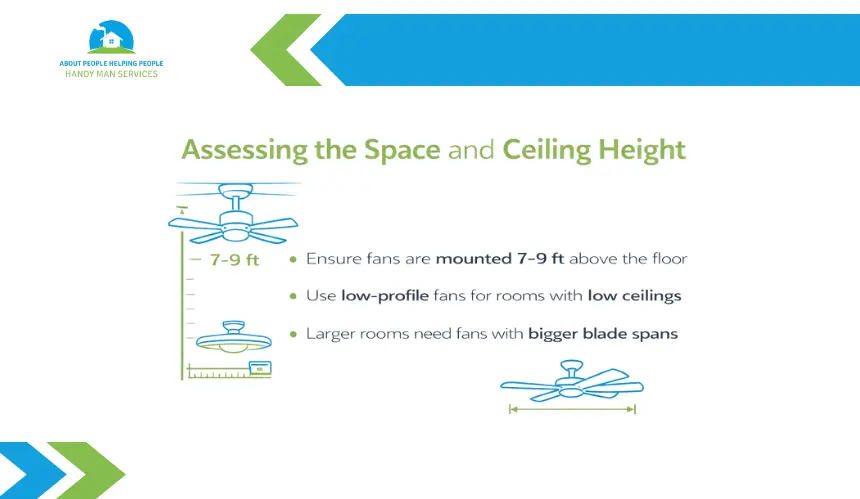
Ceiling height plays a critical role in selecting the right fan and ensuring adequate airflow. Improper placement can lead to reduced performance, uncomfortable drafts, or safety hazards.
Why Ceiling Height Matters
Standard ceiling fans work best when mounted 7–9 feet above the floor. Low ceilings require low-profile or flush-mount fans to prevent accidental contact, while higher ceilings benefit from extended downrods to optimize air circulation. Considering the room’s dimensions ensures that the fan provides adequate airflow without compromising safety.
How Room Size Influences Fan Selection
Larger rooms require fans with longer blade spans to ensure air reaches all areas, while smaller rooms perform best with shorter blades. Measuring the space accurately before purchasing helps homeowners select a fan that balances aesthetics with function.
Tip: Use blade span recommendations from the manufacturer as a baseline for room coverage.
Choosing the Right Fan for Hinesville Homes
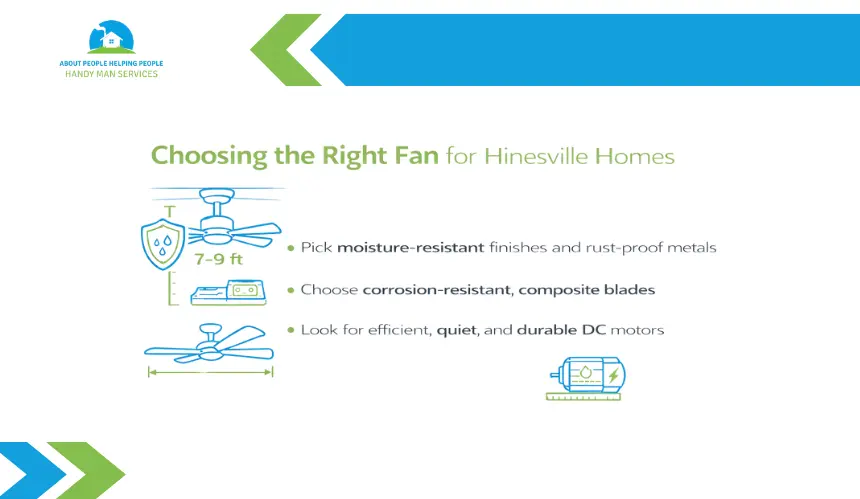
Not all ceiling fans are created equal. Materials, blade design, motor quality, and humidity resistance influence longevity and performance, particularly in Georgia’s humid climate.
Why Material and Finish Are Important
Humidity in Hinesville, GA, can warp wooden blades, corrode metal components, and affect motor performance. Selecting fans with moisture-resistant finishes, rust-proof metals, and engineered composite blades improves durability. Outdoor-rated fans are also suitable for high-humidity indoor environments such as kitchens and laundry areas.
How Motor Type Affects Performance
Fans with efficient, high-quality motors operate more quietly and deliver better airflow. DC motors consume less energy than traditional AC motors, offering long-term cost savings. Homeowners should prioritize motors rated for consistent performance under continuous operation.
Electrical and Safety Considerations
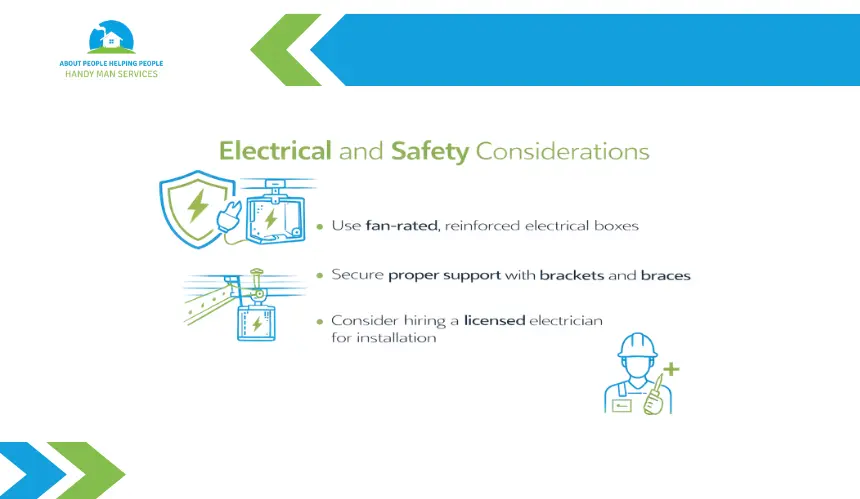
Proper electrical preparation is essential for both performance and safety. Many ceiling fan issues result from improper wiring, inadequate support, or missing grounding components.
Why Professional Wiring May Be Necessary
Ceiling fans require dedicated electrical boxes rated for fan support. Standard light fixture boxes may not support the fan’s weight, posing a safety hazard. Professional installation ensures that wiring is correctly grounded, circuits can handle the load, and switches or remote controls are properly connected.
What to Know About Structural Support
Fans generate motion and torque that can loosen fasteners over time if not installed on reinforced junction boxes. Support brackets or ceiling braces help stabilize heavier models, particularly in older Hinesville homes with wooden joists.
Placement Tips for Optimal Airflow
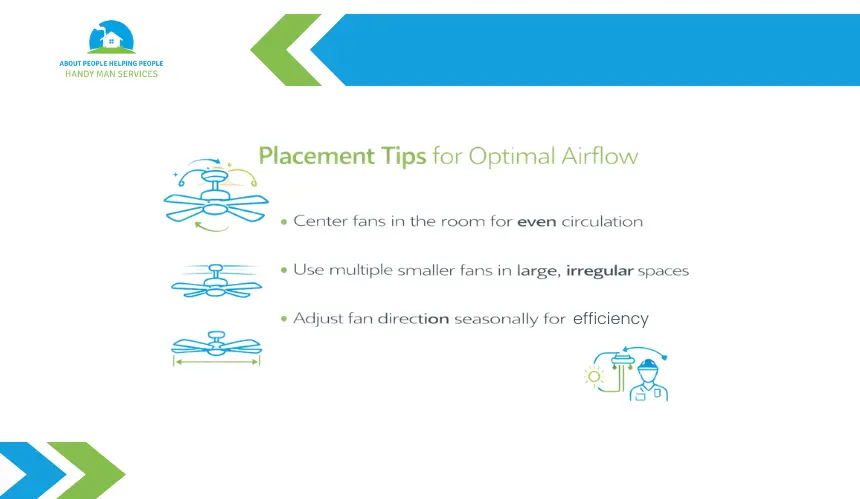
Proper placement ensures maximum comfort and efficiency. Poorly positioned fans can create uneven airflow and inefficient cooling.
Centered vs. Off-Center Placement
Centering the fan in the room maximizes circulation, but in irregularly shaped rooms, multiple smaller fans may perform better than a single large unit. Consider the location of furniture, lighting, and vents when planning placement to avoid airflow obstruction.
Direction of Blade Rotation
Fans should rotate counterclockwise in the summer to produce a cooling breeze and clockwise in winter to circulate warm air. Adjustable fan direction enhances seasonal efficiency and energy savings.
Maintenance and Longevity Tips
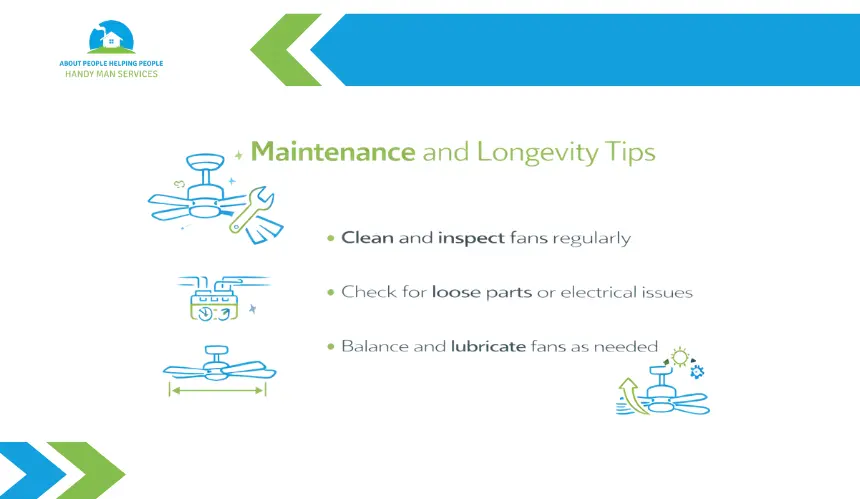
Regular maintenance is essential to keep ceiling fans operating efficiently, quietly, and safely. Without periodic care, dust accumulation, exposure to humidity, and mechanical wear can reduce performance, shorten lifespan, and create potential safety hazards. Following a structured maintenance routine helps preserve airflow efficiency, prevents damage, and ensures reliable operation in Hinesville’s humid climate.
How to Maintain Ceiling Fans in Humid Environments
Dust and humidity can accumulate on blades, motor housings, and brackets, affecting airflow and balance. Clean blades and housings monthly, and inspect screws and mounting brackets for looseness. Lubricate moving parts only if the manufacturer specifies it. Using humidity-resistant blades, corrosion-proof finishes, and proper cleaning solutions minimizes warping, rust, or degradation over time.
Tip: Use a soft, damp cloth or microfiber duster to avoid scratching finishes while removing dust effectively.
When to Inspect Electrical Components
Electrical components such as wiring, switches, and remote receivers should be examined at least once per year. Look for frayed wires, loose connections, or signs of overheating. Replacing worn capacitors or faulty controllers prevents operational failures, reduces fire risk, and extends the fan’s usable life.
Tip: Always turn off the circuit breaker before inspecting any electrical components for safety.
Balancing and Blade Alignment Checks
Unbalanced blades or misalignment can cause wobbling, noise, and excessive motor wear. Inspect blade level and alignment quarterly, using a level or a balancing kit if needed. Minor adjustments can prevent further mechanical strain and reduce vibration that could loosen mounting hardware over time.
Tip: Slightly tighten mounting screws after adjustment to maintain balance without over-torquing and damaging components.
Lubrication and Motor Care
Some ceiling fans include motors requiring periodic lubrication. Check the user manual for recommendations. Applying the correct type and amount of lubricant ensures smoother operation, prevents overheating, and reduces friction that can shorten motor life. Fans with sealed motors may not require lubrication, but monitoring temperature and noise levels is still recommended.
Seasonal Maintenance Considerations
Ceiling fans require different attention depending on the season. Switch blade rotation to counter clockwise in summer for cooling airflow and clockwise in winter to circulate warm air. Dust and clean the fan more frequently during pollen-heavy spring months, and check for moisture buildup during humid summer months. Seasonal care ensures consistent performance year-round.
Tip: Maintain a small maintenance log to track cleaning dates, lubrication, and inspections for long-term reliability.
Frequently Asked Questions
Can I install a ceiling fan myself in Hinesville?
Yes, if you have electrical and structural knowledge, but professional installation is recommended for safety and optimal performance.
What is the best ceiling fan size for a medium-sized room?
Typically, a 42–48 inch blade span works well, but always consider room dimensions and furniture placement.
How high should a ceiling fan be from the floor?
Ideally, 7–9 feet from the floor to ensure safety and airflow efficiency.
Do ceiling fans save energy in Georgia homes?
Yes. Properly used fans reduce reliance on air conditioning, cutting energy costs.
Can ceiling fans be installed on sloped ceilings?
Yes, with an angled ceiling adapter or downrod to maintain proper alignment.
How often should I clean and inspect my ceiling fan?
Dust monthly and check mounting hardware annually to ensure safety and longevity.
Final Thoughts
Hanging ceiling fans in Hinesville, GA, enhances comfort, energy efficiency, and indoor airflow, but proper planning is essential for safety and performance. Homeowners should evaluate ceiling height, fan size, electrical support, and material durability before installation. By considering these factors and following maintenance best practices, residents can enjoy reliable, long-lasting ceiling fans throughout their homes.
For safe and professional installation, About People Helping People provides experienced services in Hinesville, GA, ensuring each fan is mounted securely, operates efficiently, and enhances both comfort and energy savings for homeowners.