
- About People Helping People
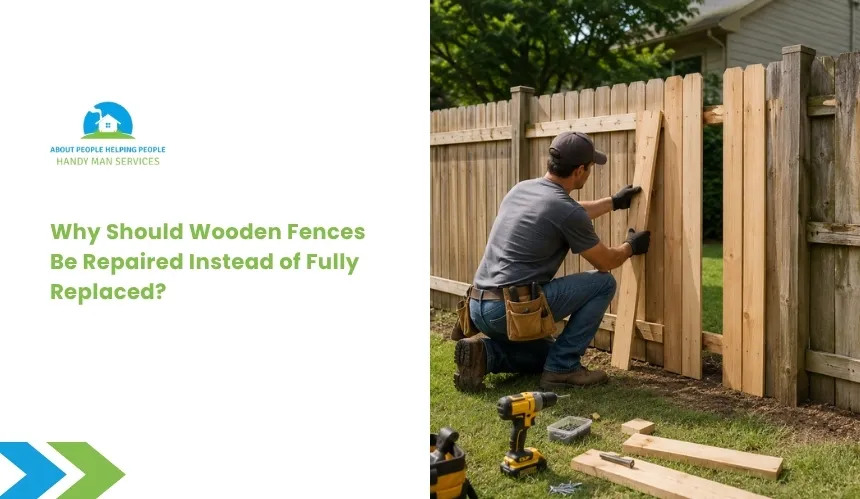
Why Should Wooden Fences Be Repaired Instead of Fully Replaced?
Quick Answer: In most cases, repairing a wooden fence is the smarter choice because it addresses localized damage without the cost and disruption of full replacement. When structural elements such as posts and rails remain intact, targeted repairs can restore strength, extend lifespan, and maintain appearance at a fraction of the cost. Why repair is often the better option:
Did You Know? Important Insight: Key Takeaway: |
A damaged wooden fence often creates an immediate sense of urgency. Leaning posts, cracked panels, or signs of rot can make the entire structure look compromised, leading many homeowners to assume that full replacement is the only reliable solution. This assumption often results in unnecessary expenses and avoidable material waste.
The real challenge lies in understanding what the damage actually means. Not every visible issue signals structural failure. In many cases, problems are localized and caused by factors such as moisture exposure, soil movement, or aging fasteners rather than by a complete breakdown of the fence system. Without this clarity, small, repairable issues are often mistaken for reasons to start over.
Did You Know?
Most wooden fences do not fail all at once. Damage usually develops first in specific sections, especially in areas exposed to excess water, shade, or ground instability. This means a large portion of the fence may still be structurally sound even when certain parts look worn or damaged.
Choosing between repair and replacement is not just about appearance. It involves evaluating cost, lifespan, structural condition, and long-term maintenance. Understanding these factors helps homeowners avoid overcorrecting the problem and instead focus on solutions that restore strength while preserving what already works.
This article breaks down exactly when repair is the smarter choice, what types of damage can be fixed effectively, and how strategic maintenance decisions can extend the life of a wooden fence without unnecessary replacement.
What Makes Fence Repair a More Practical Option?
Choosing repair over replacement often comes down to understanding how wooden fences fail in real-world conditions. Most damage does not affect the entire structure at once. Instead, it develops in isolated sections due to environmental exposure, mechanical stress, or natural aging. When the core framework remains stable, repairing targeted areas becomes the most efficient and cost-effective approach.
Repairing allows homeowners to address specific weaknesses without dismantling functional sections. This not only reduces costs but also preserves the original alignment, materials, and installation integrity that are still performing well.
How Does Repairing Save Money Compared to Replacement?
Full fence replacement involves material costs, labor, disposal, and reinstallation of posts and panels. In contrast, repairs focus only on damaged components, significantly reducing overall expenses.
- Targeted Material Use: Only affected panels, posts, or rails are replaced instead of the entire structure
- Reduced Labor Costs: Repairs require less time and fewer resources compared to complete reconstruction
- No Full Tear-Down Required: Avoids additional costs related to removing and disposing of usable materials
Important Insight:
The majority of fence-related costs come from labor and full-system installation. By limiting work to specific sections, repair eliminates unnecessary spending on areas that are still structurally sound.
Why Minor Damage Doesn’t Require Full Replacement
Not all visible damage affects a fence’s strength. Issues like surface cracks, slight warping, or loose fasteners are often cosmetic or localized problems rather than indicators of total failure.
- Surface-Level Cracks: Caused by moisture expansion and contraction, often repairable with sealing or reinforcement
- Loose Boards or Nails: Typically result from weather cycles and can be easily secured
- Minor Warping: Often corrected by replacing individual boards instead of full panels
Did You Know?
Wood naturally reacts to changes in humidity and temperature. Small imperfections are expected over time and do not automatically reduce the fence’s structural performance if addressed early.
How Repairs Extend the Life of Existing Wood Structures
Timely repairs act as a preventive measure, stopping minor issues from spreading into larger structural problems. By reinforcing weak points, the fence’s overall lifespan can be significantly extended.
- Prevents Moisture Penetration: Sealing cracks and replacing damaged boards reduces water absorption
- Stops Rot from Spreading: Removing and replacing affected sections protects the surrounding wood
- Maintains Structural Balance: Stabilizing posts and rails keeps the fence aligned and functional
Important Insight:
A well-maintained wooden fence can last years longer than an untreated one. Regular repairs reduce the need for premature replacement by preserving the integrity of the original structure.
This practical approach allows homeowners to maintain both performance and appearance while avoiding the higher costs and disruption associated with full replacement.
What Types of Wooden Fence Damage Can Be Repaired?
Understanding which types of damage are repairable is critical before deciding on full replacement. Most wooden fence issues occur at the component level rather than across the entire structure. When damage is isolated to panels, posts, or specific sections, targeted repair restores both function and appearance without rebuilding the entire fence.
Can Cracked or Warped Panels Be Fixed?
Fence panels are the most exposed part of the structure, making them more vulnerable to sun exposure, moisture cycles, and physical impact. Cracks and warping usually develop due to the expansion and contraction of wood fibers rather than structural failure.
- Panel Replacement Instead of Full Sections: Individual boards or panels can be removed and replaced without disturbing surrounding components
- Surface Reinforcement: Minor cracks can be sealed to prevent moisture entry and further splitting
- Alignment Correction: Warped panels can often be repositioned or replaced without affecting posts or rails
Did You Know?
Panels deteriorate faster than structural elements because they absorb the most direct environmental stress. Replacing only panels is one of the most common and cost-effective fence repairs.
How Are Leaning Fence Posts Stabilized?
Fence posts are the backbone of the structure, but leaning does not always mean failure. In many cases, the issue comes from soil movement, improper drainage, or weakened footing rather than damage to the post itself.
- Re-setting the Post: Adjusting and reinforcing the existing post with new concrete or compacted soil restores alignment
- Adding Support Bracing: Temporary or permanent supports can stabilize the structure without full replacement
- Correcting Drainage Issues: Improving water flow around the base prevents future shifting
Important Insight:
A leaning fence is often a ground-related issue rather than a structural collapse. Fixing the base conditions can restore stability without replacing the entire fence system.
What Happens When Wood Rot Is Localized?
Wood rot is one of the most common concerns, but it rarely spreads evenly across the entire fence. It usually develops in areas with prolonged exposure to moisture, such as near the ground or in shaded areas.
- Sectional Replacement: Only the rotted portions are removed and replaced with treated wood
- Moisture Barrier Application: Sealants and treatments protect adjacent areas from further decay
- Isolation of Damage: Early repair prevents rot from affecting structural components like rails and posts
Did You Know?
Rot typically starts in hidden or damp areas before becoming visible. Early detection enables small repairs rather than large-scale reconstruction.
Can Termite or Pest Damage Be Repaired?
Pest damage often raises concerns about structural safety, but in many cases, it is limited to specific wooden elements rather than the entire fence.
- Targeted Wood Replacement: Damaged sections can be removed while preserving unaffected components
- Protective Treatments: Applying anti-termite solutions helps prevent recurrence
- Structural Reinforcement: Reinforcing weakened areas restores strength without replacing the full fence
Important Insight:
Pest damage does not always compromise the entire structure. When caught early, repairs combined with treatment can fully restore fence performance.
When Does a Fence Actually Need Replacement Instead?
While repairs solve most common wooden fence issues, there are situations where the damage goes beyond isolated sections and begins to affect the entire structure. Recognizing these conditions is essential to avoid repeated short-term fixes that no longer restore stability or safety.
How to Identify Severe Structural Failure
A fence reaches structural failure when its core framework, including multiple posts and connecting rails, loses the ability to support weight and maintain alignment. This often appears as widespread leaning, sagging across multiple sections, or instability even after temporary fixes.
Unlike minor issues, these failures indicate that the load distribution within the fence has been compromised. Once the structural balance is lost across several points, repairs no longer provide long-term reliability.
Important Insight: Structural failure is not defined solely by visible damage. It is determined by how well the fence can maintain its shape and resist external forces such as wind pressure and ground movement.
What Happens When Rot Spreads Across Multiple Sections
Localized rot can be repaired, but when decay extends across posts, rails, and panels simultaneously, it weakens the interconnected strength of the entire fence system. At this stage, removing one damaged section often reveals additional hidden deterioration nearby.
This type of widespread rot usually results from prolonged exposure to moisture, poor drainage, or untreated wood. Repairing individual sections in such cases becomes inefficient because surrounding areas continue to degrade.
Did You Know?
Rot often spreads internally before becoming visible on the surface. By the time multiple sections show signs of decay, the internal structure may already be compromised beyond effective repair.
When Age Reduces Structural Integrity Completely
Every wooden fence has a natural lifespan influenced by material quality, exposure to weather, and maintenance history. As wood ages, it gradually loses density and strength, even if it appears intact from a distance.
Older fences may become brittle, develop weakened joints, and lose resistance to environmental stress. In these cases, repairs only address symptoms while the overall structure continues to decline.
Important Insight:
A fence nearing the end of its lifespan often shows recurring issues in different areas over time. Frequent repairs across multiple sections signal that replacement may be more practical than ongoing maintenance.
How Does Repairing a Fence Help Maintain Property Value?
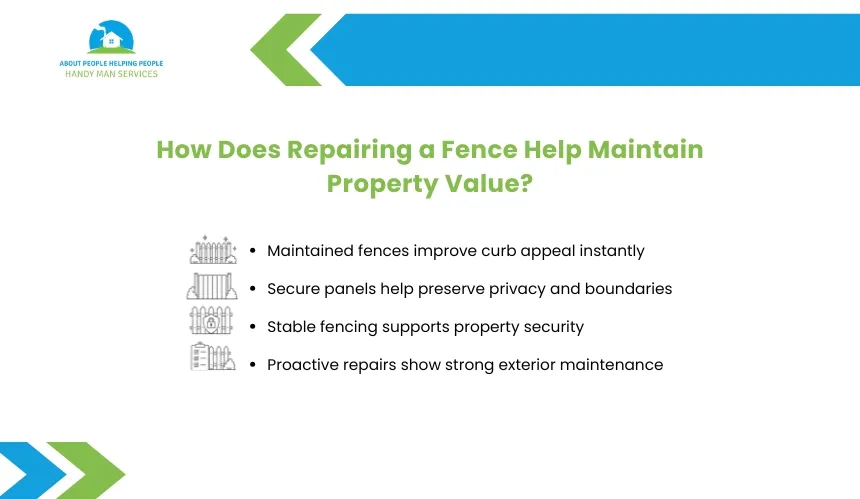
A wooden fence plays a visible and functional role in how a property is perceived and valued. When damage is addressed through timely repairs, it prevents small issues from turning into noticeable deterioration that can negatively impact both appearance and structural reliability. Maintaining the fence in good condition supports long-term property value without the need for unnecessary replacement.
Why Well-Maintained Fences Improve Curb Appeal
A fence is often one of the first exterior elements people notice. Broken panels, leaning sections, or visible decay can make the entire property appear neglected, even if the rest of the home is well-maintained. Repairing these issues restores visual consistency and keeps the boundary looking clean and intentional.
Did You Know?
Buyers and visitors tend to associate exterior upkeep with overall property care. A maintained fence signals that the property has been looked after, which positively influences perception.
How Repairs Preserve Property Boundaries and Security
Beyond appearance, a fence defines boundaries and provides a level of privacy and security. When sections become loose or unstable, gaps and weak points can develop, reducing their effectiveness. Repairing these areas ensures the fence continues to serve its intended purpose without interruption.
Stabilizing posts, securing panels, and correcting alignment all help maintain a reliable perimeter. This avoids the need for full replacement while still preserving function.
Why Buyers Prefer Maintained Structures Over New Installations
A fully replaced fence may look new, but buyers often pay closer attention to how well existing structures have been maintained over time. Consistent repairs indicate proactive care, while neglected damage can raise concerns about hidden issues elsewhere on the property.
Important Insight:
Maintenance history reflects long-term ownership behavior. A repaired and well-kept fence suggests fewer deferred maintenance problems, which can make a property more appealing during evaluation.
What Are the Long-Term Benefits of Regular Fence Repairs?
Repairing a wooden fence is not just a short-term fix. When done consistently and at the right time, it becomes a long-term maintenance strategy that protects the entire structure from gradual deterioration. Instead of reacting to major damage, regular repairs help control how the fence ages and performs over time.
How Preventive Repairs Reduce Future Costs
Small issues such as loose boards, minor cracks, or early-stage rot may seem insignificant at first, but they tend to worsen when left untreated. Addressing these problems early prevents them from spreading into larger sections that require more extensive work.
Over time, this approach reduces the frequency of major repairs and eliminates the need for premature replacement. The cost difference becomes significant because maintenance is spread across smaller, manageable efforts rather than a single large expense.
Did You Know?
Most major fence failures begin as minor, overlooked issues. Early intervention can prevent damage before it affects structural components such as posts and rails.
Why Early Fixes Stop Damage from Spreading
Wood is a material that reacts continuously to environmental conditions. Moisture, temperature changes, and ground contact can accelerate wear in specific areas. When one section becomes compromised, it can start affecting nearby components through water absorption or joint stress.
Repairing damage at its early stage isolates the problem. By removing or reinforcing the affected area, the rest of the fence remains protected and stable.
Important Insight: Damage in wooden fences often spreads through connection points such as joints and fasteners. Fixing one weak point can prevent a chain reaction across the structure.
How Maintenance Improves Fence Durability in Harsh Weather
Weather exposure is one of the biggest factors influencing fence lifespan. Rain, sunlight, and wind gradually weaken wood fibers, especially in unprotected or damaged areas. Regular repairs help reinforce these vulnerable points before they fail under stress.
Sealing cracks, replacing weakened sections, and stabilizing posts all contribute to better resistance against environmental pressure. This allows the fence to maintain its strength and alignment even under changing conditions.
How to Decide Between Fence Repair and Replacement?
Making the right decision depends on evaluating the fence as a system rather than focusing on isolated visual damage. Many homeowners rely solely on appearance, which can lead to unnecessary replacement. A more accurate approach considers structural condition, extent of damage, and long-term performance.
What Factors Should Be Evaluated First?
The first step is assessing how much of the fence is actually affected. If damage is limited to a few panels, posts, or sections, repair is usually sufficient. However, if issues span multiple structural components, the effectiveness of repair begins to decline.
It is also important to consider the condition of core elements like posts and rails. These parts carry the structural load, so if they remain stable, the fence can typically be restored through targeted repairs rather than full replacement.
Important Insight:
Visible damage does not always reflect structural condition. A fence may look worn on the surface while still having a strong internal framework that supports repair.
How Does Professional Inspection Improve Decision Accuracy?
A professional evaluation helps identify hidden issues that may not be immediately visible, such as internal rot, soil instability around posts, or weakened joints. This type of inspection focuses on how different components interact and whether the structure can continue to perform reliably after repairs.
Experts also assess environmental factors like drainage patterns, moisture exposure, and ground movement. These elements often determine whether damage will continue spreading or remain localized after repair.
Did You Know?
Many fence problems originate below ground level, especially around post foundations. Without proper inspection, these underlying causes can be missed, leading to repeated surface-level fixes.
What Does Cost vs Lifespan Analysis Reveal?
A practical decision often comes down to balancing repair costs against the fence’s remaining lifespan. If repairs can restore functionality and extend usability for several years, they provide better value than immediate replacement.
On the other hand, if ongoing repairs are needed frequently across different sections, the cumulative cost may approach or exceed the cost of a new installation. In such cases, replacement becomes the more efficient long-term option.
Important Insight:
The goal is not to choose the cheapest option, but the one that delivers the best value over time. A well-timed repair can significantly delay replacement, while an overdue replacement can eliminate repeated maintenance cycles.
Frequently Asked Questions
How do I know if my wooden fence can be repaired?
A fence can usually be repaired when damage is limited to specific components such as panels, rails, or a few posts. If the overall structure remains stable and aligned, targeted fixes can restore strength and appearance without rebuilding the entire system.
Is repairing a fence always cheaper than replacing it?
Repairing is generally more cost-effective because it focuses only on damaged areas rather than replacing the entire structure. Costs remain lower when the main framework is intact, while replacement becomes more practical only when damage is widespread or recurring.
How long does a repaired wooden fence last?
The lifespan of a repaired fence depends on the quality of the repair and ongoing maintenance. When issues are fixed early and properly, repairs can extend the fence’s usability by several years while maintaining structural stability.
Can rotten wood sections be replaced without rebuilding the fence?
Rotten sections can often be removed and replaced individually if the decay is localized. This prevents the spread of moisture damage and restores strength without affecting surrounding components that are still in good condition.
Does repairing a fence improve property value?
Maintaining and repairing a fence helps preserve curb appeal and ensures the boundary remains functional and secure. A well-maintained fence signals proper property care, which can positively influence how the property is perceived and evaluated.