- About People Helping People
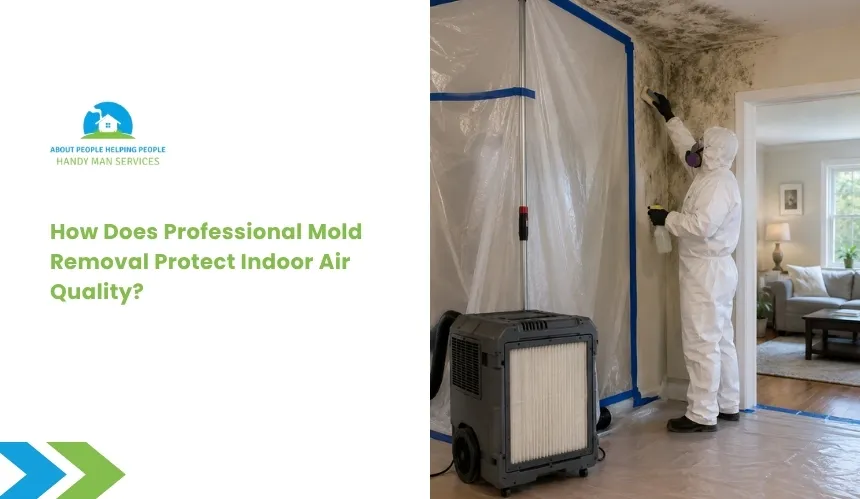
How Does Professional Mold Removal Protect Indoor Air Quality?
Quick Answer: Professional mold removal protects indoor air quality by eliminating airborne mold spores, controlling contamination spread, and addressing the moisture source that allows mold to grow. Unlike surface cleaning, it targets both visible mold and microscopic airborne particles. How it improves air quality:
Did You Know? Mold colonies can release thousands of microscopic spores into the air, which can remain suspended and spread throughout indoor spaces if not properly contained and removed. |
Indoor air quality is directly influenced by what cannot be seen. Mold is one of the most common hidden contaminants, and once it begins to grow, it releases microscopic spores into the air that circulate throughout the space. These particles are not confined to the visible area of growth. They travel through airflow, settle on surfaces, and can be inhaled continuously without immediate detection.
A major challenge is that mold problems are often addressed at the surface level. Cleaning visible patches may temporarily improve appearance, but it does not remove airborne spores or the conditions that allow mold to return. This leads to recurring contamination and a gradual decline in indoor air quality.
Mold growth is closely tied to moisture. Areas with high humidity, leaks, or poor ventilation create an environment where spores can multiply rapidly. Once active, these spores can spread through ventilation systems, affecting multiple areas of a property rather than remaining isolated.
Professional mold removal focuses on more than just eliminating visible growth. It involves controlling airborne contamination, removing spores from the environment, and addressing moisture sources that drive regrowth. The following sections explain how mold affects air quality and how professional removal methods restore a healthier indoor environment.
How Does Mold Affect Indoor Air Quality?
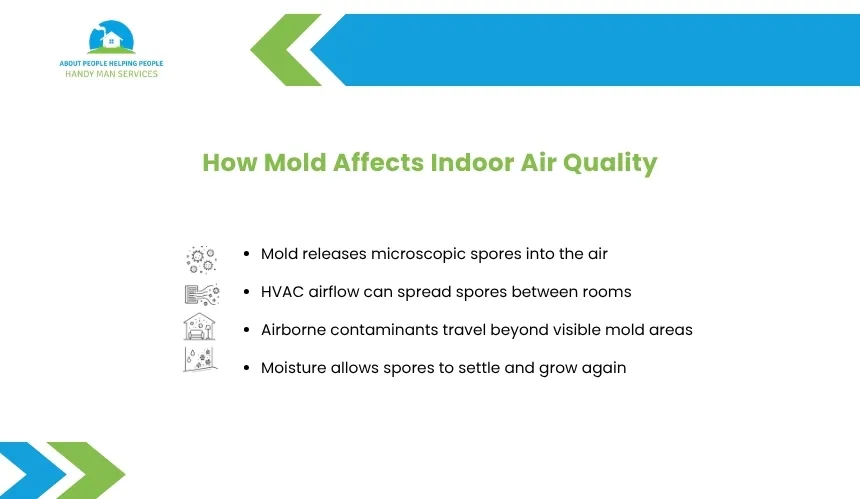
Mold affects indoor air quality by releasing microscopic spores and byproducts into the air, which can circulate throughout a space. These contaminants are not confined to visible growth areas and can spread through normal airflow, affecting overall air conditions.
How Do Mold Spores Become Airborne?
Mold reproduces by releasing spores, which are lightweight and easily carried through the air. Activities such as walking, cleaning, or even airflow from HVAC systems can disturb mold colonies and release spores into the air.
Once airborne, these spores can travel to different areas of a property and settle on new surfaces, leading to further growth if moisture is present.
Did You Know? Mold spores are microscopic and can remain suspended in the air for extended periods, making them difficult to detect without proper testing.
What Contaminants Does Mold Release Into The Air?
In addition to spores, mold can release microbial compounds that contribute to indoor air contamination. These include allergens, irritants, and in some cases, toxic byproducts known as mycotoxins.
These particles combine with dust and other airborne pollutants, increasing the overall contamination level within the indoor environment.
How Does Mold Spread Through Indoor Spaces?
Mold spreads through both airborne transmission and surface contact. Once spores are released, they can enter ventilation systems, circulate through rooms, and settle in areas with suitable moisture conditions.
This process allows mold to expand beyond its original location, affecting multiple areas and making localized cleaning ineffective.
Did You Know? Mold can spread through HVAC systems, allowing spores to circulate between rooms even if the initial growth is limited to one area.
Why Is Mold A Serious Indoor Air Contaminant?
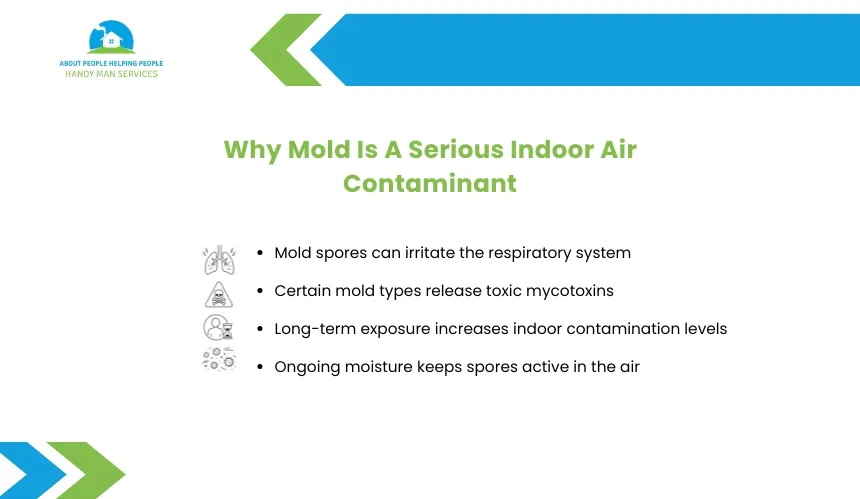
Mold is considered a serious indoor air contaminant because it continuously releases microscopic particles that degrade indoor air quality and can affect health over time. Unlike dust or general debris, mold is a living organism that grows, spreads, and produces byproducts that remain active in the air.
How Do Mold Spores Affect Respiratory Health?
When mold spores are inhaled, they can irritate the respiratory system. These particles are small enough to bypass the nose’s natural filtration and enter the lungs, especially with prolonged exposure.
Common effects include coughing, sneezing, throat irritation, and breathing discomfort. Individuals with sensitivities or pre-existing conditions may experience stronger reactions with continued exposure.
Did You Know? Mold spores are typically between 2 and 10 microns in size, small enough to remain airborne and enter the respiratory system easily.
What Role Do Mycotoxins Play In Air Contamination?
Certain types of mold produce mycotoxins, which are toxic compounds released into the air along with spores. These substances contribute to indoor air contamination and can persist even after visible mold is disturbed.
While not all mold produces mycotoxins, their presence complicates air quality issues by adding another layer of airborne contamination.
Why Does Prolonged Exposure Increase Risk?
Continuous exposure to mold-contaminated air allows spores and microbial particles to accumulate in the indoor environment. Over time, this increases the concentration of airborne contaminants and prolongs their impact.
Without proper removal, mold continues to release spores, making the issue ongoing rather than temporary.
Did You Know? Mold can continue releasing spores as long as moisture conditions exist, which means air quality can remain compromised until the root cause is addressed.
How Does Professional Mold Removal Work?
Professional mold removal is a structured process that focuses on containing contamination, removing airborne spores, and eliminating the source of moisture. Unlike basic cleaning, it addresses both visible mold and microscopic particles that affect indoor air quality.
What Is The Difference Between Removal And Remediation?
Mold removal refers to eliminating visible mold growth, while remediation is a broader process that includes cleaning contaminated areas, controlling airborne spores, and restoring safe indoor conditions.
Remediation focuses on returning the environment to a normal state rather than just removing what is visible on the surface.
Did You Know? Mold cannot be completely eliminated from any environment, but professional remediation reduces it to safe, controlled levels.
How Do Containment And Negative Air Systems Work?
To prevent mold from spreading during cleanup, professionals isolate the affected area using containment barriers. Negative air pressure systems are then used to control airflow, ensuring that contaminated air does not escape into other parts of the property.
This approach keeps spores confined and prevents cross-contamination during removal.
How Does HEPA Filtration Remove Airborne Spores?
High-efficiency particulate air (HEPA) filtration systems are used to capture microscopic particles from the air. These filters are designed to trap very small contaminants, including mold spores, as air passes through them.
By continuously filtering the air, these systems reduce the concentration of airborne spores and improve overall indoor air quality.
Did You Know? High-efficiency particulate air (HEPA) filters are designed to capture at least 99.97% of particles as small as 0.3 microns, which is considered the most penetrating particle size, according to standards set by the United States Department of Energy and supported by the Environmental Protection Agency. (1)
How Does Mold Removal Improve Indoor Air Quality?
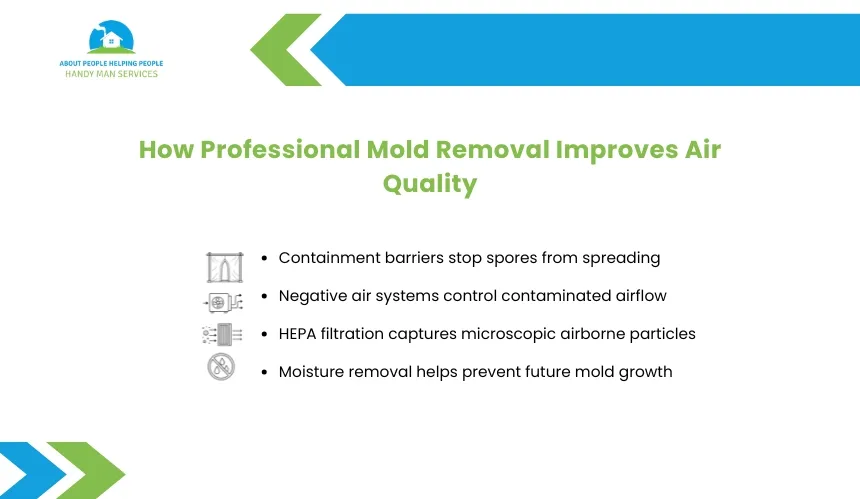
Professional mold removal improves indoor air quality by reducing airborne contaminants, eliminating active mold sources, and preventing spores from recirculating. The process targets both immediate contamination and long-term conditions that affect air quality.
How Are Airborne Spores Reduced?
During professional removal, containment systems and HEPA filtration actively capture and remove mold spores from the air. This reduces the overall concentration of airborne particles that can be inhaled.
By addressing both visible mold and microscopic spores, the air becomes cleaner and less contaminated over time.
Did You Know? Air filtration during mold remediation can significantly reduce airborne particle levels, improving indoor air quality during and after the process.
How Does Removal Prevent Recirculation Through HVAC Systems?
Mold spores can enter HVAC systems and spread throughout a property. Professional removal includes controlling airflow and cleaning affected areas to prevent spores from being pulled into ventilation systems.
By limiting this recirculation, the spread of contamination is reduced, helping maintain cleaner air across multiple spaces.
How Does Moisture Control Stop Future Contamination?
Moisture is the primary factor that allows mold to grow. Professional mold removal includes identifying and addressing moisture sources such as leaks, humidity, or poor ventilation.
By eliminating these conditions, the environment becomes less suitable for mold growth, preventing future contamination and protecting indoor air quality.
Did You Know? Controlling indoor humidity levels is one of the most effective ways to prevent mold regrowth and maintain stable air quality over time.
How Does Mold Removal Improve Indoor Air Quality?
Professional mold removal improves indoor air quality by reducing airborne spores, eliminating contamination sources, and preventing recirculation of pollutants. The process targets both the visible mold and the microscopic particles that affect the air.
How Are Airborne Spores Reduced?
During professional removal, contaminated air is continuously filtered using systems such as HEPA filtration. At the same time, mold colonies are carefully removed to stop the release of new spores into the environment.
This dual approach reduces the overall concentration of airborne particles, leading to cleaner, more stable indoor air conditions.
Did You Know? Reducing airborne spore levels can significantly improve air quality within a short period, especially in enclosed indoor spaces.
How Does Removal Prevent Recirculation Through HVAC Systems?
Mold spores can enter HVAC systems and spread throughout a building. Professional removal includes isolating affected areas and preventing spores from entering ventilation pathways during cleanup.
By controlling airflow and cleaning contaminated zones, the process reduces the risk of spores being redistributed through air circulation systems.
How Does Moisture Control Stop Future Contamination?
Moisture is the primary condition that allows mold to grow. Professional removal addresses leaks, humidity issues, and ventilation problems to eliminate the source of moisture.
By controlling these factors, the environment becomes less suitable for mold growth, which helps maintain improved air quality over time.
Did You Know? Mold cannot grow without moisture, which is why controlling humidity and water sources is essential for long-term protection of indoor air quality.
Why Is Professional Mold Removal More Effective Than DIY?
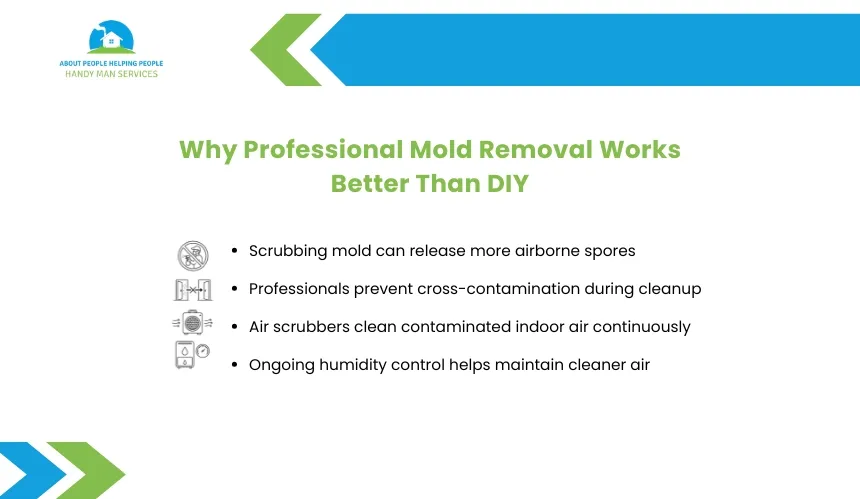
While DIY cleaning may remove visible mold, it often fails to address airborne contamination and hidden growth. Professional mold removal is more effective because it uses controlled processes, specialized equipment, and containment strategies to protect indoor air quality.
Why Does Improper Cleaning Spread Spores?
Disturbing mold without proper containment can release a large number of spores into the air. Basic cleaning methods like wiping or scrubbing often break up mold colonies, allowing spores to spread to other areas.
This can worsen indoor air quality and expand contamination rather than eliminate it.
Did You Know? Agitating mold without containment can increase airborne spore levels, making the problem more widespread.
How Do Professionals Prevent Cross-Contamination?
Professionals use containment barriers and negative air pressure systems to isolate affected areas. This ensures that contaminated air does not escape into clean spaces during the removal process.
By controlling airflow, they prevent spores from spreading through the property.
What Tools And Techniques Improve Air Quality Outcomes?
Professional mold removal relies on advanced tools such as HEPA filtration systems, air scrubbers, and specialized cleaning agents. These tools are designed to capture microscopic particles and remove contamination at both surface and air levels.
In addition, technicians follow structured procedures to ensure all affected areas are thoroughly treated.
Did You Know? Professional-grade air scrubbers can continuously filter indoor air during remediation, helping reduce airborne contaminants more effectively than standard cleaning methods.
How Can You Maintain Air Quality After Mold Removal?
Maintaining indoor air quality after mold removal is essential to prevent recurrence. Even after professional remediation, environmental conditions must be controlled to ensure mold does not return and air quality remains stable.
How Does Humidity Control Prevent Mold Regrowth?
Humidity is the primary factor that allows mold to grow. Keeping indoor humidity levels within a controlled range reduces the likelihood that spores will develop into active mold colonies.
Using dehumidifiers, improving insulation, and fixing leaks helps maintain a dry environment that limits mold growth.
Did You Know? Mold growth becomes more likely when indoor humidity rises above 60%, making moisture control a key factor in prevention. (2)
Why Is Ventilation Important For Indoor Air Quality?
Proper ventilation helps circulate fresh air and reduce indoor contaminant concentrations. Areas such as bathrooms, kitchens, and basements benefit from improved airflow to prevent moisture buildup.
Ventilation systems also help remove airborne particles, reducing the likelihood that spores will settle and grow.
How Often Should Inspections Be Done?
Regular inspections help identify early signs of moisture issues or mold growth before they become significant problems. Checking areas prone to dampness, such as basements, attics, and near plumbing, helps maintain control over indoor conditions.
Periodic inspections ensure that any issues are addressed quickly, preserving both air quality and structural integrity.
Did You Know? Early detection of moisture problems can prevent mold growth before it impacts indoor air quality, reducing the need for extensive remediation.
Key Takeaways
Professional mold removal plays a critical role in protecting indoor air quality by addressing both visible contamination and airborne particles. Understanding how mold spreads and how it is properly removed helps maintain a healthier indoor environment.
- Mold releases microscopic spores that circulate through indoor air and affect overall air quality
- Professional removal uses containment and filtration to prevent spores from spreading
- HEPA filtration systems capture airborne contaminants, improving indoor air conditions
- Moisture control is essential to stop mold from returning after removal
- DIY cleaning often fails to address airborne contamination and can worsen the problem
- Ongoing maintenance, such as ventilation and humidity control, helps preserve air quality
Did You Know? Mold spores can remain airborne for extended periods, allowing them to spread throughout indoor spaces if not properly contained.
Frequently Asked Questions
How does mold affect indoor air quality?
Mold affects indoor air quality by releasing microscopic spores and microbial particles into the air. These contaminants circulate through indoor spaces, increasing pollution levels and potentially affecting breathing and overall indoor air quality.
Can mold spores stay in the air after cleaning?
Yes, mold spores can remain airborne if not properly removed. Surface cleaning alone does not eliminate airborne particles, which is why professional removal uses filtration and containment to capture and reduce them.
What is the role of HEPA filters in mold removal?
HEPA filters capture very small particles, including mold spores, from the air. They are used during professional removal to reduce airborne contamination and improve indoor air quality.
How long does it take to improve air quality after mold removal?
Air quality can begin improving during the removal process as filtration systems reduce airborne particles. Full improvement depends on the extent of contamination and how effectively moisture sources are addressed.
How can I prevent mold from affecting air quality again?
Controlling humidity, fixing leaks, and ensuring proper ventilation are key steps. Regular inspections and maintaining dry indoor conditions help prevent mold regrowth and protect air quality.
Bibliography
(1)United States Department of Energy (HEPA standard explanation):
https://www.energy.gov/eere/buildings/articles/doe-explains-hepa-filters-and-clean-air
(2) Environmental Protection Agency (Indoor Humidity & Mold Guidance):