
- peopleLLC
How Do Plumbing Fixture Upgrades Prevent Leaks and Water Damage?
Quick Answer: Plumbing fixture upgrades help prevent leaks and water damage by replacing aging components that are more likely to fail over time. Modern fixtures use improved seals, stronger connection points, more reliable internal mechanisms, and updated manufacturing standards that reduce the likelihood of drips, hidden leaks, and sudden plumbing failures. Common ways fixture upgrades help prevent leaks include:
Many plumbing leaks begin as small problems that go unnoticed behind walls, beneath sinks, or around fixtures. Upgrading older faucets, toilets, shower fixtures, supply lines, and valves can help address potential failure points before they lead to costly repairs, mold growth, structural damage, or excessive water waste. |
A dripping faucet or a small leak beneath a sink may seem like a minor inconvenience, but many of the most expensive water damage repairs begin with plumbing problems that go unnoticed at first. A slow leak hidden inside a vanity cabinet, behind a toilet, or around a shower fixture can gradually damage flooring, drywall, cabinetry, and structural materials long before visible signs appear. By the time water stains, mold growth, or warped surfaces become obvious, the damage may already be extensive.
What makes plumbing fixture failures particularly challenging is that they often develop gradually. Seals wear out, connections loosen, supply lines age, and internal components deteriorate over the years of daily use. Homeowners frequently focus on repairing leaks as they occur, but older fixtures can continue creating new failure points throughout the plumbing system.
Did you know? According to insurance industry data, water damage and freezing are consistently among the most common causes of residential property claims. Many of these claims originate from plumbing leaks that started as small fixture-related issues.
Upgrading plumbing fixtures is not only about improving appearance or water efficiency. Modern fixtures are designed with more durable materials, improved sealing technologies, and enhanced reliability, helping reduce leak risks and protect homes from costly water damage. Understanding how these upgrades contribute to leak prevention can help homeowners make informed decisions before small plumbing issues become major repairs.
Why Do Plumbing Fixtures Develop Leaks Over Time?
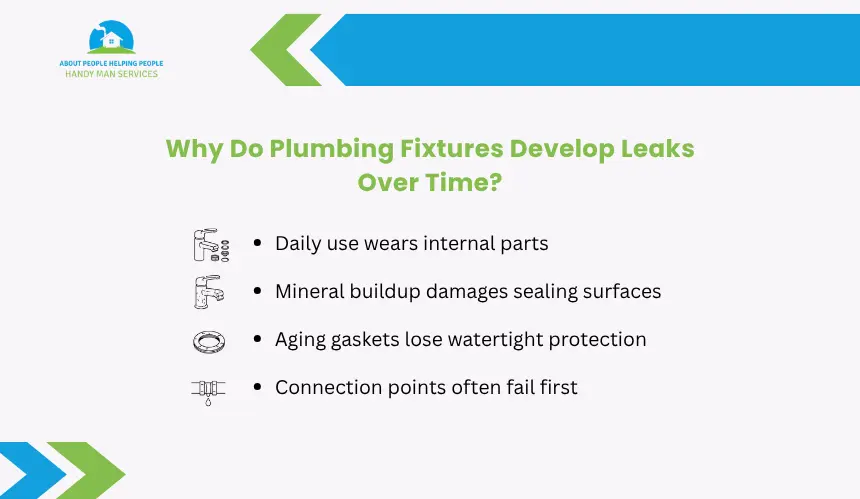
Plumbing fixtures are designed to withstand years of daily use, but no component lasts forever. Every time a faucet is turned on, a toilet is flushed, or a shower is used, internal parts experience wear. Over time, this repeated use can affect seals, valves, connections, and other components that help keep water contained within the plumbing system. As these parts deteriorate, the likelihood of leaks gradually increases.
How Does Normal Wear and Tear Lead to Leaks?
Most plumbing fixtures contain moving parts that operate thousands of times each year. Faucet cartridges, toilet fill valves, flush mechanisms, washers, and internal seals are constantly exposed to water pressure and mechanical movement.
As these components age, they may:
- Lose flexibility
- Develop small cracks
- Wear unevenly
- Become less effective at sealing water
Eventually, even minor deterioration can allow water to escape, creating persistent leaks.
Can Corrosion and Mineral Buildup Damage Fixtures?
Yes. Water naturally contains minerals that can accumulate inside fixtures over time. In addition, metal components may corrode due to age, water chemistry, or prolonged exposure to moisture.
Common effects include:
- Restricted water flow
- Damaged sealing surfaces
- Sticking valves
- Increased wear on moving parts
- Reduced fixture reliability
These issues often develop slowly, making them easy to overlook until a leak appears.
Why Do Aging Seals, Gaskets, and Connections Fail?
Many plumbing leaks originate at connection points rather than the fixture body itself. Rubber seals, O-rings, gaskets, and threaded fittings are designed to create watertight barriers, but they gradually degrade with age.
Fun Fact: A rubber washer inside a faucet may only cost a few cents, yet its failure can lead to thousands of gallons of wasted water over time if a leak is left unaddressed.
Did you know? Some plumbing fixtures can remain in service for decades, but the seals and internal components inside them often have much shorter lifespans. This is one reason older fixtures are generally more prone to leaks than newer models.
Because different plumbing fixtures wear out in different ways, certain fixtures throughout the home are more likely to develop leaks and water damage than others.
How Do Modern Plumbing Fixture Upgrades Improve Leak Prevention?
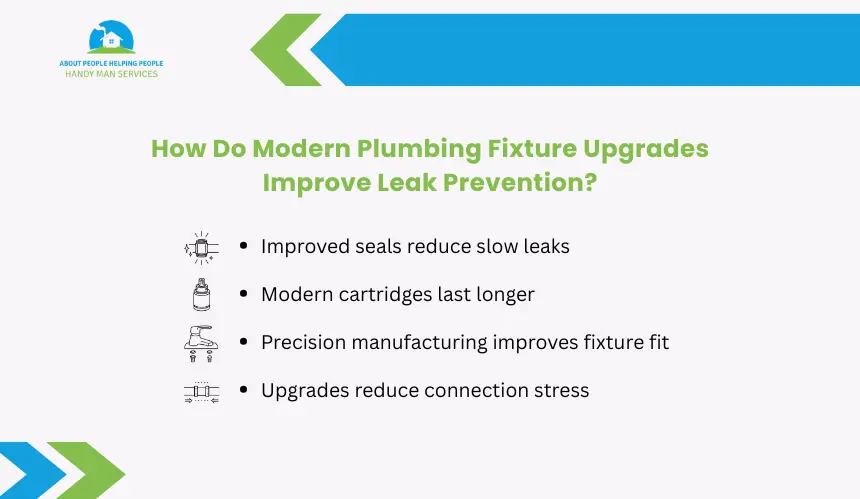
Modern plumbing fixtures are designed to do more than improve appearance or increase water efficiency. Advances in materials, engineering, and manufacturing have made today’s fixtures more reliable and better equipped to resist the wear that often leads to leaks. By replacing aging components with updated designs, homeowners can reduce many common failure points in older plumbing systems.
How Does Improved Sealing Technology Reduce Leaks?
One of the biggest improvements in modern fixtures is the use of more durable sealing materials. Advanced O-rings, gaskets, cartridges, and washers are designed to maintain a tighter seal while resisting cracking, hardening, and deterioration caused by years of water exposure and repeated use.
Better sealing technology helps minimize slow drips and hidden leaks that can gradually damage surrounding materials.
Why Are Modern Internal Components More Reliable?
Older plumbing fixtures often rely on mechanical parts that wear down over time. Modern faucets, shower valves, and toilets are commonly built with improved cartridges, ceramic disc mechanisms, and corrosion-resistant materials that are designed for longer service life.
These upgraded components reduce friction, improve water control, and decrease the likelihood of internal failures that can lead to leaks.
How Do Better Manufacturing Standards Improve Performance?
Modern manufacturing techniques allow plumbing fixtures to be built with tighter tolerances and more consistent component quality. Improved precision helps ensure that seals, threaded connections, and moving parts fit together properly, reducing opportunities for water to escape.
Fun Fact: Ceramic disc faucet technology, widely used in many modern fixtures, is designed to withstand hundreds of thousands of operating cycles while maintaining reliable sealing performance.
Can Fixture Upgrades Reduce Stress on Plumbing Connections?
Yes. Aging fixtures may develop internal wear that creates pressure fluctuations, persistent drips, or inefficient water flow. Replacing these fixtures can help stabilize operation and reduce unnecessary stress on connected supply lines, valves, and fittings.
Did you know? Many plumbing leaks do not occur because a fixture suddenly breaks. Instead, they often develop gradually as internal components wear out, placing increasing strain on surrounding connections over many years of use.
By reducing common leak points and improving the plumbing system’s reliability, modern fixture upgrades play an important role in protecting a home from the long-term effects of water intrusion and hidden moisture damage.
Can Fixture Upgrades Help Prevent Water Damage?
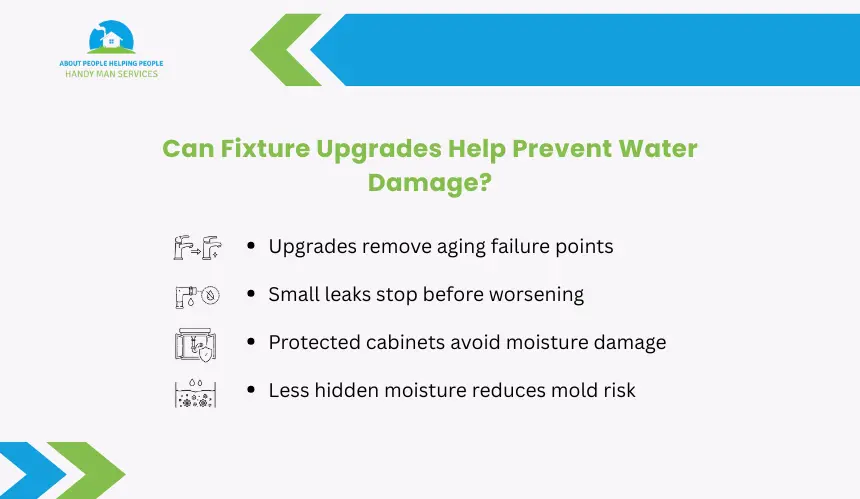
Yes. One of the greatest benefits of upgrading plumbing fixtures is the ability to reduce the risk of water damage before it starts. While many homeowners think of fixture replacement as an aesthetic improvement, newer fixtures can also eliminate aging components that are more likely to leak. Preventing even a small plumbing leak can help protect a home from expensive repairs and long-term moisture problems.
How Do Upgrades Stop Small Leaks Before They Escalate?
Many plumbing leaks begin as slow drips or tiny connection failures that are difficult to notice during daily routines. Worn seals, deteriorating cartridges, and aging supply lines may allow small amounts of water to escape long before visible damage appears.
Replacing older fixtures removes many of these potential failure points, reducing the chance that a minor leak will develop into a larger plumbing problem.
How Do Fixture Upgrades Protect Walls, Floors, and Cabinets?
Water does not need to be flowing rapidly to cause damage. Slow leaks beneath sinks, around toilets, or behind shower fixtures can gradually soak into cabinets, drywall, flooring, and surrounding structural materials.
Over time, this hidden moisture may lead to:
- Warped flooring
- Stained walls and ceilings
- Damaged cabinetry
- Deteriorating drywall
- Costly structural repairs
Addressing aging fixtures before leaks occur helps reduce the likelihood of these issues.
Why Is Reducing Hidden Moisture So Important?
Hidden moisture often remains trapped behind walls, beneath flooring, or inside cabinets, where it can persist for extended periods. These damp conditions may contribute to mold growth, wood deterioration, and material breakdown before the source of the leak is discovered.
Did you know? A leak that releases only a few drops of water every minute can waste hundreds of gallons over the course of a year. More importantly, slow, continuous exposure to moisture can quietly damage building materials without drawing immediate attention.
By reducing the risk of persistent leaks and hidden moisture intrusion, plumbing fixture upgrades provide an added layer of protection that extends beyond the plumbing system itself and helps preserve the home’s overall condition.
How Do Upgraded Valves and Supply Lines Improve Reliability?
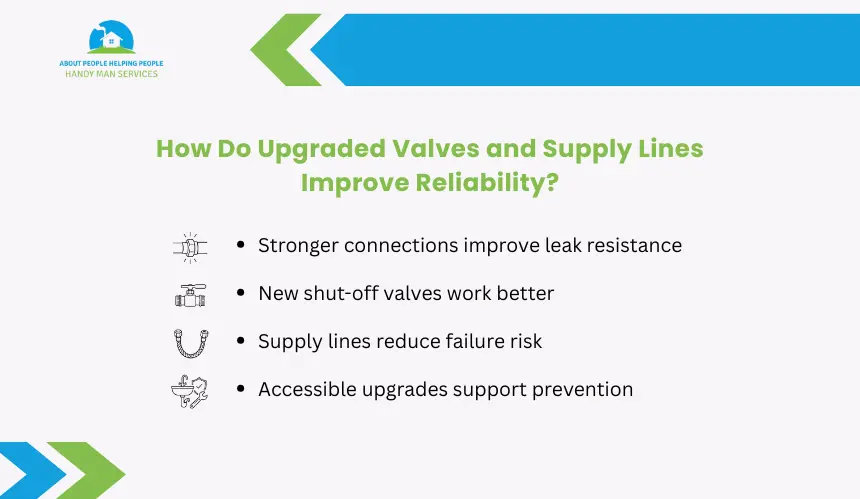
While faucets, toilets, and shower fixtures often receive the most attention, the valves and supply lines connected to them play an equally important role in leak prevention. These components are responsible for delivering and controlling water flow, and because they are frequently hidden beneath sinks, behind toilets, or inside cabinets, problems can develop without being immediately noticed. Upgrading aging valves and supply lines can help eliminate common weak points within the plumbing system.
Why Are Stronger Connection Points Important?
Every plumbing fixture relies on multiple threaded fittings, compression connections, and flexible supply lines to create a watertight system. As these parts age, vibration, water pressure, and normal wear can gradually weaken the integrity of the connections.
Modern supply lines and fittings are often manufactured with improved materials and more durable construction, helping maintain secure connections over longer periods.
How Do Upgraded Shut-Off Valves Improve Protection?
Shut-off valves allow homeowners to quickly stop the flow of water to an individual fixture if a leak or plumbing problem occurs. Older valves may become difficult to operate due to corrosion, mineral buildup, or internal wear, reducing their effectiveness during an emergency.
Replacing aging valves with newer models helps ensure they function properly when they are needed most.
Can New Supply Lines Reduce Failure Risks?
Flexible supply lines remain under water pressure almost continuously, making them one of the most important yet overlooked components of the plumbing system. As they age, materials can weaken, fittings may deteriorate, and the likelihood of leaks or unexpected failures increases.
Fun Fact: Many plumbing professionals recommend replacing older supply lines during fixture upgrades because the connection points are already accessible, making preventive replacement more practical and cost-effective.
Did you know? In many household plumbing incidents, the fixture itself is not the source of the leak. Instead, aging supply lines or deteriorated shut-off valves are often responsible for unexpected water damage.
By strengthening the components that support and connect plumbing fixtures, upgraded valves and supply lines help improve overall system reliability and reduce the number of potential leak points throughout the home.
What Warning Signs Indicate a Fixture Should Be Upgraded?
Plumbing fixtures rarely fail without warning. In many cases, they show gradual signs of wear long before a major leak develops. Paying attention to these early indicators can help homeowners replace aging fixtures before small issues turn into expensive water damage repairs.
Persistent Drips or Minor Leaks
A faucet that continues to drip or a showerhead that leaks after being turned off may seem like a minor annoyance, but persistent leaks often indicate worn internal components such as cartridges, washers, or seals.
When repairs become frequent or the same leak returns repeatedly, upgrading the fixture may provide a more reliable long-term solution.
Corrosion, Rust, or Mineral Buildup
Visible corrosion around fixture bases, supply line connections, or shut-off valves can signal material deterioration. Mineral deposits and limescale buildup may also affect the operation of moving parts and sealing surfaces.
These conditions can reduce fixture reliability and increase the likelihood of leaks developing over time.
Water Stains, Moisture, or Mold Growth
Discoloration inside sink cabinets, damp surfaces around fixtures, peeling paint, or unexplained mold growth may all point to hidden plumbing leaks. Because these symptoms often develop slowly, they can indicate that a fixture or connection has been leaking for an extended period.
Frequent Repairs and Replacement Parts
A fixture that requires repeated repairs may be approaching the end of its useful service life. Replacing washers, cartridges, seals, or valves occasionally is normal, but ongoing maintenance can suggest that multiple internal components are beginning to wear out.
Fun Fact: Homeowners often replace the same inexpensive repair parts several times before realizing that the fixture body and internal mechanisms have already experienced years of accumulated wear.
Reduced Water Flow or Declining Performance
Lower water pressure, inconsistent flow, difficulty operating handles, or irregular fixture performance can indicate internal buildup or mechanical deterioration. While cleaning or repairs may temporarily resolve the issue, these symptoms often become more common as fixtures age.
Did you know? Many plumbing fixture failures are preceded by subtle warning signs that appear months before a noticeable leak occurs. Identifying and addressing these issues early can help prevent hidden water damage and reduce the likelihood of emergency plumbing repairs.
Recognizing when a fixture is nearing the end of its lifespan allows homeowners to take a proactive approach by replacing aging components before they lead to larger plumbing or water damage issues.
Are Water-Efficient Fixtures Also Less Prone to Leaks?
In many cases, yes. Although water-efficient fixtures are primarily designed to reduce water consumption, they also benefit from newer engineering, updated materials, and improved internal components. Because these fixtures are built using more modern manufacturing standards, they often provide greater reliability and better leak resistance than many older plumbing models.
How Do Modern Fixture Designs Improve Reliability?
Water-efficient faucets, showerheads, and toilets frequently incorporate advanced cartridges, ceramic disc valves, durable seals, and corrosion-resistant materials. These design improvements help reduce the wear that commonly affects older fixtures during daily use.
As a result, many modern fixtures are better equipped to maintain consistent performance while minimizing common leak points.
Can Better Water Flow Management Reduce System Stress?
Modern plumbing fixtures are engineered to regulate water flow more effectively without sacrificing everyday functionality. By managing flow rates more consistently, these fixtures can reduce unnecessary pressure fluctuations and place less strain on internal components and connection points.
Over time, this improved control may help slow the wear that contributes to leaks.
Why Do Newer Fixtures Often Last Longer?
Advances in manufacturing and material quality have improved the durability of many modern plumbing products. Corrosion-resistant finishes, longer-lasting sealing materials, and precision-engineered internal mechanisms help reduce the likelihood of premature component failure.
Fun Fact: Many modern faucets use ceramic disc cartridges instead of traditional rubber washers. Ceramic components are highly resistant to wear and can continue operating smoothly through hundreds of thousands of open-and-close cycles.
Did you know? Water efficiency and leak prevention often work together. A fixture that delivers controlled, stable water flow places less stress on seals, valves, and moving parts, helping maintain the integrity of the plumbing system over time.
While upgrading to modern, water-efficient fixtures can improve reliability, homeowners can maximize those benefits by combining new installations with regular inspections and routine plumbing maintenance.
How Can Homeowners Maximize Leak Prevention After Upgrading Fixtures?
Upgrading plumbing fixtures is an important step toward reducing leaks, but long-term protection also depends on proper maintenance and early detection of developing issues. Even the most modern fixtures contain seals, valves, and connections that experience wear over time. A few simple maintenance habits can help preserve fixture performance and reduce the likelihood of future water damage.
Perform Routine Visual Inspections
Periodically checking beneath sinks, around toilets, behind appliances, and near shower fixtures can help identify small leaks before they become larger problems. Water stains, damp cabinets, corrosion, or mineral deposits are often early indicators that a connection or component needs attention.
Monitor Household Water Pressure
Excessively high water pressure can place additional stress on faucets, supply lines, shut-off valves, and fixture seals. Maintaining water pressure within a normal operating range helps reduce unnecessary wear and may extend the lifespan of plumbing components.
Address Minor Plumbing Issues Early
Small drips, loose connections, or occasional moisture around a fixture should not be ignored. Minor problems often indicate that a seal, gasket, or internal component is beginning to wear out, and addressing them promptly can prevent more significant leaks from developing.
Consider Professional Installation and Maintenance
Proper installation plays an important role in leak prevention. Correctly secured fittings, properly aligned connections, and careful testing help ensure that upgraded fixtures perform as intended from the start. Periodic maintenance and inspections can also identify hidden issues before they lead to water damage.
Fun Fact: Many homeowners discover plumbing leaks during routine cleaning rather than during plumbing emergencies. A quick visual inspection of cabinets, supply lines, and fixture connections can reveal early warning signs that might otherwise go unnoticed.
Did you know? A large percentage of household water damage incidents begin with slow, hidden leaks that remain undetected for extended periods. Regular inspections after a fixture upgrade can help identify these problems while they are still small and manageable.
By combining modern plumbing fixture upgrades with routine maintenance and proactive monitoring, homeowners can significantly reduce the risk of leaks and help protect their property from long-term water damage.
When Is It Time to Replace Rather Than Repair a Fixture?
Minor plumbing repairs are a normal part of home maintenance, and replacing a washer or tightening a connection can often resolve a simple leak. However, there comes a point when repeated repairs become less practical than replacing the fixture altogether. Understanding when a fixture has reached the end of its useful life can help homeowners avoid recurring leaks and reduce the risk of costly water damage.
How Does Age Affect Fixture Reliability?
Plumbing fixtures experience years of daily wear from water pressure, moving parts, mineral exposure, and constant operation. Even if the exterior appears to be in good condition, internal components such as cartridges, seals, valves, and gaskets may have significantly deteriorated.
As fixtures age, the likelihood of developing recurring leaks and mechanical failures generally increases.
When Do Recurring Leak Problems Signal Replacement?
An occasional repair is expected, but a fixture that repeatedly develops the same issue may indicate that multiple components are wearing out simultaneously. Constantly replacing washers, cartridges, or seals may provide only temporary relief if the fixture itself has reached the end of its service life.
In these situations, upgrading to a newer fixture can often provide a more dependable long-term solution.
Why Are Multiple Component Failures a Concern?
When several parts begin to fail within the same fixture, the system’s overall reliability declines. Corrosion, worn threads, weakened seals, and aging internal mechanisms can interact to create multiple potential leak points, increasing the chance of future plumbing problems.
Should Water Damage Risks Influence the Decision?
Yes. If a fixture has already caused water stains, cabinet damage, mold growth, or recurring moisture problems, replacing it may help prevent additional property damage. The cost of a new fixture is often small compared with the potential expense of repairing floors, walls, or structural materials affected by long-term leaks.
Did you know? Many plumbing emergencies occur not because a fixture suddenly fails without warning, but because an aging fixture that has been repaired several times finally reaches the point where another small component gives way.
Taking a proactive approach by replacing older, unreliable plumbing fixtures before they fail can help improve plumbing system reliability, reduce ongoing maintenance needs, and provide long-term protection against leaks and water damage.
Frequently Asked Questions
How do plumbing fixture upgrades help prevent leaks?
Plumbing fixture upgrades replace aging seals, valves, cartridges, and connections that commonly wear out over time. Modern fixtures are designed with improved materials and sealing technology to reduce the risk of leaks.
Which plumbing fixtures are most likely to leak?
Faucets, toilets, shower fixtures, supply lines, and shut-off valves are among the most common sources of household plumbing leaks because they contain moving parts and pressurized connections.
Can replacing old faucets help prevent water damage?
Yes. Older faucets may develop worn seals, corroded components, and deteriorating internal mechanisms that can cause leaks. Replacing them can eliminate common failure points before damage develops.
How often should plumbing fixtures be replaced?
The lifespan of a plumbing fixture depends on its quality, usage, water conditions, and maintenance history. Fixtures that show repeated leaks, corrosion, or declining performance may benefit from replacement rather than repeated repairs.
Are modern plumbing fixtures more reliable than older models?
In many cases, yes. Modern fixtures often feature improved sealing materials, corrosion-resistant components, and more durable internal mechanisms that help reduce wear and improve long-term reliability.
What are the warning signs that a fixture should be upgraded?
Persistent drips, recurring repairs, corrosion, mineral buildup, reduced water flow, water stains, and hidden moisture around fixtures are all signs that replacement may be worth considering.
Can plumbing fixture upgrades improve water efficiency?
Yes. Many newer fixtures are designed to deliver effective water flow while using less water. Improved efficiency can also help reduce unnecessary stress on plumbing components and support long-term system performance.