
- peopleLLC
How Does Leaf Blowing Protect Lawns and Drainage Systems?
|
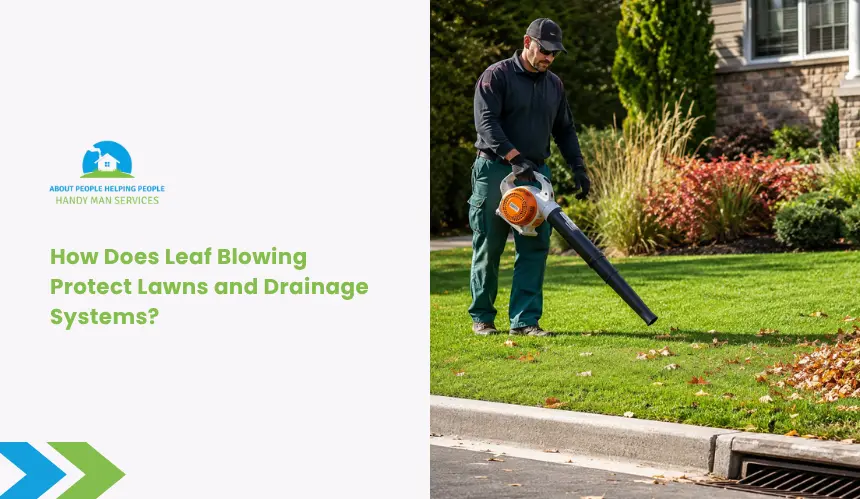
Quick Answer: Leaf blowing protects lawns and drainage systems by removing accumulated leaves that block airflow, trap moisture, and obstruct water flow. When leaves are cleared regularly, grass can breathe and grow properly, while drainage pathways remain open, preventing water buildup and potential flooding. Here’s how leaf blowing directly protects both systems:
Did You Know? Important Insight: Key Takeaway: |
Fallen leaves may seem harmless at first, often left on the lawn as part of seasonal change. However, when they begin to accumulate, they create conditions that quietly damage both the grass and the drainage system. What starts as a thin layer can quickly turn into a dense cover that affects how the entire yard functions.
On the lawn, leaves block sunlight, restrict airflow, and trap moisture against the soil surface. This creates an environment where grass struggles to grow and becomes more vulnerable to decay and disease. At the same time, those same leaves are often carried by wind or water into drainage pathways, where they begin to collect and form blockages.
Did You Know? Wet leaves compress much faster than dry ones, forming a compact layer that behaves almost like a seal over the lawn, preventing proper oxygen exchange and slowing down natural soil processes.
The real problem is that this damage develops gradually and often goes unnoticed until visible signs appear, such as patchy grass, water pooling, or slow drainage. By the time these issues become obvious, both the lawn and drainage system may already be under stress.
This is where leaf blowing becomes essential. Regular removal prevents buildup before it can interfere with soil health or water flow, helping maintain a balanced and functional outdoor environment.
Why Leaves Can Damage Lawns if Not Removed
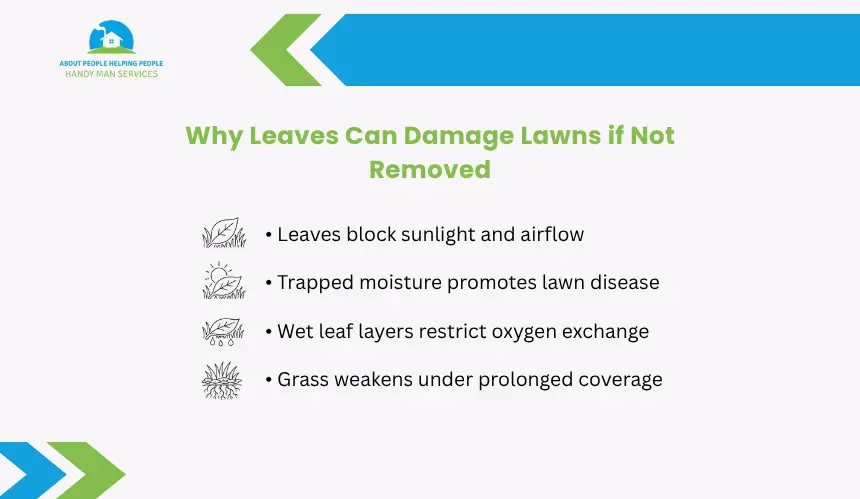
Leaves affect lawn health by creating a physical barrier between the grass and its environment. While a small amount may seem harmless, accumulated leaves begin to interfere with essential processes that keep grass healthy and growing. Over time, this buildup disrupts how the lawn absorbs light, air, and moisture.
How Leaves Block Sunlight and Airflow
Grass depends on sunlight for photosynthesis and airflow for maintaining a balanced soil environment. When leaves cover the surface, they limit the amount of light reaching the grass and reduce air circulation at ground level.
This slows down energy production within the grass and weakens its ability to grow. Without proper airflow, the soil beneath also becomes less oxygen-rich, affecting root activity.
Did You Know?
Even a thin layer of leaves can significantly reduce the amount of sunlight reaching grass, especially during shorter daylight periods.
Why Moisture Buildup Leads to Lawn Disease
Leaves trap moisture by preventing water from evaporating efficiently. This creates a damp environment where fungi and bacteria can thrive. Over time, this leads to conditions that promote lawn diseases and decay.
Excess moisture also softens the soil surface, making it more susceptible to damage from foot traffic and reducing overall lawn stability.
Important Insight:
Moisture trapped under leaves does not just affect the surface. It penetrates into the soil, altering the balance needed for healthy root development.
How Leaf Layers Suffocate Grass
As leaves accumulate, they begin to compress under their own weight, especially when wet. This creates a dense layer that restricts oxygen exchange between the soil and the air.
Without adequate oxygen, roots struggle to function properly, and grass begins to thin out or die in affected areas. This often results in patchy sections that require more effort to restore.
How Does Leaf Blowing Improve Lawn Health?
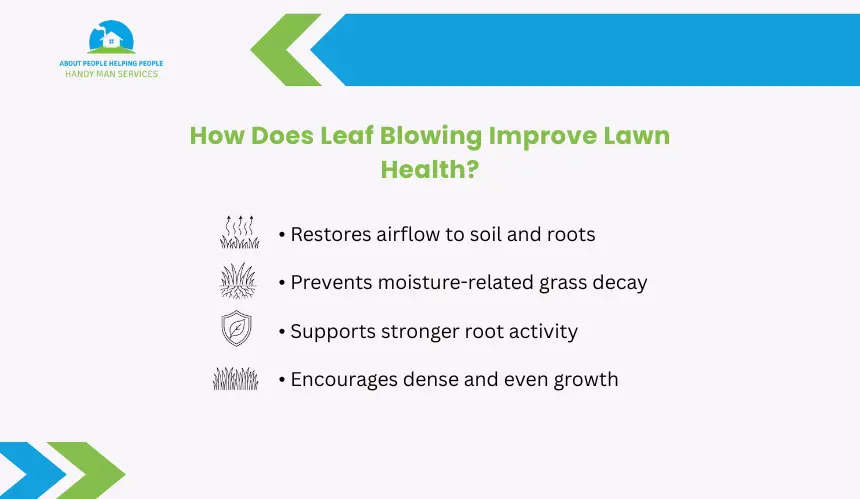
Leaf blowing improves lawn health by actively restoring the conditions that grass needs to grow. Instead of allowing leaves to interfere with soil and grass interaction, it removes the barrier that disrupts airflow, moisture balance, and light exposure. This allows the lawn to function as a healthy, active system rather than a stressed surface.
How It Restores Airflow to Soil
Soil requires a constant exchange of oxygen to support root respiration and microbial activity. When leaves accumulate, they reduce this exchange by covering the surface and compacting over time.
By clearing leaves, airflow is restored, allowing oxygen to reach the soil again. This improves root function and supports the biological processes that keep the soil fertile and active.
Did You Know?
Roots depend on oxygen just as much as they depend on water. Without proper airflow, root activity slows down even if the soil appears moist.
Why Removing Leaves Prevents Grass Decay
Leaves trap moisture close to the grass surface, creating conditions where decay can begin. This is especially common when leaves remain in place for extended periods or become wet and compressed.
Removing them quickly reduces prolonged moisture exposure, preventing the breakdown of grass blades and maintaining the lawn’s overall strength and appearance.
Important Insight: Decay often starts at the surface level where leaves sit. Clearing them early stops this process before it affects deeper layers of the lawn.
How It Supports Even Grass Growth
When leaves are removed consistently, all parts of the lawn receive equal access to sunlight, air, and moisture. This leads to more uniform growth across the entire surface.
Without leaf buildup, grass does not have to compete with shaded or suffocated areas, resulting in a denser and more balanced lawn over time.
Why Do Leaves Cause Drainage Problems?
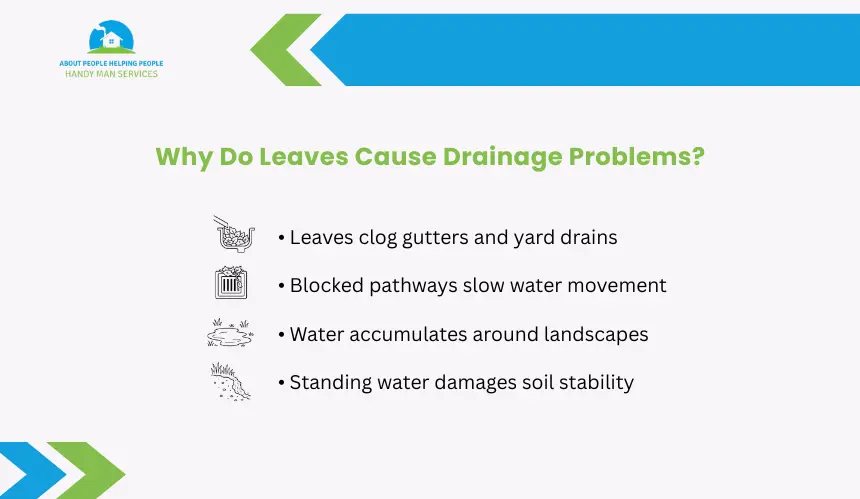
Leaves create drainage issues by physically blocking the pathways that water uses to move away from the property. While a few scattered leaves may not seem significant, accumulation in key areas such as gutters, yard drains, and low-lying sections can quickly disrupt how water flows and drains.
How Leaves Clog Gutters and Yard Drains
Leaves are lightweight and easily carried by wind or rainwater into drainage points. Once they collect in gutters or drains, they begin to pile up and restrict water movement.
As more debris accumulates, the blockage becomes denser, slowing down or completely stopping the flow of water. This prevents proper drainage and causes water to back up in areas where it should normally pass through.
Did You Know?
Leaves often mix with dirt and small debris, forming a compact mass that is much harder for water to pass through than loose material.
Why Blocked Drainage Leads to Water Accumulation
When drainage pathways are obstructed, water has nowhere to go. Instead of flowing away, it begins to collect on the lawn, around foundations, or near walkways.
This accumulation increases soil saturation, weakens the ground, and can create uneven moisture levels across the lawn. Over time, this affects both the stability of the soil and the health of the grass.
Important Insight: Drainage problems rarely start with heavy flooding. They begin with small obstructions that gradually reduce water flow until accumulation becomes noticeable.
How Standing Water Damages Property
Standing water is not just a surface issue. It can penetrate deeper into the soil, affecting plant roots and potentially impacting nearby structures. Prolonged water exposure weakens soil stability and can contribute to erosion or damage in surrounding areas.
In lawns, standing water leads to root suffocation and uneven growth, while in built areas, it can affect surfaces and structural elements over time.
How Does Leaf Blowing Help Protect Drainage Systems?
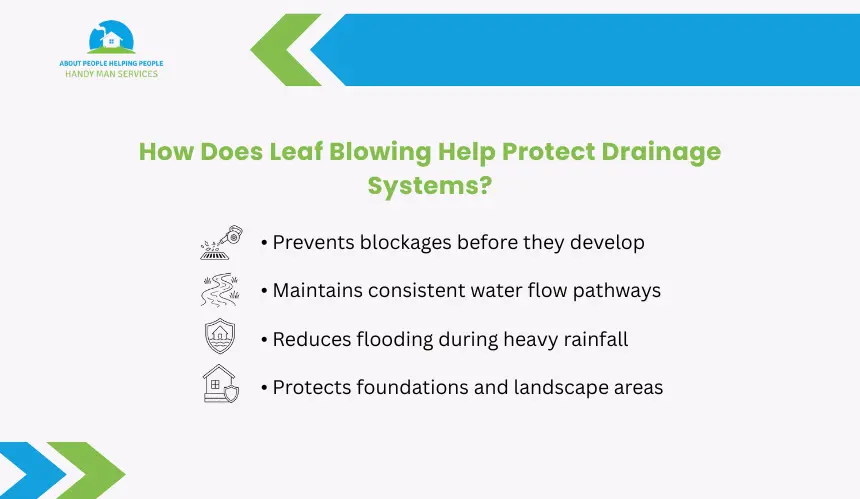
Leaf blowing protects drainage systems by removing debris before it has the chance to accumulate and form blockages. Instead of reacting to clogged drains after water buildup occurs, it works as a preventive step that keeps pathways clear and water moving efficiently.
How It Prevents Blockages Before They Form
Leaves rarely cause immediate blockage on their own. The problem begins when they collect in corners, edges, or drainage openings and start trapping additional debris like dirt and small particles. Over time, this buildup becomes dense enough to restrict water flow.
Regular leaf blowing clears these areas early, preventing accumulation at critical points such as:
- Around yard drains and grates
- Along edges of walkways and driveways
- Near gutters and downspout outlets
Did You Know?
Most drainage blockages start at entry points where leaves first collect. Keeping these areas clear significantly reduces the chance of larger system-wide issues.
Why Regular Removal Maintains Water Flow
Drainage systems rely on continuous, unobstructed pathways to function properly. Even partial blockages can slow down water movement, causing it to spread across unintended areas.
By removing leaves consistently, water is able to flow at its intended speed and direction, reducing the risk of overflow or pooling. This helps maintain balance between rainfall and drainage capacity.
Important Insight:
Efficient drainage is not just about large systems. It depends on keeping small pathways clear so water can move freely without resistance.
How It Reduces Flooding Risk
When drainage systems are clear, they can handle heavy rainfall more effectively. Leaf buildup, however, reduces this capacity and increases the likelihood of water overflow during storms.
- Prevents water from backing up near foundations
- Reduces pooling in low-lying lawn areas
- Helps avoid erosion caused by uncontrolled water flow
By keeping drainage pathways open, leaf blowing ensures that excess water is directed away from the property rather than accumulating where it can cause damage.
What Happens If Leaves Are Not Removed Regularly?
When leaves are left on lawns and around drainage areas, the problems they create do not remain surface-level. Over time, the accumulation begins to affect both the biological processes of the lawn and the functional efficiency of drainage systems. What starts as a simple layer of debris gradually turns into a more complex issue that is harder to reverse.
Why Lawn Damage Becomes Permanent
Grass can recover from short-term stress, but prolonged coverage by leaves limits its ability to photosynthesize, breathe, and maintain healthy roots. As the layer thickens and stays in place, sections of grass begin to weaken and eventually die.
Once this happens, the lawn may develop bare or patchy areas that require reseeding or restoration rather than simple maintenance.
Did You Know?
Extended leaf coverage can kill grass not just by blocking sunlight, but by creating conditions where the soil becomes oxygen-deprived over time.
How Drainage Issues Escalate Over Time
Leaves that are not removed continue to move with wind and water, eventually settling in drainage pathways. As more debris collects, these pathways become increasingly restricted.
What begins as a minor slowdown in water flow can develop into complete blockage, especially during heavy rainfall. This leads to consistent water buildup and increased pressure on drainage systems.
Important Insight:
Drainage problems rarely appear suddenly. They build gradually as small obstructions combine and reduce the system’s ability to handle water effectively.
Why Cleanup Becomes More Difficult
The longer leaves remain in place, the more they break down and compact. Wet conditions accelerate this process, turning loose leaves into dense layers that stick to surfaces and soil.
- Compacted leaves are harder to remove than dry debris
- Decomposing material mixes with soil, increasing cleanup effort
- Blocked areas require more intensive clearing rather than simple maintenance
As cleanup becomes more demanding, it often requires more time and effort compared to regular, preventative removal.
Frequently Asked Questions
How often should leaves be removed from lawns?
Leaves should be removed regularly during peak fall periods, often on a weekly basis or as soon as noticeable buildup occurs. Consistent removal prevents layering, which can block airflow, trap moisture, and interfere with both lawn health and drainage performance.
Can leaves damage grass permanently?
Grass can recover from short-term leaf coverage, but prolonged accumulation can lead to permanent damage. When leaves block sunlight and oxygen for extended periods, sections of grass may die, resulting in patchy areas that require reseeding or repair.
Do leaves clog yard drains quickly?
Leaves can begin clogging drains faster than expected, especially when combined with rainwater and debris. As they accumulate, they form dense blockages that restrict water flow and increase the risk of pooling or overflow during heavy rainfall.
Is leaf blowing better than raking?
Leaf blowing is generally more efficient for clearing large areas and hard-to-reach spaces, especially around drainage points. It allows for quicker removal without disturbing the soil, making it a practical option for maintaining both lawn health and drainage systems.
What happens if wet leaves are left on the lawn?
Wet leaves compact and form a dense layer that blocks airflow and traps moisture against the soil. This creates conditions that promote decay, weaken grass, and increase the likelihood of disease, making timely removal essential.