- About People Helping People
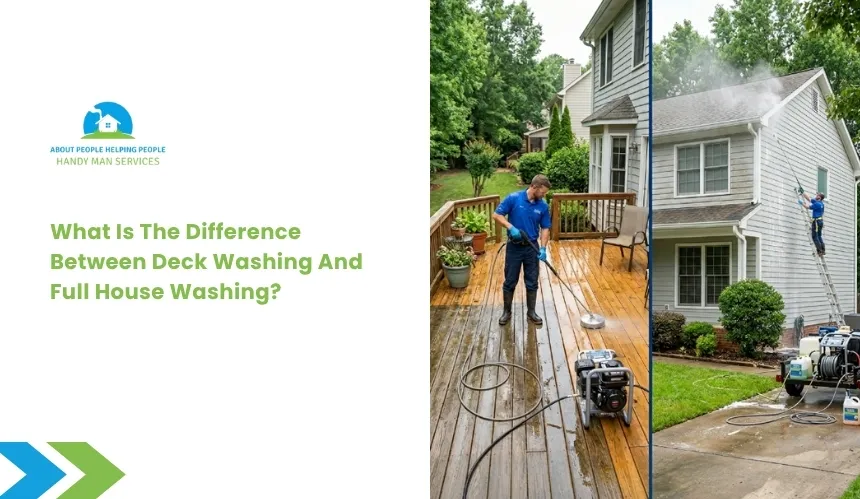
What Is The Difference Between Deck Washing And Full House Washing?
Quick Answer: Deck washing and full house washing differ in scope, surface type, and cleaning method. Deck washing focuses on horizontal outdoor surfaces like wood or composite decks, using controlled pressure to remove dirt, mold, and buildup. Full house washing covers the entire exterior, including siding, walls, and trim, often using soft washing techniques for surface safety. Key differences:
Did You Know? Most house washing services use low-pressure cleaning with detergents to safely remove mold and algae without damaging exterior materials, unlike deck washing which requires more controlled pressure for embedded dirt. |
Exterior cleaning services are often grouped together, which makes it difficult for property owners to understand what each service actually includes. Deck washing and full house washing may sound similar, but they serve very different purposes and require completely different techniques. Choosing the wrong approach can lead to ineffective cleaning or even surface damage.
One of the most common challenges is assuming that all exterior surfaces can be cleaned the same way. Decks, for example, are horizontal and often made of wood or composite materials that trap dirt and moisture. In contrast, house exteriors such as siding or stucco are vertical surfaces that require a gentler, more controlled cleaning method to avoid damage.
Environmental exposure also plays a role. Decks tend to accumulate embedded dirt, algae, and wear from foot traffic, while house exteriors are more affected by airborne contaminants like dust, mold, and mildew. These differences directly influence how each surface should be cleaned.
Understanding the distinction between deck washing and full house washing helps property owners choose the right service for their needs. The sections below break down how each method works, what surfaces they cover, and when each one should be used for the best results.
What Is Deck Washing And What Does It Include?
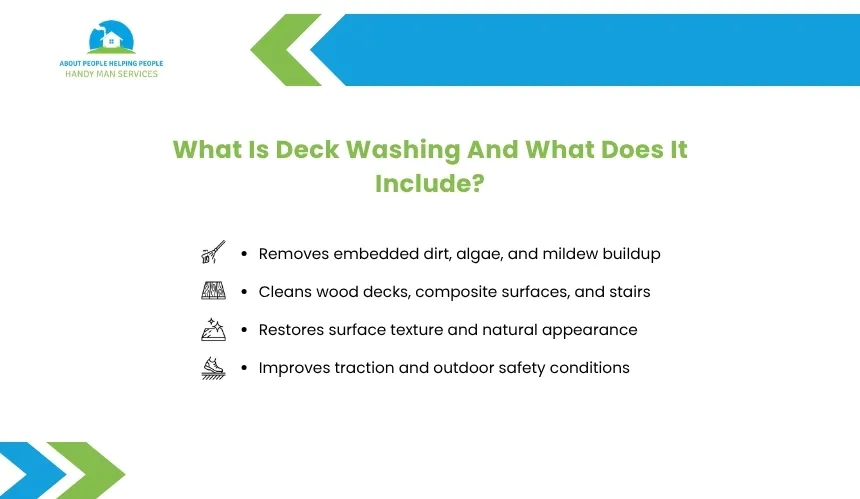
Deck washing is a targeted exterior cleaning process designed specifically for horizontal outdoor surfaces such as decks, patios, and attached structures. It focuses on removing embedded dirt, organic growth, and surface wear caused by foot traffic and environmental exposure.
What Surfaces Are Covered In Deck Washing?
Deck washing primarily applies to surfaces that experience direct use and exposure. These include wood decks, composite decking, railings, stairs, and surrounding flat areas.
Because these surfaces are walked on frequently, they tend to accumulate deeper contamination compared to vertical exteriors.
Did You Know? Horizontal surfaces collect more debris and moisture than vertical ones, which is why decks typically require more intensive cleaning.
What Cleaning Methods Are Used For Decks?
Deck washing involves controlled pressure washing, where PSI levels are adjusted based on the material. Wood decks require lower pressure to avoid fiber damage, while composite materials may tolerate slightly higher levels.
In some cases, cleaning solutions are used to break down mold, mildew, and embedded dirt before rinsing.
Did You Know? Incorrect pressure settings can damage wood fibers in a single cleaning session, making calibration essential for deck maintenance.
What Problems Does Deck Washing Solve?
Deck washing addresses issues that affect both appearance and performance. Over time, decks can become discolored, slippery, and structurally compromised due to buildup.
- Removes dirt, algae, and mildew
- Restores natural color and texture
- Improves surface traction and safety
- Prepares the deck for sealing or staining
By targeting these issues, deck washing helps maintain durability and extend the lifespan of outdoor surfaces.
What Is Full House Washing and What Does It Cover?
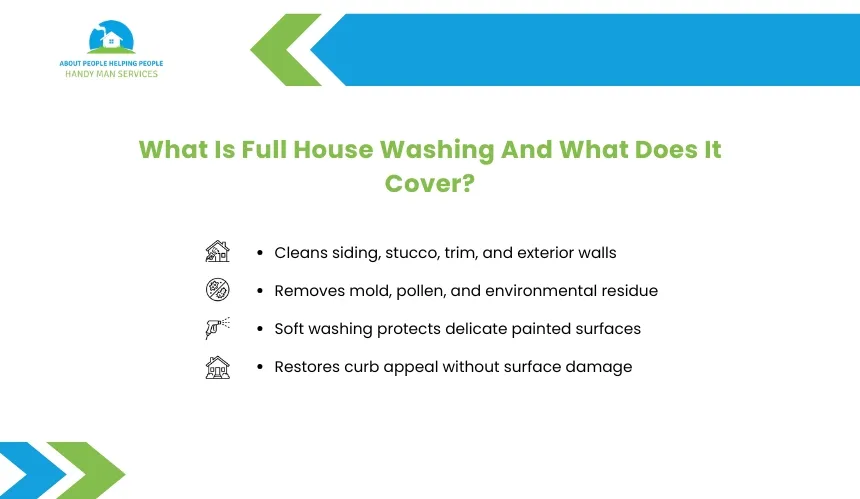
Full house washing is a comprehensive exterior cleaning process that targets vertical surfaces and structural elements of a building. Unlike deck washing, it focuses on safely removing contaminants from siding, walls, and exterior finishes without causing damage.
Which Exterior Areas Are Included?
Full house washing typically covers all visible exterior components that are exposed to the environment. This includes siding, stucco, brick facades, trim, soffits, gutters, and sometimes exterior windows.
These areas accumulate airborne contaminants rather than ground-level debris, which requires a different cleaning approach.
Did You Know? Vertical surfaces collect pollutants from the air, such as dust, mold spores, and environmental residue, which gradually build up over time.
How Does Soft Washing Differ From Pressure Washing Here?
Full house washing often relies on soft washing, a low-pressure cleaning method combined with specialized solutions. Instead of using force, it breaks down mold, algae, and dirt at the source and then rinses them away gently.
This method is essential for protecting delicate materials like painted surfaces, vinyl siding, and stucco.
Did You Know? Soft washing not only cleans surfaces but also targets the root of biological growth, helping reduce the chance of quick regrowth.
What Contaminants Are Removed During House Washing?
House washing is designed to eliminate a wide range of surface contaminants that affect both appearance and material condition.
- Mold, mildew, and algae
- Dust, pollen, and environmental residue
- Oxidation and surface staining
- Organic buildup from weather exposure
By removing these contaminants, full house washing improves curb appeal while also protecting exterior materials from long-term deterioration.
Deck Washing Vs Full House Washing: Key Differences
Although both services fall under exterior cleaning, they differ significantly in scope, technique, and purpose. Understanding these differences helps ensure the right method is applied to the right surface.
How Does Scope And Coverage Differ?
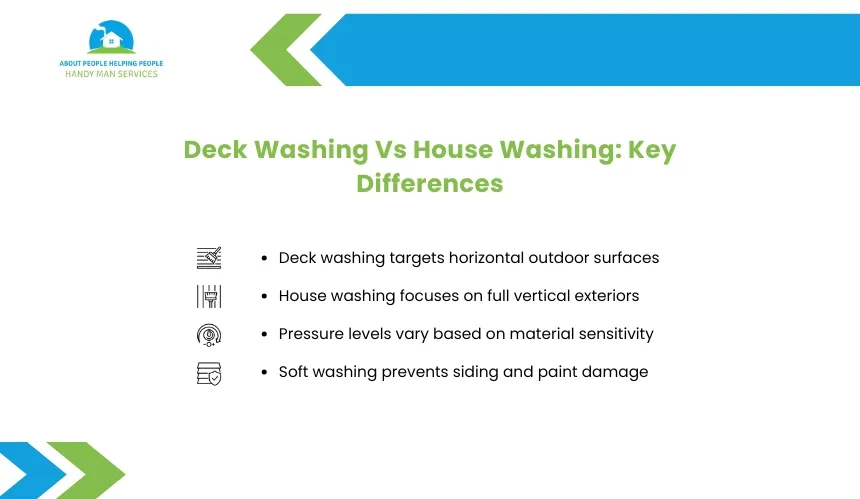
Deck washing is focused on specific outdoor structures, primarily horizontal surfaces that experience direct use. Full house washing, on the other hand, covers the entire exterior of a property, including walls, siding, and structural elements.
This difference in scope means deck washing is more targeted, while house washing is comprehensive.
Did You Know? Horizontal surfaces like decks typically accumulate more concentrated debris, while vertical surfaces collect more evenly distributed contaminants.
How Do Cleaning Methods And Pressure Levels Vary?
Deck washing generally uses controlled pressure to remove embedded dirt and restore the surface. The pressure level is adjusted based on whether the material is wood or composite.
Full house washing relies more on low-pressure soft washing techniques combined with cleaning solutions. This approach protects delicate surfaces while effectively removing contaminants.
How Do Surface Sensitivity And Risk Factors Compare?
Deck surfaces, especially wood, are sensitive to excessive pressure but still require enough force to clean deeply embedded debris. This creates a need for precise pressure calibration.
House exteriors are often more sensitive overall, particularly painted or coated surfaces, making soft washing the safer option.
Did You Know? Using high pressure on siding or painted exteriors can strip finishes or force water into gaps, leading to potential damage over time.
When Should You Choose Deck Washing Vs Full House Washing?
Choosing between deck washing and full house washing depends on which areas are affected, the type of contamination, and the condition of the surfaces. Each service addresses different problems, so selecting the right one ensures effective cleaning without unnecessary work or risk.
When Is Deck Washing Enough?
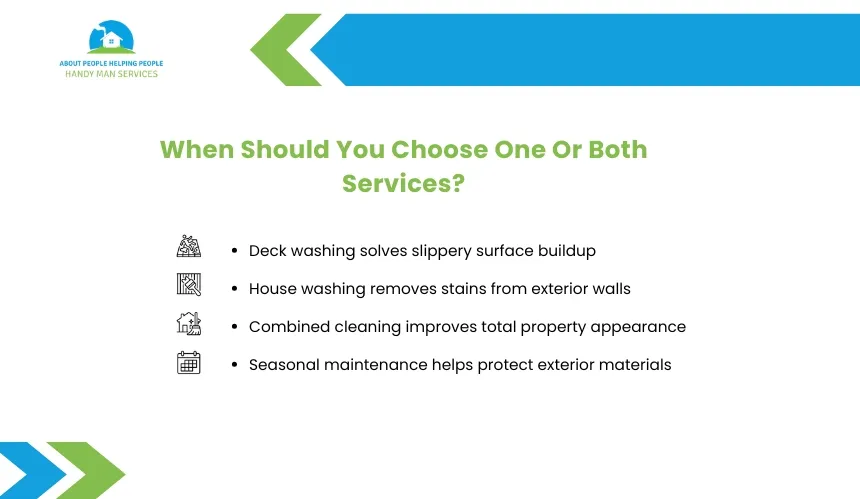
Deck washing is sufficient when the primary issues are limited to outdoor floor-level structures. This includes visible dirt buildup, algae growth, or discoloration on decks and surrounding surfaces.
It is the right choice when:
- The deck feels slippery or looks dull
- Dirt and debris are embedded in the surface
- Preparation is needed before sealing or staining
In these cases, focusing on the deck alone provides targeted results without requiring full exterior cleaning.
Did You Know? Slippery deck surfaces are often caused by algae buildup rather than just moisture, which requires proper cleaning to fully resolve.
When Is Full House Washing Required?
Full house washing becomes necessary when contamination is visible across exterior walls and structural surfaces. This includes mold streaks, mildew patches, or general discoloration on siding and фасades.
It is typically needed when:
- Exterior walls show visible staining or mold growth
- Siding appears faded or uneven in color
- Airborne contaminants have accumulated over time
This service restores the overall appearance of the property while protecting exterior materials.
When Should Both Services Be Combined?
In many cases, both deck washing and house washing are needed together to achieve complete exterior maintenance. This is especially true for properties with widespread buildup affecting multiple surfaces.
Combining both services is beneficial when:
- The entire exterior shows signs of contamination
- Seasonal maintenance is being performed
- Preparing the property for sale or inspection
Did You Know? Cleaning both horizontal and vertical surfaces together provides a more uniform appearance and helps maintain overall property value.
How Do Cleaning Frequency And Maintenance Needs Differ?
Deck washing and full house washing follow different maintenance schedules because the surfaces they target are exposed to different types and levels of contamination. Understanding these differences helps maintain both effectively without over-cleaning or neglect.
How Often Should Decks Be Washed?
Decks typically require more frequent cleaning because they are exposed to foot traffic, moisture, and debris accumulation. In most cases, washing once per year is sufficient, with more frequent cleaning in humid climates or high-use areas.
Because decks are horizontal, they retain dirt and water longer, which accelerates buildup compared to vertical surfaces.
Did You Know? Decks can develop algae and surface buildup faster than walls because moisture tends to sit on flat surfaces rather than run off.
How Often Should House Exteriors Be Cleaned?
House exteriors generally require less frequent cleaning since they are vertical and do not accumulate debris as quickly. Most homes benefit from full house washing once every 12 to 18 months, depending on environmental conditions.
However, homes in humid or shaded areas may need more frequent cleaning due to faster mold and mildew growth.
How Do Climate And Exposure Affect Both?
Environmental conditions play a major role in determining cleaning frequency. Moisture, shade, pollution, and surrounding vegetation all influence how quickly contaminants build up.
- Humid climates increase mold and algae growth
- High-traffic areas increase dirt accumulation on decks
- Shaded areas retain moisture longer
- Dusty environments lead to faster surface buildup
Did You Know? Surfaces exposed to consistent shade and moisture can develop biological growth much faster, requiring more frequent maintenance regardless of surface type.
Common Misconceptions About Exterior Washing
Misunderstandings about exterior cleaning often lead to incorrect service choices or improper methods. Clarifying these misconceptions helps property owners make better decisions and avoid unnecessary damage.
Are Deck Washing And House Washing The Same?
Deck washing and house washing are often assumed to be identical, but they serve different purposes and require different techniques. Deck washing focuses on removing embedded dirt and restoring horizontal surfaces, while house washing targets vertical exteriors using safer, low-pressure methods.
Treating them as the same can result in ineffective cleaning or surface damage.
Did You Know? Using the wrong method on the wrong surface is one of the most common causes of exterior damage during cleaning.
Can One Service Replace The Other?
Neither service replaces the other because they address different areas and types of contamination. Cleaning only the deck does not improve the condition of siding or exterior walls, and house washing does not remove deep buildup from deck surfaces.
Each service is designed for a specific purpose, and both may be needed for complete maintenance.
Is Pressure Washing Always Used?
Many assume all exterior cleaning involves high-pressure washing, but this is not the case. Full house washing often relies on soft washing techniques that use low pressure and cleaning solutions.
Pressure washing is used selectively, mainly for durable surfaces that can handle higher force.
Did You Know? Soft washing can be more effective than pressure washing for removing biological growth because it targets the root cause rather than just the surface.
Key Takeaways
Deck washing and full house washing serve different roles in exterior maintenance, and understanding their differences ensures the right method is used for each surface.
- Deck washing focuses on horizontal surfaces like wood or composite decks and uses controlled pressure to remove embedded dirt and algae
- Full house washing covers exterior walls, siding, and structural elements using low-pressure soft washing techniques
- Decks require more frequent cleaning due to foot traffic and moisture retention
- House exteriors need less frequent washing but require careful methods to avoid damage
- Each service targets different contaminants, from ground-level debris to airborne pollutants
- Combining both services provides complete exterior cleaning and long-term surface protection
Did You Know? Horizontal surfaces like decks accumulate dirt and moisture faster than vertical walls, which is why they typically need more frequent maintenance.
Frequently Asked Questions
What is the main difference between deck washing and house washing?
Deck washing focuses on cleaning horizontal outdoor surfaces like wood or composite decks using controlled pressure, while house washing covers the entire exterior of a home using low-pressure soft washing to safely clean siding, walls, and structural elements.
Can i use the same pressure washing method for both services?
No, using the same method is not recommended. Decks may require moderate pressure to remove embedded dirt, while house exteriors often need soft washing to avoid damaging siding, paint, or coatings.
How often should deck washing and house washing be done?
Decks are typically washed once a year or more frequently depending on usage and climate. House exteriors usually require cleaning every 12 to 18 months, with adjustments based on environmental conditions.
Is deck washing more aggressive than house washing?
Deck washing can involve higher pressure compared to house washing, but it still requires careful control. House washing is generally less aggressive and relies more on cleaning solutions than force.
Do i need both deck washing and house washing?
It depends on the condition of the property. If both the deck and exterior walls show buildup or contamination, combining both services provides a more complete and balanced cleaning result.