
- About People Helping People
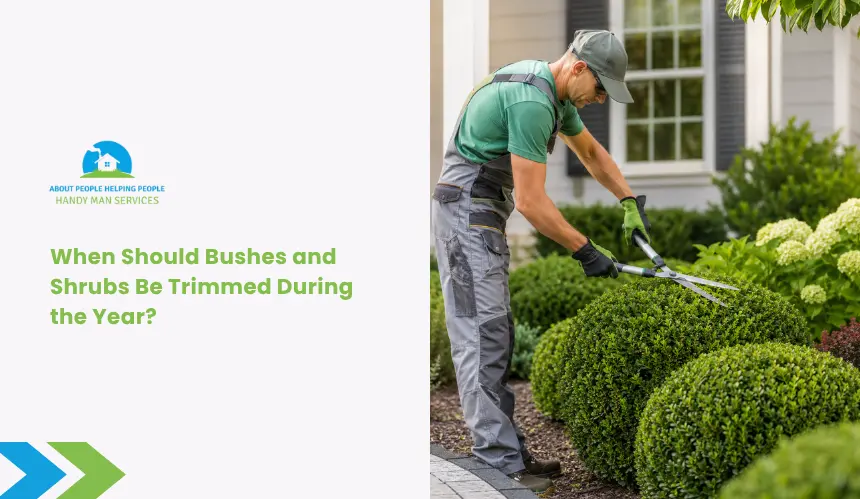
When Should Bushes and Shrubs Be Trimmed During the Year?
Quick Answer: The best time to trim bushes and shrubs depends on their growth cycle, but most benefit from pruning in late winter or early spring when they are dormant. This timing allows plants to recover quickly and produce healthy new growth. However, flowering shrubs require different timing based on when they bloom. General trimming guidelines by season:
Did You Know? Important Insight: Key Takeaway: |
Bushes and shrubs often become overgrown, uneven, or less vibrant over time, leading many homeowners to trim them whenever they appear out of shape. While this seems practical, trimming at the wrong time can do more harm than good, affecting both growth and flowering.
Plants follow specific seasonal cycles that control how they grow, store energy, and produce blooms. When trimming does not align with these cycles, it can remove developing buds, interrupt growth patterns, or force the plant to use energy at the wrong time. This often results in fewer flowers, weaker branches, or slow recovery.
Did You Know?
Many flowering shrubs begin forming next season’s buds shortly after they finish blooming. Trimming too late can remove these buds before they ever have a chance to develop.
Understanding the right timing is essential because trimming is not just about shaping plants. It directly influences how they grow, how strong they become, and how well they perform throughout the year.
This guide explains when to trim bushes and shrubs, how seasonal timing affects plant health, and how to avoid common mistakes that limit growth and flowering.
Why Timing Matters for Trimming Bushes and Shrubs
Trimming is not just a maintenance task. It directly interacts with how plants grow, store energy, and produce new shoots or flowers. Bushes and shrubs follow seasonal growth cycles, and trimming at the right time supports these cycles, while incorrect timing can interrupt them.
How Trimming Affects Plant Growth Cycles
Plants move through phases of dormancy, active growth, and energy storage throughout the year. During dormancy, energy is stored in the roots, while during the growing season, that energy is used to produce new branches, leaves, and flowers.
When trimming is done at the correct stage, it encourages controlled regrowth and helps shape the plant without stress. However, trimming during active growth or just before a key phase can disrupt how the plant distributes its energy.
Did You Know?
Proper trimming signals the plant to redirect its energy to new growth areas, which is why well-timed pruning often leads to fuller, healthier shrubs.
Why Incorrect Timing Reduces Flowering
Flowering shrubs rely on buds that form either before or during the growing season. If trimming removes these buds, the plant loses its ability to bloom for that cycle.
Shrubs that bloom early in the year often develop their buds months in advance. Trimming them too late removes these buds before they open, resulting in reduced or no flowering.
Important Insight:
A lack of flowers is often caused by improper timing rather than poor plant health. Even a healthy shrub will not bloom if its buds are removed too early.
How Seasonal Changes Impact Plant Recovery
Seasonal conditions determine how quickly a plant can recover after trimming. During favorable conditions, such as early spring, plants can heal and produce new growth efficiently. In contrast, trimming during less favorable periods, like late fall, can leave plants vulnerable.
When trimming stimulates new growth at the wrong time, especially before colder conditions, that growth may not survive. This weakens the plant and affects its performance in the following season.
When Should Bushes Be Trimmed Throughout the Year?
Bush trimming is not limited to a single season. Different times of the year serve different purposes depending on the plant’s growth stage. Understanding how each season affects plant behavior helps ensure that trimming supports growth rather than disrupting it.
Why Late Winter Is Ideal for Most Shrubs
Late winter, just before new growth begins, is considered the most effective time for major trimming. During this period, shrubs are still dormant, which means they are not actively growing and can handle cuts with minimal stress.
- Encourages strong, controlled new growth in spring
- Improves plant shape before the growing season starts
- Reduces the risk of disease since pests are less active
Did You Know?
Trimming during dormancy allows plants to allocate their stored energy to fewer, healthier branches, leading to stronger growth once temperatures rise.
When Spring Trimming Is Appropriate
Spring trimming depends on the type of shrub. For plants that bloom early, trim only after the flowers fade. This ensures that the buds responsible for blooming are not removed prematurely.
- Best for shaping shrubs after flowering
- Helps maintain size without affecting bloom cycles
- Supports healthy regrowth during active season
Important Insight:
Spring is not a one-size-fits-all season for trimming. The timing must match the plant’s flowering cycle to avoid cutting off future blooms.
How Summer Trimming Controls Growth
Summer trimming is typically used for maintenance rather than major pruning. By this time, shrubs are in full growth, so trimming helps control size and prevent overgrowth.
- Keeps shrubs neat and evenly shaped
- Removes damaged or weak branches
- Prevents excessive spread during peak growth
Summer trimming should remain light because heavy cutting at this time can stress the plant and slow growth.
Why Fall Trimming Should Be Limited
Fall is generally not recommended for trimming because it can interfere with the plant’s preparation for dormancy. Cutting during this time may stimulate new growth that does not have enough time to mature before colder conditions arrive.
- New growth may be damaged by temperature changes
- Plants may struggle to store energy for the next season
- Increased vulnerability to environmental stress
Did You Know?
Plants begin conserving energy in the fall rather than growing. Trimming during this phase disrupts this natural transition and can weaken overall plant health.
How Does Trimming Differ for Flowering vs Non-Flowering Shrubs?
Not all shrubs respond to trimming in the same way. The timing and approach depend largely on how the plant produces growth and flowers. Understanding this difference is essential because improper trimming can directly affect blooming cycles and overall plant performance.
When to Trim Shrubs That Bloom on Old Wood
Shrubs that bloom on old wood develop their flower buds during the previous growing season. This means the buds are already present on the branches before the next blooming period begins.
- These shrubs should be trimmed immediately after they finish flowering
- Delaying trimming can result in cutting off next season’s buds
- Light shaping after bloom helps maintain structure without affecting future flowers
Did You Know?
Old wood bloomers can lose an entire season of flowers if trimmed at the wrong time, even if the plant itself remains healthy.
When to Trim Shrubs That Bloom on New Growth
Shrubs that bloom on new growth produce flowers on the current season’s branches. This makes them more flexible when it comes to trimming timing.
- Best trimmed in late winter or early spring before new growth starts
- Can handle more aggressive pruning without affecting flowering
- Encourages stronger and more abundant blooms during the growing season
Important Insight:
New growth bloomers benefit from early trimming because it stimulates fresh shoots, which directly leads to more flowers.
How Evergreen Shrubs Should Be Maintained
Evergreen shrubs do not follow the same flowering cycle as deciduous plants. Their trimming focuses more on maintaining shape and controlling growth than on managing blooms.
- Best trimmed in early spring or mid-summer for shape control
- Avoid heavy trimming late in the year to prevent stress
- Regular light maintenance keeps them dense and uniform
Evergreens respond best to gradual trimming rather than heavy cuts, as this preserves their natural structure and appearance.
What Happens If Bushes Are Trimmed at the Wrong Time?
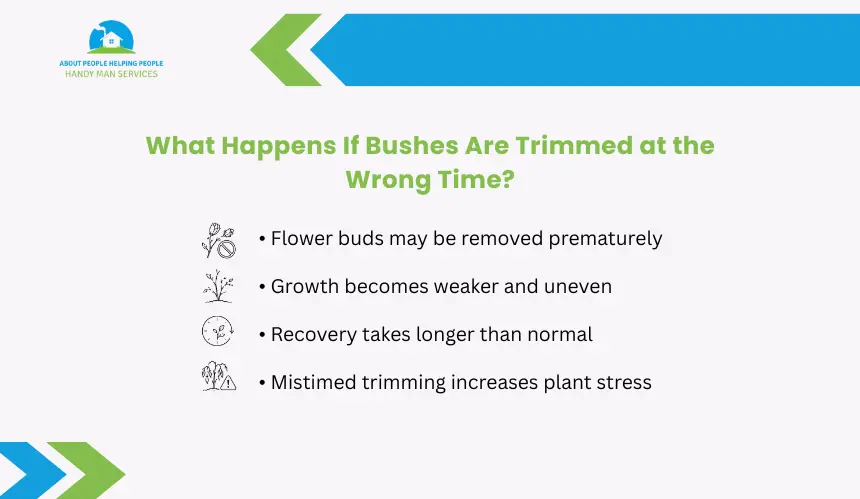
Trimming at the wrong time can disrupt how shrubs grow, store energy, and produce flowers. While the plant may still survive, its performance often declines in ways that affect both appearance and long-term health. These effects are usually not immediate but become noticeable over the following growth cycle.
Why Plants Lose Flowers or Buds
Many shrubs form their flower buds well before the blooming season. When trimming is done at the wrong time, especially before flowering, these buds are removed before they have a chance to develop.
This results in reduced or completely absent blooms, even though the plant may continue to grow leaves and branches normally.
Did You Know?
A shrub can appear healthy with full foliage but still fail to bloom simply because its buds were removed during improper trimming.
How Improper Timing Weakens Growth
Trimming during active growth or just before dormancy forces the plant to redirect its energy unexpectedly. Instead of supporting natural development, the plant uses stored energy to recover from cuts at the wrong time.
This can lead to weaker branches, uneven growth patterns, and reduced overall strength. Over time, repeated mistimed trimming can make the shrub less resilient.
Important Insight:
Plants rely on predictable cycles. Interrupting these cycles with poorly timed trimming creates stress that affects both structure and growth quality.
Why Recovery Becomes Slower
Plants recover most efficiently when trimmed under favorable conditions, such as during dormancy or in early growth stages. When trimming is done outside these periods, recovery slows down because the plant is either not ready to regrow or is preparing to conserve energy.
For example, trimming in late fall may trigger new growth that cannot survive colder conditions, leaving the plant weakened. Similarly, heavy trimming during peak growth can delay recovery and reduce overall vigor.
How Often Should Bushes and Shrubs Be Trimmed?
Trimming frequency depends on how fast the shrub grows, its purpose in the landscape, and how well it is maintained throughout the year. Instead of relying on a fixed schedule, trimming should align with growth patterns to maintain shape, health, and flowering potential without overcutting.
Why Regular Light Trimming Is Better Than Heavy Cuts
Frequent light trimming helps maintain control over the plant’s shape and size without causing stress. Large, infrequent cuts often remove too much growth at once, forcing the plant to recover aggressively and unevenly.
- Encourages steady, balanced growth instead of sudden regrowth
- Maintains natural shape without overcorrecting
- Reduces stress on the plant’s internal system
Did You Know?
Plants respond better to gradual adjustments. Small, regular trims help maintain structure while keeping the plant in a stable growth cycle.
How Growth Rate Affects Trimming Frequency
Different shrubs grow at different speeds depending on species, climate, and environmental conditions. Fast-growing shrubs may require more frequent attention, while slower-growing ones can maintain their form for longer periods.
- Rapid growers may need trimming multiple times during the growing season
- Moderate growers benefit from seasonal trimming aligned with growth cycles
- Slow-growing shrubs require minimal intervention beyond maintenance
Important Insight:
Over-trimming can be just as harmful as neglect. Matching trimming frequency to the plant’s growth rate ensures that it remains healthy without unnecessary stress.
What Signs Indicate It’s Time to Trim
Rather than following a strict calendar, visual and structural signs often indicate when trimming is needed. Observing these changes helps maintain the plant at the right stage without disrupting its natural cycle.
- Overgrowth affecting shape or space
- Reduced airflow within dense branches
- Uneven growth or weak, damaged sections
Frequently Asked Questions
What month is best to trim bushes?
The best month depends on the type of shrub, but late winter or early spring is ideal for most because plants are still dormant and can recover quickly. For flowering shrubs, timing should shift to immediately after blooming to avoid removing developing buds.
Can bushes be trimmed in summer?
Summer trimming is suitable for light maintenance, such as shaping and controlling overgrowth. Heavy pruning during this period is not recommended because plants are actively growing and may experience stress or slower recovery after significant cuts.
Is fall a bad time to trim shrubs?
Fall trimming is generally avoided because it can stimulate new growth at a time when plants are preparing for dormancy. This new growth may not mature properly, weakening the plant and making it more vulnerable to environmental stress.
How do I know if my shrub blooms on old or new wood?
Observing when the plant flowers provides the best indication. Shrubs that bloom early in the season typically use buds formed the previous year, while those that flower later usually grow blooms on new branches formed during the current season.
How often should shrubs be trimmed each year?
Trimming frequency depends on growth rate and plant type. Most shrubs benefit from 1 to 2 major trimming sessions per year, along with occasional light maintenance to maintain shape and remove damaged or overgrown sections.