
- About People Helping People
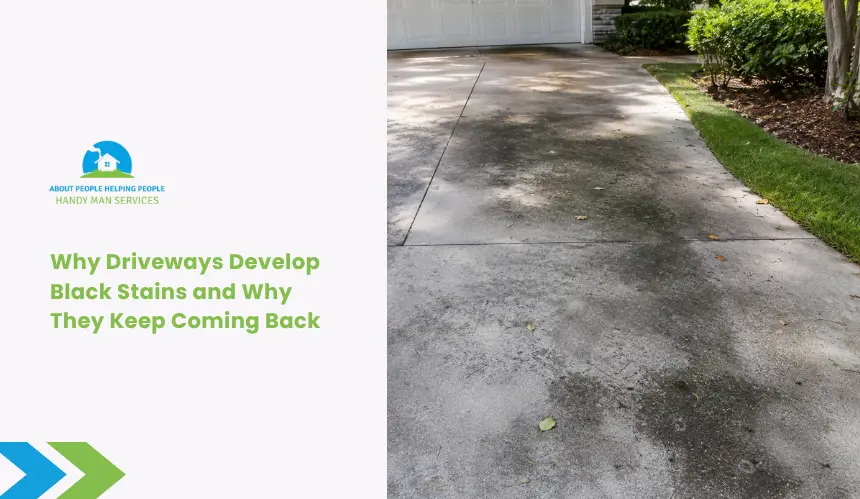
Why Driveways Develop Black Stains and Why They Keep Coming Back
Quick Answer: If you’re wondering why driveways develop black stains, the most common cause is biological growth rather than ordinary dirt. Black algae, cyanobacteria, mold, mildew, and organic debris thrive on damp, porous driveway surfaces, especially in shaded areas with poor drainage. These stains often return after cleaning because the underlying organisms and the moisture-rich conditions that support their growth remain, allowing discoloration to develop again over time. The most common causes of black driveway stains include:
Did You Know? |
Black stains on a driveway are often dismissed as simple dirt or normal aging, but they usually indicate something more persistent. In many cases, these dark discolorations result from biological growth that develops gradually as moisture, shade, and organic debris accumulate on the surface. While the stains may seem like a cosmetic issue at first, they often become more noticeable and difficult to remove if the conditions that promote their growth remain unchanged.
Many homeowners are frustrated when black stains reappear only weeks or months after cleaning. This happens because cleaning the visible surface does not always eliminate the microscopic organisms responsible for the discoloration. If moisture continues to collect, shade limits drying, or dirt and organic matter remain on the driveway, biological growth can quickly return and the stains begin to develop again.
Understanding why driveways develop black stains helps homeowners look beyond the visible discoloration and identify the environmental conditions that allow these stains to keep coming back. This guide explains the common causes of black driveway stains, why they repeatedly return, and the maintenance practices that help reduce recurring surface buildup.
Important Tip:
Recurring black stains are often a sign that the conditions supporting biological growth have not changed. Addressing moisture, drainage, shade, and organic buildup along with routine driveway cleaning provides a more effective long-term approach to reducing recurring stains.
What Causes Black Stains on Driveways?
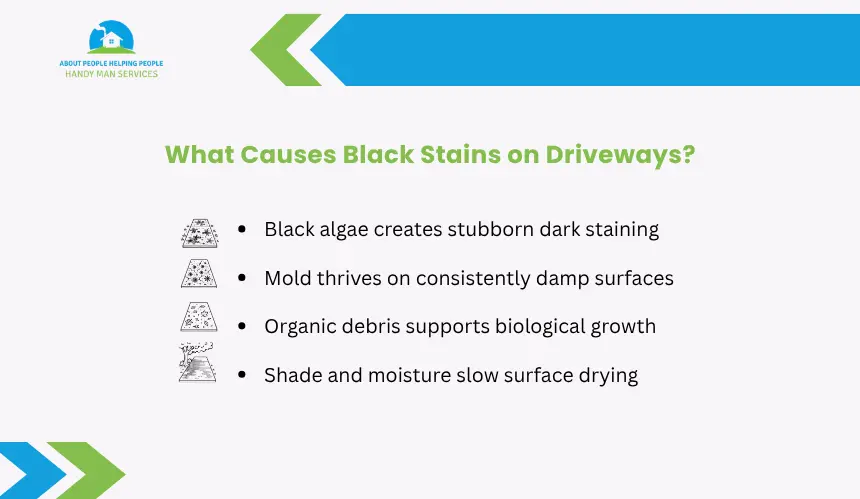
Black stains do not usually appear overnight. They develop gradually as biological growth and environmental contaminants accumulate on the driveway surface. Because concrete and asphalt are continually exposed to weather, moisture, and organic matter, they create conditions that allow dark staining to form over time. Understanding these causes is the first step toward preventing recurring discoloration.
Black Algae and Cyanobacteria Growth
One of the most common causes of black driveway stains is the growth of black algae and cyanobacteria. These microorganisms thrive on damp exterior surfaces and gradually form dark, stubborn stains that become more noticeable as they spread. Their strong attachment to porous surfaces often makes them difficult to remove with simple surface cleaning alone.
Mold and Mildew
Mold and mildew also contribute to black or dark-colored staining, particularly in areas that remain damp for long periods. When moisture combines with organic debris such as leaves and pollen, these organisms can grow on the driveway surface and add to the overall discoloration.
Dirt and Organic Debris Accumulation
Leaves, grass clippings, soil, pollen, and other organic materials continually collect on driveways. As this debris breaks down, it provides nutrients that support algae, mold, mildew, and other biological growth, making black stains more likely to develop.
Moisture and Shaded Conditions
Moisture is one of the most important factors in black stain formation. Driveways located beneath trees, beside dense landscaping, or on the shaded side of a home often stay damp much longer after rainfall. These consistently moist conditions allow biological growth to establish and spread more easily.
Common Causes of Black Driveway Stains
- Black algae and cyanobacteria.
- Mold and mildew growth.
- Organic debris accumulation.
- Constant moisture on the surface.
- Shaded areas that slow drying.
- Porous driveway materials that retain moisture.
Did You Know?
Concrete is naturally porous, meaning it absorbs small amounts of moisture over time. This retained moisture creates an ideal environment for algae, mold, and other microorganisms to grow, especially when the driveway receives limited sunlight and remains damp after rain.
Why Do Black Driveway Stains Keep Coming Back?
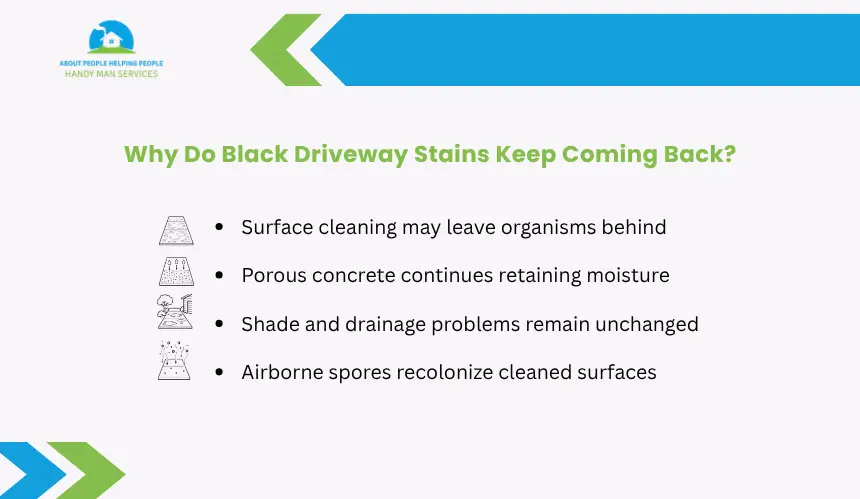
One of the most frustrating aspects of black driveway stains is how quickly they can return after cleaning. Although the surface may appear spotless initially, the conditions that caused the stains often remain unchanged. Unless the underlying biological growth and environmental factors are addressed, new staining can develop as microorganisms recolonize the driveway.
Surface Cleaning Doesn't Always Remove the Root Cause
Many cleaning methods remove only the visible discoloration from the driveway surface. However, microscopic algae, cyanobacteria, mold, or biofilm may still remain within the pores of the concrete or asphalt. As these organisms continue to grow, the black stains gradually reappear.
Porous Concrete Retains Moisture
Concrete naturally absorbs and holds small amounts of water. Even after the surface appears dry, moisture trapped within the material can continue supporting biological growth. This makes porous driveways especially susceptible to recurring black stains.
Favorable Environmental Conditions Remain
If shade, poor drainage, excessive humidity, or nearby vegetation continue creating a damp environment, the driveway remains an ideal place for biological growth. Without addressing these conditions, staining often returns regardless of how thoroughly the surface is cleaned.
Airborne Spores and Organic Matter Constantly Return
Algae, mold, mildew, and other microorganisms are continually carried by wind, rain, and surrounding vegetation. Leaves, pollen, dust, and other organic materials also settle on the driveway, providing nutrients that help new biological growth become established after cleaning.
Why Black Stains Reappear
- Biological growth is not always completely eliminated.
- Concrete and asphalt continue retaining moisture.
- Shade and humidity create favorable growing conditions.
- Organic debris continually accumulates on the surface.
- Airborne spores quickly recolonize cleaned driveways.
Important Tip:
Long-term stain reduction depends on more than removing visible discoloration. Combining routine cleaning with improved drainage, moisture control, and regular removal of organic debris helps reduce the conditions that allow black stains to keep returning.
Factors That Make Some Driveways More Prone to Black Stains
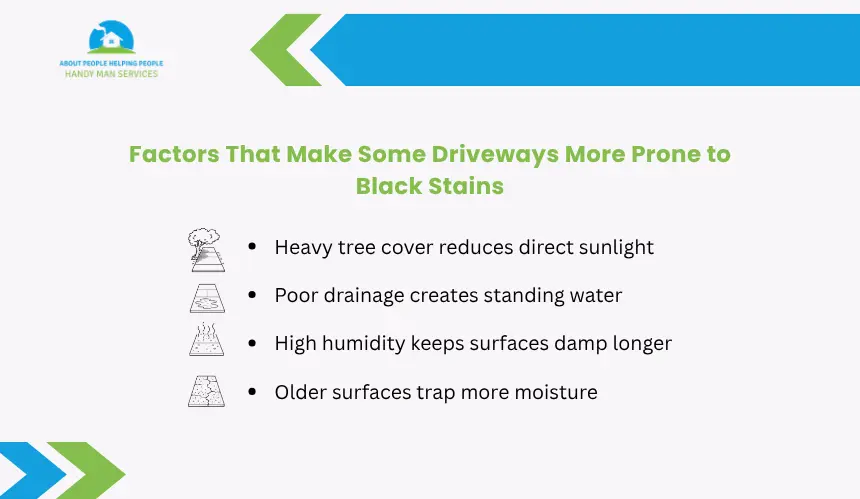
Although black stains can develop on almost any driveway, some surfaces are much more susceptible than others. Environmental conditions, driveway materials, and surrounding landscaping all influence how quickly biological growth develops and how often stains return. Understanding these factors can help homeowners identify why their driveway experiences recurring discoloration.
Tree Cover and Excessive Shade
Driveways located beneath large trees or beside dense landscaping receive less direct sunlight throughout the day. Reduced sunlight slows the drying process after rain or morning dew, allowing moisture to remain on the surface longer and creating favorable conditions for algae, mold, and mildew growth.
Poor Drainage
Standing water or slow drainage significantly increases the likelihood of black stain formation. Low spots in the driveway, clogged drainage paths, or improper grading allow moisture to collect, giving biological growth more time to establish itself on the surface.
High Humidity and Frequent Moisture
Homes in humid climates or areas that experience frequent rainfall often have driveways that remain damp for extended periods. Consistently moist surfaces provide the ideal environment for microorganisms responsible for black staining to grow and spread.
Older or Unsealed Driveways
As concrete and asphalt age, they become more porous and may develop small cracks or surface wear. These areas trap moisture, dirt, and organic matter more easily than newer or properly sealed driveways, making recurring black stains more difficult to prevent.
Conditions That Increase the Risk of Black Stains
- Heavy tree cover and limited sunlight.
- Poor drainage or standing water.
- Humid climates and frequent rainfall.
- Older, porous, or unsealed driveway surfaces.
- Continuous accumulation of leaves and organic debris.
Did You Know?
Two neighboring driveways can develop black stains at very different rates. Small differences in shade, drainage, moisture levels, and surface condition can greatly influence how quickly biological growth forms and how often stains return.
How Regular Driveway Maintenance Helps Reduce Black Stains
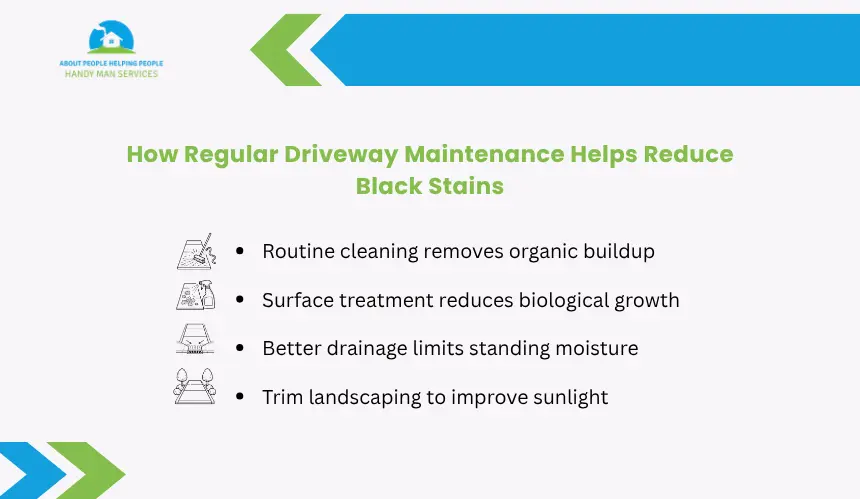
While it may not be possible to prevent black stains permanently, regular driveway maintenance can significantly reduce how quickly they develop and how severe they become. Consistent care removes the moisture, organic buildup, and surface contaminants that encourage biological growth, helping the driveway remain cleaner for longer periods.
Routine Cleaning Removes Organic Buildup
Leaves, dirt, pollen, grass clippings, and other organic materials continually collect on driveways. Regular cleaning removes these materials before they break down and provide nutrients that support algae, mold, mildew, and other biological growth responsible for black stains.
Proper Surface Treatment Helps Remove Biological Growth
Cleaning methods designed to address biological contaminants can help remove more than just visible discoloration. Treating the driveway surface helps reduce algae, mold, mildew, and biofilm that may remain attached to porous concrete or asphalt after ordinary surface cleaning.
Improve Drainage Around the Driveway
Keeping water from collecting on the driveway is an important part of stain prevention. Ensuring downspouts direct water away from the surface, correcting drainage issues, and preventing standing water help reduce the moisture that allows black stains to develop.
Keep Nearby Landscaping Well Maintained
Overhanging trees, shrubs, and nearby vegetation contribute leaves, pollen, and shade that encourage biological growth. Trimming vegetation and regularly removing organic debris from the driveway helps improve sunlight exposure, promotes faster drying, and reduces the buildup that supports recurring stains.
Maintenance Practices That Help Reduce Black Stains
- Clean the driveway regularly to remove dirt and organic debris.
- Remove biological growth before it becomes widespread.
- Improve drainage to reduce standing water.
- Trim nearby trees and shrubs to increase sunlight and airflow.
- Address moisture problems before stains become deeply established.
Important Tip:
Routine maintenance is most effective when performed before heavy staining develops. Removing moisture-retaining debris and limiting the conditions that support biological growth can help slow the return of black stains and reduce the need for more intensive cleaning later.
Common Mistakes That Allow Black Stains to Return
Even after a driveway has been cleaned, certain maintenance habits, or the lack of them, can allow black stains to reappear much sooner than expected. In many cases, the problem is not the cleaning itself but the conditions that continue supporting biological growth. Avoiding these common mistakes helps slow the return of black stains and keeps the driveway cleaner for longer.
Waiting Too Long Between Cleanings
Allowing dirt, leaves, pollen, and organic debris to remain on the driveway for extended periods gives algae, mold, mildew, and other microorganisms time to establish themselves. Routine cleaning helps interrupt this growth cycle before stains become deeply embedded.
Cleaning Only the Visible Surface
Removing surface discoloration without addressing the underlying biological growth often provides only temporary results. Microscopic organisms can remain within the pores of the driveway and gradually spread back across the surface, causing black stains to return.
Ignoring Drainage Problems
Poor drainage allows water to collect on or around the driveway after rainfall. Standing water and prolonged moisture create ideal conditions for recurring biological growth, making stains more likely to reappear regardless of how thoroughly the driveway has been cleaned.
Skipping Preventive Maintenance
Neglecting tasks such as removing leaves, trimming overhanging trees, cleaning nearby gutters, or maintaining proper drainage allows the same moisture-rich environment to persist. Without preventive maintenance, the conditions that caused the original stains remain unchanged.
Mistakes That Encourage Recurring Black Stains
- Waiting until stains become severe before cleaning.
- Removing only visible discoloration.
- Allowing standing water to remain on the driveway.
- Ignoring shade and organic debris buildup.
- Skipping routine preventive maintenance.
Did You Know?
Recurring black stains are often the result of environmental conditions rather than ineffective cleaning. When moisture, shade, and organic buildup continue year after year, biological growth naturally returns, making preventive maintenance just as important as the cleaning process itself.
Frequently Asked Questions
What causes black stains on concrete driveways?
Black stains are commonly caused by algae, cyanobacteria, mold, mildew, and organic buildup that thrive on damp, porous driveway surfaces. Shade, moisture, and poor drainage create ideal conditions for these organisms to grow.
Are black driveway stains harmful?
While many black stains are primarily cosmetic, they often indicate biological growth and persistent moisture. If left untreated, these conditions can make the driveway more slippery and contribute to gradual surface deterioration over time.
Why do black stains return after pressure washing?
Pressure washing may remove visible stains, but microscopic organisms and favorable growing conditions often remain. Moisture, shade, and organic debris allow algae and other biological growth to return, causing the stains to reappear.
Can sealing a driveway help reduce black stains?
Yes. A properly sealed driveway absorbs less moisture than an unsealed surface, making it more difficult for biological growth to become established. Sealing works best when combined with routine cleaning and preventive maintenance.
How often should a driveway be cleaned?
The ideal cleaning schedule depends on climate, nearby trees, shade, and moisture levels. Regular inspections and routine cleaning help reduce organic buildup and slow the return of black stains.
Is shade one of the main causes of black driveway stains?
Yes. Shade keeps driveway surfaces damp for longer after rain or dew, creating favorable conditions for algae, mold, mildew, and other microorganisms that contribute to recurring black stains.