
- About People Helping People
Where Should Smoke Detectors Be Installed for Maximum Home Safety?
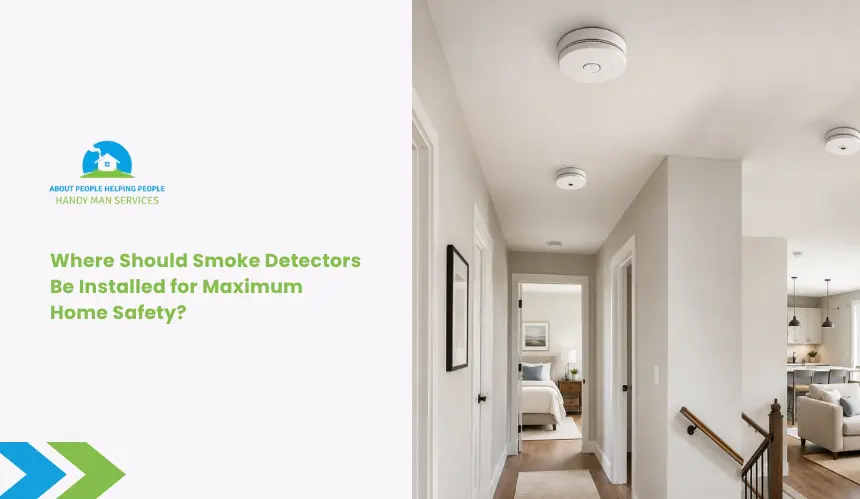
Quick Answer: If you’re wondering where smoke detectors should be installed, the recommended locations include inside every bedroom, outside each sleeping area, and on every level of the home, including basements. Additional smoke detectors may also be appropriate near living areas and at the top of stairways to provide more comprehensive fire detection. Proper placement helps ensure occupants receive the earliest possible warning if smoke is detected. Recommended smoke detector locations:
Avoid installing smoke detectors:
Did You Know? |
Smoke detectors are one of the most important fire safety devices in any home, but simply installing them is not enough. Their ability to provide an early warning during a fire depends heavily on where they are placed. Even a high-quality smoke detector may not offer maximum protection if it is installed in the wrong location or if key areas of the home are left uncovered.
Smoke can spread quickly, especially while occupants are sleeping. Strategic smoke detector placement helps ensure that alarms activate as early as possible, giving everyone in the home valuable time to respond and evacuate safely. Installing smoke detectors in recommended locations throughout the home creates more complete fire detection coverage and reduces the chances of a fire going unnoticed.
Understanding where smoke detectors should be installed helps homeowners make informed decisions about protecting their families and property. This guide explains the best installation locations, areas to avoid, the different types of smoke detectors available, and the maintenance practices that help keep them operating reliably.
Important Tip:
Smoke detectors provide the greatest level of protection when they are properly placed, routinely tested, and maintained. Even the best smoke detector cannot provide an early warning if it is installed in the wrong location or is not functioning correctly.
Why Proper Smoke Detector Placement Matters
Smoke detectors are designed to provide an early warning when smoke is present, but they can only do so effectively if they are installed in the right locations. Proper placement improves the chances of detecting a fire during its early stages, allowing occupants more time to respond. A well-planned smoke detection system provides broader coverage throughout the home and helps reduce areas where a fire could go unnoticed.
Earlier Fire Detection
Smoke detectors installed in recommended locations can detect smoke sooner, often before flames spread throughout the home. Early detection allows occupants to react more quickly, helping reduce the time between the start of a fire and the sounding of the alarm.
Faster Warning for Occupants
Smoke detectors placed inside bedrooms, outside sleeping areas, and throughout the home help ensure that alarms are heard regardless of where occupants are located. This is particularly important at night when people may not notice other signs of a developing fire.
Better Whole-Home Protection
Installing smoke detectors only in one or two locations leaves portions of the home without adequate fire detection. Placing detectors on every level and in key living areas creates more complete coverage, helping provide earlier warning no matter where a fire begins.
Reduced Risk of Detection Delays
Smoke follows predictable airflow patterns as it rises and moves through a home. Properly positioned smoke detectors are more likely to detect smoke before it spreads extensively, while poorly placed detectors may experience delays that reduce valuable evacuation time.
Benefits of Proper Smoke Detector Placement
- Detects smoke earlier during a fire.
- Provides faster warning for occupants throughout the home.
- Improves overall fire detection coverage.
- Reduces areas where fires may go undetected.
- Supports a safer and more effective home fire protection system.
Did You Know?
The effectiveness of a smoke detector depends not only on its quality but also on its location. Proper placement throughout the home helps maximize early detection, giving occupants more time to respond safely during a fire.
Where Should Smoke Detectors Be Installed?
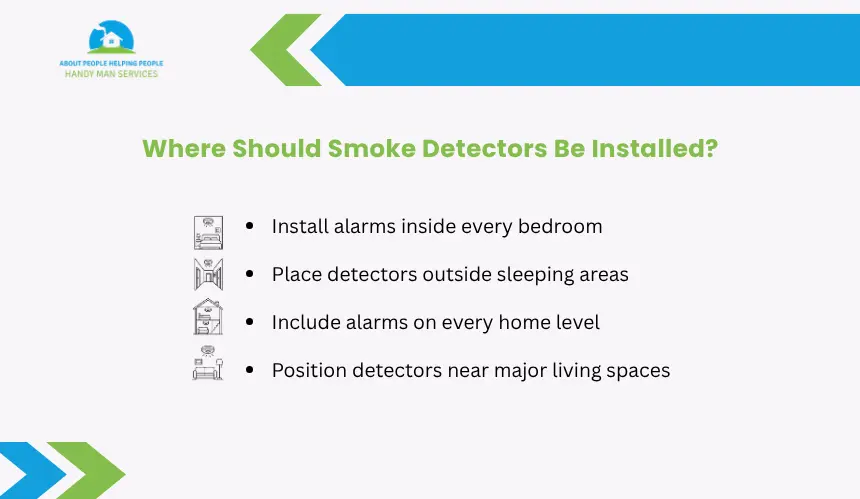
Proper smoke detector placement provides comprehensive fire detection throughout the home. Rather than relying on a single alarm, smoke detectors should be installed in multiple strategic locations so smoke can be detected quickly regardless of where a fire starts. Covering all recommended areas helps maximize warning time and improve overall home safety.
Inside Every Bedroom
A smoke detector should be installed inside every bedroom. Fires can begin while occupants are sleeping, and having an alarm within the room provides the earliest possible warning, even if bedroom doors are closed.
Outside Each Sleeping Area
In addition to bedrooms, smoke detectors should be installed in hallways or common areas immediately outside sleeping rooms. This helps detect smoke moving toward bedrooms and provides an additional layer of protection for everyone in the home.
On Every Level of the Home
Every floor of the home, including basements, should have at least one smoke detector. Fires can start on any level, and placing alarms throughout the home helps ensure that smoke is detected before it spreads extensively.
Near Main Living Areas
Living rooms, family rooms, dens, and other frequently occupied spaces are also important locations for smoke detectors. Because many household electrical devices and furnishings are located in these areas, installing smoke detectors nearby improves overall fire detection coverage.
At the Top of Stairways
Smoke naturally rises as it spreads through a home, making stairways an important location for smoke detection. Installing a smoke detector near the top of an interior stairway can help identify smoke moving between floors and provide earlier warning to occupants throughout the home.
Recommended Smoke Detector Locations
- Inside every bedroom.
- Outside each sleeping area.
- On every level of the home, including the basement.
- Near main living and family areas.
- At the top of interior stairways.
Important Tip:
Installing smoke detectors in all recommended locations provides far better protection than relying on a single centrally located alarm. Multiple properly placed detectors work together to improve early fire detection throughout the entire home.
Where Should Smoke Detectors Not Be Installed?
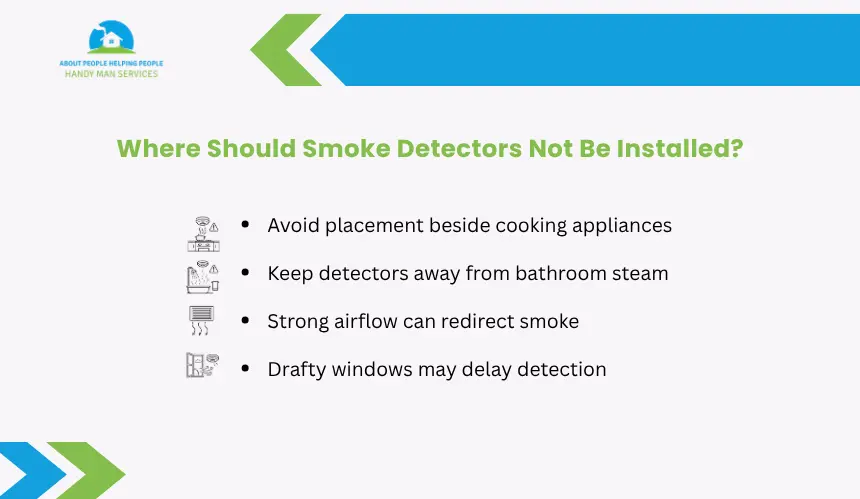
Choosing the right location for a smoke detector is just as important as avoiding the wrong one. Certain areas of the home can interfere with a smoke detector’s ability to respond properly or may cause frequent nuisance alarms. Avoiding these locations helps improve reliability while ensuring the detector can provide an early warning when it is truly needed.
Too Close to Kitchens
Smoke detectors should not be installed immediately next to cooking appliances. Normal cooking smoke, steam, and airborne grease particles can trigger unnecessary alarms, which may encourage occupants to disable or ignore the detector over time. Install smoke detectors far enough from cooking areas to reduce nuisance activations while still maintaining protection.
Near Bathrooms
Bathrooms with showers or bathtubs produce steam that can interfere with smoke detection. Frequent exposure to moisture may cause false alarms and reduce the effectiveness of the smoke detector if it is installed too close to these areas.
Close to HVAC Vents
Heating and cooling vents, ceiling fans, and whole-house ventilation systems create airflow that can divert smoke away from the detector. Installing smoke detectors away from strong air currents helps ensure smoke reaches the sensing chamber as quickly as possible.
Near Windows and Exterior Doors
Windows and exterior doors can introduce drafts that affect smoke movement inside the home. Fresh air entering through these openings may delay smoke from reaching the detector, reducing the amount of warning time available during a fire.
Locations to Avoid
- Immediately beside kitchen cooking appliances.
- Directly outside bathrooms with showers or tubs.
- Next to HVAC supply vents or ceiling fans.
- Near windows and exterior doors with frequent drafts.
- Any location where airflow may interfere with smoke detection.
Important Tip:
Even a properly functioning smoke detector may not perform effectively if it is installed where airflow, steam, or cooking smoke interferes with its operation. Following recommended placement guidelines helps maximize both reliability and early fire detection.
Choosing the Right Type of Smoke Detector
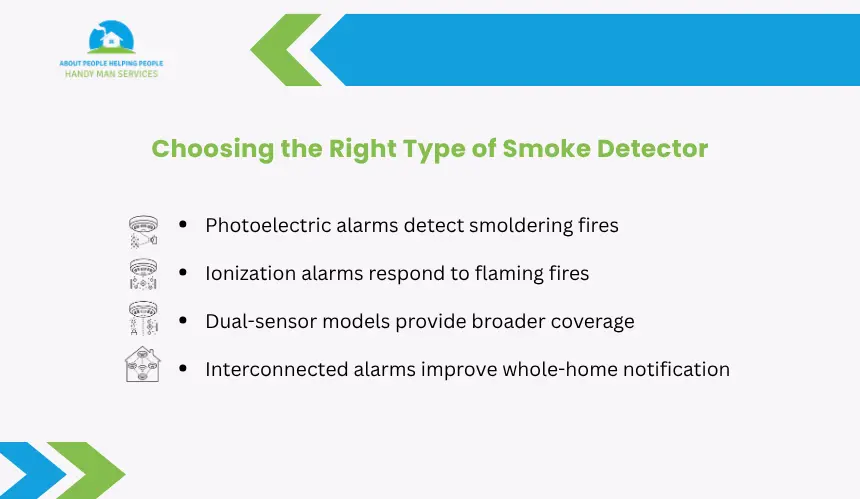
Proper placement is only one part of an effective home fire safety system. Selecting the right type of smoke detector is equally important because different detectors respond more effectively to different types of fires. Understanding the available options helps homeowners choose smoke detectors that provide reliable protection throughout the home.
Photoelectric Smoke Alarms
Photoelectric smoke alarms are generally more responsive to slow, smoldering fires that produce large amounts of smoke before visible flames develop. These detectors are commonly recommended for bedrooms, living areas, and hallways because they can provide early warning for fires that begin gradually.
Ionization Smoke Alarms
Ionization smoke alarms are typically more responsive to fast-flaming fires that spread quickly and produce smaller combustion particles. They are designed to detect rapidly developing fires and provide early notification during these types of fire events.
Dual-Sensor Smoke Alarms
Dual-sensor smoke alarms combine both photoelectric and ionization technologies in a single unit. By responding to a wider range of fire conditions, they provide more comprehensive fire detection and help improve overall home safety.
Interconnected Smoke Alarms
Interconnected smoke alarms communicate with one another so that when one detector senses smoke, all alarms throughout the home activate simultaneously. This provides earlier warning for occupants, especially in larger or multi-story homes where a fire may begin far from sleeping areas.
Choosing the Right Smoke Detector
- Photoelectric alarms for enhanced response to smoldering fires.
- Ionization alarms for faster response to flaming fires.
- Dual-sensor alarms for broader fire detection coverage.
- Interconnected alarms for whole-home notification.
- Select smoke detectors appropriate for the home’s layout and fire safety needs.
Did You Know?
Interconnected smoke alarms can significantly improve home safety because every alarm sounds when one detects smoke. This means occupants can receive an early warning even if the fire starts on a different floor or in another part of the home.
Maintaining Smoke Detectors for Reliable Protection
Proper smoke detector placement provides effective coverage, but ongoing maintenance is what keeps the system dependable over time. Even correctly installed smoke detectors can become less effective if they are not tested, cleaned, or replaced when necessary. Regular maintenance helps ensure they remain ready to provide an early warning during a fire.
Test Smoke Detectors Regularly
Smoke detectors should be tested periodically using the built-in test button to verify that the alarm is functioning properly. Routine testing helps identify issues such as weak batteries, power interruptions, or malfunctioning components before an emergency occurs.
Replace Batteries When Needed
Battery-powered smoke detectors depend on a reliable power source to operate continuously. Replacing batteries as recommended helps reduce the risk of a detector failing when it is needed most. Even hardwired smoke detectors with battery backups require periodic battery replacement.
Keep Smoke Detectors Clean
Dust, dirt, cobwebs, and other debris can accumulate inside or around smoke detectors over time. Keeping the detectors clean according to the manufacturer’s recommendations helps maintain proper airflow and allows the sensing chamber to function more effectively.
Replace Aging Smoke Detectors
Smoke detectors are not designed to last indefinitely. As internal sensing components age, their ability to detect smoke can gradually decline. Replacing older detectors according to the manufacturer’s recommended service life helps maintain dependable fire detection throughout the home.
Smoke Detector Maintenance Checklist
- Test every smoke detector regularly.
- Replace batteries whenever required.
- Clean detectors to remove dust and debris.
- Verify interconnected alarms activate properly.
- Replace aging smoke detectors at the end of their recommended service life.
Important Tip:
A properly placed smoke detector only provides protection if it is fully operational. Regular testing, cleaning, battery replacement, and timely detector replacement are essential for maintaining reliable home fire safety year after year.
Common Smoke Detector Installation Mistakes
Even high-quality smoke detectors cannot provide maximum protection if they are installed incorrectly or maintained improperly. Many homeowners unintentionally reduce the effectiveness of their smoke detection system through common installation mistakes that leave parts of the home inadequately protected or increase the likelihood of nuisance alarms.
Installing Too Few Smoke Detectors
One of the most common mistakes is relying on only one or two smoke detectors to protect the entire home. Limited coverage can delay fire detection in rooms or levels without an alarm. Installing smoke detectors in all recommended locations provides more complete home fire protection.
Poor Placement Within the Home
Installing smoke detectors too close to kitchens, bathrooms, HVAC vents, windows, or exterior doors can reduce their effectiveness. Steam, cooking smoke, and strong airflow may cause nuisance alarms or prevent smoke from reaching the detector quickly during an actual fire.
Ignoring Manufacturer Installation Instructions
Different smoke detectors may have specific installation requirements regarding mounting height, spacing, and placement. Following the manufacturer’s instructions helps ensure the detector performs as designed and provides reliable smoke detection.
Failing to Test and Maintain the Alarms
Proper installation is only the first step. Smoke detectors that are not tested regularly, have depleted batteries, or have exceeded their recommended service life may fail to operate when needed. Routine maintenance is essential for maintaining dependable fire protection.
Common Installation Mistakes to Avoid
- Installing too few smoke detectors throughout the home.
- Placing detectors near kitchens, bathrooms, or strong airflow.
- Ignoring the manufacturer’s installation recommendations.
- Failing to test alarms and replace batteries regularly.
- Continuing to use smoke detectors beyond their recommended lifespan.
Did You Know?
A home with multiple properly installed and interconnected smoke detectors provides significantly better fire detection than one with only a few alarms. Correct placement combined with regular maintenance creates a more dependable home fire safety system.
Frequently Asked Questions
Should smoke detectors be installed in every bedroom?
Yes. Installing a smoke detector inside every bedroom provides the earliest possible warning if a fire starts while occupants are sleeping. It also helps improve overall fire detection coverage throughout the home.
Where should smoke detectors be placed on each floor?
At a minimum, install smoke detectors on every level of the home, including the basement. They should also be placed outside sleeping areas and in other recommended locations such as near living areas and at the top of stairways.
Should smoke detectors be installed in kitchens?
Smoke detectors should not be installed immediately next to cooking appliances because normal cooking smoke can trigger nuisance alarms. Instead, install them a suitable distance from the kitchen while maintaining adequate fire detection coverage.
How often should smoke detectors be tested?
Smoke detectors should be tested regularly using the built-in test button to verify they are functioning properly. Routine testing helps ensure the alarms are ready to provide early warning during a fire emergency.
When should smoke detectors be replaced?
Smoke detectors should be replaced when they reach the end of their manufacturer-recommended service life or if they no longer function properly during routine testing, even after battery replacement.
Are interconnected smoke detectors worth installing?
Yes. Interconnected smoke detectors improve home fire safety because when one alarm detects smoke, all connected alarms sound simultaneously, providing earlier warning throughout the entire home.