
- About People Helping People
When Should Light Switches Be Replaced?
Quick Answer: Light switches should be replaced when they no longer operate safely or reliably. Warning signs such as flickering lights, buzzing or crackling sounds, warm switch plates, loose operation, burning odors, or visible damage may indicate that the switch is wearing out or developing an electrical fault. Replacing a faulty light switch promptly helps maintain electrical safety and reduces the risk of more serious electrical problems. Common signs a light switch needs replacement include:
Did You Know? Most light switches are operated thousands of times during their lifetime. Over years of everyday use, the internal electrical contacts can gradually wear out, leading to unreliable operation and increasing the likelihood of loose electrical connections, overheating, or electrical arcing if the switch is not replaced when warning signs appear. |
Light switches are among the most frequently used electrical components in a home, yet they are often overlooked until they stop working properly. Every time a switch is turned on or off, its internal electrical contacts experience a small amount of wear. Over time, normal use, aging components, loose electrical connections, or installation issues can cause a light switch to operate less reliably and, in some cases, create potential electrical hazards.
Many failing light switches begin showing subtle warning signs before they stop functioning completely. Flickering lights, buzzing or crackling sounds, warm switch plates, loose operation, burning odors, or intermittent lighting may indicate that the switch is no longer operating safely. Recognizing these symptoms early allows homeowners to address the problem before it affects the home’s electrical system or creates a greater safety risk.
Important: A faulty light switch should never be ignored. While homeowners can perform basic visual inspections, switches that become warm, spark, produce unusual sounds, emit burning odors, or operate inconsistently should be inspected and replaced by a qualified licensed electrician.
Understanding when light switches should be replaced helps homeowners recognize early warning signs, maintain a safe and reliable electrical system, and prevent minor switch problems from developing into more serious electrical hazards.
Why Faulty Light Switches Should Never Be Ignored
A faulty light switch is more than an inconvenience. Because switches control the flow of electricity to lighting fixtures, any sign of wear or malfunction may indicate an underlying electrical problem that requires attention. Addressing these warning signs promptly helps maintain the safe operation of the home’s electrical system and reduces the risk of more serious electrical issues.
How Can Replacing a Faulty Switch Help Prevent Electrical Hazards?
A worn or damaged light switch may develop loose internal electrical connections that can create excessive heat or electrical arcing during normal use. Replacing a faulty switch before it fails completely helps reduce the risk of overheating, electrical shock, and other electrical hazards.
Why Is a Properly Working Light Switch Important for Reliable Lighting?
A functioning light switch should operate smoothly and provide consistent control of connected lighting. If lights flicker, fail to turn on immediately, or operate intermittently when the switch is used, the switch or its electrical connections may require professional inspection and replacement.
How Does Replacing a Faulty Switch Protect the Home's Electrical System?
Electrical problems that begin inside a worn switch can place additional stress on connected wiring, lighting fixtures, and other electrical components. Replacing a defective switch early helps maintain stable electrical connections, supports reliable system performance, and reduces the likelihood of more extensive electrical repairs.
Did You Know?
Many light switch failures develop gradually through years of normal use. Addressing early warning signs such as flickering lights, buzzing sounds, warm switch plates, or inconsistent operation can help prevent larger electrical problems while keeping the home’s electrical system operating safely and reliably.
Common Signs a Light Switch Needs Replacement
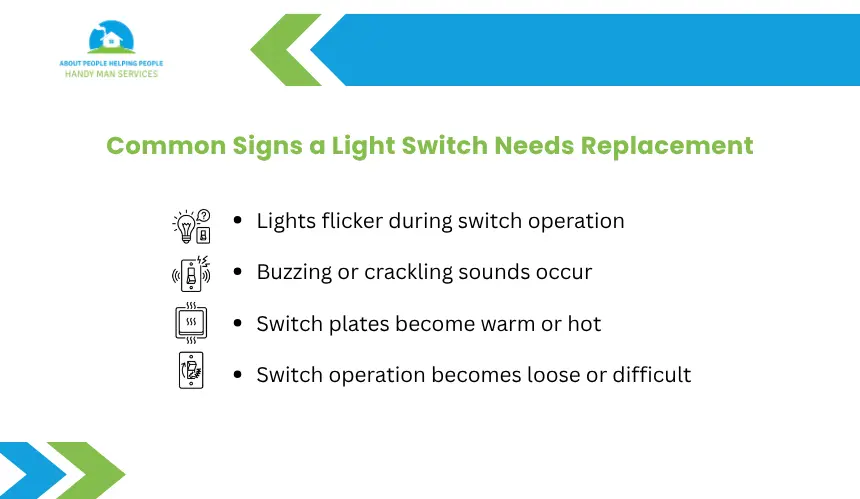
Light switches often provide warning signs before they fail completely. Recognizing these symptoms early allows homeowners to replace a worn switch before it creates electrical hazards or affects the reliability of the home’s lighting. If any of these warning signs occur repeatedly, the switch should be inspected by a qualified licensed electrician.
Why Do Flickering Lights Indicate a Problem?
If lights flicker only when a particular switch is operated, the switch may have worn internal contacts or loose electrical connections. While flickering can have several causes, repeated flickering associated with one switch should be professionally evaluated.
Should Buzzing or Crackling Sounds Be a Concern?
Yes. A properly functioning light switch should operate quietly. Buzzing, humming, or crackling sounds may indicate loose electrical connections, worn internal components, or electrical arcing inside the switch. These sounds should never be ignored.
Why Is a Warm Switch Plate a Warning Sign?
Light switches may become slightly warm when controlling certain high-load lighting, but they should never feel hot. A noticeably warm or hot switch plate can indicate overheating caused by loose electrical connections, excessive electrical resistance, or a failing switch that requires prompt inspection.
What Does Loose or Difficult Switch Operation Mean?
A light switch should move smoothly between the on and off positions. If it feels loose, stiff, sticks during operation, or no longer clicks firmly into position, the internal mechanism may be worn and approaching the end of its service life.
Why Should You Never Ignore Burning Odors?
A burning smell coming from a light switch is a serious warning sign that may indicate overheating electrical components or damaged wiring. If this occurs, discontinue using the switch if it is safe to do so and arrange for immediate inspection by a licensed electrician.
Does Visible Damage Mean the Switch Should Be Replaced?
Yes. Cracked switch plates, broken switches, discoloration, scorch marks, or signs of physical damage can indicate wear or overheating. Damaged switches should be replaced promptly to maintain safe operation and reduce the risk of electrical hazards.
Important:
A light switch should operate quietly, remain cool during normal use, and control lighting consistently. Flickering lights, unusual sounds, overheating, burning odors, loose operation, or visible damage are all warning signs that the switch may need professional inspection and replacement.
What Causes Light Switches to Fail?
Although light switches are built to withstand years of everyday use, they are not designed to last indefinitely. Repeated operation, aging electrical components, loose wiring, and installation issues can gradually affect their performance. Understanding the common causes of switch failure helps homeowners recognize why timely replacement is important for maintaining electrical safety.
Does Normal Wear and Tear Affect Light Switches?
Yes. Every time a light switch is turned on or off, its internal contacts experience a small amount of wear. After thousands of operating cycles, these contacts may begin to deteriorate, resulting in inconsistent operation, loose switching, or unreliable electrical connections.
Can Loose Electrical Connections Cause Switch Failure?
Yes. Loose wiring connections behind a light switch can interrupt the smooth flow of electricity, creating additional electrical resistance and heat. Over time, these conditions may lead to flickering lights, buzzing sounds, overheating, or premature switch failure.
Can Overloaded Circuits Damage a Light Switch?
While light switches are designed for their intended electrical load, repeatedly operating circuits that are overloaded or connected to equipment beyond the switch’s rating can place additional stress on the switch. This may accelerate wear and reduce its service life.
Can Improper Installation Lead to Future Problems?
Improperly installed switches or poorly secured electrical connections may develop problems over time. Loose mounting, incorrect wiring, or inadequate electrical connections can affect switch performance and increase the likelihood of electrical faults. Professional installation helps ensure the switch operates safely and reliably.
Did You Know?
Most light switch failures occur gradually rather than suddenly. Normal wear, loose electrical connections, aging components, and installation issues can slowly reduce a switch’s reliability, making routine attention to warning signs an important part of maintaining a safe home electrical system.
What Should You Do if a Light Switch Shows Warning Signs?
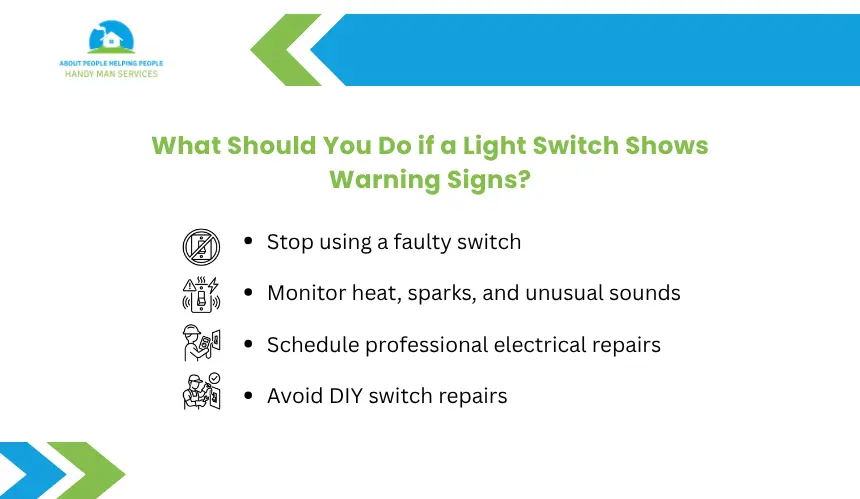
Ignoring a faulty light switch can allow a minor electrical problem to become a larger safety concern. Taking the appropriate action as soon as warning signs appear helps protect the home’s electrical system and reduces the risk of overheating, electrical arcing, or other hazards. Prompt attention also helps prevent damage to connected lighting fixtures and wiring.
Should You Stop Using a Faulty Light Switch?
Yes. If a light switch sparks, produces a burning odor, becomes unusually warm, or operates inconsistently, it is best to avoid using it until the cause has been identified. Continuing to operate a faulty switch may worsen the underlying electrical problem.
What Warning Signs Should You Monitor?
Certain symptoms indicate that a light switch may require immediate professional attention. Watching for these warning signs helps homeowners determine when the switch should no longer be used.
Common warning signs include:
- Flickering lights
- Buzzing or crackling sounds
- Warm or hot switch plate
- Burning odors
- Loose or stiff switch operation
Why Should You Schedule Professional Repairs?
A licensed electrician can determine whether the problem is caused by a worn switch, loose wiring, damaged electrical connections, or another issue within the electrical system. Correctly diagnosing and repairing the problem helps restore safe operation and prevents additional damage.
Why Should You Avoid DIY Light Switch Repairs?
Although replacing a light switch may appear straightforward, it involves working with the home’s electrical wiring. Incorrect repairs can create serious safety hazards, including electrical shock, loose electrical connections, or code compliance issues. Electrical repairs should be completed by a qualified licensed electrician to ensure they are performed safely.
Important:
A faulty light switch should never be ignored simply because it still works. Warning signs such as overheating, unusual sounds, burning odors, sparking, or unreliable operation indicate that the switch should be professionally inspected and replaced before it creates a more serious electrical hazard.
Tips to Help Light Switches Last Longer
Although light switches naturally wear over time, proper use and routine inspections can help extend their service life and reduce the likelihood of unexpected electrical problems. Following a few simple maintenance practices helps keep switches operating safely while allowing developing issues to be identified before they require more extensive repairs.
Why Should You Inspect Light Switches Regularly?
Routine visual inspections help identify loose switch plates, cracks, discoloration, unusual sounds, or other signs of wear before they become more serious. Including light switches in regular home electrical inspections allows potential problems to be addressed early.
Why Is It Important to Replace Worn Switches Promptly?
A light switch that shows signs of wear or inconsistent operation should be replaced before it fails completely. Prompt replacement helps maintain reliable lighting, reduces stress on the electrical system, and lowers the risk of overheating or electrical arcing.
How Does Avoiding Overloaded Circuits Protect Light Switches?
Using electrical circuits within their intended capacity helps reduce unnecessary stress on switches and other electrical components. Proper load management supports stable electrical performance and can help extend the service life of lighting controls.
Why Should You Schedule Routine Electrical Inspections?
Periodic inspections by a licensed electrician can identify hidden electrical issues that may affect light switches, wiring, or connected circuits. Professional evaluations help detect loose electrical connections, aging components, or developing faults before they create safety hazards or require more extensive repairs.
Did You Know?
Light switches often provide early warning signs long before they stop working completely. Regular inspections, timely replacement of worn switches, proper circuit loading, and routine professional electrical evaluations help keep lighting systems operating safely while reducing the risk of unexpected electrical failures.
Frequently Asked Questions
How long do light switches typically last?
The lifespan of a light switch depends on how often it is used and the conditions in which it operates. While many switches function reliably for years, they should be replaced when they begin showing signs of wear, damage, or unreliable operation rather than waiting for complete failure.
Why does my light switch feel warm?
A light switch should normally remain close to room temperature during regular use. If it feels noticeably warm or hot, it may indicate loose electrical connections, excessive electrical resistance, or a failing switch that should be inspected by a licensed electrician.
Can a faulty light switch cause a fire?
Yes. A faulty light switch with loose electrical connections or internal damage can generate heat or electrical arcing, increasing the risk of overheating and, in some situations, an electrical fire. Prompt replacement helps reduce these risks.
Should I replace a buzzing light switch?
Yes. A properly functioning light switch should operate quietly. Buzzing, humming, or crackling sounds may indicate worn internal components, loose wiring, or electrical arcing. These warning signs should be professionally inspected, and the switch should be replaced if necessary.
Can a bad light switch cause flickering lights?
Yes. If flickering occurs only when a specific switch is operated, the switch may have worn contacts or loose electrical connections. Although flickering can have other causes, a faulty switch is one possible reason and should be evaluated by a licensed electrician.
When should I call a licensed electrician?
A licensed electrician should be contacted if a light switch becomes warm, sparks, emits a burning odor, makes buzzing or crackling sounds, operates inconsistently, or shows visible damage. Professional inspection helps identify the underlying cause and ensures the switch is repaired or replaced safely.