- About People Helping People
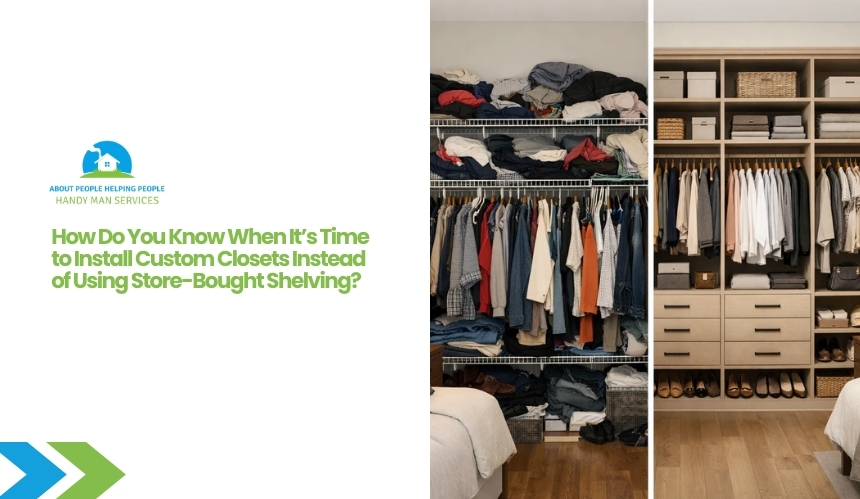
How Do You Know When It’s Time to Install Custom Closets Instead of Using Store-Bought Shelving?
Quick Answer: If you’re wondering whether it’s time to switch from store-bought shelving to a custom closet, here are the most common signs:
|
Deciding between custom closets and store-bought shelving can be challenging for homeowners. While off-the-shelf solutions may seem convenient and affordable, they often fall short in terms of durability, space optimization, and personalized organization. Custom closets, on the other hand, are designed specifically for your home’s dimensions and lifestyle needs, offering tailored solutions that maximize storage and improve efficiency.
Understanding when it’s time to upgrade to a custom closet is key to maintaining a functional, organized, and aesthetically pleasing home. This guide explores the signs that indicate a custom solution is needed, the advantages of custom materials, installation processes, space optimization strategies, and factors to consider when making the decision.
Why Store-Bought Shelving May Not Meet Your Home’s Needs
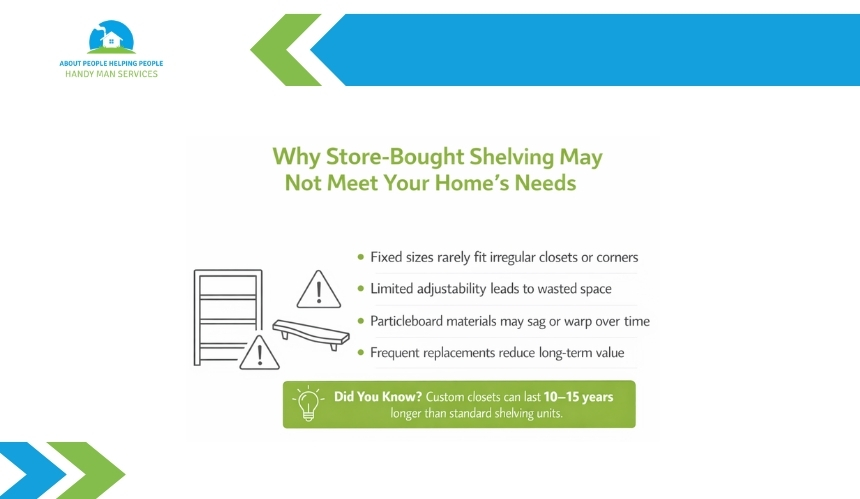
While store-bought shelving is convenient and cost-effective, it often falls short in durability, customization, and efficient space use. Standard shelving units are designed for typical closet sizes and may not accommodate irregular layouts or unique storage needs. Over time, these limitations can result in wasted space, clutter, and frequent replacements.
Limitations of Standard Shelving
Store-bought units come with fixed dimensions and limited adjustability. They may not fit corners, sloped ceilings, or walk-in closets with unusual layouts. Homeowners often find themselves trying to adapt the shelves to their space, leading to inefficient storage and frustration.
Durability and Lifespan Concerns
Most pre-fabricated shelving is made from particleboard or low-cost materials, which can warp or sag over time. Frequent replacements can add up, making store-bought solutions less cost-effective in the long run compared to a well-built custom closet.
Did You Know? Custom closets often last 10–15 years longer than standard shelving units due to superior materials and construction.
Signs You Might Need a Custom Closet
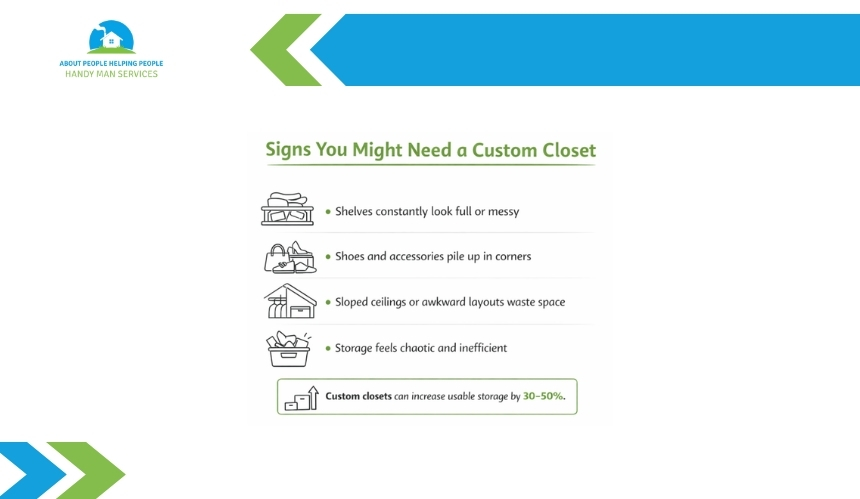
Knowing when it’s time to move from store-bought shelving to a custom closet is key to maximizing storage, improving organization, and ensuring long-term durability. Certain clear indicators suggest that standard units are no longer sufficient. Recognizing these signs early can save time, prevent clutter, and provide a solution that lasts.
Persistent Clutter and Disorganized Storage
If your closet is constantly overflowing despite attempts at organization, it’s a sign that standard shelving isn’t meeting your needs. Items may be hard to reach, seasonal clothing may lack proper storage, and vertical space is often underused. A custom closet offers personalized compartments, drawers, and adjustable shelves, making organization easier and more efficient.
Key Observations:
- Shelves always appear full or messy
- Accessories, shoes, or small items pile up in corners
- Storage feels inefficient or chaotic
Unique or Awkward Spaces
Closets with sloped ceilings, recesses, corners, or small walk-in areas often cannot accommodate standard units. Store-bought shelving leaves gaps or wasted space. Custom closets are designed to fit irregular spaces perfectly, optimizing every inch with built-in shelves, hanging areas, and specialty racks.
Technical Note: Properly designed custom closets can increase usable storage by 30–50% compared to standard shelving, especially in irregular or compact spaces.
Desire for Personalized Functionality and Durable Materials
When your storage needs include specialized sections for shoes, handbags, accessories, or long garments, it’s a strong indicator of the need for a custom solution. Beyond functionality, the material quality and durability of a custom closet are critical to long-term performance. Unlike store-bought units, which often use particleboard or low-grade materials, custom closets are built with high-quality wood, laminate, or metal to support heavier loads and last for years without sagging or warping.
Key Advantages:
- Adjustable shelving tailored to lifestyle needs
- Built-in drawers for delicate or small items
- Specialty racks for shoes, belts, or handbags
- Strong, durable materials that maintain structure over 10–15+ years
Did You Know? High-quality custom closets can outlast standard store-bought shelving by more than a decade, providing better durability and long-term value while reducing the need for replacements.
Need for Enhanced Storage Efficiency and Space Optimization
Homes with limited closet space or high storage demands benefit from custom-designed layouts. Built-in closets make use of vertical and horizontal space more effectively, turning previously wasted areas into practical storage. The result is faster access, better visibility, and a more organized system, which improves daily routines and reduces clutter accumulation.
How Does the Custom Closet Installation Process Work?
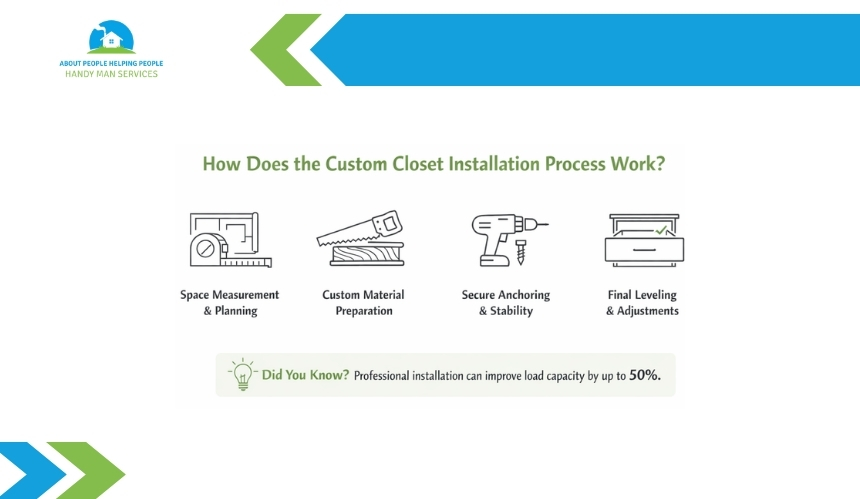
Installing a custom closet involves more than assembling pre-made shelves; it is a precision-driven process designed to fit the unique dimensions of your space. Professionals begin by accurately measuring the closet area, taking into account ceiling height, wall irregularities, and any obstructions. A tailored plan is then created, specifying shelving, drawers, hanging areas, and specialty compartments. Professional installation ensures that each component is secure, level, and properly anchored, reducing the risk of sagging or misalignment over time.
What Steps Are Involved in Professional Installation?
The installation process typically follows these steps:
- Space Measurement and Planning: Assessing the closet layout to design a system that maximizes usable space.
- Material Preparation: Cutting and finishing shelves, drawers, and panels according to custom specifications.
- Assembly and Anchoring: Installing each component securely, ensuring weight distribution and stability.
- Final Adjustments: Leveling shelves, aligning drawers, and confirming smooth operation.
Technical Note: Proper installation increases system load capacity by up to 50% compared to DIY or pre-fabricated units that rely on simple brackets or connectors.
How Does Installation Impact Long-Term Performance?
A professionally installed custom closet not only fits perfectly but also ensures durability and longevity. Correct anchoring prevents sagging, warping, or uneven wear over time. Smooth-sliding drawers, adjustable shelving, and reinforced hanging areas ensure functionality for years. Additionally, a well-installed system reduces maintenance needs and prevents structural issues that could arise from improper DIY setups or ill-fitting store-bought shelving.
Did You Know? Closets installed by professionals with high-quality materials typically last 10–15 years longer than store-bought or DIY shelving systems, maintaining both stability and aesthetic appeal.
How Can Custom Closets Improve Storage Efficiency and Optimize Space?
Custom closets are designed to maximize every inch of available space, unlike store-bought shelving that often leaves gaps or underutilized areas. By tailoring the layout to the room’s dimensions, homeowners gain better vertical and horizontal storage, improved accessibility, and a more organized system. Optimized storage reduces clutter, protects belongings, and creates a visually appealing closet environment.
How Do Custom Closets Maximize Vertical and Horizontal Space?
Custom closets use floor-to-ceiling shelving, adjustable racks, and built-in compartments to make the most of areas that standard units cannot. Corners, sloped ceilings, and narrow walk-in spaces are converted into functional storage zones, allowing homeowners to store more items efficiently.
Key Techniques:
- Tall shelving units for seasonal or bulky items
- Horizontal compartments for shoes, accessories, or folded clothing
- Modular drawers and racks designed for varied items
Technical Insight: Well-designed layouts can increase usable storage space by 30–50%, compared to standard store-bought shelving.
How Do Custom Closets Enhance Organization and Accessibility?
A tailored closet allows items to be grouped logically, such as shoes, handbags, and clothing types. Adjustable shelving and specialized compartments ensure everything is visible and reachable, which reduces the time spent searching for items.
Practical Benefits:
- Separate areas for long garments, folded items, and accessories
- Built-in drawers for delicate or small items
- Specialty racks for shoes, belts, or handbags
Did You Know? Homeowners with optimized custom closets report 40% faster access to clothing and accessories compared to standard shelving, improving daily routines and reducing frustration.
How to Decide Which Option Is Right for You: Custom Closets vs Store-Bought Shelving?
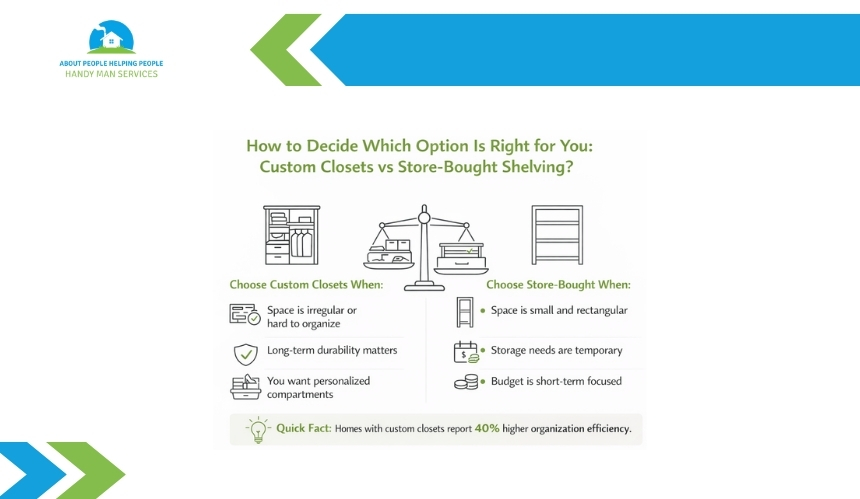
Choosing between a custom closet and store-bought shelving depends on your space, storage needs, budget, and long-term goals. While store-bought units may suffice for small or temporary spaces, custom closets provide tailored solutions that maximize storage, improve organization, and last for years. Evaluating your home and lifestyle requirements will help determine which option offers the best value.
When Custom Closets Are the Better Choice
Consider investing in a custom closet if you notice persistent storage challenges or have unique spaces. Custom solutions excel when:
- Closets are consistently cluttered or difficult to organize
- Spaces are irregularly shaped or have sloped ceilings
- You want personalized compartments for shoes, accessories, or long garments
- Long-term durability and aesthetic integration with your home are priorities
Custom closets also add perceived home value and provide a more satisfying, organized experience than store-bought alternatives.
Did You Know?
Homes with professionally designed custom closets report 40% higher organization efficiency and significantly reduced clutter compared to homes relying solely on store-bought shelving.
When Store-Bought Shelving Might Be Sufficient
Standard shelving may work if your storage needs are modest and your space is rectangular. Store-bought units are ideal when:
- You have small reach-in closets or temporary storage needs
- Budget constraints are a priority
- Quick assembly and portability are more important than long-term durability
Store-bought options provide immediate storage solutions, but may require replacement sooner and often fail to maximize space efficiently.
Factors to Consider Before Making a Decision
When deciding, evaluate:
- Budget vs. Long-Term Value: Custom closets cost more upfront but last longer and reduce the need for repeated purchases.
- Space Constraints: Irregular or large spaces benefit most from tailored solutions.
- Lifestyle Needs: Consider your storage habits, clothing types, and accessories.
- Aesthetic Goals: Custom designs integrate seamlessly with decor, while store-bought units may look temporary or mismatched.
Did You Know? Homes with professionally installed custom closets often increase usable storage by up to 50% and maintain organization far longer than standard shelving systems.
Frequently Asked Questions
How much does a custom closet typically cost?
The price of a custom closet depends on size, materials, and design complexity. On average, costs range from $2,000 to $10,000, with higher-end solutions for large walk-in closets or specialized compartments.
Can custom closets fit small or irregular spaces?
Yes. Custom closets are designed to maximize space in awkward layouts, including sloped ceilings, corners, and walk-in nooks, ensuring every inch is functional.
Are custom closets more durable than store-bought shelving?
Absolutely. Custom closets use high-quality wood, laminate, or metal and are professionally installed, lasting 10–15 years longer than most store-bought shelving.
How long does a custom closet installation take?
Installation typically takes 1–3 days for standard closets. Larger walk-in systems or highly customized layouts may take longer, depending on design complexity and material preparation.
Can modular shelving be added to a custom closet later?
Yes. Many custom systems are modular and adjustable, allowing homeowners to add shelves, drawers, or racks as storage needs change.
Do custom closets increase home value?
Yes. A well-designed custom closet improves storage efficiency, aesthetics, and perceived home value, especially in resale situations, compared to standard store-bought shelving.