
- About People Helping People
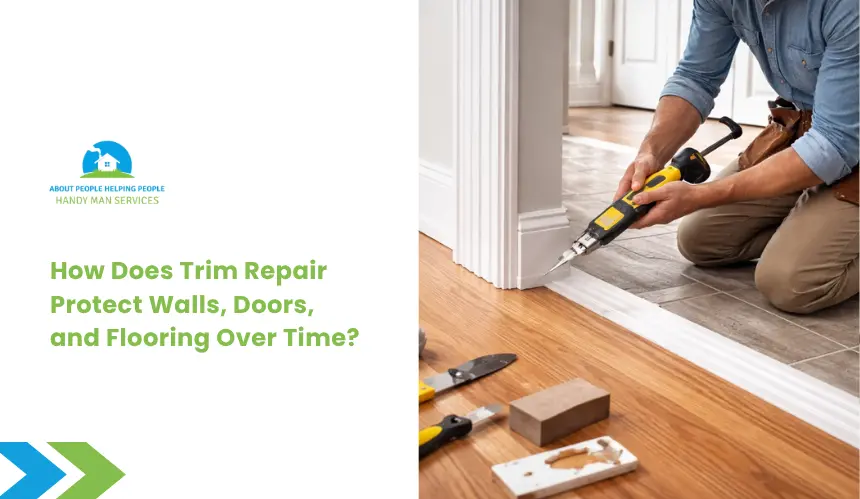
How Does Trim Repair Protect Walls, Doors, and Flooring Over Time?
Quick Answer: Trim repair protects walls, doors, and flooring by restoring the protective barrier at joints, edges, and transition points where damage typically begins. When trim is intact, it absorbs impact, seals gaps, and shields vulnerable materials like drywall and flooring edges from wear, moisture, and abrasion. How Trim Repair Provides Protection
What Happens Without Trim Repair
Why It Matters Long-Term Trim is not just decorative, it acts as a protective system. Repairing damaged trim early restores its ability to absorb stress and seal vulnerable areas, preventing small issues from developing into costly wall, door, or flooring repairs over time. |
Interior trim is often viewed as a finishing detail, but it plays a critical role in protecting some of the most vulnerable areas of a home. Baseboards, door casings, and other trim elements sit at key transition points, where walls meet floors, where doors meet frames, and where movement and contact occur most frequently. When these components are intact, they act as a protective barrier that absorbs stress and shields adjacent materials.
Did you know? The lower portion of walls and floor perimeters experience the highest levels of impact and abrasion from daily activity, making trim the first line of defense in these areas.
Over time, however, trim can crack, loosen, or separate due to impact, moisture exposure, or natural material movement. While this damage may appear minor, it often exposes underlying surfaces such as drywall edges and flooring perimeters, which are not designed to handle direct wear. Once exposed, these areas become more susceptible to deterioration, including paint failure, edge chipping, and moisture-related damage.
Did you know? Even small gaps in trim can allow moisture and debris to reach underlying materials, gradually weakening them and accelerating wear.
Understanding how trim functions, and how repairing it restores protection, helps prevent this chain reaction of damage. By addressing trim issues early, it becomes possible to maintain the integrity of walls, doors, and flooring while avoiding more extensive repairs over time.
What Protective Role Does Interior Trim Serve in a Home?
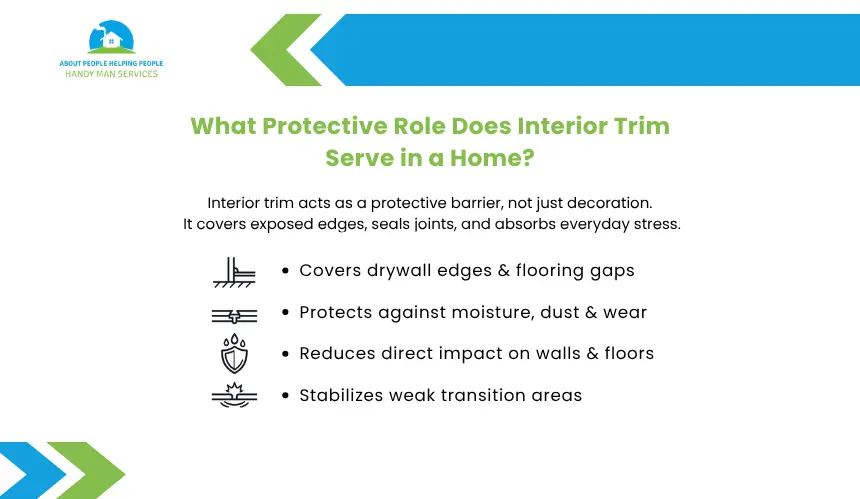
Interior trim functions as a protective interface between structural materials and daily use. It covers exposed edges, absorbs impact, and seals transition points where movement, moisture, and wear are most likely to occur. Rather than being purely decorative, trim acts as a buffer that protects adjacent surfaces from direct stress.
How Trim Shields Vulnerable Wall and Floor Transition Areas
Trim is installed at junctions where different materials meet, such as where drywall connects to flooring. These areas are inherently weak because they involve material transitions and movement allowances.
Baseboards and molding:
- Cover exposed drywall edges
- Conceal flooring expansion gaps
- Protect joints from dust, moisture, and cleaning exposure
By covering these transition zones, trim prevents direct contact with surfaces that are more prone to damage.
Did you know? Flooring systems like hardwood and laminate require expansion gaps at the perimeter, and trim protects these gaps from being exposed or compromised.
How Baseboards and Casings Absorb Daily Impact Before Adjacent Surfaces Do
Trim absorbs repeated low-level impacts from everyday activities such as foot traffic, vacuuming, furniture movement, and door use. These forces would otherwise be transferred directly to walls, flooring edges, or door frames.
Because trim is designed as a sacrificial layer, it:
- Takes surface-level damage instead of drywall or flooring
- Reduces wear on painted wall surfaces
- Protects door frame edges from repeated contact
This impact absorption helps preserve the integrity of more sensitive materials behind it.
Did you know? Lower wall areas receive the most frequent contact in a home, which is why baseboards are positioned to act as an impact buffer.
Why Trim Functions as More Than a Decorative Finish
While trim contributes to visual finishing, its primary function is protective. It stabilizes joints, hides structural allowances, and reinforces areas that would otherwise remain exposed.
Without trim, edges and seams would be directly exposed to:
- Mechanical stress
- Moisture infiltration
- Surface wear and abrasion
This makes trim a critical component in maintaining long-term durability across walls, doors, and flooring systems.
Did you know? Trim helps maintain the integrity of interior finishes by shielding the most vulnerable edges, which are typically the first points of failure in a space.
How Does Damaged Trim Expose Walls to Long-Term Deterioration?
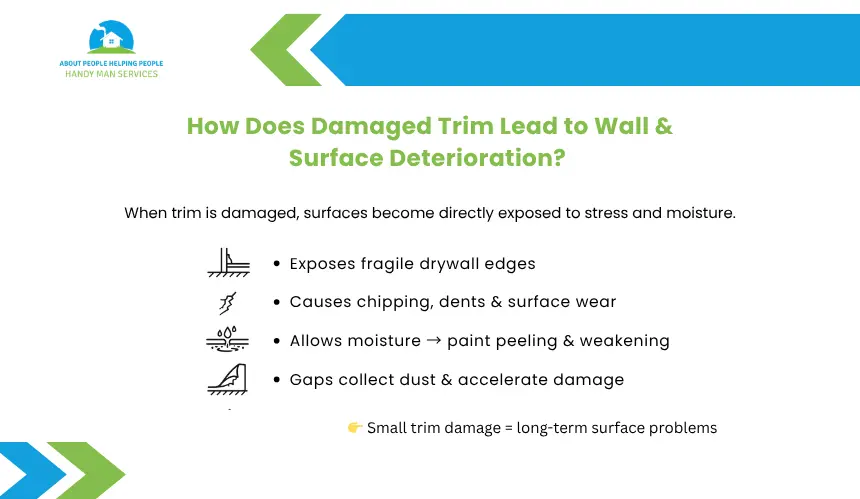
When trim becomes cracked, loose, or detached, it stops functioning as a protective barrier. This exposes vulnerable wall edges, especially drywall, to direct impact, moisture, and environmental stress. Over time, what begins as minor trim damage can lead to visible wall deterioration and structural surface wear.
How Missing or Loose Trim Leaves Drywall Edges Vulnerable
Drywall edges at the base of walls are not designed to withstand direct contact. Trim normally covers and protects these edges, but once it loosens or separates, the underlying material becomes exposed.
This exposure can lead to:
- Chipping and crumbling of drywall edges
- Increased susceptibility to dents from minor impacts
- Loss of structural edge definition
Without trim acting as a buffer, even routine contact can gradually degrade the wall surface.
Did you know? Drywall edges are one of the most fragile parts of a wall system, which is why they are typically concealed and protected by trim.
How Cracks and Gaps Allow Moisture, Dust, and Impact to Reach Wall Surfaces
Damaged trim often creates small gaps between the wall and floor. These openings allow external elements to reach areas that are normally sealed and protected.
Moisture from cleaning, spills, or humidity can enter these gaps, leading to:
- Paint peeling or bubbling
- Softening of drywall material
- Gradual weakening of surface integrity
Dust and debris can also accumulate in these openings, contributing to long-term surface degradation.
Did you know? Even minor moisture exposure at wall edges can cause gradual paint failure, especially in areas with repeated cleaning or humidity.
How Trim Repair Helps Preserve Paint Lines, Lower Wall Edges, and Surface Integrity
Repairing trim restores its ability to cover and seal vulnerable areas. By closing gaps and stabilizing loose sections, trim repair prevents further exposure and protects the wall surface from continued damage.
Proper repair:
- Re-establishes a sealed barrier at wall-floor transitions
- Protects paint edges from peeling or separation
- Reduces direct impact on lower wall surfaces
This helps maintain both the appearance and durability of walls over time.
Did you know? Early trim repair can prevent the need for drywall patching or repainting by stopping damage at its source.
How Does Trim Repair Help Protect Doors and Door Frames?
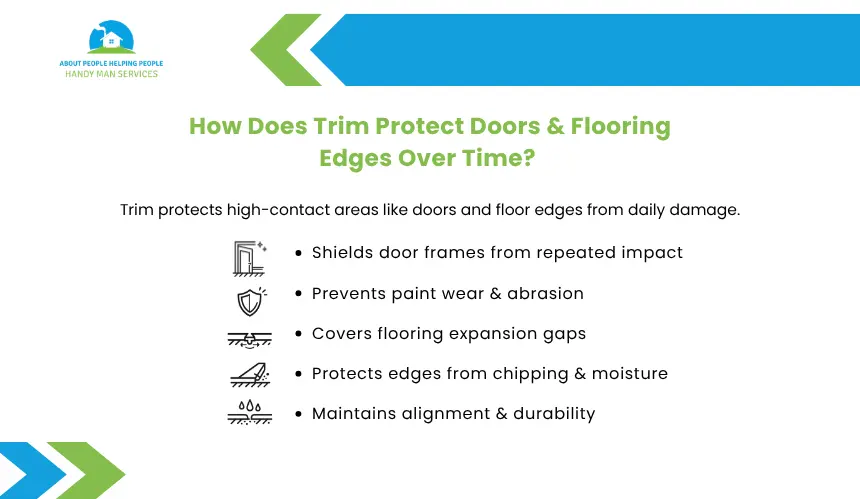
Trim around doors, commonly referred to as door casing, plays a key role in protecting the edges of door frames and adjacent wall surfaces. These areas experience frequent contact from opening, closing, and daily movement. When trim is intact, it absorbs this stress and preserves the structural and visual integrity of the door system.
How Door Casing Reduces Wear Around Jamb and Frame Transitions
Door casing covers the joint where the wall meets the door frame, protecting both materials from direct exposure. This transition area is particularly vulnerable because it combines different materials that respond differently to movement and pressure.
By covering this junction, trim:
- Shields the edges of the door jamb from abrasion
- Protects paint and finish lines from wear
- Maintains a clean transition between wall and frame
This reduces long-term surface damage caused by repeated use.
Did you know? Door frames experience constant low-level impact from daily use, making casing essential for preserving their finish and structure.
How Loose or Split Trim Increases Abrasion and Finish Damage Around Doors
When door trim becomes loose, cracked, or separated, it exposes the edges of the frame and wall. These exposed areas are more susceptible to direct contact and wear.
Over time, this can result in:
- Chipping or peeling of paint around the frame
- Increased friction damage from repeated door movement
- Visible gaps that collect dust and debris
Without proper protection, these areas deteriorate faster due to constant interaction.
Did you know? Even slight movement in loose trim can create friction against adjacent surfaces, accelerating finish wear.
How Trim Repair Restores Stability Around High-Contact Entry Points
Repairing door trim restores its ability to stabilize and protect high-contact areas. By reattaching loose sections, sealing gaps, and reinforcing joints, trim regains its structural function.
This helps:
- Reduce direct impact on door frame edges
- Maintain alignment and finish quality
- Prevent further wear from repeated use
Restoring trim ensures that door frames remain protected under continuous daily activity.
Did you know? Properly secured door casing distributes impact more evenly, reducing stress on specific points of the frame and extending its lifespan.
How Does Trim Repair Protect Flooring Edges Over Time?
Trim plays a critical role in protecting flooring edges, which are among the most vulnerable parts of any flooring system. Baseboards, shoe molding, and quarter round cover perimeter gaps and shield exposed edges from impact, moisture, and daily wear. When trim is damaged, these edges become exposed and more prone to deterioration.
How Baseboards and Molding Cover Expansion Gaps and Perimeter Edges
Most flooring materials, such as hardwood and laminate, require expansion gaps along the perimeter to allow for natural movement due to temperature and humidity changes. Trim covers these gaps while keeping them functional.
This protective layer:
- Conceals expansion spaces without restricting movement
- Prevents debris from entering perimeter gaps
- Shields exposed flooring edges from direct contact
Without trim, these gaps would remain open, increasing the risk of contamination and damage.
Did you know? Expansion gaps are essential for flooring stability, and trim ensures they remain protected while allowing necessary movement.
How Damaged Trim Increases the Risk of Chipping, Separation, and Edge Exposure
When trim is cracked, missing, or detached, flooring edges lose their protective barrier. This exposes them to direct contact from foot traffic, cleaning tools, and furniture movement.
As a result:
- Edges can chip or splinter under repeated impact
- Moisture can enter exposed seams, leading to swelling or warping
- Flooring planks may begin to separate at the perimeter
These issues often start small but can spread across larger sections of the floor if left unaddressed.
Did you know? Flooring edges are more susceptible to damage than central areas because they lack structural support on one side.
How Trim Repair Helps Maintain Flooring Stability During Cleaning and Daily Use
Repairing trim restores its ability to protect flooring edges from routine stress. By sealing gaps and securing molding in place, trim repair prevents direct exposure and stabilizes the perimeter.
This helps:
- Protect edges from cleaning-related moisture
- Reduce impact damage from daily movement
- Maintain consistent alignment along the floor perimeter
With proper trim repair, flooring systems retain their durability and appearance over time.
Did you know? Maintaining trim around flooring edges can significantly extend the lifespan of the floor by preventing early-stage edge damage.
What Types of Trim Damage Create Secondary Problems in Adjacent Surfaces?
Not all trim damage remains isolated. Certain types of failure create conditions that allow deterioration to spread into walls, door frames, and flooring. Identifying these damage patterns early helps prevent secondary issues that are often more costly to repair.
How Warping, Swelling, and Detachment Affect Surrounding Materials
Trim materials such as MDF and wood can react to moisture and environmental changes. When they swell, warp, or detach, they lose their ability to sit flush against surfaces, creating uneven gaps.
These gaps:
- Expose drywall edges to impact and abrasion
- Allow moisture to reach flooring perimeters
- Reduce the stability of joints between materials
As the trim shifts, adjacent surfaces begin to experience direct exposure and increased wear.
Did you know? Swollen trim often indicates underlying moisture exposure, which can also affect nearby walls and flooring if not addressed.
How Failed Caulk Lines and Open Joints Lead to Progressive Deterioration
Caulking seals the joint between trim and adjacent surfaces. When this seal fails, it creates small openings that allow external elements to enter.
Open joints can lead to:
- Moisture infiltration that weakens drywall and paint
- Dust and debris buildup that accelerates surface wear
- Gradual separation between trim and surrounding materials
These issues develop slowly but can expand into visible damage if left untreated.
Did you know? Caulk failure is often one of the earliest signs that trim is no longer providing full protection.
How Surface-Level Trim Damage Can Become a Larger Wall or Floor Issue
Minor trim damage, such as small cracks or loose sections, can appear cosmetic at first. However, these issues often mark the beginning of a larger deterioration process.
As protection is reduced:
- Wall edges become more prone to dents and paint failure
- Flooring edges are exposed to impact and moisture
- Door frame transitions lose structural support
Addressing trim damage early prevents these secondary problems from developing into more extensive repairs.
Did you know? Many wall and floor edge repairs originate from untreated trim damage that allowed exposure over time.
How Does Early Trim Repair Prevent More Expensive Interior Repairs?
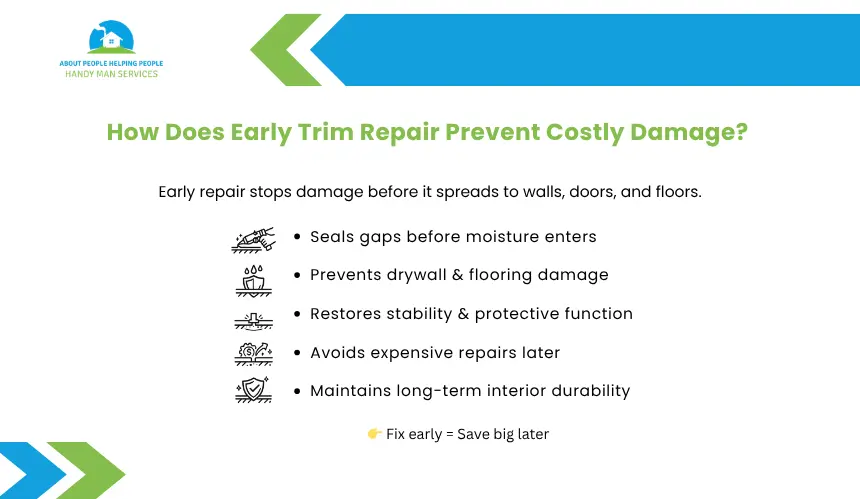
Early trim repair interrupts the progression of damage before it spreads into adjacent surfaces such as drywall, door frames, and flooring edges. Because trim acts as a protective barrier, even small failures can expose vulnerable areas to ongoing stress. Addressing these issues early helps maintain the integrity of surrounding materials and prevents more complex repairs.
How Small Repairs Stop Damage from Spreading into Drywall and Flooring Systems
Minor issues such as loose trim, small gaps, or cracked sections often seem cosmetic, but they create openings where impact, moisture, and debris can reach underlying materials. Once drywall edges or flooring perimeters are exposed, deterioration begins gradually.
Repairing trim at this stage restores coverage and prevents further exposure. By sealing gaps and stabilizing the trim, the protective layer is re-established before damage can extend into larger surface areas.
Did you know? Early intervention at the trim level can prevent damage from reaching structural surfaces, which are typically more expensive and time-consuming to repair.
How Re-Sealing and Re-Fastening Restore Protective Performance
Trim relies on secure attachment and sealed joints to function effectively. Over time, movement or wear can weaken fasteners and break down sealant lines, reducing stability.
Re-fastening loose trim and re-sealing joints restores its ability to remain flush against adjacent surfaces. This eliminates gaps and reinforces the barrier that protects walls, doors, and flooring from direct exposure.
Did you know? Restoring proper contact between trim and adjacent surfaces is critical for preventing moisture intrusion and impact-related wear.
Why Delayed Trim Repair Often Leads to Higher Restoration Costs
When trim damage is left unaddressed, exposed areas continue to experience wear and environmental stress. This can lead to paint failure, drywall degradation, and flooring edge damage that require more extensive repairs.
What could have been resolved with simple trim repair may escalate into surface restoration or partial replacement of surrounding materials. Addressing trim issues early reduces the likelihood of these larger, more costly interventions.
Did you know? Delayed trim repair often results in compounded damage, where multiple surfaces require restoration instead of a single targeted repair.
What Repair Methods Restore the Protective Function of Trim?
Restoring the protective function of trim involves more than fixing visible damage. Effective repair focuses on re-establishing structural stability, sealing transition points, and ensuring full contact between the trim and adjacent surfaces. Each method plays a role in rebuilding the barrier that protects walls, doors, and flooring.
How Filling, Sealing, and Repainting Protect Surface Integrity
Surface-level damage such as cracks, dents, or minor separation is typically addressed through filling and sealing. Wood filler or similar compounds are used to restore damaged areas, while caulking seals the joint between trim and adjacent surfaces.
Repainting then provides a protective coating that helps resist moisture and surface wear. This combination restores both the appearance and the functional barrier that prevents exposure.
Did you know? Proper sealing at trim joints helps prevent moisture from reaching drywall edges, which are highly susceptible to deterioration.
How Reattachment and Joint Stabilization Prevent Movement and Exposure
Loose or detached trim reduces its ability to protect surrounding materials. Reattaching trim using fasteners and ensuring it sits flush against the wall or floor restores stability.
Stabilizing joints eliminates movement that can create gaps over time. This ensures that the trim remains in place under daily use, maintaining continuous protection at critical transition points.
Did you know? Even slight movement in trim can create micro-gaps that allow dust and moisture to enter, leading to gradual damage.
When Partial Replacement Is Necessary to Restore Proper Protection
In cases where trim is significantly damaged, such as severe warping, swelling, or structural failure, repair may not be sufficient. Partial replacement ensures that the protective function is fully restored.
Replacing compromised sections allows for proper alignment, secure attachment, and effective sealing. This prevents recurring issues and ensures long-term durability.
Did you know? Replacing severely damaged trim is often more effective than repeated repairs, as it restores full structural integrity and protection.
Which Trim Materials Perform Best for Long-Term Protection?
The performance of trim over time depends heavily on the material used. Different materials respond differently to moisture, impact, and environmental changes. Selecting the right material improves durability and reduces the frequency of repairs while maintaining consistent protection for walls, doors, and flooring.
MDF, Solid Wood, and PVC Performance in Different Interior Conditions
Medium-density fiberboard (MDF), solid wood, and PVC are the most commonly used trim materials, each with distinct characteristics.
MDF provides a smooth surface and is cost-effective, but it is more susceptible to swelling when exposed to moisture. Solid wood offers better durability and impact resistance, though it can expand or contract with humidity changes. PVC trim is highly resistant to moisture and does not warp easily, making it suitable for areas with higher humidity.
The choice of material should align with the conditions of the space to ensure consistent performance over time.
Did you know? Moisture exposure is one of the primary factors that determines how well trim materials hold up, especially at floor-level installations.
How Moisture Resistance and Impact Resistance Affect Durability
Trim located near floors and entry points is exposed to both moisture and physical contact. Materials that resist these factors maintain their shape and protective function more effectively.
Moisture-resistant materials prevent swelling and separation, while impact-resistant materials absorb daily contact without cracking or chipping. A combination of both properties ensures long-term durability.
Did you know? Trim that resists both moisture and impact reduces the likelihood of gaps forming, which helps maintain a consistent protective barrier.
Why Material Selection Influences Future Maintenance Needs
The material used directly affects how often trim requires repair or replacement. Less durable materials may need frequent maintenance, especially in high-traffic or moisture-prone areas.
Choosing materials that match the environmental conditions of the space reduces long-term maintenance demands and ensures that trim continues to protect adjacent surfaces effectively.
Did you know? Proper material selection can significantly extend the lifespan of trim, reducing the need for repeated repairs and helping maintain the integrity of surrounding surfaces.
What Signs Indicate Trim Repair Is Needed Before Adjacent Surfaces Are Damaged?
Trim damage often shows early warning signs before it begins affecting walls, doors, or flooring. Identifying these indicators allows for timely repair, preventing exposure and protecting surrounding materials from progressive deterioration.
Visible Gaps, Cracks, and Loose Sections at Trim Lines
One of the most noticeable signs is the presence of gaps between the trim and adjacent surfaces. Cracks in the trim or sections that feel loose indicate that the material is no longer securely attached.
These issues suggest that the protective seal has been compromised, allowing external elements to reach underlying surfaces. Even small gaps can expand over time, increasing the risk of damage.
Did you know? Gaps at trim lines often indicate loss of adhesion or movement, both of which reduce the trim’s ability to protect adjacent materials.
Paint Separation, Edge Exposure, and Floor-Level Moisture Signs
Changes in the appearance of the trim or surrounding surfaces can signal early deterioration. Paint separation, peeling, or discoloration near trim edges often indicates moisture exposure or loss of sealing.
At floor level, signs such as slight swelling, staining, or uneven edges may suggest that moisture is reaching areas that are normally protected. These conditions can lead to further damage if not addressed promptly.
Did you know? Paint failure near trim edges is often an early indicator of underlying exposure to moisture or environmental stress.
Repeated Damage in High-Traffic or High-Moisture Areas
Areas that experience frequent contact or moisture—such as entryways, kitchens, and bathrooms—are more prone to recurring trim damage. Repeated wear in these zones can weaken the trim’s structure and reduce its protective function.
If the same sections of trim show ongoing issues, it indicates that the material is under continuous stress and may require repair or reinforcement to maintain stability.
Did you know? High-traffic areas tend to reveal trim issues earlier because they experience more frequent impact and environmental exposure.
How Can Proper Trim Maintenance Extend the Life of Walls, Doors, and Floors?
Proper trim maintenance ensures that the protective barrier remains intact over time. By keeping trim secure, sealed, and structurally stable, it continues to shield vulnerable edges and transition points from ongoing wear, moisture, and impact. This reduces the rate at which adjacent surfaces deteriorate and helps maintain overall interior durability.
Routine Inspection of Perimeter Edges and Transition Points
Regular inspection of trim along walls, doors, and flooring allows early detection of small issues before they develop into larger problems. Checking for gaps, loose sections, or surface damage helps identify areas where protection may be compromised.
Maintaining awareness of these conditions ensures that repairs can be made before underlying materials are exposed to stress or environmental factors.
Did you know? Frequent inspection of high-contact areas can significantly reduce long-term damage by identifying early-stage issues.
Early Caulk, Paint, and Joint Repairs to Prevent Progressive Wear
Minor maintenance tasks such as reapplying caulk, touching up paint, or reinforcing joints help preserve the trim’s protective function. These actions restore the seal and prevent external elements from reaching adjacent surfaces.
By addressing small areas of wear promptly, the integrity of the trim is maintained, reducing the likelihood of larger repairs involving drywall, flooring, or door frames.
Did you know? Maintaining sealed joints is essential for preventing moisture intrusion, which is a common cause of interior surface deterioration.
Why Preventive Trim Maintenance Supports Long-Term Interior Durability
Preventive maintenance ensures that trim continues to function as a protective system rather than allowing it to degrade into a source of exposure. Consistent upkeep reduces the accumulation of damage and helps maintain stable conditions for surrounding materials.
Over time, this approach preserves the appearance, structure, and performance of walls, doors, and flooring, minimizing the need for extensive repairs and extending the lifespan of interior finishes.
Did you know? Preventive maintenance at the trim level often reduces the need for more invasive repairs, helping maintain overall interior quality with minimal intervention.
Frequently Asked Questions
Is trim repair only cosmetic or does it protect surfaces?
Trim repair is not just cosmetic. It restores a protective barrier that shields drywall edges, door frames, and flooring perimeters from impact, moisture, and daily wear. Without proper repair, these exposed areas can deteriorate over time.
How does trim help prevent wall damage?
Trim protects the lower portion of walls by covering fragile drywall edges and absorbing impact from foot traffic, furniture, and cleaning tools. It also seals gaps, preventing moisture and debris from reaching wall surfaces.
Can damaged trim affect flooring?
Damaged trim can expose flooring edges and expansion gaps, increasing the risk of chipping, separation, and moisture-related damage. Repairing trim helps maintain stability and protects the perimeter of the flooring system.
What happens if trim damage is not repaired?
If trim damage is ignored, exposed areas can experience progressive wear, including drywall deterioration, paint failure, and flooring edge damage. Over time, this can lead to more extensive and costly repairs.
When should trim be repaired instead of replaced?
Trim can be repaired when damage is minor, such as small cracks, gaps, or loose sections. Replacement is recommended when there is severe warping, swelling, or structural failure that affects the trim’s ability to protect surrounding surfaces.
How often should interior trim be inspected or maintained?
Interior trim should be inspected periodically, especially in high-traffic or moisture-prone areas. Regular checks help identify early signs of damage, allowing timely repairs that prevent further deterioration.