
- About People Helping People
What Surfaces Benefit Most From Professional Pressure Washing?
Quick Answer: Professional pressure washing benefits surfaces that are durable, porous, and exposed to heavy contamination, where standard cleaning cannot remove embedded dirt, oil, or biological growth. These surfaces respond best because they can tolerate controlled pressure while allowing deep cleaning to restore both appearance and function. Surfaces that benefit the most include:
From a technical standpoint:
Did You Know? Porous materials like concrete can retain contaminants below the surface layer, which is why professional pressure washing is significantly more effective than standard cleaning methods for long-term results. |
Not all surfaces respond the same way to cleaning, which is why many property owners face confusion. A driveway covered in oil stains, a wall with mildew streaks, or a deck that feels rough underfoot may all look like they need the same solution, but the effectiveness of pressure washing depends heavily on the material, the type of contamination, and the surface condition.
One of the most common issues is the use of a one-size-fits-all approach. Applying the same pressure or method across different surfaces can lead to uneven results or even permanent damage. Hard surfaces may remain partially dirty due to embedded contaminants, while more delicate materials can be stripped, etched, or weakened by excessive force.
Environmental exposure also plays a major role. Outdoor surfaces are constantly subjected to moisture, UV radiation, dust, and organic growth. Over time, this leads to a buildup that goes beyond surface-level dirt, especially on porous materials that absorb contaminants.
The key is understanding which surfaces benefit the most from professional pressure washing and why. When the right combination of pressure, water flow, and cleaning method is applied, it not only restores appearance but also improves safety, durability, and long-term performance. The sections below break down each surface type and explain how and why professional pressure washing delivers better results.
Why Do Some Surfaces Respond Better To Professional Pressure Washing Than Others?
The effectiveness of pressure washing depends on how a surface interacts with water, pressure, and contaminants. Some materials allow dirt to penetrate below the surface, while others retain contaminants on the surface. Understanding these differences explains why certain surfaces benefit significantly more from professional cleaning.
How Do Porosity And Surface Density Affect Cleaning Results?
Porosity determines how deeply contaminants can penetrate a material. Highly porous surfaces such as concrete and brick absorb water, oils, and organic matter, making surface-level cleaning ineffective.
Dense, non-porous surfaces tend to trap dirt on the exterior, making it easier to remove. However, even these surfaces can accumulate layered residue over time that requires controlled pressure to fully clean.
Did You Know? Porous materials can trap contaminants below the visible surface, which is why they often appear clean initially but quickly become dirty again without deep cleaning.
Why Do Contamination Type And Depth Matter?
Different contaminants behave differently on surfaces. Dust and loose debris sit on top, while grease, oil, algae, and mold can bond with or penetrate the material.
Deeper contamination requires more than just water pressure. It often needs a combination of pressure, flow rate, and cleaning agents to break down and remove the buildup effectively.
How Do PSI, GPM, And Nozzle Control Influence Surface Safety?
Pressure washing is not just about force. PSI determines impact strength, while GPM controls how efficiently contaminants are rinsed away. The nozzle type and spray angle further influence how pressure is distributed across the surface.
Improper control of these variables can cause damage, especially to sensitive materials. Professional pressure washing ensures that pressure is calibrated to match the surface, maximizing cleaning effectiveness while maintaining structural integrity.
Did You Know? Adjusting spray angle and distance can significantly change how pressure interacts with a surface, making technique just as important as equipment power.
Why Do Concrete, Driveways, Sidewalks, And Pavers Benefit The Most?
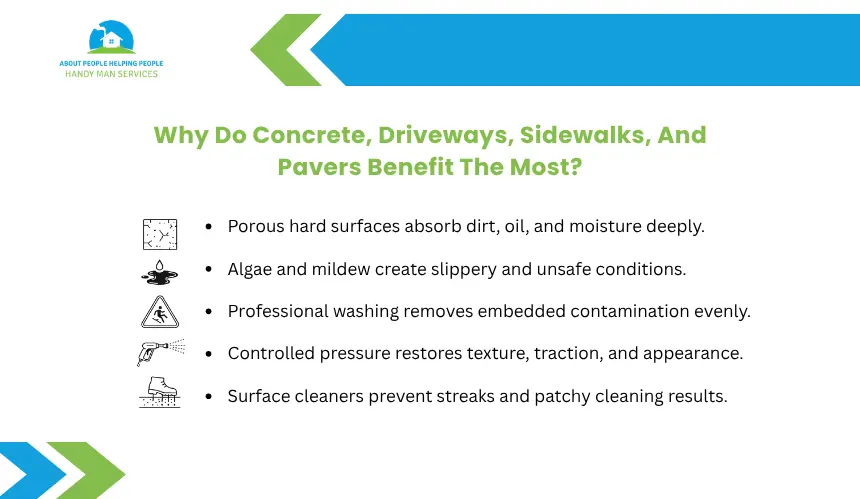
Concrete and similar hardscaping surfaces benefit most from professional pressure washing due to their porous structure, high exposure to contaminants, and their ability to withstand higher pressure. These surfaces accumulate deep-set dirt and require controlled high-pressure cleaning to restore both function and appearance.
Why Do Porous Hard Surfaces Trap Dirt, Oil, And Algae?
Concrete, pavers, and similar materials contain microscopic pores that absorb liquids and fine particles. Oil, grease, and organic growth penetrate below the surface, making them difficult to remove with standard cleaning.
Over time, these contaminants bind to the material, leading to discoloration, staining, and biological growth, such as algae and mildew.
Did You Know? Concrete can absorb contaminants deep into its structure, which is why surface cleaning alone often fails to remove oil stains and embedded dirt.
How Does Professional Pressure Washing Improve Traction And Appearance?
As contaminants build up, surfaces can become both visually dull and physically unsafe. Algae and moisture create slippery conditions, while dirt buildup reduces the surface’s original texture.
Professional pressure washing restores the surface by removing buildup evenly, improving grip and making the area safer for foot and vehicle traffic.
Did You Know? Algae and moisture buildup on hard surfaces can significantly reduce traction, increasing the risk of slips in walkways and driveways.
Why Is Even Surface Cleaning Important On Flatwork?
Flat surfaces such as driveways and patios require uniform cleaning to avoid streaking or patchy results. Uneven pressure or inconsistent technique can leave visible lines or partially cleaned areas.
Professional equipment, including surface cleaners, ensures consistent pressure distribution across large areas, delivering a uniform finish without damaging the material.
Did You Know? Uneven cleaning patterns can occur when pressure is not distributed evenly, which is why professional-grade tools are often used for large, flat surfaces.
How Do Brick, Stone, and Masonry Surfaces Benefit From Professional Cleaning?
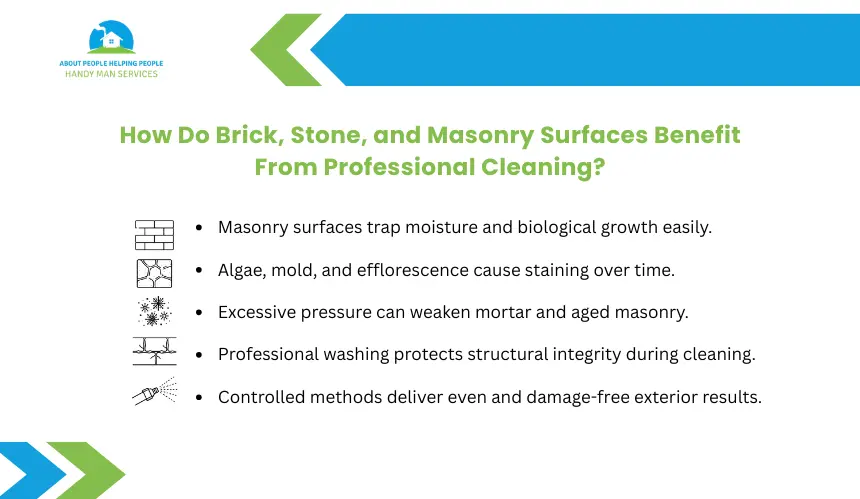
Brick, natural stone, and masonry surfaces benefit significantly from professional pressure washing due to their mineral composition, porosity, and exposure to environmental contaminants. These materials tend to retain moisture and support biological growth, which requires controlled cleaning to remove without causing damage.
How Do Mineral Surfaces Collect Biological Growth And Staining?
Brick and stone surfaces naturally absorb moisture, creating conditions where algae, mold, and mildew can develop. Over time, this leads to discoloration, staining, and surface degradation.
In addition to biological growth, minerals within the material can react with water and environmental elements, causing deposits such as efflorescence, which appears as a white residue on the surface.
Did You Know? Moisture retention in masonry surfaces creates an ideal environment for algae and mold growth, especially in shaded or humid areas.
Why Does Pressure Control Matter On Mortar Joints And Aged Masonry?
While brick and stone can handle moderate pressure, mortar joints are more vulnerable. Excessive pressure can erode these joints, weakening the overall structure.
Older masonry is particularly sensitive, as weathering may have already reduced its strength. Professional pressure washing uses controlled pressure and appropriate techniques to clean effectively without compromising structural integrity.
When Is Professional Washing Better Than DIY For Exterior Walls?
Exterior walls often involve height, surface variation, and complex contamination patterns. DIY methods may not provide consistent pressure or reach, leading to incomplete cleaning or accidental damage.
Professional washing ensures proper pressure calibration, the use of suitable cleaning agents, and even coverage across the entire surface.
Did You Know? Incorrect pressure on masonry surfaces can cause long-term damage by weakening joints and allowing moisture to penetrate deeper into the structure.
Which Building Exteriors Benefit Most From Controlled Pressure Or Soft Washing?
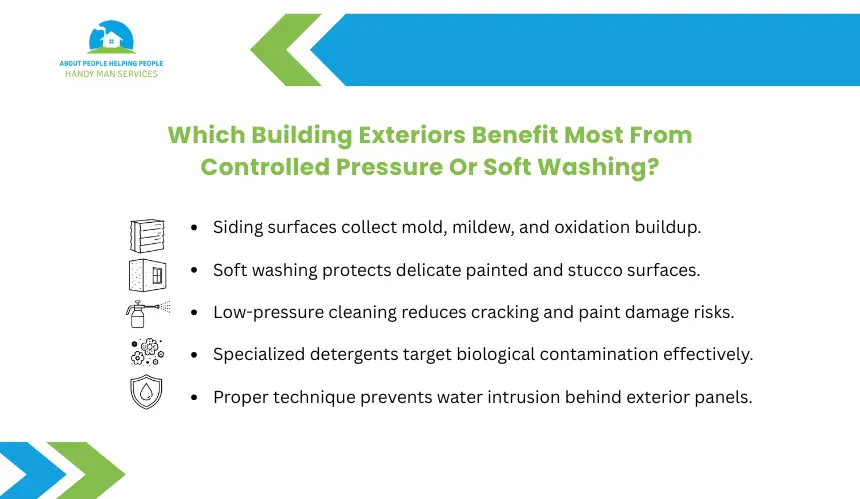
Exterior building surfaces require a more controlled approach because they vary in material strength, coating, and sensitivity. While some areas can handle moderate pressure, others require soft washing techniques to avoid damage while still achieving effective cleaning.
How Do Vinyl Siding And Fiber Cement Respond To Cleaning?
Vinyl siding and fiber cement are designed to withstand environmental exposure, but they tend to accumulate mold, mildew, and oxidation over time. These contaminants often sit on the surface or within shallow layers.
Controlled pressure washing, often combined with detergents, helps remove this buildup without damaging the material. Proper technique ensures that water does not get forced behind panels, which could lead to moisture issues.
Did You Know? Mold and mildew can develop on siding surfaces within months, especially in humid or shaded environments, making periodic cleaning essential.
Why Do Stucco and Painted Exteriors Require Surface-Specific Methods?
Stucco and painted surfaces are more delicate due to their texture and finish. High pressure can crack stucco or strip paint, leading to costly repairs.
Soft washing or low-pressure cleaning methods are typically used to remove contaminants while preserving the surface. This approach relies more on cleaning solutions and controlled rinsing rather than direct force.
When Should Soft Washing Be Used Instead Of Direct Pressure?
Soft washing is necessary when surfaces cannot tolerate high pressure or when contamination is primarily biological. It is commonly used for painted exteriors, coated surfaces, and areas with mold or algae growth.
By using low-pressure combined with specialized cleaning agents, soft washing effectively removes contaminants while minimizing the risk of structural or visual damage.
Did You Know? Soft washing can clean surfaces more safely by targeting the root cause of biological growth, reducing the chance of regrowth compared to pressure-only methods.
Do Decks, Fences, and Outdoor Wood Surfaces Benefit From Professional Pressure Washing?
Wood and composite outdoor surfaces benefit from professional pressure washing, but only when pressure is carefully controlled. Unlike concrete or masonry, these materials are more sensitive to force, making technique and calibration critical for effective cleaning without causing damage.
How Does Embedded Dirt Affect Wood And Composite Materials?
Over time, dirt, mold, and moisture settle into the grain of wood and the texture of composite materials. This buildup not only affects appearance but also accelerates deterioration by trapping moisture.
If not removed properly, these contaminants can lead to discoloration, surface breakdown, and reduced lifespan.
Did You Know? Moisture trapped in wood surfaces can promote mold growth and contribute to long-term structural weakening if not regularly cleaned.
Why Is Pressure Calibration Critical For Grain Protection?
Wood surfaces have a natural grain structure that can be easily damaged by excessive pressure. High PSI can strip the surface, create uneven textures, or cause splintering.
Professional pressure washing uses lower pressure levels and controlled techniques to clean without damaging the grain, preserving both the appearance and integrity of the material.
What Results Improve Before Sealing Or Staining?
Cleaning wood and composite surfaces before applying sealants or stains is essential for proper adhesion. Removing dirt, old coatings, and contaminants ensures that new finishes bond correctly and last longer.
Professional pressure washing prepares the surface evenly, creating a clean base that improves the durability and appearance of protective treatments.
Did You Know? Proper surface preparation before sealing or staining can significantly extend the life of the finish, reducing the need for frequent reapplication.
What Commercial and Functional Surfaces Gain the Most From Professional Washing?
Commercial and high-use functional surfaces benefit significantly from professional pressure washing due to heavy contamination, safety requirements, and regulatory standards. These areas accumulate substances that cannot be effectively removed with standard cleaning methods.
Why Do Parking Areas, Loading Zones, And Dumpster Pads Need Professional Cleaning?
These surfaces are exposed to constant vehicle traffic, waste handling, and environmental buildup. Over time, oil leaks, tire residue, food waste, and organic matter accumulate and penetrate the surface.
This not only affects appearance but also creates hygiene and safety concerns, especially in areas with frequent public or operational use.
Did You Know? Oil and grease can penetrate deep into concrete surfaces, making them difficult to remove without high-pressure and detergent-assisted cleaning.
How Do Grease, Gum, and Heavy-Use Residues Affect Commercial Surfaces?
Unlike residential surfaces, commercial areas often deal with stubborn contaminants such as grease, chewing gum, and industrial residue. These substances bond strongly with the surface, requiring more advanced cleaning techniques.
Without proper removal, these residues can create slip hazards, reduce surface traction, and contribute to long-term material degradation.
Why Does Hot Water Or Detergent-Assisted Washing Matter Here?
Hot water and specialized detergents play a critical role in breaking down grease, oil, and organic waste. Heat reduces the viscosity of oils, making them easier to remove, while detergents dissolve contaminants that water alone cannot remove.
Professional systems are designed to combine pressure, temperature, and chemical action to deliver consistent results in demanding environments.
Did You Know? Heated pressure washing systems can significantly improve grease and oil removal compared to cold-water alone, making them essential for commercial cleaning applications.
Which Surfaces Should Not Be Pressure Washed?
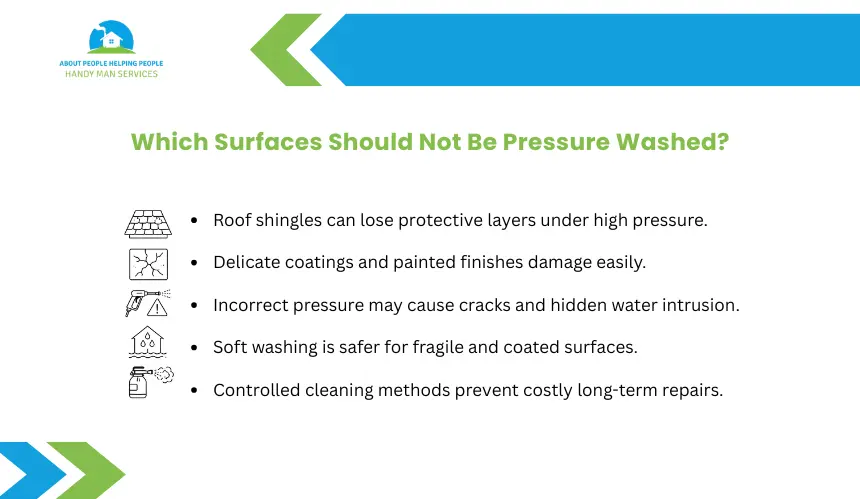
Not all surfaces are suitable for standard pressure washing. Some materials are too delicate, coated, or structurally sensitive to handle high-pressure water. Using the wrong method can cause permanent damage rather than cleaning benefits.
Why Are Roofs And Delicate Surfaces High-Risk?
Roof shingles, especially asphalt types, can lose protective granules when exposed to high pressure. This weakens the roof’s ability to protect against weather and accelerates deterioration.
Similarly, delicate surfaces such as painted finishes or aged materials can be stripped or eroded by excessive force.
Did You Know? Removing protective layers from roofing materials can shorten their lifespan significantly and lead to costly repairs.
Which Surfaces Need Soft Washing Instead?
Surfaces that are sensitive to pressure typically require soft washing. This includes roofs, painted exteriors, stucco, and surfaces with protective coatings.
Soft washing uses low pressure combined with cleaning solutions to safely remove contaminants without damaging the surface.
How Can Incorrect Pressure Cause Long-Term Damage?
Improper pressure application can lead to etching, cracking, or water intrusion. In some cases, it can force water into gaps or behind surfaces, creating hidden moisture problems.
This type of damage may not be immediately visible but can lead to structural issues over time.
Did You Know? High-pressure water can penetrate small gaps in surfaces, increasing the risk of moisture-related damage if not properly controlled.
How To Decide What Needs Professional Cleaning?
Not every surface requires professional pressure washing, but certain conditions indicate when expert cleaning becomes necessary. The decision depends on contamination depth, surface condition, and whether standard cleaning methods are no longer effective.
What Signs Show Deep Buildup?
Some surfaces develop contamination that goes beyond visible dirt. These signs indicate that debris, oil, or biological growth has penetrated below the surface.
- Darkened patches or uneven discoloration
- Persistent stains that return after cleaning
- Slippery surfaces caused by algae or moisture
- Dull appearance despite regular maintenance
Did You Know? Surfaces that appear clean can still contain embedded contaminants, which is why discoloration often returns quickly without deep cleaning.
When Does DIY Stop Working?
DIY pressure washing is effective for light cleaning, but it has limitations when dealing with deep stains or large areas. Inconsistent pressure, limited equipment capabilities, and improper technique can result in incomplete cleaning.
When stains persist, surfaces remain uneven, or cleaning takes excessive time without results, it indicates the need for professional methods.
Why Does Professional Equipment Matter?
Professional pressure washing systems are designed to deliver controlled pressure, higher flow rates, and consistent results across different surfaces. They also allow the use of specialized attachments and cleaning solutions tailored to specific materials.
This combination improves cleaning efficiency while reducing the risk of damage, making professional cleaning more effective for complex or heavily contaminated surfaces.
Did You Know? Professional equipment can maintain consistent pressure and coverage across large surfaces, which helps achieve uniform results that are difficult to replicate with standard tools.
Frequently Asked Questions
What surfaces benefit the most from professional pressure washing?
Hard, porous surfaces such as concrete driveways, sidewalks, brick, stone, and pavers benefit most. These materials trap dirt, oil, and biological growth below the surface, making professional pressure washing more effective than standard cleaning.
Can all exterior surfaces be pressure-washed safely?
Not all surfaces can handle high pressure. Delicate materials like roofs, painted surfaces, and stucco require soft washing or low-pressure cleaning to prevent damage while still removing contaminants.
Why is professional pressure washing better than diy?
Professional pressure washing uses calibrated PSI, higher GPM, and proper techniques to ensure deep and even cleaning. It also reduces the risk of surface damage caused by incorrect DIY pressure settings.
How often should surfaces be professionally pressure-washed?
Frequency depends on exposure and usage. High-traffic areas like driveways may need cleaning once or twice a year, while siding and exterior walls may require cleaning annually or based on environmental conditions.
Does pressure washing improve surface safety?
Yes, removing algae, mold, and grease improves traction and reduces slip hazards on walkways, driveways, and commercial surfaces, making them safer for use.