- About People Helping People
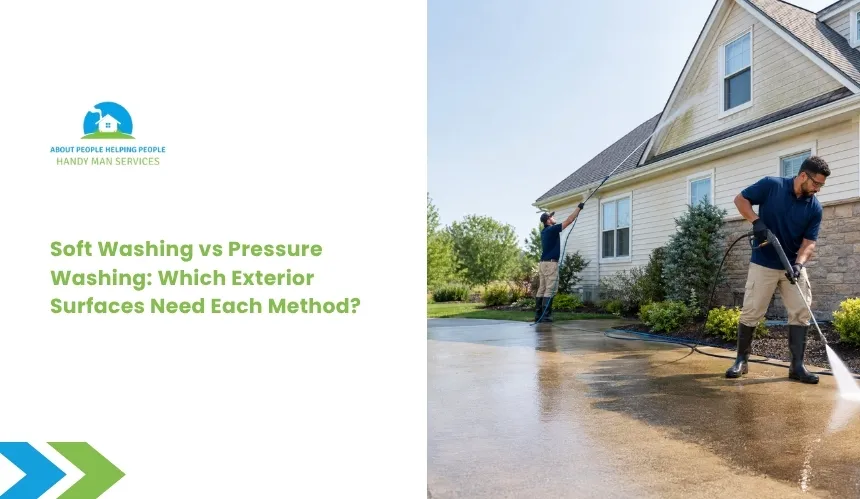
Soft Washing vs Pressure Washing: Which Exterior Surfaces Need Each Method?
Quick Answer Use pressure washing for harder exterior surfaces such as concrete driveways, sidewalks, pavers, stone, some brick, metal surfaces, and heavily soiled hardscapes. Pressure washing uses water force to lift dirt, mud, grease, and surface buildup. The pressure still needs to be controlled because even durable surfaces can be etched, chipped, or damaged when cleaned too aggressively. |
Current exterior-cleaning guidance supports a surface-first approach: soft washing is safer for delicate, painted, coated, or organic-growth-heavy surfaces because it uses low pressure and a cleaning solution, while pressure washing is better for hard, durable surfaces such as concrete, pavers, and some masonry when the surface can handle force. High pressure can damage vinyl, painted wood, asphalt shingles, old brick mortar, windows, and electrical components if used incorrectly.
Choosing between soft washing and pressure washing is not about which method is stronger. It is about which method matches the surface, the stain, and the risk of damage. Some surfaces need chemical cleaning with low pressure. Others need controlled mechanical force to remove soil, grime, tire marks, and buildup.
The wrong method can create costly problems. High pressure can force water behind siding, strip paint, scar wood, damage shingles, loosen mortar, or break seals around windows. A surface-safe cleaning plan starts by identifying what the material can handle before choosing pressure, nozzle angle, detergent, and dwell time.
Quick Insight
Soft washing kills and loosens organic growth. Pressure washing removes surface debris through force. The safest method depends on whether the problem is biological staining or physical buildup.
Soft Washing Vs Pressure Washing: The Core Difference
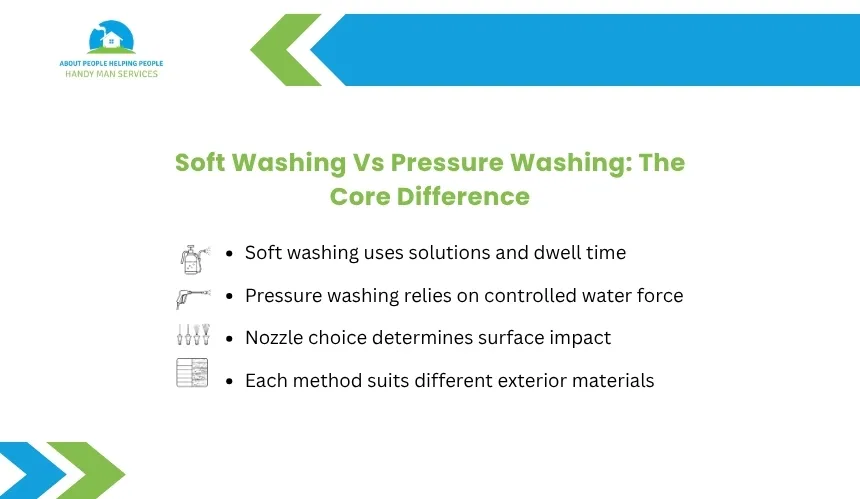
Soft washing and pressure washing both clean exterior surfaces, but they work through different mechanisms. Soft washing depends on chemistry and dwell time. Pressure washing depends on water pressure, flow, nozzle control, and surface strength.
What Is Soft Washing?
Soft washing is a low-pressure cleaning method that uses a cleaning solution to break down algae, mildew, mold, moss, lichen, and grime. After the solution has time to work, the surface is rinsed gently with low pressure.
This method is useful when the surface can be damaged by force. It is common for roofs, siding, painted surfaces, stucco, and other areas where high pressure may cause cracking, water intrusion, coating damage, or finish removal.
The main cleaning action is not the water pressure. It is the solution. That is why soft washing can clean organic stains more deeply than pressure alone when the growth is rooted into textured or porous surfaces.
What Is Pressure Washing?
Pressure washing uses high-pressure water to remove dirt, mud, algae film, stains, loose paint, gum, tire marks, and surface buildup. The equipment can produce much higher PSI than a soft wash system, which makes it effective on strong materials but risky on fragile ones.
Pressure washing works best when the surface is dense, stable, and not easily penetrated or scarred. Concrete, pavers, stone, and some masonry can often handle controlled pressure when the right nozzle, distance, and technique are used.
The mistake is treating pressure washing like a universal cleaning method. More pressure does not mean better cleaning. It often means higher damage risk.
Why PSI, Flow, And Nozzle Choice Matter
PSI measures pressure, while flow affects how much water moves across the surface. A narrow nozzle concentrates force into a smaller area, which can cut into wood, strip finishes, or etch concrete. A wider nozzle spreads force more safely.
Distance also matters. Holding a wand too close increases impact. Spraying upward against siding can push water behind panels. Spraying directly into joints, seals, vents, or fixtures can create moisture problems.
Professional cleaning is not just about having the machine. It is about matching pressure, detergent, nozzle angle, distance, and rinse technique to the material.
Did You Know?
High pressure can damage a surface before the damage is obvious. Water forced behind siding, into window seals, or under roofing edges may create moisture problems days or weeks later.
Which Exterior Surfaces Need Soft Washing?
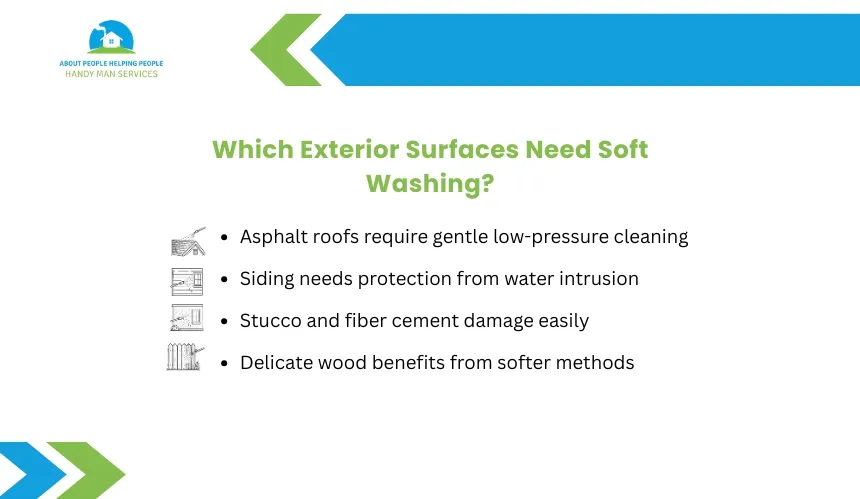
Soft washing is best for surfaces where high pressure could break, lift, scar, penetrate, or strip the material. It is also the preferred method for organic growth because the solution treats the source instead of only removing visible discoloration.
Roofs And Asphalt Shingles
Roofs, especially asphalt shingle roofs, should usually be soft washed rather than pressure washed. High pressure can dislodge granules, weaken shingle surfaces, lift edges, and reduce roof life. Roof-cleaning guidance connected to ARMA standards emphasizes low-pressure cleaning with appropriate biocides rather than pressure washing asphalt shingles. (Roof Cleaning)
Soft washing works because black streaks, algae, moss, and lichen are biological problems. The cleaning solution breaks down the growth, while low-pressure rinsing avoids mechanical damage.
Roof cleaning should be handled carefully because runoff, landscaping protection, ladder safety, and chemical control matter. A roof is not the right place for aggressive DIY pressure washing.
Vinyl Siding And Painted Siding
Vinyl siding and painted siding often need soft washing because high pressure can force water behind panels, loosen seams, dent softer materials, or strip paint. Southern Living’s 2026 siding guidance notes that pressure washing siding requires care, lower pressure, distance, and avoiding upward spray because water can be driven behind the siding. (Southern Living)
Soft washing is better when siding has algae, mildew, pollen film, spider webs, or green staining. The detergent loosens the growth so the siding can be rinsed without harsh impact.
Painted siding needs extra caution. High pressure can lift loose paint, expose raw wood, or damage older coatings. Soft washing preserves the finish when the paint is still in good condition.
Stucco, EIFS, And Fiber Cement
Stucco and EIFS are textured and can hold dirt, algae, and moisture-sensitive residue. High pressure can scar the surface, force water into cracks, or damage the finish coat. Soft washing is usually safer because it cleans the textured surface without blasting into it.
Fiber cement siding also needs careful cleaning. Some manufacturer and homeowner guidance warns against aggressive pressure because improper washing can affect finishes, seams, or warranties. A low-pressure wash with the right cleaner is usually the safer choice.
For these surfaces, the cleaning plan should focus on chemistry, gentle rinsing, and avoiding saturation around cracks, joints, windows, and trim.
Wood Fences, Painted Wood, And Delicate Decking
Wood can be pressure washed, but it is easy to damage. Too much pressure raises the grain, splinters boards, cuts grooves, removes stain unevenly, or pushes water deep into the surface.
Soft washing or low-pressure washing is better for painted wood, stained fences, cedar, older deck boards, and surfaces with algae or mildew. The cleaner loosens organic buildup while reducing the need for aggressive force.
If wood needs pressure, it should be controlled and tested in a hidden spot first. The goal is cleaning, not carving.
Quick Insight
Wood damage from pressure washing often appears as fuzzy grain, wand marks, or uneven stripes after drying. Once that happens, sanding or refinishing may be needed.
Which Exterior Surfaces Need Pressure Washing?
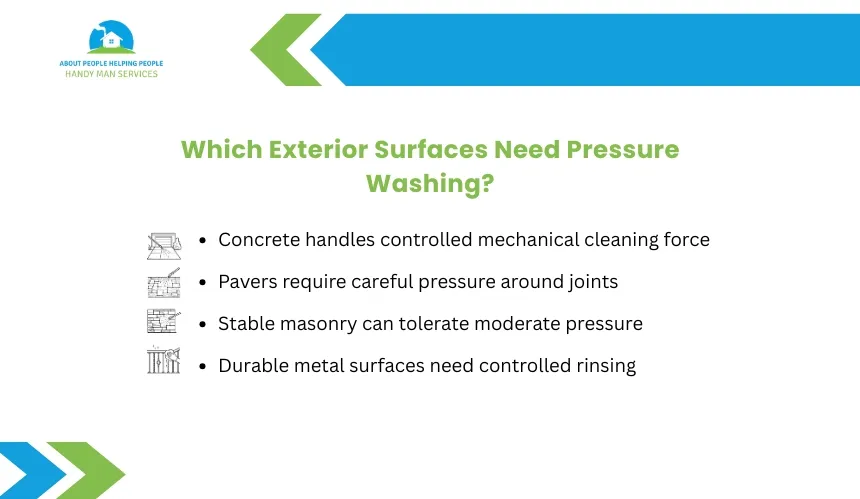
Pressure washing belongs on stronger, more durable surfaces where the material can handle mechanical force. Even then, the pressure should be adjusted to the surface, not maxed out by default.
Concrete Driveways And Sidewalks
Concrete is one of the best candidates for pressure washing because it can hold heavy dirt, mud, tire marks, algae film, and surface staining. Driveways, sidewalks, garage aprons, and curbs often need more force than soft washing alone can provide.
Pressure washing removes embedded debris from the concrete surface and can restore traction by clearing slippery buildup. Detergents or degreasers may be used first when oil, grease, or automotive residue is present.
Concrete can still be damaged if the pressure is too high or the nozzle is too narrow. Etching, streaking, and surface scarring are common mistakes when the wand is held too close.
Pavers, Patios, And Pool Decks
Pavers and patios often benefit from pressure washing because dirt, weeds, moss, sand, and grime settle into joints and textured surfaces. Controlled pressure can clean the surface and improve appearance.
The risk is joint disturbance. Too much pressure can remove polymeric sand, loosen pavers, or expose uneven gaps. Pool decks also need caution because some coatings, sealers, and decorative finishes can be damaged by aggressive washing.
For pavers, a professional may clean first, then recommend re-sanding or sealing if the joints need restoration.
Brick, Stone, And Durable Masonry
Brick and stone can often handle pressure washing when they are newer, stable, and structurally sound. Pressure can remove soil, algae, mineral deposits, and weather staining from hard masonry.
Old brick is different. Older mortar can be soft or deteriorated, and high pressure can erode joints. Better Homes & Gardens warns against pressure washing old brick because strong jets can damage aged mortar and create structural concerns.
The correct method depends on age and condition. Newer hard masonry may handle controlled pressure. Older or fragile masonry may need soft washing or low-pressure cleaning.
Metal Railings, Equipment Pads, And Some Hard Fixtures
Metal surfaces such as railings, gates, equipment pads, and some exterior fixtures may handle pressure washing when corrosion, coatings, and electrical components are not involved.
Pressure washing should not be directed into electrical panels, outlets, light fixtures, HVAC controls, cameras, doorbells, or wiring. Water intrusion can create corrosion, shorts, or safety hazards.
For painted metal, soft washing may be better if the coating is old, peeling, or delicate. For bare or durable metal, controlled pressure can remove dirt and buildup efficiently.
Did You Know?
Concrete can handle more pressure than siding or wood, but it can still be etched. A pressure washer can leave permanent wand marks when the nozzle is too close or the operator moves unevenly.
Surface-By-Surface Method Guide
The safest cleaning method depends on material condition, stain type, and damage risk. The same surface may need different treatment depending on age, coating, cracks, and buildup.
Use Soft Washing For These Surfaces
Soft washing is usually the safer choice for:
- Asphalt shingle roofs
- Vinyl siding
- Painted siding
- Stucco
- EIFS
- Fiber cement siding
- Painted wood
- Cedar fences
- Older decks
- Screens
- Awnings
- Outdoor furniture
- Windows and frames
- Shutters
- Gutters and fascia
- Delicate trim
- Surfaces with algae, moss, mildew, or lichen
These surfaces need cleaning that reduces force. The solution does the work, and the rinse removes residue without damaging the finish.
Use Pressure Washing For These Surfaces
Pressure washing is usually better for:
- Concrete driveways
- Concrete sidewalks
- Garage floors
- Curbs
- Some patios
- Stable pavers
- Newer brick
- Durable stone
- Some retaining walls
- Heavy mud buildup
- Tire marks
- Grease-stained hardscapes
- Commercial walkways
- Metal surfaces without electrical risk
These surfaces can usually handle more mechanical force, but pressure should still be matched to the material. A hard surface does not mean unlimited pressure is safe.
Use A Hybrid Approach For Mixed Surfaces
Many homes need both methods. A common exterior cleaning plan might use soft washing on the house siding and roof, then pressure washing on the driveway, sidewalk, and patio.
Hybrid cleaning works because exterior surfaces rarely have the same tolerance. For example, a home may have vinyl siding, painted shutters, asphalt shingles, brick steps, concrete walkways, wood fencing, and pavers. One method cannot safely handle all of them.
A professional should change pressure, nozzle, cleaner, and technique as the surface changes.
Stain Type Matters: Organic Growth Vs Surface Buildup
The material tells you what the surface can handle. The stain tells you what cleaning method will actually work. Some stains need chemical treatment. Others need pressure, scrubbing, or degreasing.
Algae, Mildew, Moss, And Lichen Need Soft Washing
Organic growth responds best to soft washing because the solution treats living growth at the source. Pressure washing may remove visible color temporarily, but if growth remains in pores, joints, or textured surfaces, staining can return faster.
This is especially true on roofs, siding, stucco, fences, and shaded areas. Green or black growth often means moisture and biological buildup, not just dirt.
Soft washing is also useful for north-facing walls, areas under trees, humid climates, and surfaces that stay shaded after rain.
Dirt, Mud, Tire Marks, And Grease Often Need Pressure
Physical buildup on hard surfaces often needs mechanical force. Concrete driveways, sidewalks, and patios collect dirt, tire residue, clay, rust transfer, and oil-related grime.
Degreasers may be needed before pressure washing when oil or automotive residue is present. Pressure alone can spread grease if the surface is not pretreated correctly.
For hardscape cleaning, the best result usually comes from pretreatment, proper pressure, even passes, and controlled rinsing.
Oxidation And Rust Need Special Care
Oxidation on siding, gutters, and painted metal is not the same as dirt. Pressure washing oxidation can create streaks or uneven clean marks. Rust may also need specialized cleaners rather than more pressure.
This is where experience matters. Using pressure to solve a chemical stain can damage the surface without removing the stain properly.
If the stain is rust, oxidation, artillery fungus, battery acid, irrigation staining, or efflorescence, the cleaner matters as much as the washing method.
Quick Insight
Not every stain is removable with pressure. Some stains are chemical, mineral, or oxidation-based, which means the wrong pressure can damage the surface while leaving the discoloration behind.
Common Mistakes That Damage Exterior Surfaces
Most exterior cleaning damage comes from using one pressure setting everywhere, skipping surface testing, choosing the wrong cleaner, or treating fragile materials like concrete.
Using High Pressure On Roofs And Siding
Roofs and siding are two of the most commonly damaged surfaces. High pressure can remove shingle granules, push water under roof edges, force water behind siding, loosen panels, or damage paint.
A clean surface is not successful if moisture gets trapped behind it. Water intrusion can lead to mold, rot, insulation damage, and staining inside the home.
Soft washing is safer because it cleans without relying on impact.
Spraying Too Close To The Surface
Distance controls impact. The same machine can be safe or destructive depending on how close the nozzle is held. Spraying too close can cut into wood, stripe concrete, dent siding, or damage mortar.
Operators should start with lower pressure, keep a safe distance, and test small areas before cleaning visible sections.
A consistent motion also matters. Stopping in one spot concentrates pressure and can leave permanent marks.
Ignoring Plants, Windows, And Electrical Areas
Exterior cleaning affects more than the target surface. Cleaning solution and runoff can affect landscaping if plants are not watered, covered, or rinsed properly. High-pressure water can also damage window seals, screens, door thresholds, and exterior fixtures.
Electrical components should never be sprayed directly. Better Homes & Gardens warns against pressure washing electrical components, light fixtures, windows, and delicate exterior items because of damage and safety risk. (Better Homes & Gardens)
Safe exterior cleaning includes preparation before the first spray starts.
How To Choose The Right Cleaning Method For Your Home
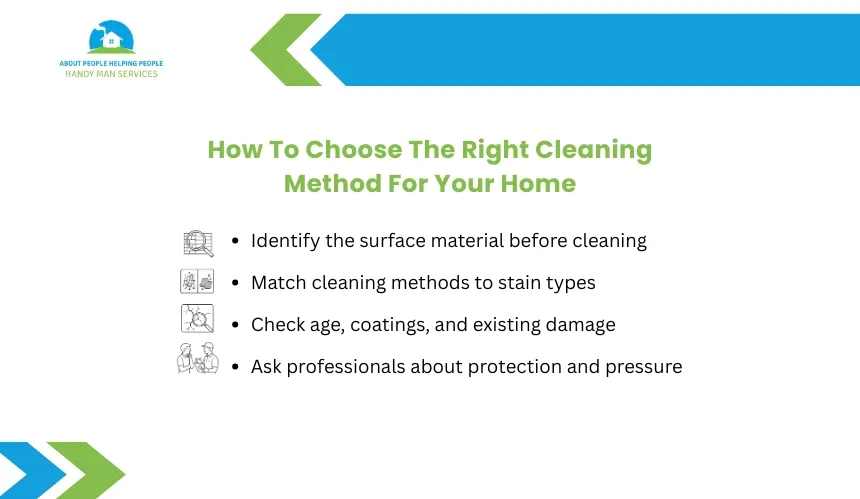
The right method comes from evaluating the surface, stain, age, coating, and risk. A good exterior cleaner should not give one answer for every area of the property.
Start With Surface Material
Ask what the surface is made of and how easily it can be damaged. Asphalt shingles, vinyl, painted wood, stucco, and screens usually need soft washing. Concrete, pavers, and durable stone can often handle pressure.
Material condition matters too. Newer concrete and deteriorated concrete may respond differently. Painted wood and raw wood need different care. New brick and old brick should not be cleaned the same way.
The material sets the pressure limit.
Match The Method To The Stain
Organic staining usually needs soft washing. Heavy dirt and hardscape grime often need pressure washing. Rust, oxidation, oil, and mineral staining may need specialized cleaners.
This prevents overusing pressure. Pressure is useful, but it is not a substitute for correct chemistry.
A clean result should remove the stain while preserving the surface.
Consider The Age And Condition Of The Surface
Older surfaces usually need gentler cleaning. Loose paint, cracked stucco, brittle siding, deteriorated mortar, dry wood, and worn sealants can all be damaged by pressure.
Before cleaning, check for:
- Cracks
- Loose paint
- Soft wood
- Open siding seams
- Damaged caulk
- Old mortar
- Broken shingles
- Loose pavers
- Window seal gaps
- Electrical exposure
If the surface is already compromised, cleaning should be cautious and may need repair first.
Ask The Right Questions Before Hiring A Professional
Before hiring an exterior cleaning company, ask how they decide between soft washing and pressure washing. A strong answer should mention surface type, pressure control, detergents, plant protection, runoff, and damage prevention.
Good questions include:
- What method will you use on each surface?
- What pressure range will you use?
- How do you protect plants?
- Will you pressure wash the roof or soft wash it?
- How do you handle windows and electrical fixtures?
- What cleaners do you use?
- Do you test delicate areas first?
- Are you insured?
- What surfaces should not be pressure washed?
A professional should be able to explain the method without relying on “we pressure wash everything.”
Before cleaning your home’s exterior, match the method to the surface instead of choosing the strongest spray. Use soft washing for delicate materials and organic growth, and use pressure washing for durable hardscapes that can handle controlled force. The right approach protects your roof, siding, concrete, wood, masonry, and long-term property value.
Frequently Asked Questions
What is the main difference between soft washing and pressure washing?
Soft washing uses low pressure and a cleaning solution to break down algae, mildew, moss, and grime. Pressure washing uses a stronger stream of water to remove dirt and buildup from durable surfaces. Soft washing is safer for delicate materials, while pressure washing works better on hard surfaces.
Should you soft wash or pressure wash a roof?
Most roofs, especially asphalt shingle roofs, should be soft washed instead of pressure washed. High pressure can strip granules, lift shingles, and shorten roof life. Soft washing uses a controlled cleaning solution and low-pressure rinsing to treat algae, moss, and black streaks more safely.
Is pressure washing safe for vinyl siding?
Pressure washing vinyl siding can be risky if the pressure is too high or the spray is aimed upward. Water can be forced behind panels, and siding can crack or loosen. Soft washing is usually safer because it removes algae and mildew without aggressive force.
Which surfaces should be pressure washed?
Pressure washing is usually best for concrete driveways, sidewalks, pavers, patios, curbs, durable stone, newer brick, and some metal surfaces. These materials can handle controlled water force better than roofing, painted wood, stucco, windows, screens, and delicate siding.
Can soft washing remove algae and mildew better than pressure washing?
Yes, soft washing often works better on algae and mildew because the cleaning solution treats organic growth instead of only blasting the surface. Pressure washing may remove visible staining temporarily, but soft washing helps break down growth more completely when applied correctly.