
- About People Helping People
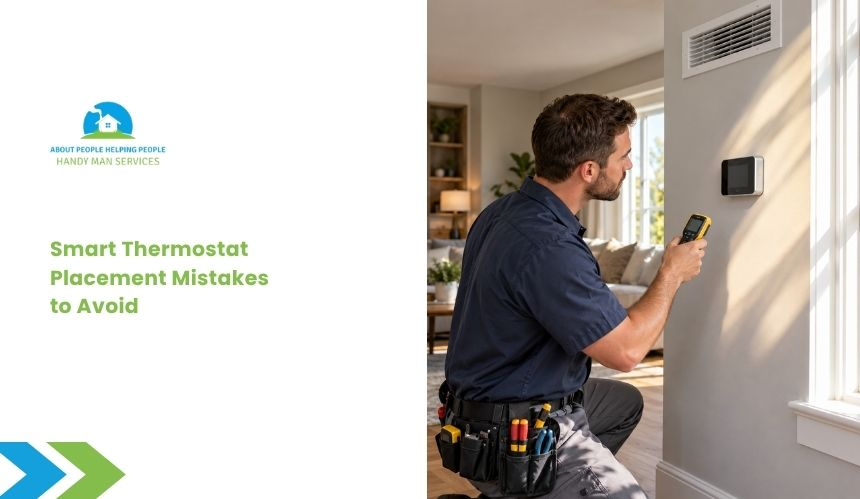
Smart Thermostat Placement Mistakes to Avoid
Quick Answer: Smart thermostat placement matters because the device needs to sense a temperature that accurately represents the main living area. Installing it where sunlight, drafts, HVAC airflow, appliances, or other localized conditions affect the sensor can cause misleading readings and unnecessary heating or cooling. Common smart thermostat placement mistakes include:
A better location is generally an interior wall in a regularly used area with normal room airflow, away from conditions that create unusually warm or cool readings. The specific smart thermostat manufacturer’s placement instructions should also be followed, especially when the model uses additional occupancy, humidity, or temperature-sensing features. |
A smart thermostat can only make useful heating and cooling decisions when it receives temperature readings that reasonably represent the living space. Where the device is mounted therefore matters just as much as choosing compatible equipment.
Direct sunlight, nearby HVAC vents, exterior doors, drafts, appliances, fireplaces, and even large furniture can create localized temperature conditions around the thermostat. These influences may cause the sensor to register a room as warmer or cooler than it actually feels elsewhere.
Avoiding common smart thermostat placement mistakes helps support more representative temperature sensing, steadier HVAC control, and more effective use of the thermostat’s automated features.
Why Does Smart Thermostat Placement Matter?
Smart thermostat placement matters because the temperature surrounding the device influences when the HVAC system heats or cools the home. If the thermostat is exposed to conditions that differ from the main living space, its readings may not accurately represent overall indoor comfort.
How Does Location Affect Temperature Readings?
A thermostat measures conditions at its installed location rather than every area of the home. Direct sunlight, drafts, nearby heat sources, or concentrated HVAC airflow can make that particular spot warmer or cooler than surrounding rooms.
Choosing a more representative location helps the thermostat respond to typical indoor conditions instead of localized temperature changes.
What Happens When a Thermostat Senses the Wrong Conditions?
An inaccurate or unrepresentative reading can cause the HVAC system to start, stop, or adjust based on conditions that exist mainly around the thermostat. Other occupied areas may consequently feel warmer or cooler than the thermostat setting suggests.
Avoiding poor placement helps the smart thermostat make control decisions based on more representative indoor temperatures.
Mistake 1: Installing a Smart Thermostat in Direct Sunlight
Installing a smart thermostat where sunlight regularly reaches it can warm the device and influence its temperature sensor. The thermostat may then register conditions that are warmer than the actual temperature experienced throughout the surrounding living space.
How Can Sunlight Affect the Temperature Sensor?
Solar heat can raise the temperature around the thermostat even when the rest of the room remains relatively comfortable. The HVAC system may respond to this localized warmth by running the cooling system when additional cooling is not needed elsewhere.
The effect can also change throughout the day as the sun moves across the room.
Which Sun-Exposed Locations Should Be Avoided?
Walls receiving prolonged direct sunlight should generally be avoided, particularly locations near sunny windows, glass doors, or skylights where solar heat can regularly reach the thermostat.
A location with stable indoor conditions and no direct solar exposure gives the thermostat a better opportunity to measure a temperature that represents the occupied space.
Mistake 2: Placing the Thermostat Near Windows or Exterior Doors
Windows and exterior doors can expose a smart thermostat to temperature conditions that differ from the rest of the room. Outdoor heat or cold, air leakage, and frequent door opening can create localized fluctuations that interfere with representative temperature sensing.
How Can Outdoor Temperatures Influence Thermostat Readings?
Areas close to windows and exterior doors may become warmer or cooler due to solar exposure, outdoor temperatures, or air leakage around openings. A thermostat positioned nearby may react to these localized conditions rather than the temperature across the occupied space.
This can make HVAC operation less representative of actual comfort needs.
Why Do Frequently Opened Doors Create a Problem?
Each time an exterior door opens, outdoor air can temporarily change the temperature around a nearby thermostat. Frequent entries and exits can therefore create repeated short-term fluctuations.
Positioning the thermostat away from exterior doorways and similar sources of changing airflow helps it measure more stable indoor conditions.
Mistake 3: Installing the Thermostat in a Drafty Location
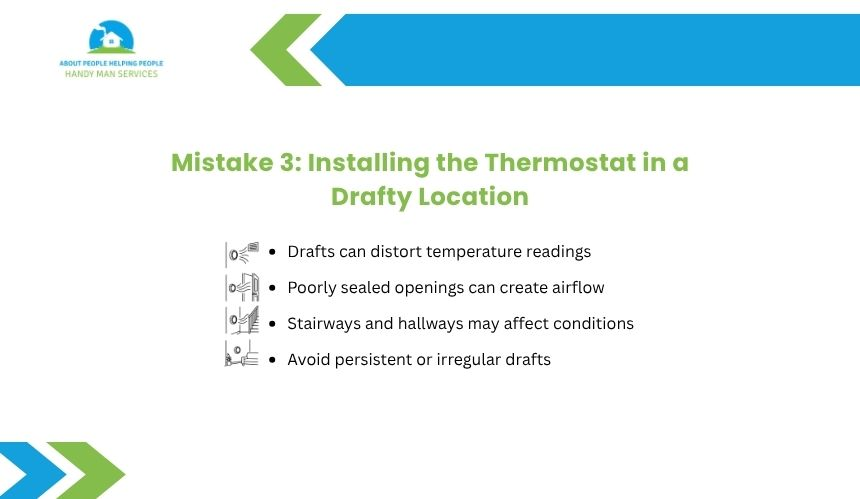
A drafty location can expose a smart thermostat to air temperatures that do not represent the overall room. Even relatively localized airflow may influence the sensor, causing the thermostat to respond to a temporary cool or warm spot rather than typical indoor conditions.
Where Can Indoor Drafts Come From?
Drafts can develop around poorly sealed windows and doors, wall penetrations, gaps around openings, or other areas where air moves between spaces. Air movement from nearby stairways, hallways, or frequently opened doors may also create changing conditions around the thermostat.
Identifying these airflow patterns before choosing the installation location can help avoid misleading readings.
How Can Drafts Cause Unrepresentative Temperature Readings?
Cool airflow passing over the thermostat may make the sensor register a lower temperature than occupants experience elsewhere. Warmer moving air can create the opposite effect.
Because smart thermostats use these readings to control HVAC operation, placing the device away from persistent or irregular drafts helps it respond to more representative room conditions.
Mistake 4: Positioning the Thermostat Near HVAC Vents
Placing a smart thermostat close to an HVAC vent can expose its sensor to conditioned air before that air has mixed throughout the room. This may cause the thermostat to detect temperatures that differ from those experienced across the main living area.
Why Can Supply Air Affect the Thermostat Sensor?
During heating, warm supply air can make a nearby thermostat register the target temperature sooner than the rest of the room reaches it. During cooling, concentrated cold air can create a similar effect in the opposite direction.
The thermostat may therefore respond to the air leaving the vent rather than typical room conditions.
Why Should Strong Airflow Around the Thermostat Be Avoided?
Strong or concentrated airflow can create localized temperature changes around the thermostat sensor. Because these conditions occur mainly near the vent, they may not represent temperatures elsewhere in the space.
Keeping the thermostat away from supply registers and direct HVAC airflow helps it monitor more representative indoor conditions.
Mistake 5: Mounting the Thermostat Near Heat-Producing Appliances
Heat-producing appliances and fixtures can create localized warm areas that do not represent the temperature throughout the room. A smart thermostat installed too close to these sources may detect extra heat and make HVAC decisions based on temporarily elevated readings.
Which Household Heat Sources Can Affect Readings?
Potential heat sources include ovens, cooktops, lamps, televisions, electronics, fireplaces, and other appliances that release noticeable heat during operation.
The effect may be intermittent, making thermostat readings fluctuate depending on when the nearby appliance or fixture is being used.
How Can Localized Heat Change HVAC Operation?
When nearby heat raises the temperature around the thermostat, the device may interpret the room as warmer than it actually is. This can cause cooling to operate when other areas do not require it or heating to stop before the occupied space reaches the desired temperature.
Keeping the thermostat away from concentrated household heat sources helps provide more representative readings.
Mistake 6: Choosing an Exterior Wall
Installing a smart thermostat on an exterior wall can expose it to wall temperatures influenced by outdoor conditions. Depending on insulation, weather, and construction, the surface around the thermostat may be warmer or cooler than interior areas of the home.
Why Can Exterior Walls Experience Different Temperatures?
Exterior walls separate conditioned indoor space from outdoor temperatures. During particularly hot or cold weather, heat transfer through the wall can affect conditions around the thermostat, especially where insulation or air sealing is limited.
These localized effects can make the thermostat’s reading less representative of the main living area.
Why Is an Interior Wall Usually a Better Location?
An interior wall is generally less directly influenced by outdoor temperature changes. When located in a regularly occupied area with normal airflow, it can provide more representative indoor temperature conditions for the thermostat to monitor.
Manufacturer placement instructions should still be followed because recommended positioning can vary between smart thermostat models.
Mistake 7: Installing the Thermostat in a Rarely Used Room
A smart thermostat placed in a rarely occupied room may control the HVAC system based on conditions that do not reflect where people spend most of their time. Temperature differences between rooms can make this location less representative of everyday comfort needs.
Why Should Placement Reflect Normal Living Conditions?
Different areas of a home can experience different temperatures because of sunlight, airflow, room orientation, doors, and patterns of use. A seldom-used room may therefore be warmer or cooler than frequently occupied spaces.
Thermostat placement should represent typical indoor conditions as closely as possible.
What Makes a Frequently Occupied Area More Representative?
A regularly used living area can provide a better reference for the temperatures occupants commonly experience. The location should still be away from direct sunlight, drafts, HVAC vents, and localized heat sources.
Choosing a representative occupied area with stable airflow helps the smart thermostat make heating and cooling decisions based on more relevant indoor conditions.
Mistake 8: Hiding the Thermostat Behind Furniture or Other Obstructions
A smart thermostat needs exposure to normal room air circulation to sense surrounding temperature effectively. Large furniture, curtains, shelving, wall décor, or other objects positioned around the device can create a more isolated pocket of air that differs from conditions elsewhere in the room.
How Can Restricted Airflow Affect Temperature Sensing?
When furniture or other objects limit air movement around the thermostat, the air near its sensor may warm or cool at a different rate from the rest of the space.
This can make the thermostat slower to detect changing room conditions or cause its reading to be less representative of the occupied area.
Why Does Open Space Around the Thermostat Matter?
Keeping the thermostat unobstructed allows normal room air to circulate around its sensors. It can also prevent nearby objects from creating localized heat or restricting airflow.
Before selecting a smart thermostat placement, homeowners should consider whether future furniture, curtains, shelving, or decorations could interfere with the device’s exposure to typical room conditions.
Mistake 9: Ignoring Nearby Kitchens, Fireplaces, and Other Changing Heat Sources
Some areas of a home experience frequent short-term temperature changes because of cooking, fireplaces, or other intermittent heat sources. Installing a smart thermostat nearby can cause its sensor to react to these temporary conditions rather than the broader temperature of the living space.
Why Are Areas With Frequent Temperature Swings Poor Locations?
Kitchens can become noticeably warmer while ovens and cooktops are operating, while fireplaces can create concentrated heat in nearby areas. Once these heat sources are turned off, the local temperature may change again relatively quickly.
These fluctuations make such locations less suitable for obtaining consistent, representative temperature readings.
How Can Temporary Heat Lead to Misleading Readings?
Temporary heat around the thermostat may cause it to register that the home has reached or exceeded the desired temperature even when other rooms have not.
As a result, heating may stop prematurely or cooling may operate unnecessarily. Choosing a location away from intermittent heat sources and rapidly changing temperatures helps the thermostat respond to more typical indoor conditions.
How Can You Choose a Better Location for a Smart Thermostat?
A better smart thermostat location is one that reflects the normal temperature of the occupied living space without being strongly influenced by localized heat, cold, or airflow. Placement should be evaluated before installation rather than simply reusing an existing location automatically.
Look for Representative Indoor Temperatures
Choose an area where temperature conditions are reasonably similar to those experienced throughout the main occupied space. Avoid spots that regularly become unusually warm or cool because of sunlight, exterior openings, appliances, or other localized influences.
The goal is to give the thermostat a reliable reference for everyday indoor comfort.
Choose an Interior Wall With Normal Air Circulation
An interior wall in a regularly used area is generally preferable because it is less directly affected by outdoor temperatures. The thermostat should also remain exposed to normal room airflow rather than being hidden behind furniture, curtains, shelving, or other obstructions.
It should also be positioned away from HVAC vents, drafts, and concentrated heat sources.
Follow the Smart Thermostat Manufacturer’s Placement Guidance
Placement recommendations can vary depending on the thermostat’s design and sensing capabilities. Some smart thermostats may incorporate occupancy, humidity, or additional temperature-sensing features that affect installation considerations.
Checking the manufacturer’s instructions helps confirm appropriate positioning and prevents general placement advice from conflicting with model-specific requirements.
Frequently Asked Questions
Where is the best place to install a smart thermostat?
A smart thermostat is generally best placed on an interior wall in a regularly occupied area with normal air circulation. The location should be away from direct sunlight, exterior doors, windows, HVAC vents, drafts, appliances, fireplaces, and other influences that can distort temperature readings.
Can a smart thermostat be installed near a window?
It is generally better to avoid installing a smart thermostat close to a window. Solar heat, outdoor temperature changes, and air leakage around the window can create localized conditions that differ from the rest of the room, potentially affecting the thermostat’s temperature readings.
Should a thermostat be installed near an HVAC vent?
No. Air leaving a supply vent may be considerably warmer or cooler than the surrounding room while the HVAC system operates. A nearby thermostat may respond to this conditioned air before it has mixed throughout the space, making its reading less representative.
Can sunlight affect a smart thermostat?
Yes. Direct sunlight can warm the thermostat and its temperature sensor independently of the surrounding room. This localized heating may make the thermostat register a higher temperature than occupants experience elsewhere, potentially influencing when the cooling or heating system operates.
Is an exterior wall a bad place for a thermostat?
An exterior wall is generally less desirable because its temperature can be influenced by outdoor conditions, insulation, and air leakage. An interior wall in a representative occupied area usually provides more stable conditions, provided the thermostat manufacturer’s specific placement requirements are also followed.
Can furniture affect thermostat temperature readings?
Furniture can interfere when it restricts normal airflow around the thermostat or creates an isolated pocket of air. Large cabinets, shelving, curtains, or other obstructions should not surround the device. Keeping the thermostat unobstructed helps it sense more representative room conditions.
Should a smart thermostat be installed in the most-used room?
A frequently occupied area can be a good choice when its temperature represents normal household conditions. However, occupancy alone is not enough. The location should also avoid direct sunlight, HVAC vents, drafts, exterior openings, appliances, and other factors that create unusual temperature changes.