
- About People Helping People
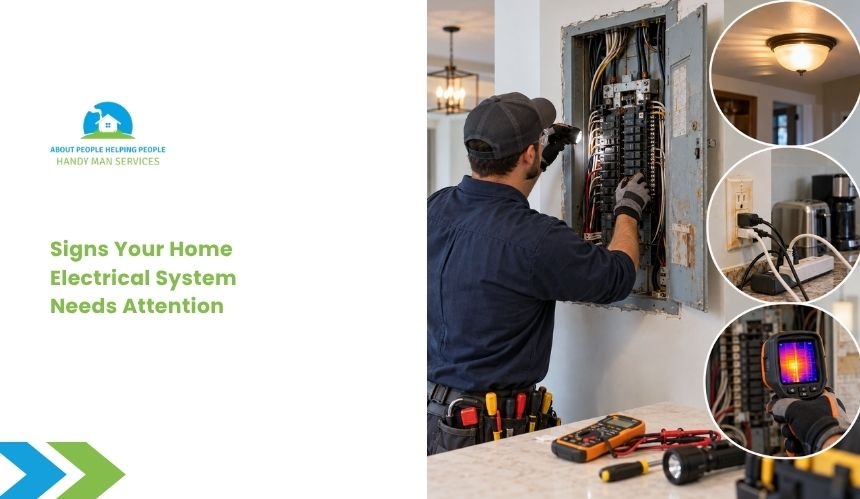
Signs Your Home Electrical System Needs Attention
Quick Answer: A home’s electrical system often provides warning signs before a serious problem develops. Flickering lights, frequently tripped circuit breakers, warm or discolored outlets, burning odors, buzzing sounds, power fluctuations, or damaged wiring can all indicate that the electrical system needs professional attention. Identifying these warning signs early helps reduce the risk of electrical fires, electric shock, equipment damage, and costly repairs. Common signs your home electrical system needs attention include:
Did You Know? Electrical problems rarely appear without warning. Small issues such as occasional flickering lights or a breaker that trips repeatedly can be early indicators of underlying electrical faults. Addressing these warning signs promptly helps prevent more serious safety hazards and expensive electrical repairs. |
A home’s electrical system is designed to operate safely and reliably, but like any major home system, it can develop problems over time. Aging wiring, overloaded circuits, worn electrical components, and increased power demands can all affect the performance of the system. In many cases, these issues begin with subtle warning signs that are easy to overlook until they develop into more serious safety hazards or expensive repairs.
Common symptoms such as flickering lights, repeatedly tripped circuit breakers, warm outlets, unusual buzzing sounds, or burning odors should never be ignored. While these problems may seem minor at first, they can indicate underlying electrical faults that require professional inspection. Recognizing these warning signs early helps reduce the risk of electrical fires, electric shock, appliance damage, and unexpected power failures.
Important: Homeowners can safely perform routine visual inspections of outlets, switches, and visible electrical components, but electrical repairs involving wiring, circuit breakers, electrical panels, or other energized equipment should always be handled by a qualified licensed electrician.
Understanding the signs your home electrical system needs attention allows homeowners to identify potential hazards sooner, schedule repairs before problems worsen, and maintain a safer, more reliable electrical system that supports the home’s everyday power needs.
Why Electrical Warning Signs Should Never Be Ignored
Electrical problems rarely resolve on their own. Minor warning signs often indicate developing faults within the home’s electrical system that can worsen over time if left unaddressed. Identifying these issues early helps protect the property, reduce safety risks, and prevent more extensive electrical repairs. Routine inspections and prompt professional attention are essential for maintaining a safe and reliable electrical system.
How Can Early Action Help Prevent Electrical Fires?
Many electrical fires are linked to problems such as damaged wiring, overloaded circuits, loose electrical connections, or overheating components. Recognizing warning signs early and arranging professional repairs helps reduce the likelihood of these conditions developing into a serious fire hazard.
Why Is Responding to Electrical Problems Important for Household Safety?
Electrical faults can increase the risk of electric shock, damage to appliances, and interruptions to the home’s power supply. Addressing electrical warning signs promptly helps maintain a safer living environment while ensuring the electrical system continues operating as intended.
How Can Prompt Repairs Help Avoid Costly Electrical Damage?
Minor electrical issues often become more expensive when they are ignored. A loose connection, deteriorating outlet, or overloaded circuit may eventually damage wiring, electrical devices, or other system components. Correcting these problems early usually requires less extensive repairs than waiting until a major failure occurs.
Did You Know?
Many serious electrical failures begin with subtle warning signs that appear weeks or even months beforehand. Responding quickly to flickering lights, repeated breaker trips, unusual odors, or warm electrical components can help prevent larger electrical problems while improving the overall safety and reliability of the home’s electrical system.
Common Signs Your Home Electrical System Needs Attention
Electrical systems often show noticeable symptoms before a significant failure occurs. Recognizing these warning signs early allows homeowners to arrange professional inspections before the problem becomes a safety hazard or leads to costly repairs. If any of these issues occur repeatedly, the electrical system should be evaluated by a qualified licensed electrician.
Why Are Flickering or Dimming Lights a Warning Sign?
Lights that flicker, dim unexpectedly, or change brightness without explanation may indicate loose electrical connections, overloaded circuits, deteriorating wiring, or other electrical faults. While occasional flickering may have a simple cause, persistent lighting issues should not be ignored.
Why Do Circuit Breakers Keep Tripping?
Circuit breakers are designed to shut off power when they detect unsafe electrical conditions. Frequent breaker trips may indicate overloaded circuits, faulty appliances, damaged wiring, or electrical faults that require professional diagnosis rather than repeatedly resetting the breaker.
What Does a Warm or Discolored Outlet Mean?
Electrical outlets and switches should remain cool during normal operation. If an outlet feels warm, shows discoloration, or has scorch marks, it may indicate overheating, loose wiring, or excessive electrical resistance. These warning signs require immediate professional inspection.
Why Should You Never Ignore Burning Smells?
A burning odor coming from an outlet, switch, electrical panel, or appliance may indicate overheating electrical components or damaged insulation. This can be an early sign of a serious electrical hazard and should be investigated immediately by disconnecting power to the affected area, if it is safe to do so, and contacting a licensed electrician.
Are Buzzing Sounds a Sign of Electrical Problems?
Electrical systems should operate quietly. Buzzing, humming, or crackling sounds from outlets, switches, light fixtures, or the electrical panel may indicate loose connections, faulty components, or electrical arcing that requires prompt professional attention.
What Causes Power Fluctuations Throughout the Home?
Lights dimming when appliances start, intermittent power loss, or inconsistent electrical performance may indicate overloaded circuits, deteriorating wiring, electrical panel issues, or other system problems. Persistent power fluctuations should be professionally inspected to determine the underlying cause.
Important:
Electrical warning signs should never be dismissed as normal household behavior. Repeated flickering lights, tripped breakers, overheating outlets, unusual odors, buzzing sounds, or power fluctuations often indicate developing electrical problems that should be inspected promptly to help maintain a safe and reliable home electrical system.
What Can Cause Electrical Problems?
Electrical problems can develop for many different reasons, ranging from normal wear and tear to improper electrical installations. Understanding the common causes helps homeowners recognize potential risks and take preventive action before these issues affect the safety or reliability of the home’s electrical system.
How Do Overloaded Circuits Cause Electrical Problems?
Every electrical circuit is designed to carry a limited amount of electrical current. Running multiple high-power appliances on the same circuit can exceed its capacity, causing circuit breakers to trip, outlets to overheat, or electrical components to experience unnecessary stress over time.
Why Does Aging or Damaged Wiring Create Safety Risks?
As electrical wiring ages, insulation can deteriorate and connections may become loose. Physical damage from pests, moisture, renovations, or normal wear can also affect wiring performance. Damaged wiring increases the risk of electrical faults, power interruptions, overheating, and potential fire hazards if not repaired.
Can Faulty Electrical Components Affect the Entire System?
Yes. Worn outlets, defective switches, damaged light fixtures, malfunctioning circuit breakers, or aging electrical panels can affect the safe operation of the home’s electrical system. Replacing worn or damaged components promptly helps maintain reliable electrical performance and reduces the likelihood of more extensive electrical problems.
How Can Improper Electrical Installations Lead to Future Problems?
Electrical work that is not installed correctly may result in loose connections, overloaded circuits, inadequate grounding, or code compliance issues. These conditions can increase the risk of recurring electrical faults, equipment damage, and safety hazards. Professional installation by a licensed electrician helps ensure the electrical system operates safely and reliably.
Did You Know?
Many residential electrical problems develop gradually because of normal wear, aging components, or increasing household power demands. Routine inspections and timely maintenance help identify these underlying causes before they lead to electrical failures, safety hazards, or costly repairs.
When Should You Call a Licensed Electrician?
Some electrical concerns can be identified through routine visual inspections, but diagnosing and repairing electrical faults should be left to a qualified professional. Knowing when to call a licensed electrician helps prevent minor issues from becoming serious safety hazards while ensuring repairs are completed safely and in accordance with applicable electrical standards.
When Do Recurring Electrical Problems Require Professional Attention?
If the same electrical issue continues despite basic troubleshooting, it is a sign that the underlying cause has not been resolved. Repeated breaker trips, flickering lights, buzzing outlets, or intermittent power loss should be professionally inspected to determine the source of the problem.
Why Should Electrical Panel Concerns Be Evaluated Immediately?
The electrical panel is the central distribution point for the home’s electrical system. Signs such as burning odors, corrosion, unusual noises, overheating, or breakers that repeatedly trip may indicate problems that require immediate attention from a licensed electrician to prevent further damage or potential safety hazards.
Why Is Professional Electrical Work Important During Remodeling or Home Additions?
Home renovations often increase the demand on the electrical system by adding new lighting, outlets, appliances, or equipment. A licensed electrician can determine whether the existing electrical system has sufficient capacity and safely install any required circuits, wiring, or panel upgrades.
Why Should Older Homes Have Their Electrical Systems Inspected?
Older homes may contain aging wiring, outdated electrical panels, or components that no longer meet current electrical demands. A professional inspection can identify worn or obsolete equipment, recommend necessary upgrades, and help improve the safety and reliability of the home’s electrical system.
Important:
Electrical panels, wiring, circuit modifications, and other electrical repairs should never be treated as do-it-yourself projects. Prompt evaluation by a licensed electrician helps ensure electrical problems are diagnosed correctly, repaired safely, and resolved before they create more serious risks to the home or its occupants.
How to Help Prevent Electrical Problems
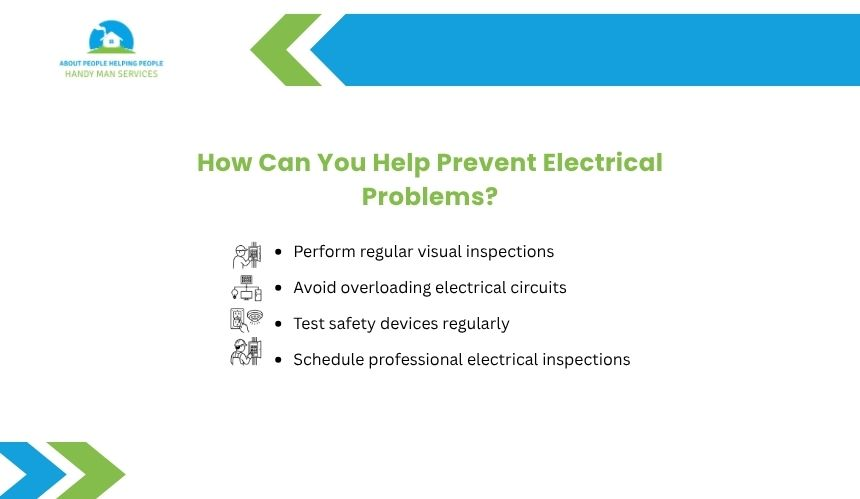
Preventing electrical problems is often easier and less expensive than repairing them after they develop. Routine inspections, safe electrical practices, and timely maintenance help reduce stress on the home’s electrical system while lowering the risk of electrical hazards. Incorporating these preventive measures into regular home maintenance helps keep the electrical system operating safely throughout the year.
Why Should You Perform Routine Visual Electrical Inspections?
Regular visual inspections help homeowners identify early signs of electrical problems before they become more serious. Checking outlets, switches, electrical cords, light fixtures, and the electrical panel for visible damage, discoloration, or unusual conditions allows potential hazards to be addressed promptly.
How Can You Avoid Overloading Electrical Circuits?
Using multiple high-power appliances on the same circuit can place excessive demand on the electrical system. Distributing electrical loads appropriately, unplugging unnecessary devices, and avoiding excessive use of extension cords or outlet adapters help reduce the risk of overloaded circuits.
Why Is It Important to Test Electrical Safety Devices?
Safety devices such as GFCI outlets, AFCI protection, smoke alarms, and carbon monoxide detectors help protect the home from electrical hazards. Testing these devices regularly according to the manufacturer’s recommendations helps verify they are functioning correctly when needed.
Why Should You Schedule Professional Electrical Inspections?
Although homeowners can perform basic visual checks, professional electrical inspections can identify hidden issues that are not easily visible. Periodic inspections by a licensed electrician help detect aging wiring, loose electrical connections, overloaded circuits, and other developing problems before they affect the safety or reliability of the electrical system.
Did You Know?
Many electrical problems can be prevented through regular maintenance rather than emergency repairs. Routine inspections, safe electrical practices, properly functioning safety devices, and timely professional evaluations all contribute to a safer, more reliable home electrical system while reducing the risk of unexpected electrical failures.
Frequently Asked Questions
What are the most common signs of electrical problems?
Some of the most common warning signs include flickering or dimming lights, frequently tripped circuit breakers, warm or discolored outlets, burning odors, buzzing sounds, sparking outlets, and intermittent power loss. These symptoms may indicate underlying electrical faults that should be professionally inspected.
Are flickering lights always an electrical issue?
Not always. A flickering light can sometimes be caused by a loose bulb or a faulty light fixture. However, if multiple lights flicker, the problem occurs frequently, or it is accompanied by other warning signs, the home’s electrical system should be evaluated by a licensed electrician.
Why do electrical outlets become warm?
Outlets should normally remain cool during regular use. Warm or hot outlets may indicate overloaded circuits, loose electrical connections, damaged wiring, or faulty outlets. Because these conditions can increase the risk of electrical hazards, they should be inspected promptly.
Can faulty wiring cause electrical fires?
Yes. Damaged or deteriorating wiring can create excessive heat, electrical arcing, or short circuits, all of which may increase the risk of an electrical fire. Routine inspections and timely repairs help reduce these risks and improve household safety.
How often should a home's electrical system be inspected?
Homeowners should perform routine visual inspections throughout the year and arrange professional inspections whenever recurring electrical problems occur, after major renovations, when purchasing an older home, or whenever concerns arise about the condition of the electrical system.
When should homeowners contact a licensed electrician?
A licensed electrician should be contacted if you notice recurring breaker trips, persistent flickering lights, warm outlets, burning odors, buzzing electrical components, visible wiring damage, sparking outlets, or any other electrical condition that affects the safety or reliability of the home’s electrical system.