- About People Helping People
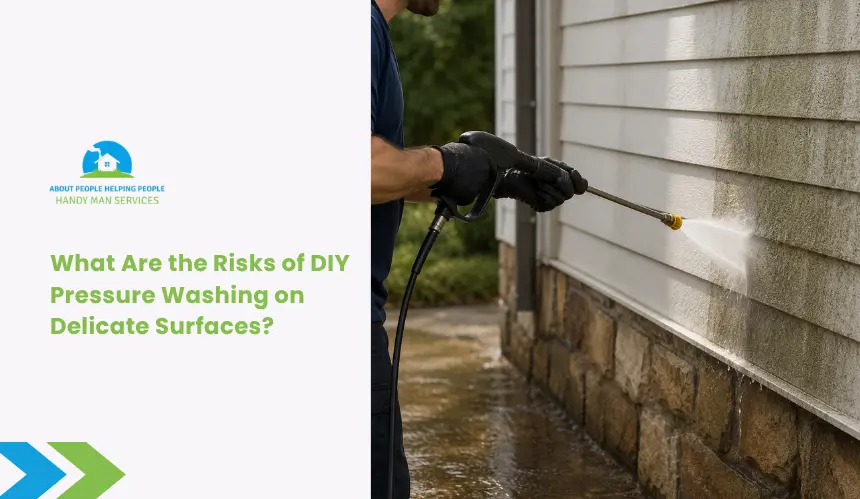
What Are the Risks of DIY Pressure Washing on Delicate Surfaces?
Quick Answer: DIY pressure washing can pose significant risks to delicate surfaces when excessive pressure, the wrong nozzle, or improper cleaning techniques are used. While pressure washers are effective for removing dirt and grime, they can also strip paint, splinter wood, damage siding, erode mortar joints, force water behind exterior materials, and harm other vulnerable surfaces if not operated correctly. Some of the most common risks of DIY pressure washing include:
Many homeowners assume that higher pressure yields better results, but excessive force can permanently damage materials designed to shed water rather than withstand concentrated high-pressure streams. Using the correct cleaning method and matching the pressure level to the surface being cleaned are essential for protecting the home’s exterior and preventing costly repairs. |
Pressure washers have become one of the most popular tools for DIY exterior cleaning. With the ability to remove years of dirt, mildew, and stains in a matter of minutes, they often seem like a simple solution for restoring a home’s appearance. However, the same force that makes pressure washing so effective can also cause costly damage when applied to delicate surfaces without proper technique or equipment.
Many homeowners are surprised to learn that a pressure washer can deliver water at thousands of pounds per square inch (PSI), enough to strip paint, splinter wood, erode mortar, and force water behind siding or trim. In many cases, the damage is not immediately visible. Water driven into small gaps around windows, doors, or exterior joints can remain hidden behind walls and contribute to moisture-related problems long after the cleaning project is finished.
Did you know? Professional exterior cleaning methods often vary depending on the material being cleaned. Delicate surfaces such as painted siding, roof shingles, soft wood, and decorative trim are frequently cleaned using low-pressure soft washing techniques rather than high-pressure washing to reduce the risk of surface damage.
DIY pressure washing is not necessarily unsafe, but understanding its limitations is essential. Knowing which surfaces are vulnerable, how damage occurs, and when lower-pressure cleaning methods are more appropriate can help homeowners protect their property while still achieving effective cleaning results.
Why Can DIY Pressure Washing Be Risky?
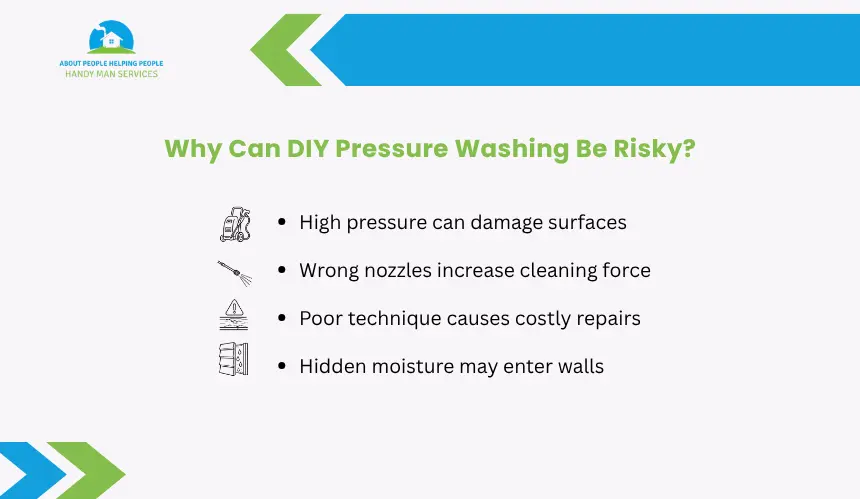
Pressure washing may appear straightforward, but achieving good cleaning results without damaging the surface requires much more than simply aiming a spray wand. The amount of water pressure produced, the type of nozzle selected, the spray angle, and the distance from the surface all influence the outcome. Small mistakes in any of these areas can turn a routine cleaning project into an expensive repair.
How Powerful Are Residential Pressure Washers?
Many consumer-grade pressure washers generate between 2,000 and 3,500 PSI, while some heavy-duty models can produce even higher pressures. This level of force can remove stubborn dirt and mildew, but it can also strip paint, damage wood fibers, loosen siding panels, and erode protective finishes if used incorrectly.
Fun Fact: A narrow, high-pressure nozzle concentrates water into a very small area, dramatically increasing the cleaning force. The same machine can produce very different results simply by changing the nozzle tip.
What DIY Mistakes Increase the Risk of Damage?
Surface damage often occurs because the equipment is more powerful than the user expects. Common mistakes include using excessive pressure, holding the nozzle too close to the surface, selecting the wrong spray tip, or concentrating the spray in one location for too long.
Some of the most frequent DIY pressure washing errors include:
- Using maximum pressure for every surface
- Choosing an incorrect nozzle type
- Spraying too close to delicate materials
- Directing water upward beneath siding or trim
- Cleaning painted or weathered surfaces too aggressively
Even a few seconds of improper spraying can permanently alter or damage certain materials.
Why Does Cleaning Technique Matter?
Pressure washing is not only about force but also about controlling how water interacts with the surface. Professional cleaning methods often involve adjusting pressure levels, maintaining a consistent spray angle, and keeping the nozzle moving to avoid concentrating force in one area.
Did you know? In many cases, the greatest risk is not the visible surface damage but the hidden moisture forced behind siding, trim, or window assemblies. Water intrusion from improper pressure washing may not become apparent until stains, mold growth, or material deterioration appear.
Because different exterior materials respond differently to high-pressure water, some surfaces are significantly more vulnerable to DIY pressure-washing damage than others.
Which Delicate Surfaces Are Most Vulnerable to Damage?
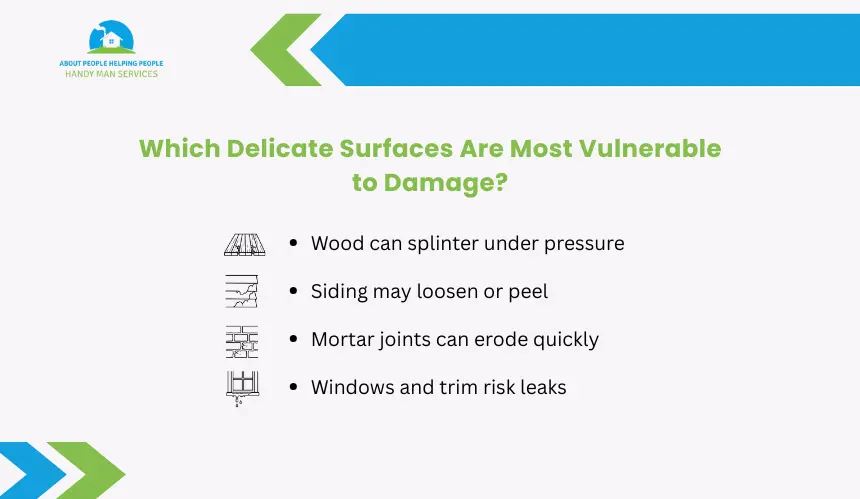
Not every exterior surface is designed to withstand high-pressure cleaning. While materials such as certain concrete surfaces may tolerate greater force, many common residential features can be damaged if the pressure, nozzle selection, or cleaning technique is not appropriate. Understanding which surfaces are most vulnerable helps homeowners avoid accidental damage and choose safer cleaning methods when necessary.
Why Are Wood Decks and Fences Easily Damaged?
Wood is a relatively soft material, and high-pressure water can erode the surface, raise the grain, and create splintering. Weathered or older wood is especially vulnerable because years of exposure to sunlight and moisture may have already weakened the fibers.
Improper pressure washing can leave wood surfaces rough, uneven, and more susceptible to future weather damage.
How Can Vinyl and Painted Siding Be Affected?
Vinyl siding is designed to shed rainwater, but a concentrated stream of high-pressure water can force moisture behind the panels or loosen sections of siding. Painted surfaces may also experience peeling, chipping, or premature finish failure if the spray is too aggressive.
Fun Fact: Paint that already has minor cracks or weak adhesion may appear intact before cleaning, but high-pressure washing can quickly expose these hidden weaknesses.
Why Are Brick, Mortar, and Masonry Joints at Risk?
Although brick itself is often durable, the mortar joints holding the structure together can be much softer. Excessive pressure may erode mortar, widen existing cracks, or remove protective surface layers that help resist weathering.
Older masonry surfaces can be particularly sensitive because age and environmental exposure may have weakened the joints over time.
Can Windows, Screens, and Exterior Trim Be Damaged?
Yes. High-pressure spray directed at windows can damage screens, weaken seals, or force water around the edges of frames. Decorative trim and wooden exterior details may also crack, splinter, or allow moisture to penetrate beneath protective finishes.
Because trim and window assemblies contain multiple joints and seams, they are especially vulnerable to hidden water intrusion.
Are Outdoor Furniture and Decorative Features Safe to Pressure Wash?
Many outdoor furnishings and decorative elements are made from materials such as painted wood, resin, wicker, lightweight metals, or composite products that can be scratched, stripped, or otherwise damaged by excessive pressure.
Did you know? Surface damage from pressure washing is not always immediately obvious. Water forced beneath siding, trim, or painted finishes may remain hidden until peeling paint, mold growth, or moisture stains appear weeks or months later.
Since these delicate materials respond differently to high-pressure cleaning, using the wrong technique can cause several types of damage that extend beyond the surface.
What Are the Most Common Risks of DIY Pressure Washing?

DIY pressure washing can create a wide range of problems when the equipment or technique is not matched to the surface being cleaned. While some damage is immediately visible, other issues may remain hidden for weeks or months before becoming noticeable. Understanding these common risks helps explain why delicate surfaces often require a more controlled approach to exterior cleaning.
Can Pressure Washing Strip Paint or Damage Surface Finishes?
Yes. One of the most common DIY mistakes is using more pressure than the surface can safely tolerate. High-pressure water can remove loose or aging paint, scratch protective coatings, and leave visible streaks or etching marks on delicate materials.
This is especially common on painted siding, wood trim, fences, doors, and outdoor furniture, where protective finishes may already be weathered.
How Does High Pressure Damage Wood?
Wood fibers can be surprisingly vulnerable to concentrated streams of water. Excessive pressure may raise the grain, create splintering, carve grooves into the surface, or leave an uneven texture that requires sanding or refinishing.
Older decks, fences, and decorative wooden features are particularly susceptible because years of exposure may have weakened the material.
Why Is Water Intrusion a Hidden Concern?
A pressure washer can force water into places where normal rainfall would never reach. Spraying upward beneath siding panels or directly into joints around windows, doors, and trim may drive moisture behind the exterior surface.
Because this water can become trapped in wall cavities or around framing materials, the resulting damage may not be discovered until stains, mold growth, or material deterioration develop.
Can Caulking and Sealants Be Damaged?
Caulking and sealants help create a weather-resistant barrier around windows, doors, and exterior joints. High-pressure spray can loosen, crack, or remove these protective materials, leaving gaps that allow water to enter during future rain events.
Fun Fact: Many exterior sealants are designed to resist normal weather exposure, but they are not intended to withstand direct streams of concentrated high-pressure water.
Can Pressure Washing Harm Windows and Screens?
Yes. Spraying too closely or using excessive pressure around windows may damage screens, weaken seals, crack older glass, or force water around the window assembly. Even when the glass remains intact, the protective components surrounding it may be affected.
How Can Pressure Washing Affect Brick and Mortar?
While brick is generally durable, mortar joints are often softer and more vulnerable to erosion. Aggressive cleaning can wear away mortar, enlarge existing cracks, and shorten the lifespan of masonry surfaces by exposing them to additional weather-related deterioration.
Can Landscaping and Outdoor Fixtures Be Damaged?
High-pressure water can also affect plants, mulch beds, decorative stonework, outdoor lighting, and other nearby features. Delicate landscaping may be uprooted or damaged, while light fixtures and decorative elements may sustain wear or breakage if struck directly by the spray.
Did you know? In many DIY pressure-washing projects, the most expensive repairs are not caused by visible surface marks but by hidden moisture intrusion or damage to protective exterior materials designed to keep water out of the home.
Because water intrusion is one of the most significant long-term concerns associated with improper pressure washing, it deserves closer attention when evaluating the risks to a home’s exterior.
Why Is Soft Washing Better for Some Delicate Surfaces?

Not every exterior surface needs the force of a high-pressure washer to become clean. In fact, many delicate materials respond better to low-pressure cleaning methods that remove dirt, algae, mildew, and other contaminants without exposing the surface to unnecessary mechanical stress. This is why soft washing is often recommended for surfaces that could be damaged by excessive pressure.
How Does Soft Washing Differ From Pressure Washing?
Traditional pressure washing relies on high-pressure water to remove buildup. Soft washing, by comparison, uses significantly lower water pressure and often combines it with specially formulated cleaning solutions that help break down organic growth and surface contaminants.
Because the cleaning process depends less on force, there is a lower risk of damaging sensitive materials.
Which Surfaces Benefit Most From Soft Washing?
Several common exterior surfaces can be negatively affected by aggressive pressure washing and are often better suited for low-pressure cleaning methods.
These include:
- Painted or older siding
- Wood decks and fences
- Exterior trim and fascia boards
- Roof shingles
- Window surrounds and door frames
- Decorative woodwork and outdoor furniture
Using an appropriate cleaning method for these materials helps preserve their appearance and structural condition.
How Does Soft Washing Help Reduce Surface Damage?
Lower water pressure reduces the chance of stripping paint, splintering wood, eroding mortar joints, or loosening caulking around windows and doors. It also minimizes the risk of water being forced into seams and vulnerable transition points, where delicate surfaces are most susceptible to damage.
Did you know? Many professional exterior cleaning services adjust their cleaning method based on the material rather than using maximum pressure for every job. Delicate surfaces are frequently cleaned with soft washing techniques because effective cleaning often depends more on the right process than on the highest possible PSI.
Choosing a cleaning method that matches the material being treated is one of the most effective ways to avoid the common risks of DIY pressure washing while still achieving long-lasting results.
Frequently Asked Questions
Can DIY pressure washing damage siding?
Yes. Excessive pressure or incorrect spraying techniques can crack, loosen, or force water behind siding panels, potentially causing hidden moisture problems and surface damage.
Is pressure washing safe for wood decks and fences?
It can be, but using too much pressure or holding the nozzle too close may splinter wood, raise the grain, and damage protective finishes. Delicate wood surfaces often require lower-pressure cleaning methods.
What surfaces should not be cleaned with high-pressure washing?
Painted siding, exterior trim, roof shingles, older wood, decorative masonry, windows, screens, and outdoor furniture are among the surfaces that can be damaged by excessive pressure.
Can DIY pressure washing cause water leaks?
Yes. Improper spraying angles can force water behind siding, trim, windows, and doors, increasing the risk of hidden moisture intrusion and long-term water damage.
What is the difference between pressure washing and soft washing?
Pressure washing relies on high-pressure water to remove dirt and buildup, while soft washing uses lower pressure and cleaning solutions to safely clean more delicate surfaces.
How can homeowners avoid pressure washing damage?
Using the correct nozzle, maintaining a safe spraying distance, matching the pressure level to the surface, and testing a small area first can help reduce the risk of accidental damage.
When should a professional exterior cleaning method be considered?
Professional cleaning may be appropriate when working with delicate surfaces such as painted siding, roof shingles, decorative trim, older wood, or areas where excessive pressure could cause costly damage.