
- About People Helping People
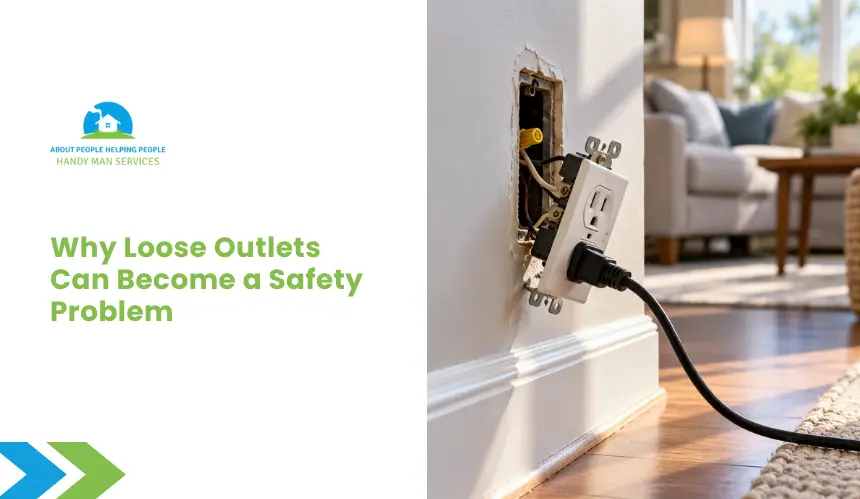
Why Loose Outlets Can Become a Safety Problem
Quick Answer: A loose electrical outlet is more than a minor inconvenience because it can create unsafe electrical connections inside the outlet. Loose outlets may increase the risk of electrical arcing, overheating, electric shock, intermittent power, and, in some cases, electrical fires. If an outlet moves when a plug is inserted, no longer holds plugs securely, becomes warm, sparks, or makes unusual noises, it should be inspected by a qualified licensed electrician. Common signs of a loose electrical outlet include:
Did You Know? Electrical outlets gradually wear with repeated use. As the internal contacts loosen over time, plugs may no longer fit securely, increasing electrical resistance. This extra resistance can generate heat and contribute to electrical arcing, making a loose outlet a safety concern rather than simply an inconvenience. |
A loose electrical outlet may seem like a small household annoyance, but it can be an early warning sign of a developing electrical problem. Outlets are designed to hold plugs securely and maintain stable electrical connections. When an outlet becomes loose or no longer grips plugs properly, the connection between the plug and the outlet may become unstable, increasing the risk of overheating, electrical arcing, intermittent power, and other electrical hazards.
Loose outlets can develop gradually through normal wear, repeated use, aging components, loose mounting hardware, or improper installation. Homeowners may notice that the outlet shifts when plugging in a device, plugs fall out easily, or the outlet feels warm during use. While these symptoms may appear minor, ignoring them can allow the problem to worsen and increase the likelihood of damage to the outlet, connected devices, or the home’s electrical system.
Important: A loose electrical outlet should never be considered normal. Homeowners can perform a visual inspection for obvious signs of damage, but outlets that move, spark, overheat, produce unusual sounds, or fail to hold plugs securely should be inspected and repaired by a qualified licensed electrician.
Understanding why loose outlets can become a safety problem helps homeowners recognize the warning signs early, reduce the risk of electrical hazards, and ensure that damaged outlets are repaired before they develop into more serious safety concerns.
Why Loose Electrical Outlets Are a Safety Concern
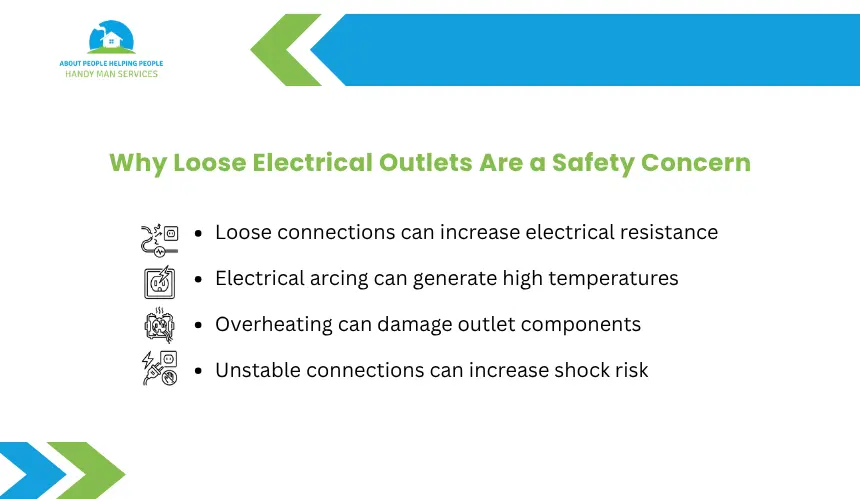
A loose electrical outlet is more than a cosmetic or mechanical issue. Secure electrical connections are essential for the safe flow of electricity, and when an outlet becomes loose, the connection between the plug and the receptacle may become unstable. This instability can increase electrical resistance, create excess heat, and place additional stress on the outlet and connected devices. Addressing a loose outlet early helps reduce the risk of more serious electrical hazards.
How Can a Loose Outlet Increase the Risk of Electrical Arcing?
When a plug does not fit securely inside an outlet, electricity may not flow through a consistent connection. Small gaps between the plug and the outlet contacts can create electrical arcing, where electricity jumps through the air instead of flowing smoothly. Electrical arcing generates high temperatures that can damage the outlet and surrounding electrical components.
Why Can Loose Outlets Become a Fire Hazard?
Loose electrical connections create additional resistance, which may cause the outlet to overheat during normal use. Over time, excessive heat can damage internal components, melt insulation, or affect nearby combustible materials. Promptly repairing a loose outlet helps reduce the risk of overheating and potential electrical fires.
Can a Loose Outlet Increase the Risk of Electric Shock?
Yes. An outlet that moves within the wall or does not securely hold a plug may expose users to unstable electrical connections while plugging in or removing devices. Damaged outlets, cracked faceplates, or loose internal components can increase the possibility of accidental contact with energized parts and should be professionally inspected.
Did You Know?
A properly functioning electrical outlet should hold plugs firmly and remain securely mounted in the wall. If an outlet shifts during use or repeatedly loses its grip on plugs, it may indicate worn internal contacts or loose electrical connections that require prompt attention to maintain electrical safety.
Common Signs of a Loose Electrical Outlet
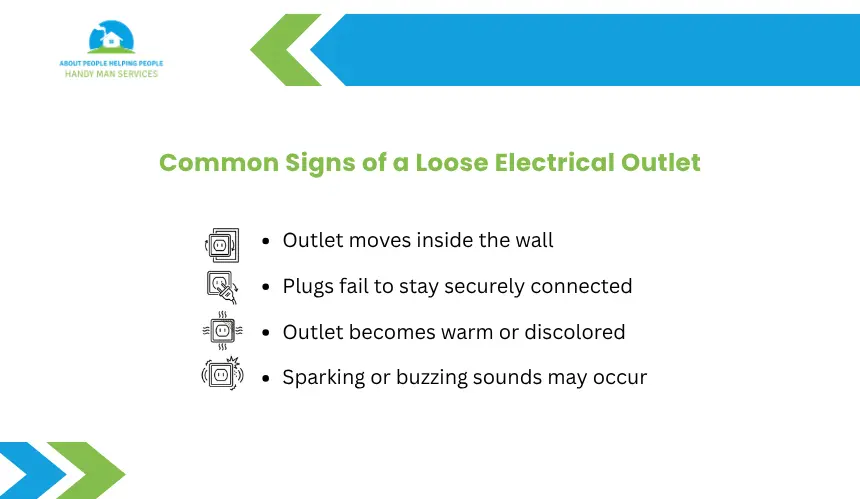
Loose electrical outlets often show warning signs before they become a serious safety hazard. Recognizing these symptoms early allows homeowners to arrange repairs before the outlet causes electrical damage or creates an unsafe condition. If an outlet shows any of the following signs repeatedly, it should be inspected by a qualified licensed electrician.
Why Does the Outlet Move in the Wall?
A properly installed outlet should remain firmly secured inside the electrical box. If the outlet shifts, tilts, or moves when plugging in or unplugging a device, it may indicate loose mounting hardware, a damaged electrical box, or improper installation that requires professional attention.
Why Won't Plugs Stay Securely in the Outlet?
An outlet that no longer holds plugs firmly often has worn internal contacts caused by years of repeated use. Loose-fitting plugs may create unstable electrical connections, increasing the risk of intermittent power, overheating, and electrical arcing.
What Does a Warm or Discolored Outlet Indicate?
Electrical outlets should remain close to room temperature during normal operation. Warm surfaces, scorch marks, discoloration, or melted plastic may indicate overheating caused by loose electrical connections or excessive electrical resistance. These warning signs should never be ignored.
Should You Be Concerned About Sparking or Buzzing Sounds?
Yes. Small sparks, buzzing, humming, or crackling sounds coming from an outlet may indicate loose internal wiring, worn contacts, or electrical arcing. These symptoms suggest the outlet is not operating normally and should be inspected promptly to reduce the risk of electrical hazards.
Important:
A loose outlet should never be used until the cause has been identified. Outlets that move, fail to hold plugs securely, become warm, spark, or produce unusual sounds may indicate unsafe electrical conditions that require inspection and repair by a qualified licensed electrician.
What Causes Electrical Outlets to Become Loose?
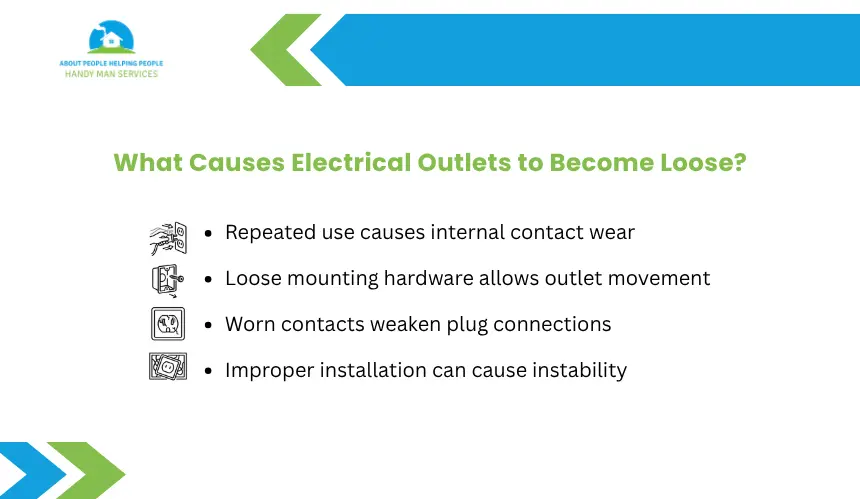
Electrical outlets are designed to withstand years of everyday use, but repeated plugging and unplugging, aging components, or installation issues can gradually weaken their ability to hold plugs securely. Understanding the common causes of loose outlets helps homeowners recognize why the problem develops and why timely repairs are important for maintaining electrical safety.
Does Normal Wear and Tear Cause Loose Outlets?
Yes. Every time a plug is inserted or removed, the outlet’s internal contacts experience a small amount of wear. After years of regular use, these contacts can lose their gripping strength, causing plugs to fit loosely and reducing the quality of the electrical connection.
Can Loose Mounting Hardware Make an Outlet Move?
Yes. An outlet that shifts or moves when a plug is inserted may have loose mounting screws or an electrical box that no longer secures the outlet properly. Movement inside the wall can place additional stress on the wiring and electrical connections, making prompt repairs important.
What Happens When the Internal Contacts Wear Out?
Inside every electrical outlet are metal contacts that hold the plug firmly in place. As these contacts wear over time, they may no longer maintain a secure connection with the plug. This can lead to intermittent power, increased electrical resistance, overheating, and electrical arcing during normal use.
Can Improper Installation Lead to Loose Outlets?
Improperly installed outlets or loose wiring connections may become unstable over time. Outlets that were not securely mounted or correctly connected can develop movement, poor electrical contact, or recurring performance issues. Professional installation helps ensure outlets remain secure and operate safely.
Did You Know?
Electrical outlets are not designed to last forever. Like other electrical components, they gradually wear with age and repeated use. Replacing worn outlets before they fail completely helps maintain safe electrical connections and reduces the risk of overheating, electrical arcing, and other electrical hazards.
What Should You Do if You Notice a Loose Outlet?
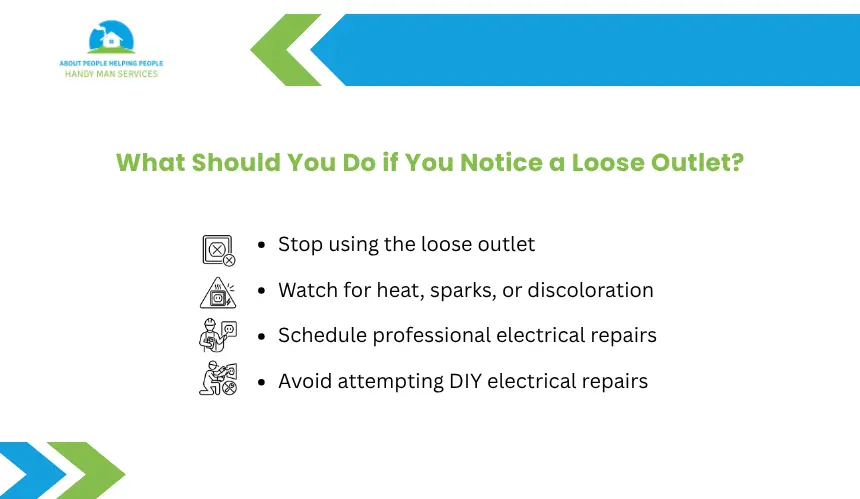
A loose electrical outlet should never be ignored, even if it still appears to work. Continuing to use a damaged outlet can increase stress on the electrical connections and raise the risk of overheating or other electrical hazards. Taking the appropriate steps as soon as the problem is noticed helps maintain the safety and reliability of the home’s electrical system.
Should You Stop Using a Loose Outlet?
Yes. If an outlet moves in the wall, fails to hold plugs securely, sparks, or becomes warm during use, it is best to avoid using it until it has been inspected. Continuing to plug devices into a loose outlet may worsen the condition of the internal electrical connections.
What Warning Signs Should You Watch For?
A loose outlet may show additional signs that indicate the problem is becoming more serious. Monitoring these symptoms can help determine whether immediate professional attention is needed.
Common warning signs include:
- Warm or hot outlet surface
- Burn marks or discoloration
- Sparking during use
- Buzzing or crackling sounds
- Intermittent power to connected devices
Why Should You Schedule Professional Repairs?
A licensed electrician can determine whether the problem involves worn outlet contacts, loose wiring, damaged mounting hardware, or another electrical fault. Correctly diagnosing and repairing the underlying issue helps restore safe electrical connections and reduces the risk of future electrical problems.
Why Should You Avoid DIY Electrical Repairs?
Electrical outlets are connected directly to the home’s wiring system, and improper repairs can create serious safety hazards. Work involving outlet replacement, wiring repairs, or electrical connections should be completed by a qualified licensed electrician to ensure the repair is performed safely and in accordance with applicable electrical standards.
Important:
A loose outlet is a warning sign that should be addressed promptly rather than monitored over time. Discontinuing use of the outlet and arranging a professional inspection helps reduce the risk of electrical arcing, overheating, electric shock, and potential fire hazards while maintaining the safety of the home’s electrical system.
Tips to Help Keep Electrical Outlets Safe
Keeping electrical outlets in good condition is an important part of maintaining a safe home. Simple preventive practices can reduce unnecessary wear, help identify developing problems early, and lower the risk of electrical hazards. Regular inspections and proper outlet use also help extend the service life of electrical components.
Why Should You Inspect Electrical Outlets Regularly?
Routine visual inspections can help identify loose outlets, cracked faceplates, discoloration, burn marks, or other signs of wear before they become more serious. Checking outlets during regular home maintenance allows homeowners to arrange repairs before safety is affected.
Why Should You Avoid Forcing Plugs Into Outlets?
Plugs should fit firmly without excessive force. Forcing oversized, damaged, or loose plugs into an outlet can wear the internal contacts more quickly and increase stress on the outlet. Using plugs that fit properly helps maintain secure electrical connections.
Why Is It Important to Replace Damaged Outlets Promptly?
Outlets that are cracked, loose, discolored, or no longer hold plugs securely should be replaced rather than continued in service. Prompt replacement helps restore safe electrical connections and reduces the risk of overheating, electrical arcing, and other electrical hazards.
Why Should You Schedule Routine Electrical Inspections?
Professional electrical inspections can identify hidden issues that may not be visible during routine homeowner checks. Periodic inspections help detect loose electrical connections, worn outlets, aging wiring, and other developing problems before they create safety risks or require more extensive repairs.
Did You Know?
Electrical outlets experience wear every time a device is plugged in or unplugged. Regular inspections, proper use, timely replacement of worn outlets, and periodic professional electrical evaluations help keep outlets functioning safely while reducing the risk of electrical failures and household safety hazards.
Frequently Asked Questions
Are loose electrical outlets dangerous?
Yes. Loose electrical outlets can create unstable electrical connections that increase the risk of overheating, electrical arcing, electric shock, and, in some cases, electrical fires. Any outlet that moves, becomes warm, sparks, or no longer holds plugs securely should be inspected promptly.
Can a loose outlet cause a fire?
A loose outlet can become a fire hazard if poor electrical connections generate excessive heat or electrical arcing. While not every loose outlet will cause a fire, it should never be ignored because the underlying problem can worsen over time.
Why won't my plug stay in the outlet?
A plug that falls out easily is often a sign that the outlet’s internal contacts have worn out through repeated use. Worn contacts may no longer provide a secure electrical connection, making outlet replacement the safest long-term solution.
Should I stop using a loose outlet?
Yes. If an outlet moves in the wall, feels warm, sparks, produces unusual sounds, or fails to hold plugs securely, it is safest to discontinue using it until it has been inspected and repaired by a licensed electrician.
Can I tighten a loose outlet myself?
Homeowners may notice that an outlet is loose, but repairs involving electrical outlets, wiring, or electrical connections should be performed only after the circuit has been safely de-energized and by someone qualified to do the work. If you are unsure of the cause or proper repair procedure, contact a licensed electrician rather than attempting a repair yourself.
When should an electrical outlet be replaced?
An outlet should be replaced if it no longer holds plugs securely, moves within the wall, becomes warm, shows burn marks, sparks during use, has visible cracks, or exhibits other signs of wear or damage. Prompt replacement helps maintain safe electrical connections and reduces the risk of future electrical hazards.