
- About People Helping People
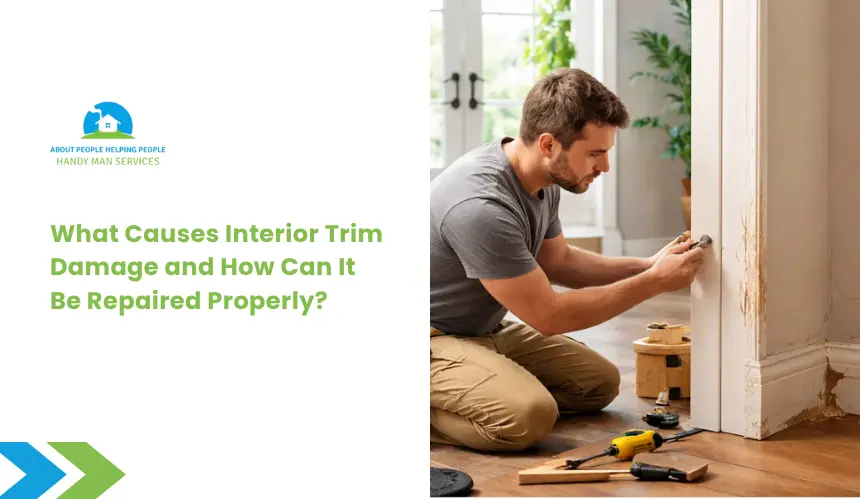
What Causes Interior Trim Damage and How Can It Be Repaired Properly?
Quick Answer: Interior trim damage typically occurs due to environmental stress, material limitations, and installation issues. The repair approach depends on identifying the root cause and applying the correct restoration method rather than treating surface symptoms. Common Causes of Interior Trim Damage
How Interior Trim Should Be Repaired Properly
A proper repair process focuses on cause correction + structural restoration + surface finishing, ensuring the trim performs reliably rather than temporarily masking visible defects. |
Interior trim damage often goes unnoticed until visible cracks, swelling, or peeling paint begin to affect the overall finish of a space. What appears to be a minor cosmetic issue is usually the result of underlying environmental stress, material response, or installation flaws. Without addressing these root causes, surface-level fixes tend to fail quickly, leading to repeated repairs and escalating deterioration.
Did you know? Indoor humidity levels above 60% can significantly accelerate material expansion in wood-based trim, increasing the risk of warping and joint separation over time. This makes moisture control one of the most critical yet overlooked factors in maintaining trim integrity.
Interior trim, whether baseboards, crown molding, or door casings, acts as a finishing layer that interacts closely with walls, flooring, and structural movement. Because of this positioning, it is constantly exposed to impact, temperature shifts, and moisture variations. These combined forces gradually weaken both the material and its protective coatings, leading to visible and structural damage.
Did you know? Studies in building material performance show that repeated expansion and contraction cycles can reduce joint stability in interior finishes by up to 30% over time, especially when installation does not account for movement tolerance.
Understanding what causes interior trim damage requires more than identifying surface defects. It involves analyzing how materials behave under stress, how environmental conditions influence performance, and how improper installation can amplify these effects. This article breaks down the core causes, explains how to accurately diagnose different types of damage, and outlines a structured repair process designed for long-term durability rather than temporary fixes.
What Is Interior Trim and Why Is It Vulnerable to Damage Over Time?
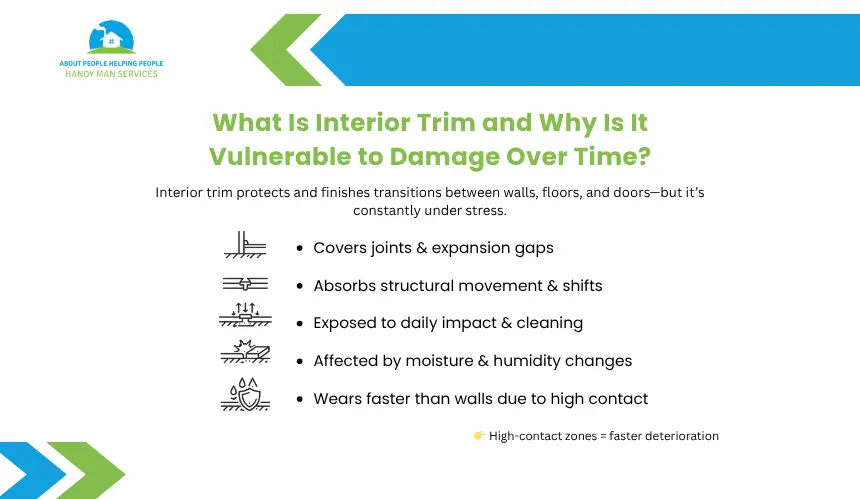
Interior trim functions as a finishing component that conceals structural transitions between walls, floors, ceilings, doors, and windows. While it is not load-bearing, it plays a critical role in protecting edges, covering expansion gaps, and maintaining visual continuity across interior surfaces. Because trim sits at the intersection of multiple building elements, it is constantly influenced by movement, environmental conditions, and daily use.
Functional Role of Trim in Interior Finishing Systems
Trim is installed to bridge joints where different materials meet, such as drywall to flooring or wall corners to door frames. These junctions naturally experience slight movement due to structural settling, thermal expansion, and humidity changes. Trim absorbs and masks this movement, but over time, repeated stress can weaken fasteners, loosen joints, and create visible gaps or cracks.
Did you know? Even minor structural movement, often less than a few millimeters, can place continuous stress on trim joints, gradually breaking down caulk lines and causing separation at seams.
How Material Composition Influences Durability and Failure Risk
The durability of interior trim depends heavily on the material used. MDF, solid wood, and PVC all respond differently to environmental stress. MDF is highly uniform but more susceptible to moisture absorption, while solid wood expands and contracts based on humidity levels. PVC offers better moisture resistance but can deform under high temperatures or improper installation.
Protective layers such as primer and paint act as barriers against moisture and wear. When these coatings degrade, the underlying material becomes exposed, accelerating deterioration and increasing vulnerability to damage.
Did you know? Unsealed or poorly primed trim can absorb moisture up to several times faster than sealed surfaces, significantly increasing the likelihood of swelling and paint failure.
Why Trim Experiences Accelerated Wear Compared to Other Interior Elements
Interior trim is typically installed in high-contact and high-risk zones, such as along floors, around doors, and near windows. These areas are frequently exposed to physical impact from foot traffic, furniture movement, cleaning activities, and daily use. In addition, trim located near floors or exterior walls is more likely to encounter moisture from spills, leaks, or condensation.
Unlike walls or ceilings, which remain relatively undisturbed, trim endures continuous mechanical and environmental stress. Over time, this repeated exposure leads to a combination of surface damage, joint instability, and material fatigue.
Did you know? Baseboards are among the most frequently impacted interior elements, with studies in residential wear patterns showing they experience significantly higher physical contact than wall surfaces, making them more prone to dents and surface degradation.
What Are the Primary Causes of Interior Trim Damage?
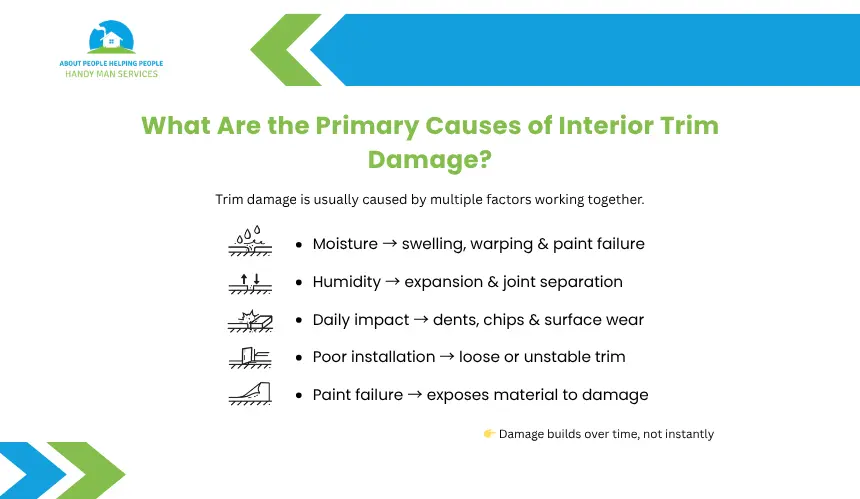
Interior trim damage rarely results from a single factor. In most cases, it develops through a combination of environmental exposure, material behavior, and installation weaknesses. Understanding the exact cause is critical because each damage type follows a different failure mechanism and requires a specific repair approach.
How Moisture Exposure Leads to Swelling, Warping, and Paint Failure
Moisture is one of the most damaging factors for interior trim, particularly for porous materials like MDF and wood. When water penetrates the surface, whether from leaks, spills, or condensation, it is absorbed into the fibers. This causes the material to expand unevenly, leading to swelling, edge distortion, and eventual warping.
As the material expands, the paint layer on top loses adhesion and begins to crack or peel. In prolonged exposure, internal fiber breakdown can occur, making the trim structurally weak and difficult to repair.
Did you know? MDF can swell significantly when exposed to moisture, and even short-term water contact can permanently distort its shape if not dried and treated quickly.
How Humidity Fluctuations Create Expansion and Joint Separation Issues
Unlike direct moisture exposure, ambient humidity affects trim gradually but consistently. When indoor humidity rises, materials like wood absorb moisture from the air and expand. As humidity drops, they contract. This continuous expansion–contraction cycle creates stress at joints, seams, and fastening points.
Over time, this movement leads to visible gaps, cracked caulking, and separation between trim and adjacent surfaces. These issues are often mistaken for poor installation when they are actually driven by environmental instability.
Did you know? A change in indoor humidity of just 20–30% can cause measurable dimensional changes in wood trim, enough to create visible joint separation over time.
How Physical Impact and High-Traffic Contact Damage Trim Surfaces
Interior trim, especially baseboards and door casings, is located in areas with frequent movement and interaction. Furniture contact, foot traffic, cleaning equipment, and accidental impacts create dents, scratches, and chipped edges. While these may begin as surface-level defects, repeated impact weakens the material structure over time.
In high-traffic areas, this type of damage accumulates quickly, leading to uneven surfaces and exposed material beneath the protective coating.
Did you know? High-contact zones such as hallways and entry points can experience repeated low-force impacts daily, which gradually degrade trim surfaces even without noticeable single-event damage.
How Poor Installation and Fastening Errors Trigger Structural Instability
Improper installation can significantly reduce the lifespan of interior trim. Incorrect nail spacing, weak adhesive application, or failure to align trim properly creates stress points that worsen over time. Without proper fastening, trim may shift, loosen, or detach from the surface.
In addition, failing to allow for expansion gaps during installation can cause the trim to press against adjacent materials, increasing the likelihood of cracking and joint failure as the material expands.
Did you know? Inconsistent fastening or insufficient support can cause trim to lose stability within a few seasonal cycles, especially in environments with noticeable temperature and humidity variation.
How Paint System Failure Contributes to Surface Deterioration
Paint and primer are not just aesthetic they serve as protective layers that shield trim from moisture and wear. When these coatings are improperly applied or begin to degrade, the underlying material becomes exposed to environmental stress.
Peeling, cracking, or bubbling paint is often an early indicator of deeper issues such as moisture infiltration or poor surface preparation. Once the protective barrier fails, deterioration accelerates rapidly.
Did you know? Poor surface preparation before painting can reduce coating adhesion significantly, leading to premature paint failure even under normal indoor conditions.
How Biological and Environmental Factors Affect Trim Integrity
In certain conditions, biological factors such as mold growth or pest activity can compromise interior trim. Moist environments create ideal conditions for mold, which weakens the material and stains the surface. In wooden trim, termites or other pests can cause internal damage that is not immediately visible.
Additionally, exposure to harsh cleaning chemicals or environmental pollutants can degrade finishes and weaken protective coatings over time.
Did you know? Mold can begin developing on untreated or damp surfaces within 24–48 hours, especially in enclosed or poorly ventilated spaces, accelerating material breakdown if not addressed quickly.
How Do Different Trim Materials Respond to Damage Conditions?
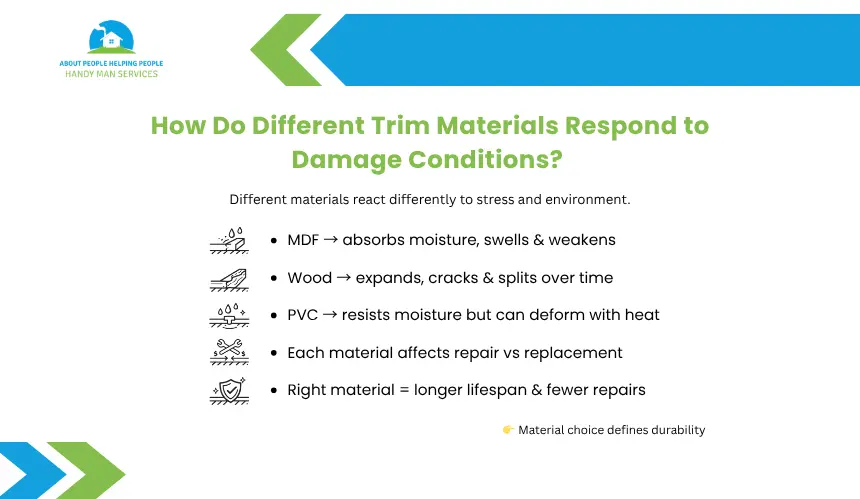
Interior trim performance under stress varies significantly depending on the material used. Each material has distinct physical properties that influence how it reacts to moisture, impact, temperature changes, and long-term wear. Understanding these differences is essential for both accurate diagnosis and selecting the correct repair method.
MDF Trim Behavior Under Moisture and Pressure Stress
Medium-density fiberboard (MDF) is widely used due to its smooth finish and cost efficiency, but it is highly susceptible to moisture. Because MDF is composed of compressed wood fibers, it absorbs water quickly, leading to rapid swelling and edge deformation.
Once moisture penetrates MDF, the internal fibers expand and lose structural integrity, making the damage difficult to reverse. Even after drying, the material often remains permanently distorted.
Key characteristics of MDF under damage conditions:
- Absorbs moisture rapidly, especially at edges and cut sections
- Swells and softens, leading to irreversible deformation
- Loses holding strength for nails and adhesives after exposure
- Surface coating failure occurs quickly once moisture enters
Did you know? MDF can expand noticeably even with minimal moisture exposure, and once swollen, it typically cannot return to its original shape, often requiring replacement instead of repair.
Solid Wood Trim Response to Expansion, Cracking, and Splitting
Solid wood trim is more durable than MDF but reacts strongly to environmental changes. It expands when humidity rises and contracts when conditions become dry. This natural movement can lead to cracking, splitting, or joint separation over time.
Unlike MDF, wood can often be repaired if the damage is not severe, but repeated expansion cycles weaken joints and coatings.
Common damage patterns in solid wood trim:
- Hairline cracks caused by shrinkage during dry conditions
- Splitting along the grain under stress or improper fastening
- Joint gaps due to seasonal expansion and contraction
- Surface wear from repeated sanding and repainting cycles
Did you know? Wood trim can expand and contract multiple times throughout the year, and without proper sealing, this movement gradually reduces joint stability and coating adhesion.
PVC and Composite Trim Performance in Variable Environments
PVC and composite trims are designed to resist moisture and are commonly used in areas prone to damp conditions. Unlike wood-based materials, they do not absorb water, making them less vulnerable to swelling or rot.
However, these materials can still experience deformation under temperature changes or improper installation. Heat exposure may cause slight expansion, and insufficient fastening can lead to movement or warping.
Performance characteristics of PVC and composite trim:
- Resistant to moisture absorption and biological damage
- Less prone to swelling, warping, or rot
- Can expand under heat, requiring proper installation spacing
- Surface scratches and dents are still possible under impact
Did you know? While PVC trim resists water damage, temperature fluctuations can still cause expansion, which may lead to joint misalignment if installation does not account for movement.
How Material Selection Impacts Repairability and Longevity
The type of trim material directly determines whether damage can be repaired effectively or if replacement is necessary. Some materials allow localized repair, while others require full section replacement once compromised.
General repairability comparison:
- MDF: Limited repair potential after moisture exposure; often replaced
- Solid wood: Repairable through filling, sanding, and refinishing if damage is moderate
- PVC/composite: Durable and resistant but may require replacement if structurally deformed
Selecting the appropriate material based on environmental conditions, such as humidity levels and traffic exposure, plays a critical role in reducing long-term damage and maintenance frequency.
Did you know? Choosing moisture-resistant materials in vulnerable areas can significantly reduce repair frequency and extend the lifespan of interior trim systems.
How Can Interior Trim Damage Be Accurately Diagnosed?
Accurate diagnosis is the most critical step in repairing interior trim effectively. Surface defects often mask deeper issues such as moisture infiltration, structural movement, or material failure. Without identifying the root cause, repairs may only provide temporary improvement before the damage reappears.
How to Differentiate Between Surface-Level and Structural Damage
Interior trim damage can generally be categorized into cosmetic (surface-level) or structural (substrate-level) issues. Surface damage affects only the outer layer, while structural damage compromises the integrity of the material itself.
Surface-level damage typically includes:
- Minor scratches, dents, or chipped paint
- Hairline cracks limited to the coating layer
- Small gaps in caulking without material movement
Structural damage indicators include:
- Soft or weakened material beneath the surface
- Deep cracks extending through the trim
- Warping or visible deformation
- Loose or detached trim sections
Identifying this distinction helps determine whether simple refinishing is sufficient or if deeper repair or replacement is required.
Did you know? Many visible paint defects originate from underlying structural issues, meaning repainting alone often fails unless the root cause is addressed.
How to Identify Moisture-Related Deterioration Early
Moisture damage often develops gradually and may not be immediately visible. Early detection relies on recognizing subtle visual and physical changes in the trim.
Key signs of moisture-related damage:
- Swelling along edges or seams
- Discoloration or darkened patches
- Bubbling or peeling paint
- Soft or spongy texture when pressed
In advanced cases, persistent moisture can lead to internal breakdown of fibers, making the trim fragile and prone to further damage.
Did you know? Moisture-related deterioration often begins internally before becoming visible, which is why early-stage detection significantly improves repair success rates.
How to Detect Joint, Seam, and Fastener Failures
Trim joints and fastening points are common failure zones because they absorb stress from movement and environmental changes. When these areas weaken, visible separation and instability occur.
Indicators of joint and fastening issues:
- Gaps forming between trim and wall surfaces
- Cracked or separating caulk lines
- Nail pops or visible fastener movement
- Sections of trim shifting or pulling away
These issues often point to either installation deficiencies or repeated expansion–contraction cycles affecting the trim.
Did you know? Joint failure is one of the earliest signs of long-term material movement, often appearing before more severe structural damage develops.
What Visual and Physical Signs Indicate Underlying Issues
A comprehensive diagnosis involves both visual inspection and physical assessment. While visual signs provide initial clues, physical testing helps confirm the extent of damage.
Key evaluation methods include:
- Pressing the surface to detect softness or instability
- Running a hand along edges to identify warping or unevenness
- Inspecting paint adhesion for signs of underlying failure
- Observing patterns of damage across multiple areas
When damage appears repeatedly in the same location, it often indicates an unresolved environmental or structural issue rather than isolated wear.
Did you know? Repeated damage in the same trim section is usually a sign of an ongoing underlying problem, such as hidden moisture or continuous structural movement, rather than isolated impact or wear.
When Should Interior Trim Be Repaired vs Replaced?
Deciding whether to repair or replace interior trim requires evaluating the extent of damage, material condition, and the likelihood of long-term performance. Repairing without considering structural integrity or environmental causes often leads to repeated failure, while unnecessary replacement increases cost without added benefit.
Conditions Where Repair Is Effective and Structurally Sound
Repair is appropriate when the damage is localized and the underlying material remains stable. In these cases, restoring the surface and reinforcing minor defects can return the trim to its original function and appearance.
Repair is typically suitable when:
- Damage is limited to surface-level defects such as scratches, dents, or chipped paint
- The trim remains firmly attached with no significant movement or looseness
- Moisture exposure has not caused internal fiber breakdown
- Cracks are shallow and do not compromise the structural profile
Under these conditions, processes such as filling, sanding, and refinishing can restore both aesthetics and durability.
Did you know? Most minor trim damage can be effectively repaired if addressed early, before environmental factors weaken the internal structure of the material.
Scenarios That Require Partial or Full Trim Replacement
Replacement becomes necessary when the damage affects the structural integrity of the trim or when the material has permanently deformed. In such cases, repairs may only provide short-term improvement and fail under continued stress.
Replacement is recommended when:
- Trim has warped, swollen, or lost its original shape
- Internal material has softened due to prolonged moisture exposure
- Sections are detached or cannot be securely re-fastened
- Damage extends across large or continuous areas
- Repeated repairs have failed due to unresolved underlying issues
Partial replacement may be possible when damage is isolated, while full replacement is required when deterioration is widespread.
Did you know? Once moisture penetrates deeply into materials like MDF, structural integrity can degrade rapidly, making replacement more reliable than repeated repair attempts.
Cost, Performance, and Long-Term Durability Considerations
The decision between repair and replacement should also account for long-term performance rather than just immediate cost. While repair is generally less expensive upfront, it may not provide lasting results if the material is already compromised.
Key factors to consider:
- Repair costs vs replacement costs: Smaller repairs are cost-effective, but repeated fixes can exceed replacement costs over time
- Material lifespan: Damaged materials may fail sooner even after repair
- Environmental conditions: Areas with ongoing moisture or high traffic may require more durable solutions
- Maintenance frequency: Repairs in unstable conditions may require ongoing attention
A balanced approach focuses on selecting the option that ensures durability, stability, and minimal future intervention.
Did you know? In many cases, investing in replacement with more suitable materials can reduce long-term maintenance costs by minimizing recurring damage and repair cycles.
What Is the Correct Step-by-Step Process to Repair Interior Trim Properly?
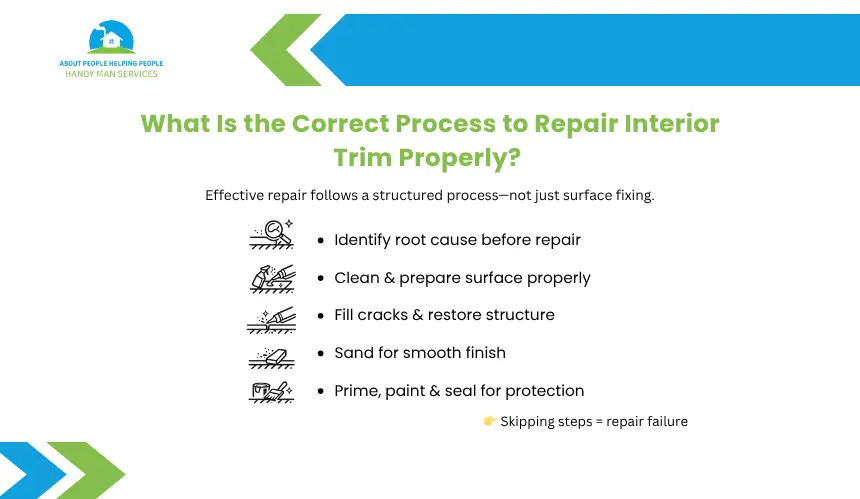
A proper trim repair process follows a structured sequence that addresses the root cause, restores material integrity, and rebuilds the protective surface. Skipping steps or focusing only on visible defects often results in short-term fixes that fail under continued stress.
Assessing Damage and Identifying the Root Cause Before Repair
Every repair should begin with a clear understanding of why the damage occurred. This involves inspecting for moisture sources, structural movement, or installation issues that may have contributed to the problem.
Key assessment actions include:
- Identifying signs of leaks, humidity exposure, or condensation
- Checking for loose trim, joint separation, or fastening issues
- Evaluating whether the damage is surface-level or structural
Addressing the root cause first ensures that the repair will not fail due to recurring conditions.
Did you know? Repairs performed without eliminating the underlying cause often fail within a short period, especially in moisture-affected environments.
Preparing the Surface and Stabilizing the Material
Surface preparation is essential for ensuring proper adhesion and long-term durability. Any unstable or contaminated material must be removed before proceeding with repair.
Preparation steps include:
- Removing loose or peeling paint and damaged material
- Cleaning dust, debris, and contaminants from the surface
- Allowing any moisture-affected areas to fully dry
- Securing loose trim sections to restore stability
Proper preparation creates a solid foundation for all subsequent repair steps.
Did you know? Surface contamination is one of the leading causes of repair failure, as it prevents fillers and coatings from bonding effectively.
Filling, Patching, and Restoring Structural Integrity
Once the surface is prepared, damaged areas must be rebuilt using appropriate materials. The choice of filler depends on the depth and type of damage.
Common repair approaches include:
- Using wood filler for minor dents, cracks, and surface defects
- Applying epoxy-based fillers for deeper or structural damage
- Re-fastening loose sections with nails or adhesive where needed
The goal is to restore both the shape and strength of the trim before finishing.
Did you know? Using the correct filler type significantly improves repair durability, as different materials respond differently to stress and environmental conditions.
Sanding and Reprofiling for a Uniform Surface Finish
After filling, the repaired area must be smoothed and reshaped to match the original trim profile. This step ensures that the repair blends seamlessly with surrounding surfaces.
Key sanding considerations:
- Starting with coarser grit to level the surface
- Progressing to finer grit for smooth finishing
- Maintaining edges and contours to preserve trim design
Improper sanding can create uneven surfaces or distort the original profile, affecting both appearance and performance.
Did you know? Gradual sanding progression improves finish quality and ensures better paint adhesion compared to using a single grit level.
Priming and Repainting to Restore Protective Coatings
Priming and painting are critical for sealing the repaired area and restoring the trim’s protective barrier. This step prevents moisture intrusion and enhances durability.
Finishing steps include:
- Applying primer to seal the repaired surface
- Using compatible paint to match the existing finish
- Ensuring even coverage for consistent protection
A properly applied coating system protects the trim from environmental stress and future damage.
Did you know? Primer improves paint adhesion and can significantly extend the lifespan of the finish, especially on repaired surfaces.
Sealing Joints and Finishing for Long-Term Protection
The final step involves sealing joints and edges to accommodate movement and prevent moisture entry. This ensures the repair remains stable over time.
Final finishing actions include:
- Applying caulk to joints and seams
- Smoothing edges for a clean, continuous finish
- Inspecting the repaired area for uniformity and stability
Sealing plays a key role in preventing future joint separation and protecting vulnerable areas.
Did you know? Properly sealed joints can absorb minor movement and reduce the risk of cracks forming due to expansion and contraction cycles.
What Common Mistakes Lead to Recurring Trim Damage After Repairs?
Many trim repairs fail not because of the repair itself, but due to overlooked factors during the process. These mistakes often result in damage reappearing in the same areas, creating a cycle of repeated fixes without long-term resolution. Understanding these errors helps ensure that repairs are both effective and durable.
Ignoring Underlying Moisture or Structural Issues
One of the most common mistakes is addressing only the visible damage while ignoring the root cause. If moisture intrusion, humidity imbalance, or structural movement is not resolved, the repaired area will continue to deteriorate.
Typical oversights include:
- Repairing swollen trim without fixing leaks or moisture sources
- Repainting over areas affected by humidity without improving ventilation
- Ignoring recurring joint movement caused by structural shifts
This approach leads to repeated failure, as the same conditions continue to affect the material.
Did you know? Moisture-related damage is one of the leading causes of repair failure, with untreated sources often causing issues to reappear within a short period.
Using Incompatible Fillers, Paints, or Adhesives
Selecting the wrong materials for repair can compromise durability and performance. Different trim materials require specific fillers and coatings that can adapt to their movement and environmental exposure.
Common material-related mistakes:
- Using rigid fillers on flexible materials, leading to cracking
- Applying incompatible paint types that fail to adhere properly
- Using low-quality adhesives that weaken over time
Material incompatibility often results in poor bonding, surface defects, and reduced lifespan of the repair.
Did you know? Incompatible repair materials can fail under normal environmental conditions, even if the initial repair appears visually correct.
Skipping Critical Surface Preparation Steps
Surface preparation is often underestimated, but it directly affects the success of the repair. Applying fillers or paint over unstable or contaminated surfaces prevents proper adhesion.
Frequent preparation errors include:
- Leaving loose paint or damaged material in place
- Failing to clean dust, grease, or debris before repair
- Not allowing moisture-affected areas to fully dry
Without proper preparation, even high-quality materials cannot perform effectively.
Did you know? Poor surface preparation is one of the most common reasons for coating failure, significantly reducing adhesion and durability.
Failing to Account for Environmental Conditions
Environmental factors such as humidity, temperature, and airflow continue to influence trim even after repair. Ignoring these conditions can cause repaired areas to fail under ongoing stress.
Environmental mistakes include:
- Repairing trim in high-humidity conditions without controlling moisture
- Not sealing joints in areas prone to expansion and contraction
- Reinstalling or repairing trim without allowing for movement tolerance
Repairs must account for the environment in which the trim operates to ensure long-term stability.
Did you know? Even well-executed repairs can fail if environmental conditions remain unchanged, highlighting the importance of addressing both material and environmental factors together.
How Can Interior Trim Damage Be Prevented in the Long Term?
Preventing interior trim damage requires a proactive approach that focuses on controlling environmental conditions, selecting appropriate materials, and maintaining installation quality. Since most trim failures develop gradually, consistent preventive measures can significantly reduce the need for repairs and extend the lifespan of the material.
Controlling Moisture and Indoor Humidity Levels Effectively
Moisture management is one of the most critical factors in preventing trim damage. Excess humidity or hidden leaks can continuously stress trim materials, leading to swelling, joint failure, and coating breakdown.
Effective moisture control strategies include:
- Maintaining indoor humidity levels within a stable range (typically 30–50%)
- Ensuring proper ventilation in moisture-prone areas such as kitchens and bathrooms
- Addressing leaks, spills, or condensation issues promptly
- Using dehumidifiers or HVAC systems to regulate indoor conditions
Stabilizing moisture levels minimizes expansion–contraction cycles and reduces long-term stress on trim materials.
Did you know? Consistent humidity control can significantly reduce dimensional movement in wood-based materials, helping maintain joint stability and finish integrity over time.
Selecting the Right Trim Materials for Different Environments
Material selection plays a key role in preventing damage, especially in areas exposed to moisture or heavy use. Choosing materials that align with environmental conditions improves durability and reduces maintenance requirements.
Material selection considerations:
- Using moisture-resistant options such as PVC or composite trim in damp areas
- Selecting solid wood for areas where controlled humidity is maintained
- Avoiding MDF in high-moisture zones unless properly sealed
- Applying high-quality primers and coatings for added protection
Matching the material to the environment ensures better performance under real-world conditions.
Did you know? Using moisture-resistant materials in vulnerable areas can extend trim lifespan and reduce the frequency of repairs caused by environmental exposure.
Following Proper Installation and Sealing Techniques
Even high-quality materials can fail if installation is not performed correctly. Proper fastening, alignment, and sealing ensure that trim can withstand movement and environmental stress.
Best installation practices include:
- Maintaining consistent nail spacing and secure fastening
- Allowing for expansion gaps where necessary
- Applying caulk at joints to accommodate movement
- Ensuring proper alignment to avoid stress concentration
Correct installation reduces the likelihood of early failure and improves overall structural stability.
Did you know? Properly installed trim with adequate spacing and sealing is less likely to develop joint separation, even under fluctuating environmental conditions.
Implementing Routine Inspection and Preventive Maintenance
Regular inspection allows early detection of minor issues before they develop into significant damage. Preventive maintenance helps preserve both the material and its protective coatings.
Routine maintenance practices include:
- Inspecting joints and seams for early signs of separation
- Checking for paint peeling or surface wear
- Monitoring areas prone to moisture exposure
- Addressing minor defects such as small cracks or gaps promptly
Early intervention prevents small issues from escalating into costly repairs or replacements.
Did you know? Addressing minor trim defects early can significantly reduce repair costs and prevent structural damage from developing over time.
When Is Professional Intervention Necessary for Trim Repair?
While many trim issues can be addressed with basic repair techniques, certain conditions require professional expertise to ensure structural stability, precision, and long-term performance. Complex damage often involves underlying factors that go beyond surface-level fixes.
Handling Extensive Moisture or Structural Damage Cases
When trim damage is caused by prolonged moisture exposure or structural movement, the issue often extends beyond the visible surface. Hidden leaks, internal material breakdown, or repeated environmental stress can compromise large sections of trim.
Professional intervention is necessary when:
- Moisture damage has spread across multiple areas
- Trim feels soft, unstable, or extensively warped
- Damage continues to reappear after previous repairs
Professionals can identify concealed causes and implement solutions that address both the damage and its source.
Did you know? Hidden moisture behind walls or flooring can continue damaging trim even after visible repairs, making professional assessment critical in recurring cases.
Repairing Complex or Decorative Trim Profiles with Precision
Decorative elements such as crown molding or custom trim profiles require precise restoration to maintain visual consistency. Replicating intricate shapes, edges, and finishes can be difficult without specialized tools and experience.
Situations requiring precision work include:
- Restoring detailed molding profiles
- Matching paint finishes and surface textures
- Aligning joints seamlessly across long sections
Improper repair in these cases can result in visible inconsistencies that affect the overall finish of the space.
Did you know? Even slight variations in trim alignment or finish can become highly noticeable, especially in continuous or decorative installations.
Evaluating Time, Tools, and Skill Requirements for Quality Results
Certain repairs demand tools, techniques, and time commitments that exceed typical DIY capabilities. Professional involvement ensures efficiency and reduces the risk of repeated errors.
Consider professional help when:
- Specialized tools such as nail guns or precision cutters are required
- Large areas of trim need repair or replacement
- Consistent, high-quality finishing is essential
Balancing effort, cost, and expected results often makes professional repair the more reliable option in complex scenarios.
Did you know? Professional repairs are often more cost-efficient in the long term when they prevent repeated failures and ensure durable, high-quality results.
Frequently Asked Questions
Is trim repair only cosmetic or does it protect surfaces?
Moisture exposure is one of the most common causes of interior trim damage. Water intrusion, high humidity, or condensation can cause materials like MDF and wood to swell, warp, and lose structural stability. Over time, this leads to paint failure, joint separation, and material breakdown if not addressed early.
Can damaged interior trim be repaired without replacing it?
Interior trim can be repaired when the damage is limited to surface defects such as minor cracks, dents, or paint issues. If the material remains structurally stable and firmly attached, techniques like filling, sanding, and repainting are effective. However, replacement becomes necessary when the trim is warped, softened, or extensively deteriorated.
How can you tell if trim damage is caused by moisture?
Moisture-related trim damage often shows signs such as swelling, discoloration, bubbling paint, or a soft texture when pressed. Damage that appears repeatedly in the same area or near floors, windows, or plumbing fixtures is often linked to hidden moisture sources that require further inspection.
How long does interior trim repair typically last?
The durability of a trim repair depends on whether the root cause of the damage has been resolved. Repairs that address moisture, installation issues, or environmental factors can last for years. In contrast, surface-level fixes without correcting underlying conditions may fail within a short period.
What materials are best for preventing future trim damage?
Moisture-resistant materials such as PVC or composite trim perform better in areas exposed to humidity or water. Solid wood can also be durable in controlled environments when properly sealed. Selecting the right material based on location and conditions significantly reduces the risk of recurring damage.
How often should interior trim be inspected for damage?
Interior trim should be inspected at least once or twice a year, especially in areas prone to moisture or high traffic. Regular checks help identify early signs of cracking, joint separation, or coating failure, allowing timely repairs before the damage becomes more extensive and costly.