

- About People Helping People
How Often Should Gutters Be Cleaned to Prevent Water Damage?
Quick Answer: Gutters should typically be cleaned at least 2 to 4 times per year to prevent water damage. The exact frequency depends on factors like nearby trees, weather conditions, and how quickly debris accumulates. Regular cleaning ensures that water flows properly through the drainage system instead of overflowing onto the roof or foundation. General cleaning schedule based on conditions:
Did You Know? Important Insight: Key Takeaway: |
Gutters are designed to quietly manage rainwater, so they often go unnoticed until something goes wrong. Many homeowners assume that as long as water is flowing during light rain, the system is working properly. However, debris buildup inside gutters can gradually restrict flow without obvious signs, allowing problems to develop beneath the surface.
When gutters become partially or fully clogged, water no longer moves efficiently through the system. Instead, it begins to overflow, seep into roof edges, or collect near the foundation. These issues may not be visible immediately, but over time they can lead to roof damage, weakened structures, or moisture-related problems inside the property.
Did You Know?
Gutter blockages often start with a thin layer of debris that slows water flow rather than stopping it completely. This reduced flow can still cause overflow during heavy rain without being noticeable during normal conditions.
The challenge is that gutter-related damage builds gradually. By the time signs such as water stains, sagging gutters, or pooling water appear, the system may already be under stress.
Understanding how often gutters should be cleaned is essential because regular maintenance prevents these hidden issues from developing, ensuring water is directed safely away from the property.
Why Regular Gutter Cleaning Is Essential
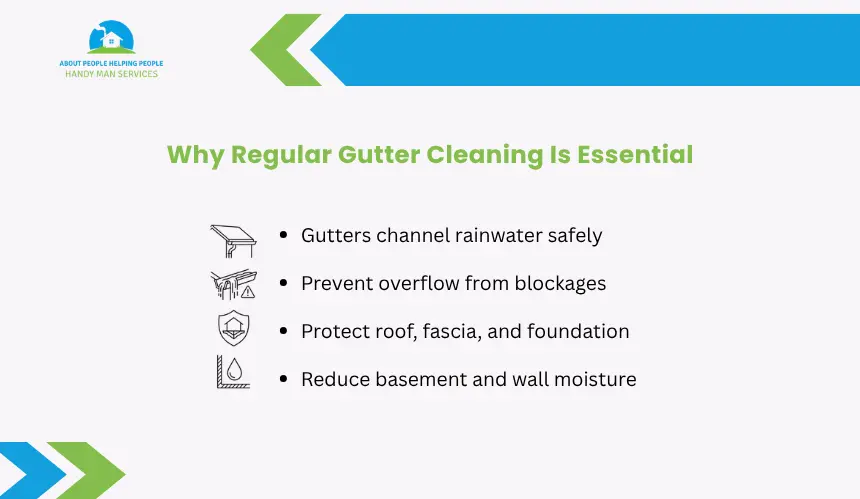
Gutter cleaning is not just a routine task. It is a critical part of protecting the entire drainage system and preventing water-related damage across multiple parts of a property. Gutters, downspouts, and roof drainage channels work together to direct rainwater away from the structure. When any part of this system becomes obstructed, the impact spreads beyond the gutter itself.
How Gutters Direct Water Away From Property
Gutters are designed to collect rainwater from the roof and channel it through downspouts to a safe discharge point away from the foundation. This controlled flow prevents water from accumulating on the roof or near the base of the structure.
When the system is clear, water moves efficiently from roof edges through gutters and downspouts, reducing pressure on roofing materials, fascia boards, and the surrounding ground.
Did You Know?
A properly functioning gutter system can redirect hundreds of gallons of water during a single rain event, protecting both the roof and foundation from excess moisture exposure.
Why Blockages Lead to Overflow
Clogged gutters disrupt this controlled flow by creating barriers inside the channel. Leaves, dirt, and debris accumulate over time, reducing the space available for water to pass through.
As water flow slows down, it begins to rise within the gutter. During heavier rainfall, this leads to overflow, where water spills over the edges instead of being directed through downspouts.
Important Insight: Overflow does not always mean a fully blocked gutter. Even partial obstructions can reduce flow capacity enough to cause water to spill over during moderate to heavy rain.
How Water Damage Develops Over Time
When gutters overflow, water is redirected to areas that are not designed to handle it. This can affect multiple parts of the property, often simultaneously.
- Roof and Fascia Damage: Water can back up under shingles or soak into fascia boards, weakening these components over time
- Foundation Issues: Excess water near the base of the structure increases soil saturation and can lead to shifting or cracks
- Basement and Wall Moisture: Poor drainage can allow water to seep into lower levels, creating damp conditions
Did You Know?
Repeated exposure to uncontrolled water flow is one of the most common causes of long-term structural damage in residential properties.
How Often Should Gutters Be Cleaned Throughout the Year?
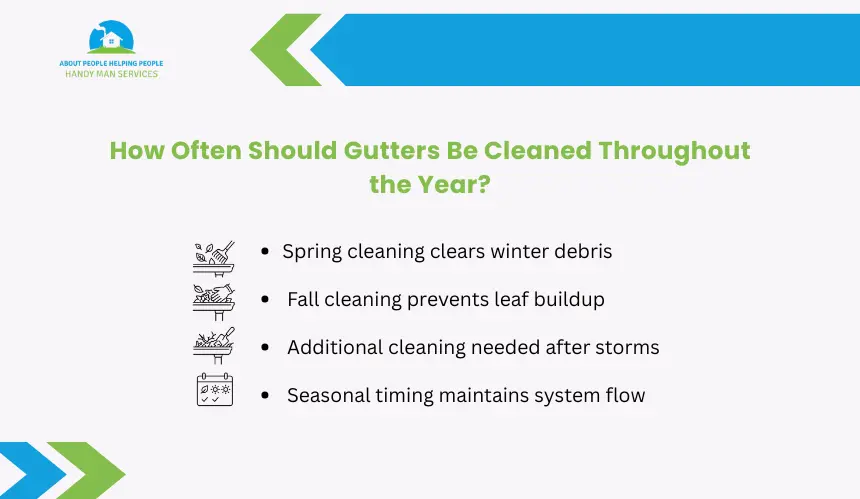
Gutter cleaning frequency is not fixed to a single schedule. It varies based on seasonal changes, debris accumulation, and environmental conditions. Different times of the year introduce different types of buildup, which is why cleaning at specific intervals ensures the system remains functional year-round.
Why Spring Cleaning Is Important
Spring cleaning focuses on clearing debris that has accumulated over winter. During colder months, gutters often collect dirt, small branches, and residue from weather exposure, which can restrict early-season water flow.
Clearing gutters in spring prepares the drainage system for increased rainfall and ensures that water can move freely through downspouts without obstruction.
Did You Know?
Debris left over from winter can harden or compact, making it more difficult for water to pass through even if the gutter does not appear fully clogged.
Why Fall Cleaning Prevents Major Blockages
Fall is the most critical season for gutter maintenance due to leaf accumulation. As trees shed leaves, gutters can fill quickly, especially in properties with nearby vegetation.
Cleaning during or immediately after leaf fall prevents large blockages from forming and ensures that the system can handle rain and seasonal weather changes effectively.
Important Insight:
Leaf buildup is one of the primary causes of gutter clogging. Regular removal during fall reduces the risk of overflow and long-term drainage issues.
When Additional Cleaning Is Needed After Storms
Storms can introduce sudden debris such as leaves, twigs, and dirt into gutters. Even a previously clean system can become partially blocked after heavy winds or rainfall.
In these situations, additional cleaning helps restore normal water flow and prevents temporary blockages from turning into long-term problems.
- Removes unexpected debris buildup
- Restores drainage efficiency quickly
- Prevents overflow during subsequent rainfall
What Factors Affect Gutter Cleaning Frequency?
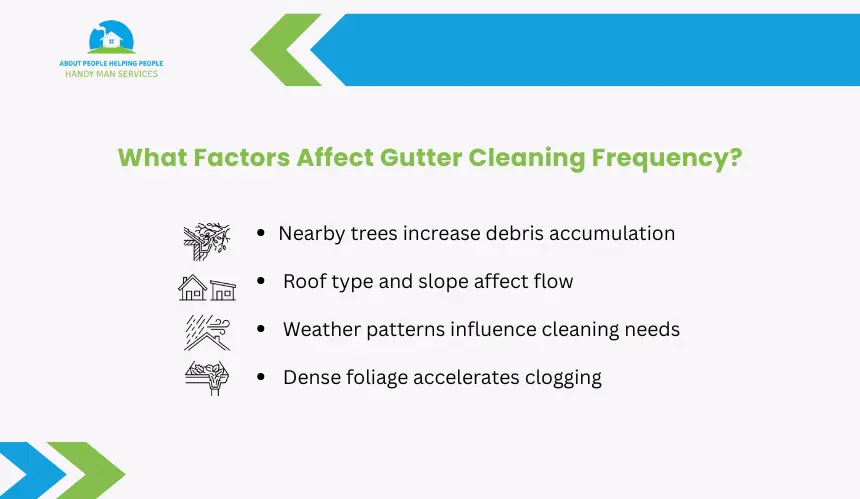
Gutter cleaning frequency depends on how quickly debris accumulates and how the drainage system responds to environmental conditions. While a general schedule works for most properties, certain factors can increase the need for more frequent maintenance to prevent clogging and water overflow.
How Nearby Trees Increase Debris Buildup
Properties surrounded by trees experience faster accumulation of leaves, twigs, and organic debris. These materials are easily carried by wind and settle inside gutters, especially during seasonal shedding.
- Dense tree coverage leads to frequent leaf buildup
- Smaller debris can collect even outside peak fall season
- Organic matter can decompose and compact, making removal more difficult
Did You Know?
Gutters near overhanging branches tend to clog faster because leaves fall directly into the system rather than being dispersed across the yard.
Why Roof Type and Slope Matter
The design of the roof influences how debris moves into the gutter system. Steeper roofs allow water and debris to flow quickly into gutters, which can increase accumulation rates. Flatter roofs may slow down this movement but can allow debris to settle and collect more gradually.
Roof materials also play a role, as some surfaces shed particles that can mix with debris and contribute to buildup inside gutters.
Important Insight:
Gutters do not just collect leaves. They also gather particles from the roof itself, which can combine with debris and reduce water flow over time.
How Weather Conditions Impact Gutters
Weather patterns directly affect how often gutters need cleaning. Heavy rainfall, wind, and seasonal changes all influence debris movement and accumulation.
- Strong winds can carry debris into gutters unexpectedly
- Frequent rain accelerates the buildup of wet, compacted material
- Seasonal changes introduce different types of debris throughout the year
Storms, in particular, can quickly overwhelm gutters by adding large amounts of debris in a short time, making additional cleaning necessary.
What Happens If Gutters Are Not Cleaned Regularly?
When gutters are not cleaned on a regular basis, the entire roof drainage system begins to lose its ability to manage water effectively. The impact is not limited to the gutters themselves. It extends to the roof, walls, foundation, and surrounding ground, often developing gradually before becoming visible.
How Overflow Causes Roof and Fascia Damage
Clogged gutters force water to spill over the edges instead of flowing through downspouts. This overflow often runs along roof edges and fascia boards, areas that are not designed for constant water exposure.
Over time, this repeated contact can weaken materials, cause wood components to deteriorate, and increase the risk of water seeping beneath roofing layers. Once moisture enters these areas, it becomes difficult to detect and repair early.
Did You Know?
Water that overflows from clogged gutters can travel backward under roof shingles, especially during heavy rain, leading to hidden damage that may not be immediately visible.
Why Water Reaches the Foundation
Gutters are designed to direct water away from the base of the property. When they fail, water begins to collect near the foundation instead of being carried away.
This accumulation increases soil saturation, which can lead to shifting, cracking, or weakening of the foundation over time. Even small amounts of repeated water exposure can gradually affect structural stability.
Important Insight:
Foundation damage often starts with poor drainage rather than direct structural issues. Clogged gutters are one of the most common causes of this problem.
How Basement Flooding Can Occur
When water is not properly directed away, it can seep into lower levels of the property, including basements. This is especially likely during heavy rainfall when the drainage system is under pressure.
Water infiltration creates damp conditions that can damage walls, flooring, and stored items, while also increasing the risk of long-term moisture-related issues.
How Can Regular Cleaning Prevent Water Damage?
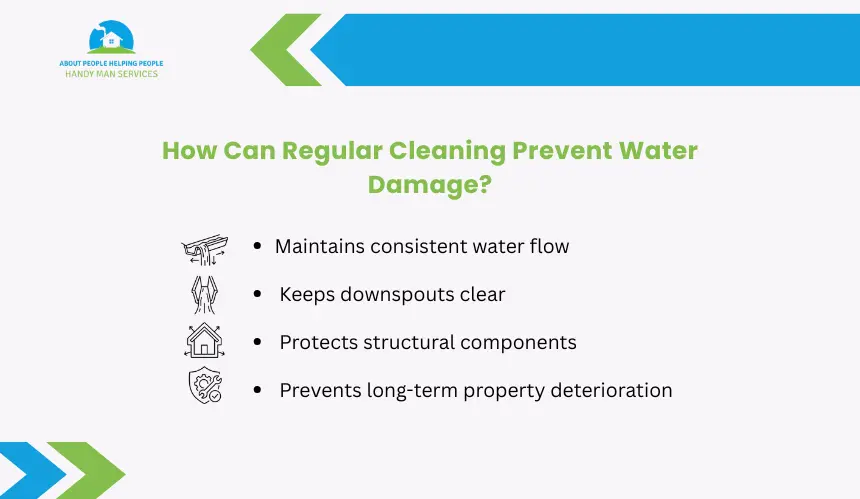
Regular gutter cleaning prevents water damage by keeping the entire drainage system clear and functional. When gutters and downspouts are free of debris, rainwater is directed away from the roof and foundation as intended, reducing the risk of overflow and moisture buildup in critical areas.
How It Maintains Proper Water Flow
Clean gutters allow water to move smoothly from the roof into downspouts without interruption. This continuous flow prevents water from pooling or backing up, which is often the first step toward structural damage.
When flow is consistent, pressure within the gutter system remains balanced, even during heavy rainfall. This reduces the likelihood of overflow and ensures that water is carried away efficiently.
Did You Know?
Even minor debris can slow water flow enough to cause overflow during storms, which is why consistent cleaning is more effective than occasional deep cleaning.
Why Downspouts Stay Clear
Downspouts play a key role in directing water away from the property, but they are also one of the most common points of blockage. When gutters are regularly cleaned, debris is prevented from reaching and clogging these vertical channels.
Clear downspouts ensure that water exits the system quickly and does not accumulate at the base of the structure. This reduces stress on both the gutter system and the surrounding ground.
Important Insight: A gutter system is only as effective as its downspouts. Even if gutters appear clean, blocked downspouts can still cause water to overflow and collect in unwanted areas.
How It Protects Structural Components
By maintaining proper water flow, regular cleaning helps protect key structural elements of the property. Roof edges, fascia boards, siding, and foundations are all shielded from prolonged exposure to uncontrolled water.
This preventive approach reduces the risk of gradual deterioration, which can otherwise lead to costly repairs over time.
Frequently Asked Questions
Is cleaning gutters twice a year enough?
Cleaning gutters twice a year is sufficient for many homes with minimal tree coverage. However, properties surrounded by trees or exposed to frequent debris may require more frequent cleaning to prevent buildup and maintain proper water flow throughout the year.
How do I know if my gutters need cleaning?
Signs include water overflowing during rain, sagging gutters, visible debris buildup, or water pooling near the foundation. Even without visible signs, reduced water flow can indicate partial blockages that should be addressed before they worsen.
Can clogged gutters cause roof leaks?
Clogged gutters can lead to roof leaks by causing water to back up under shingles or along roof edges. This trapped moisture can seep into roofing materials and create hidden damage that develops over time.
What is the best time of year to clean gutters?
Spring and fall are the most important times for gutter cleaning. Spring removes debris from winter buildup, while fall prevents leaf accumulation from clogging the system before heavy seasonal rainfall.
How long can gutters go without cleaning?
Gutters should not go more than six months without cleaning under normal conditions. In areas with heavy debris or frequent storms, shorter intervals are recommended to avoid blockages and maintain proper drainage.