
- About People Helping People
How Can Modern Light Fixtures Change the Look and Function of a Home?
Quick Answer: Modern light fixtures transform a home by enhancing visual appeal, improving illumination quality, and increasing energy efficiency. Through layered lighting, including ambient, task, and accent fixtures, homeowners can create balanced brightness, highlight architectural details, and improve everyday usability. With LED technology and smart controls, updated fixtures also reduce electricity consumption while offering greater flexibility and convenience. |
Lighting has the power to completely reshape how a home looks and feels, yet it is often treated as an afterthought. Outdated fixtures can cast uneven shadows, distort wall colors, and make rooms feel smaller or dimmer than they actually are. In contrast, modern light fixtures enhance depth, clarity, and spatial balance while improving overall comfort.
Did You Know?
Lighting accounts for roughly 10–15% of a typical household’s electricity use, and switching to energy-efficient LED systems can significantly reduce long-term energy costs.
Beyond aesthetics, lighting directly affects functionality. Poor illumination can increase eye strain, reduce task accuracy, and limit the effective use of a room. Modern fixtures integrate improved light distribution, adjustable brightness, and smart automation to support daily activities more efficiently.
To understand how lighting upgrades create such a noticeable transformation, it’s important to explore their design impact, functional advantages, and the different types of fixtures available today.
Why Is Lighting So Important in Residential Design?
Lighting is not just about visibility; it shapes perception. The way light is distributed throughout a room influences how large, warm, modern, or inviting that space feels. Even high-end finishes can appear flat or dull under poor illumination, while thoughtfully placed modern light fixtures can enhance texture, color, and architectural detail.
Did You Know? The human eye responds differently to color temperature. Warm lighting (around 2700K–3000K on the Kelvin scale) promotes relaxation, while cooler lighting (4000K and above) increases alertness and visual clarity.
How Does Lighting Influence Mood and Atmosphere?
Color temperature and brightness levels directly impact emotional comfort. Soft, warm ambient lighting creates a calm and cozy environment in living rooms and bedrooms. Cooler, brighter task lighting improves concentration in kitchens, bathrooms, and home offices. Dimmable systems add flexibility, allowing one room to serve multiple functions throughout the day.
How Does Proper Lighting Improve Visual Performance?
Modern lighting focuses on lumen output, light distribution, and glare reduction. Balanced illumination reduces shadows, enhances contrast, and minimizes eye strain. High Color Rendering Index (CRI) fixtures allow colors to appear more natural and vibrant, making interiors look more refined and cohesive.
When lighting is strategically planned, it becomes both a design enhancer and a performance tool, setting the stage for understanding the different types of modern fixtures available today.
What Are the Main Types of Modern Light Fixtures?
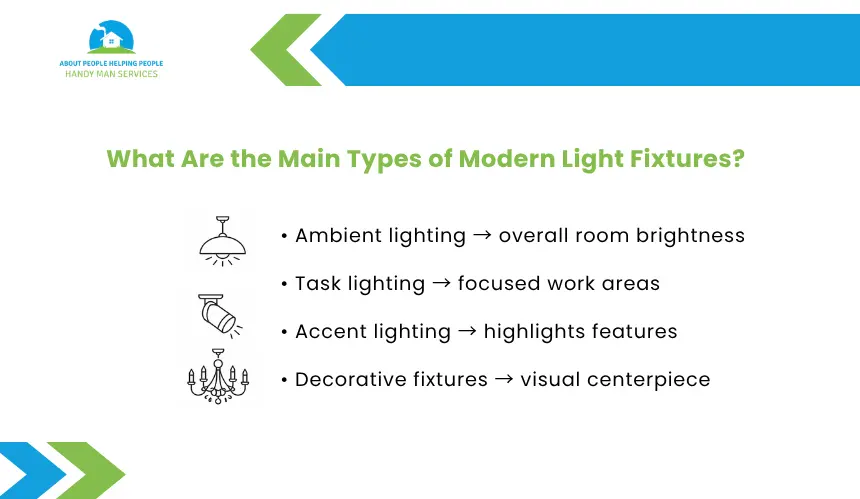
Modern lighting design follows a layered approach, where different fixture types work together to create balance, depth, and functionality. Instead of relying on a single ceiling light, contemporary homes combine ambient, task, accent, and decorative lighting to enhance both comfort and usability.
Did You Know?
Layered lighting can improve visual comfort by reducing harsh shadows and uneven brightness, making spaces feel more natural and professionally designed.
What Is Ambient Lighting?
Ambient lighting provides overall illumination for a room. It creates a consistent base layer of light that allows safe movement and general visibility.
Common ambient fixtures include:
- Recessed lighting
- Flush-mount and semi-flush ceiling lights
- LED ceiling panels
- Large surface-mounted fixtures
This foundational layer ensures even light distribution without overpowering the space.
What Is Task Lighting?
Task lighting focuses on specific activities that require precision. It increases brightness in targeted areas, reducing eye strain and improving accuracy.
Typical task fixtures include:
- Pendant lights over kitchen islands
- Under-cabinet LED strips
- Desk lamps
- Adjustable track lighting
By concentrating light where it’s needed most, task lighting enhances productivity and safety.
What Is Accent Lighting?
Accent lighting highlights architectural details or decorative elements. It adds dimension and visual interest to a room.
Examples include:
- Wall sconces
- Picture lights
- Cove lighting
- LED strip lighting
Accent fixtures create contrast and depth, preventing spaces from feeling flat or monotonous.
What Are Decorative or Statement Fixtures?
Decorative lighting serves as both illumination and a design focal point. These fixtures define a room’s character and often become the visual centerpiece.
Examples include:
- Chandeliers
- Sculptural pendants
- Linear suspension lights
- Contemporary geometric fixtures
Statement lighting can transform a simple dining area or foyer into a visually striking space.
With these fixture types understood, the next step is examining how modern lighting technology enhances efficiency, convenience, and long-term performance.
How Do Modern Light Fixtures Improve Functionality?
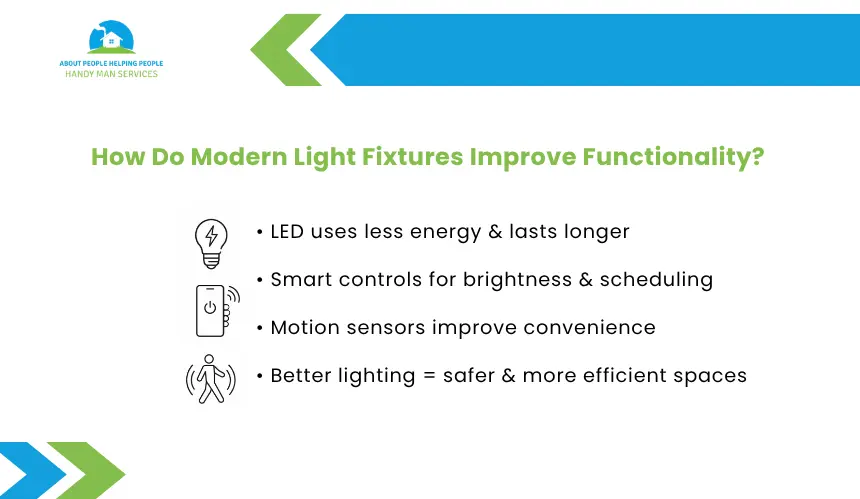
Beyond aesthetics, modern light fixtures significantly improve how a home operates day-to-day. Advances in lighting technology now allow homeowners to control brightness, reduce energy consumption, enhance safety, and extend fixture lifespan, all while maintaining consistent illumination quality.
Did You Know?
LED lighting can use up to 75% less energy than traditional incandescent bulbs and last 10–25 times longer, dramatically reducing both electricity costs and replacement frequency.
How Does LED Technology Enhance Efficiency?
Light-emitting diode systems convert more of their energy into light than into heat. Unlike incandescent bulbs, which lose much of their energy as heat output, LED fixtures operate at lower temperatures and consume fewer watts for the same lumen output.
Key advantages include:
- Lower electricity consumption
- Lifespan ranging from 15,000 to 50,000 hours
- Reduced heat buildup
- Minimal maintenance requirements
These performance improvements make LED fixtures one of the most impactful home upgrades.
How Do Smart Lighting Systems Increase Convenience?
Modern fixtures often integrate with smart home ecosystems, allowing enhanced control and automation.
Features may include:
- App-based brightness control
- Scheduling and timers
- Motion sensor activation
- Voice assistant compatibility
- Energy usage monitoring
Smart lighting adapts to daily routines, automatically adjusting brightness based on time of day or occupancy, improving both comfort and efficiency.
How Can Lighting Improve Safety and Usability?
Strategic lighting placement enhances safety throughout the home.
Examples include:
- Stair lighting to reduce fall risk
- Under-cabinet kitchen lighting for safer food preparation
- Motion-activated exterior lights for security
- Pathway illumination for nighttime navigation
Proper illumination reduces accidents, increases visibility, and supports safer movement in both interior and exterior spaces.
As functionality improves, lighting upgrades also influence resale appeal and perceived property value, which we’ll explore next.
Can Modern Light Fixtures Increase Property Value?
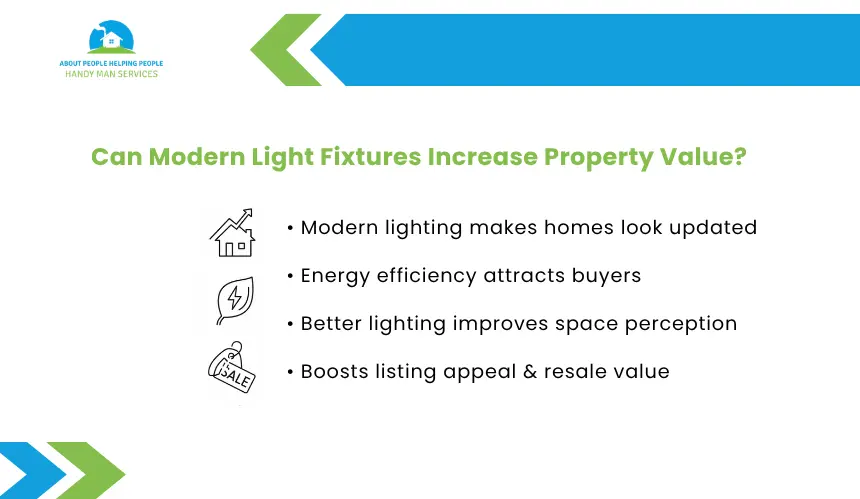
Lighting upgrades are often perceived as minor cosmetic changes, but their impact on buyer perception and property value can be substantial. Updated light fixtures signal modernization, energy efficiency, and overall maintenance quality, all of which influence resale appeal.
Did You Know? Well-lit homes tend to photograph brighter and more spacious in online listings, increasing buyer engagement and improving perceived square footage.
How Do Updated Fixtures Influence Buyer Perception?
Outdated brass chandeliers, fluorescent panels, or mismatched fixtures can make a home feel older than it is. In contrast, clean-lined recessed lighting, contemporary pendants, and cohesive fixture styles create a polished and updated impression. Buyers often associate modern lighting with broader renovations and improved system maintenance.
How Does Energy Efficiency Add Market Appeal?
Energy-efficient LED systems reduce electricity consumption and maintenance costs. Homes with updated lighting may be more attractive to eco-conscious buyers who value lower utility bills and sustainable upgrades.
Additionally, smart lighting systems integrated with automation platforms enhance perceived technological sophistication, an increasingly desirable feature in competitive real estate markets.
Why Does Lighting Improve Space Perception?
Proper illumination enhances room proportions, highlights architectural details, and eliminates dark corners. Bright, evenly distributed lighting can make smaller spaces feel larger and more open, while accent lighting adds depth and dimension.
Because lighting influences both aesthetic presentation and functional performance, it becomes one of the most cost-effective upgrades for increasing perceived value without major structural renovation.
Next, we’ll explore when homeowners should consider upgrading their existing light fixtures.
When Should Homeowners Consider Upgrading Their Light Fixtures?
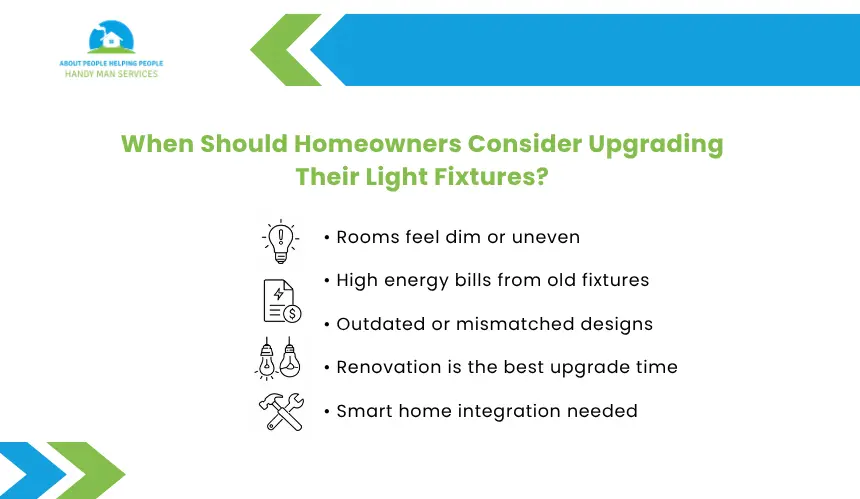
Lighting upgrades are most effective when aligned with functional needs, energy goals, or design updates. While fixtures may continue operating for years, performance and efficiency often decline long before failure occurs.
Did You Know? Incandescent bulbs convert nearly 90% of their energy into heat rather than visible light, making older fixtures significantly less efficient than modern LED systems.
What Signs Indicate It’s Time for an Upgrade?
Homeowners should consider upgrading fixtures when:
- Rooms feel dim despite bulb replacements
- Energy bills remain high due to outdated lighting
- Fixtures appear dated or mismatched
- Uneven shadows or glare affect visibility
- Renovations alter room layout or ceiling design
Modern fixtures improve both illumination quality and visual cohesion.
Are Renovations the Best Time to Update Lighting?
Kitchen remodels, bathroom upgrades, and open-concept conversions present ideal opportunities to incorporate layered lighting strategies. Adding recessed lighting, under-cabinet LEDs, or statement pendants during renovation minimizes disruption during installation and maximizes design integration.
When Does Smart Lighting Become a Practical Upgrade?
Homeowners transitioning to smart thermostats, security systems, or automation hubs often upgrade lighting simultaneously. Smart-compatible fixtures allow scheduling, motion detection, and adaptive brightness, improving both convenience and energy management.
Upgrading light fixtures does not always require a full renovation. Even replacing outdated ceiling mounts or adding task lighting can dramatically improve comfort and usability.
Lighting as a Design and Performance Upgrade
Modern light fixtures do far more than brighten a room; they redefine how a home looks, feels, and functions. From improving energy efficiency through LED technology to enhancing mood with layered lighting strategies, updated fixtures influence daily comfort and long-term value.
Thoughtfully selected ambient, task, accent, and decorative lighting creates depth, balance, and usability. Smart controls add convenience, while improved lumen output and color rendering enhance clarity and reduce eye strain. Even small upgrades, such as replacing outdated ceiling mounts or adding under-cabinet lighting, can noticeably transform a space.
Because lighting affects perception, productivity, safety, and resale appeal, it remains one of the most impactful yet cost-effective home improvements available. When modern fixtures are integrated strategically, they elevate both aesthetics and performance, turning illumination into a powerful design asset.
Next, we’ll address common homeowner questions about modern lighting upgrades.
Frequently Asked Questions
Do modern light fixtures really reduce electricity bills?
Modern LED fixtures consume significantly less energy than traditional incandescent or halogen bulbs. LEDs can use up to 75% less electricity while producing the same lumen output. Over time, reduced wattage and longer lifespans lower both monthly energy costs and replacement expenses.
How long do LED light fixtures typically last?
Most LED fixtures have an average lifespan between 15,000 and 50,000 hours, depending on build quality and usage. In a home where lights operate 3–5 hours per day, this can translate to 10–20 years of use before noticeable lumen depreciation occurs.
What color temperature is best for living spaces?
Warm white lighting between 2700K and 3000K is generally preferred in living rooms and bedrooms because it creates a comfortable, inviting atmosphere. Kitchens, bathrooms, and workspaces often benefit from cooler lighting between 3500K and 4000K to enhance clarity and visibility.
Are smart lighting systems difficult to install?
Installation complexity depends on the system. Smart bulbs typically require minimal setup and connect through Wi-Fi or Bluetooth. Hardwired smart switches or integrated fixtures may require professional installation to ensure compatibility with existing wiring and electrical boxes.
Which rooms benefit most from recessed lighting?
Recessed lighting works particularly well in kitchens, hallways, basements, and living rooms where clean ceiling lines and even ambient illumination are desired. When spaced properly, recessed fixtures reduce shadows and create a modern, streamlined appearance.