- peopleLLC
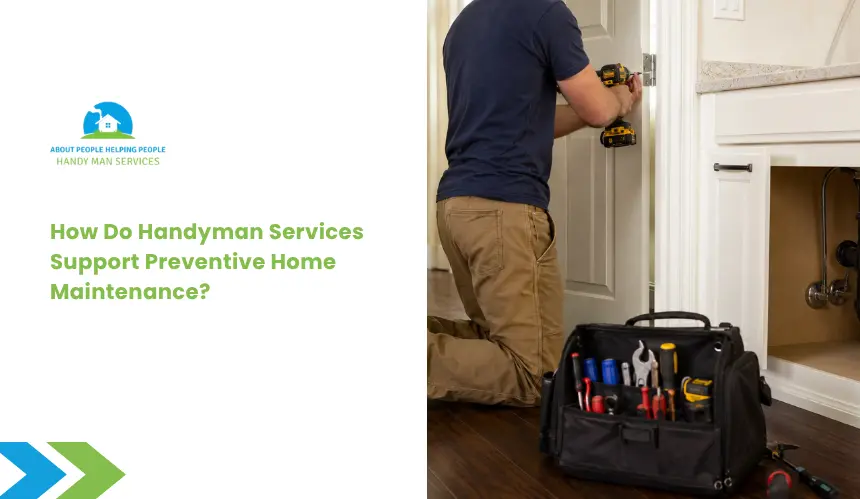
How Do Handyman Services Support Preventive Home Maintenance?
Quick Answer: Handyman services support preventive home maintenance by identifying and repairing small household issues before they become larger, more expensive problems. Routine maintenance tasks such as fixing minor leaks, repairing damaged trim or drywall, sealing gaps, maintaining gutters, and addressing everyday wear and tear help protect the home’s structure and reduce the risk of future damage. Some of the key ways handyman services contribute to preventative home maintenance include:
Preventative home maintenance focuses on solving small problems early rather than waiting for them to become major repairs. By performing routine maintenance and minor repairs, handyman services help homeowners maintain the condition of their property, reduce unexpected repair costs, and extend the lifespan of many everyday building components. |
Preventive home maintenance is based on a simple idea: fixing small problems before they become major repairs. A loose piece of trim, a minor plumbing leak, cracked caulking, or a section of damaged drywall may not seem urgent at first, but these everyday issues can gradually lead to water damage, material deterioration, or more extensive maintenance needs if they are left unresolved. Regular attention to these small repairs helps preserve the condition of the home and reduces the likelihood of larger, more expensive problems developing over time.
This is where handyman services play an important role. Rather than waiting until a repair becomes an emergency, routine handyman maintenance focuses on identifying signs of wear, correcting minor defects, and keeping essential building components in good working condition. Addressing these issues early helps maintain the home’s structure, improve the performance of its exterior and interior features, and support long-term property upkeep.
Did you know? Many costly home repairs begin as relatively minor maintenance issues that could have been addressed quickly if identified early. Small leaks, damaged sealants, or loose exterior materials often worsen gradually before visible damage appears.
By handling routine repairs and maintenance tasks, handyman services help homeowners take a proactive approach to property care, making preventive maintenance an effective strategy for protecting the home’s long-term condition and value.
How Do Handyman Services Help Prevent Costly Repairs?
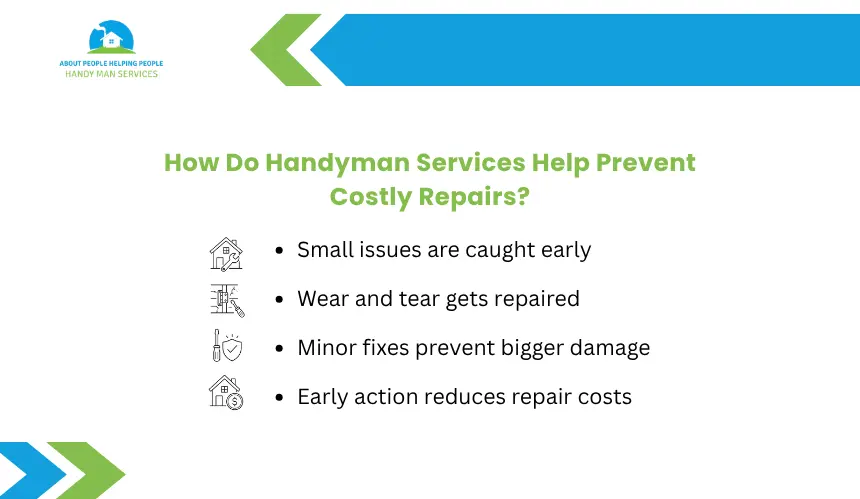
One of the primary goals of preventive home maintenance is to identify and correct minor issues before they develop into larger, more expensive problems. Handyman services support this approach by performing routine repairs and maintenance tasks that help prevent normal wear and tear from affecting the home’s overall condition. Addressing these concerns early often requires less time, fewer materials, and less extensive work than waiting until significant damage occurs.
How Does Early Problem Detection Make a Difference?
Many household maintenance issues begin gradually. A small crack in caulking, a loose piece of trim, a dripping faucet, or a section of damaged drywall may seem insignificant, but these conditions can worsen over time if they are not addressed.
Routine handyman inspections and repairs help identify these early warning signs before they contribute to larger maintenance concerns.
Why Is Repairing Everyday Wear and Tear Important?
Every home experiences daily use and exposure to changing weather conditions. Doors may become misaligned, exterior sealants can deteriorate, fixtures may loosen, and finishes may begin to wear. While these changes are normal, allowing them to accumulate can reduce the effectiveness of the home’s protective features.
Common preventative repairs include:
- Replacing damaged caulking
- Repairing small drywall cracks
- Securing loose trim or hardware
- Fixing minor plumbing leaks
- Repairing damaged exterior components
Handling these repairs promptly helps maintain the property’s condition.
How Do Small Repairs Help Avoid Larger Maintenance Problems?
Many major home repairs begin with relatively minor issues that were left unresolved. A small leak may eventually lead to water damage, a gap around a window can allow moisture intrusion, and deteriorated exterior materials may expose underlying building components to the elements.
Did you know? Preventive maintenance is often more cost-effective than reactive repairs because addressing a problem early typically requires less labor and fewer replacement materials than repairing the resulting damage later.
By focusing on routine maintenance and minor repairs, handyman services help reduce the likelihood that everyday wear and tear will develop into larger issues that require more extensive restoration.
What Preventive Maintenance Tasks Can a Handyman Perform?

Handyman services support preventative home maintenance by handling a wide variety of routine repair tasks that help keep a property in good condition. These services typically focus on correcting minor defects, maintaining protective building components, and addressing everyday wear before it leads to more significant damage. By performing these tasks regularly, homeowners can reduce the likelihood of unexpected repairs and extend the life of many parts of the home.
Gutter and Exterior Drainage Maintenance
Keeping gutters and downspouts free of debris helps maintain proper water flow away from the roof and foundation. Routine cleaning and minor repairs help reduce the risk of overflow, moisture buildup, and water-related damage around the property.
Drywall, Trim, and Caulking Repairs
Small cracks in drywall, damaged trim, and deteriorated caulking may seem cosmetic, but they can allow moisture intrusion and reduce the effectiveness of protective barriers around windows, doors, and other transition points. Repairing these areas early helps preserve the condition of surrounding materials.
Door and Window Maintenance
Handyman services often include adjusting sticking doors, tightening loose hardware, repairing weatherstripping, and sealing gaps around windows and doors. These routine tasks help maintain proper operation while reducing unnecessary wear and exposure to the elements.
Minor Plumbing and Electrical Repairs
Addressing small plumbing leaks, replacing worn fixtures, securing loose outlets, or repairing damaged switches can help prevent minor issues from affecting other parts of the home. Early maintenance also helps reduce the risk of moisture damage and everyday safety concerns.
Deck, Fence, and Exterior Component Repairs
Outdoor structures are constantly exposed to weather, sunlight, and moisture. Routine maintenance, such as securing loose boards, repairing damaged trim, replacing deteriorated fasteners, and sealing exposed areas, helps extend the lifespan of these exterior features.
Did you know? Many preventive maintenance tasks take only a short time to complete, but they can help prevent repairs that become much more extensive after months or years of neglect.
By routinely addressing these common maintenance items, handyman services help homeowners keep small problems under control and support the long-term upkeep of the entire property.
How Do Handyman Services Help Prevent Water Damage?

Water damage often results from small maintenance issues that go unnoticed or are left unresolved over time. A minor leak, a damaged sealant, or a deteriorated exterior component may not seem urgent at first, but repeated exposure to moisture can gradually affect surrounding building materials. Handyman services support preventive home maintenance by identifying and repairing minor issues before they lead to larger water-related problems.
How Do Small Repairs Help Stop Moisture Problems?
Many common sources of water damage begin with relatively simple defects, such as loose caulking, small plumbing leaks, damaged trim, or gaps around windows and doors. Routine handyman repairs help restore these protective barriers and reduce opportunities for water to enter the home.
Addressing these concerns early helps prevent moisture from reaching drywall, wood framing, insulation, and other vulnerable materials.
Why Is Maintaining Exterior Components Important?
Exterior features such as gutters, fascia boards, trim, and sealants all work together to direct water away from the structure. If one of these components becomes damaged or deteriorates, the home’s ability to manage rainwater may be reduced.
Regular maintenance of these areas helps support proper drainage and limits unnecessary water exposure around the property.
Can Minor Plumbing Repairs Prevent Larger Damage?
Yes. Small plumbing leaks beneath sinks, around fixtures, or near supply lines can release moisture slowly over long periods without obvious warning signs. Repairing these issues promptly helps reduce the risk of hidden water damage, material deterioration, and unnecessary repair costs.
Did you know? Many water-related home repairs begin with small maintenance issues that remain unnoticed for months. Routine handyman services can help identify and correct these problems before visible damage appears.
By addressing everyday maintenance issues affecting moisture control, handyman services play an important role in preventing water damage and supporting the home’s long-term condition.
Can Routine Maintenance Extend the Life of Home Components?
Yes. One of the biggest advantages of preventative home maintenance is that it helps preserve the condition and performance of everyday building components. Regular handyman services address minor wear and tear before it accelerates, reducing unnecessary strain on materials and helping many parts of the home remain functional for longer.
How Does Routine Maintenance Protect Building Materials?
Building materials naturally deteriorate with age and exposure to weather, moisture, and daily use. Small issues such as cracked caulk, damaged trim, loose hardware, or minor drywall defects can gradually expose surrounding materials to additional wear if left unaddressed.
By correcting these problems early, handyman services help maintain the protective features that keep walls, windows, doors, and exterior components in good condition.
How Can Preventive Repairs Reduce Everyday Wear?
Routine maintenance helps stop minor defects from spreading to adjacent materials. A loose board can be secured before it causes additional damage, a small leak can be repaired before it affects nearby surfaces, and deteriorated sealants can be replaced before moisture reaches the underlying structure.
These preventative repairs help reduce cumulative wear throughout the home.
Why Does Consistent Upkeep Support Long-Term Property Value?
A well-maintained home is less likely to show visible deterioration from neglected repairs. Keeping building components in good working order helps preserve the property’s overall appearance and condition while reducing the need for larger restoration projects in the future.
Did you know? Many home maintenance professionals view routine preventative repairs as a way to extend the service life of existing materials rather than waiting until replacement becomes necessary. Addressing small maintenance needs consistently can often delay more extensive repairs and help protect long-term property value.
By supporting the longevity of everyday home components, handyman services make preventive maintenance an effective strategy for reducing future repair needs and preserving the property’s overall condition.
Why Is It Important to Fix Small Problems Quickly?
One of the core principles of preventive home maintenance is addressing minor issues before they become major repairs. Small defects rarely remain isolated. A loose piece of trim, a cracked seal, a minor drywall issue, or a small plumbing leak can gradually affect nearby materials if left unattended. Handyman services help homeowners respond to these problems early, reducing the likelihood of more extensive damage.
How Can Small Issues Turn Into Larger Repairs?
Many home maintenance problems develop slowly. What begins as a simple repair may expand over time as normal wear, weather exposure, or moisture continue to affect the area. Early intervention helps stop this progression before additional building components become involved.
For example, a small maintenance issue that is corrected promptly may prevent:
- Moisture spreads to the surrounding materials
- Damage to adjacent finishes or fixtures
- Deterioration of protective sealants and exterior elements
- More complex and time-consuming repairs later
Why Does Early Maintenance Reduce Long-Term Costs?
Preventive repairs are generally simpler because they focus on correcting the source of the problem before significant damage occurs. Minor maintenance tasks often require fewer materials and less labor than repairs that involve replacing multiple affected components.
Fun Fact: Many routine handyman repairs take only a short time to complete, but delaying them for months can allow normal wear and environmental exposure to increase the scope of the repair.
How Do Handyman Services Support a Proactive Maintenance Plan?
Rather than waiting for visible damage or system failures, routine handyman services encourage a proactive approach to home care. Regular inspections and timely repairs help homeowners stay ahead of common maintenance issues and keep the property in good overall condition.
Did you know? A large percentage of expensive home repairs begin as relatively minor maintenance concerns that gradually worsen over time. Identifying and fixing these issues early is one of the most effective ways to support long-term preventative home maintenance.
By focusing on early action and consistent maintenance, handyman services help homeowners reduce the need for unexpected repairs and protect the long-term durability of their property.
What Areas of a Home Should Be Inspected Regularly?
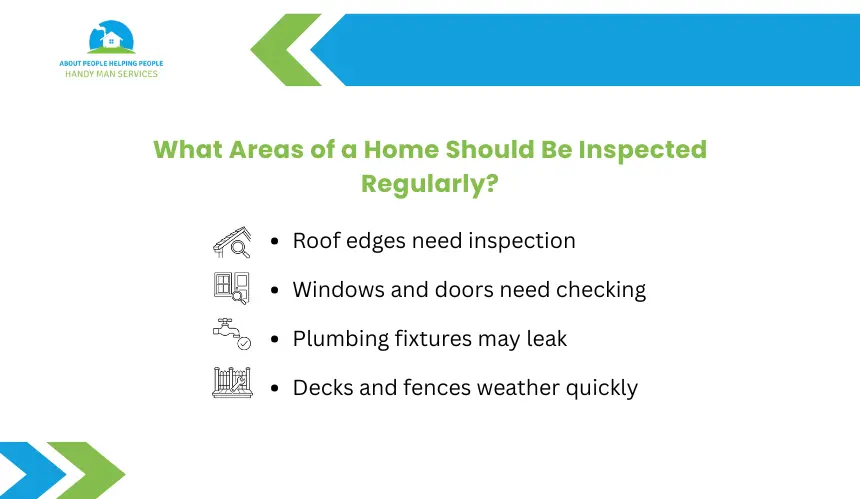
Regular inspections are a key part of preventative home maintenance because they help identify small problems before they become larger repairs. Handyman services often focus on the areas of a home that experience the greatest amount of wear, weather exposure, or daily use. Monitoring these locations on a regular basis helps maintain the property’s condition and supports timely maintenance.
Roof Edges, Gutters, and Exterior Trim
Roof drainage components and exterior trim are constantly exposed to the elements. Gutters should be checked for debris and proper drainage, while trim, fascia boards, and exterior joints should be inspected for cracks, loose sections, or deteriorating sealants that could allow moisture intrusion.
Windows, Doors, and Caulking
Windows and doors contain moving parts and protective seals that naturally wear over time. Routine inspections can help identify damaged weatherstripping, failing caulk, loose hardware, or small gaps that may reduce the effectiveness of the home’s protective barriers.
Plumbing Fixtures and Interior Surfaces
Minor leaks beneath sinks, around fixtures, or near supply lines can often go unnoticed until visible damage develops. Interior walls and ceilings should also be checked for drywall cracks, stains, or other signs that maintenance may be needed.
Decks, Fences, and Other Exterior Features
Outdoor structures are constantly exposed to sunlight, moisture, and temperature fluctuations. Loose boards, damaged fasteners, peeling finishes, and small areas of deterioration should be addressed early to help maintain their condition and extend their service life.
Did you know? Many preventative maintenance issues are easiest to repair when they are first discovered. Routine inspections of high-use and weather-exposed areas help homeowners identify these concerns before they require more extensive work.
By regularly inspecting the parts of the home most susceptible to everyday wear, handyman services support a proactive maintenance strategy and reduce the likelihood of unexpected repairs.
How Often Should Preventive Home Maintenance Be Performed?
Preventive home maintenance is most effective when it becomes a regular part of property care rather than a one-time project. Because different parts of a home experience wear at different rates, routine inspections and minor repairs should be performed throughout the year to identify developing issues early. Handyman services help support this ongoing approach by addressing maintenance needs before they progress into larger problems.
Why Are Seasonal Inspections Important?
Seasonal changes can affect many parts of a home. Temperature fluctuations, rainfall, humidity, and everyday use may gradually impact caulking, trim, gutters, drywall, doors, windows, and other building components. Conducting routine inspections several times a year helps identify signs of wear before they become more serious.
Should Maintenance Be Performed After Severe Weather?
Yes. Heavy rain, wind, storms, or extreme temperature changes can place additional stress on exterior and interior components. Inspecting the property after significant weather events helps identify minor damage that may not be immediately noticeable but could worsen if left unrepaired.
How Does a Routine Maintenance Plan Help?
A consistent maintenance schedule allows homeowners to address small repairs as they arise instead of waiting for visible deterioration or system failures. Regular handyman visits can help keep routine tasks on track and ensure that common maintenance items are not overlooked.
Fun Fact: Many home maintenance professionals recommend spreading preventive tasks throughout the year rather than trying to complete everything at once. Smaller, routine inspections often make it easier to identify and correct developing issues.
Did you know? Preventive home maintenance is generally more effective when performed consistently. Regular inspections and timely handyman repairs help reduce the accumulation of minor problems that can eventually lead to more extensive and costly home repairs.
By making routine maintenance a habit, homeowners can better protect their property’s condition, reduce the need for unexpected repairs, and support the long-term performance of the home’s essential components.
Frequently Asked Questions
What is preventative home maintenance?
Preventative home maintenance involves performing routine inspections and minor repairs to address small issues before they develop into larger, more expensive problems.
How do handyman services help prevent costly repairs?
Handyman services identify and fix minor defects such as small leaks, damaged trim, cracked caulking, and everyday wear, helping prevent these issues from escalating over time.
What types of preventative maintenance can a handyman handle?
Common tasks include gutter maintenance, drywall and trim repairs, caulking and replacement, door and window adjustments, minor plumbing repairs, and exterior maintenance.
Can handyman services help prevent water damage?
Yes. Routine handyman repairs can address small leaks, damaged sealants, deteriorated trim, and drainage issues before moisture can affect surrounding building materials.
How often should preventative home maintenance inspections be performed?
Most homes benefit from seasonal inspections throughout the year, along with additional maintenance checks after severe weather or when signs of wear become noticeable.
Do small repairs really help avoid bigger problems?
Yes. Many major home repairs begin as minor maintenance issues. Addressing them early can help reduce damage, limit repair costs, and preserve the property’s condition.
Why is routine home maintenance important?
Routine maintenance helps protect the home’s structure and everyday building components, extends the lifespan of materials, reduces the need for unexpected repairs, and supports long-term property value.