
- About People Helping People
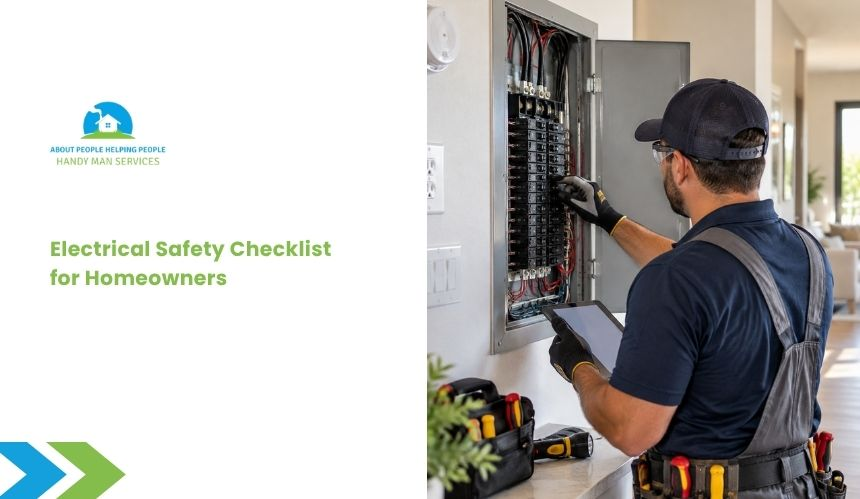
Electrical Safety Checklist for Homeowners
Quick Answer: An electrical safety checklist helps homeowners identify potential hazards before they become serious safety risks. Regularly inspecting the electrical panel, circuit breakers, outlets, GFCI protection, wiring, light fixtures, smoke alarms, extension cords, and appliances can reduce the risk of electrical fires, electric shock, equipment damage, and costly repairs while keeping the home’s electrical system operating safely. A home electrical safety checklist should include:
Did You Know? Many household electrical problems develop gradually before becoming noticeable. Warm outlets, flickering lights, frequently tripped breakers, or unusual odors can all be early warning signs of electrical issues that should be inspected promptly to help prevent more serious safety hazards. |
Electrical systems power nearly every part of a modern home, from lighting and appliances to heating, cooling, and home electronics. While these systems are designed to operate safely, electrical hazards can develop gradually as wiring ages, components wear out, or circuits become overloaded. Regular electrical safety inspections help homeowners identify potential problems before they create risks such as electrical shock, equipment damage, or house fires.
Many electrical issues begin with subtle warning signs that are easy to overlook. Flickering lights, frequently tripped circuit breakers, warm outlets, damaged cords, or unusual burning odors may all indicate underlying electrical problems that require attention. Performing routine inspections and addressing these warning signs promptly helps maintain a safer home while reducing the likelihood of unexpected electrical repairs.
Important: Homeowners can perform routine visual electrical safety checks, but work involving electrical panels, wiring, circuit modifications, or repairs should be completed by a qualified licensed electrician to ensure safety and compliance with applicable electrical codes.
Following a comprehensive electrical safety checklist helps homeowners identify potential hazards early, maintain the reliability of the home’s electrical system, improve overall household safety, and reduce the risk of costly electrical failures throughout the year.
Why Electrical Safety Inspections Matter
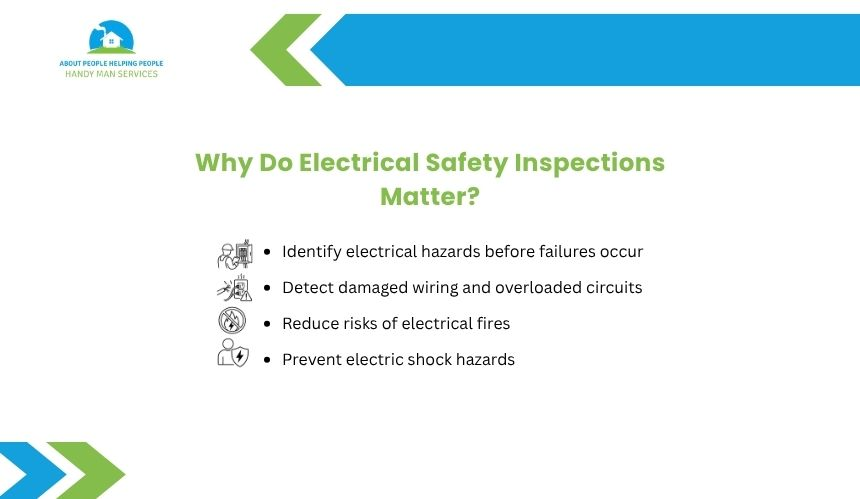
Routine electrical inspections are one of the most effective ways to identify potential hazards before they become serious safety concerns. Many electrical problems develop gradually and may not be immediately visible, making regular inspections an important part of preventive home maintenance. Identifying worn components, overloaded circuits, or damaged wiring early helps protect both the home’s electrical system and the people living in it.
How Do Electrical Inspections Help Prevent Electrical Fires?
Electrical fires are often caused by damaged wiring, overloaded circuits, loose electrical connections, or deteriorating electrical components. Routine inspections help identify these issues before excessive heat or electrical faults create conditions that could lead to a fire.
Why Are Electrical Inspections Important for Preventing Electric Shock?
Damaged outlets, exposed wiring, faulty switches, or improperly functioning GFCI outlets can increase the risk of electric shock. Regular inspections help identify these hazards early, allowing repairs to be completed before they create unsafe conditions for household members.
How Do Routine Inspections Help Identify Electrical Problems Early?
Many electrical issues begin with subtle warning signs such as flickering lights, frequently tripped breakers, buzzing sounds, or warm outlets. Routine inspections help detect these developing problems before they affect the reliability of the electrical system or require more extensive repairs.
Did You Know?
Many electrical hazards show early warning signs long before a major failure occurs. Identifying problems such as loose connections, worn outlets, damaged wiring, or overloaded circuits during routine inspections can significantly reduce the risk of electrical fires, equipment damage, and unexpected electrical repairs.
Home Electrical Safety Checklist
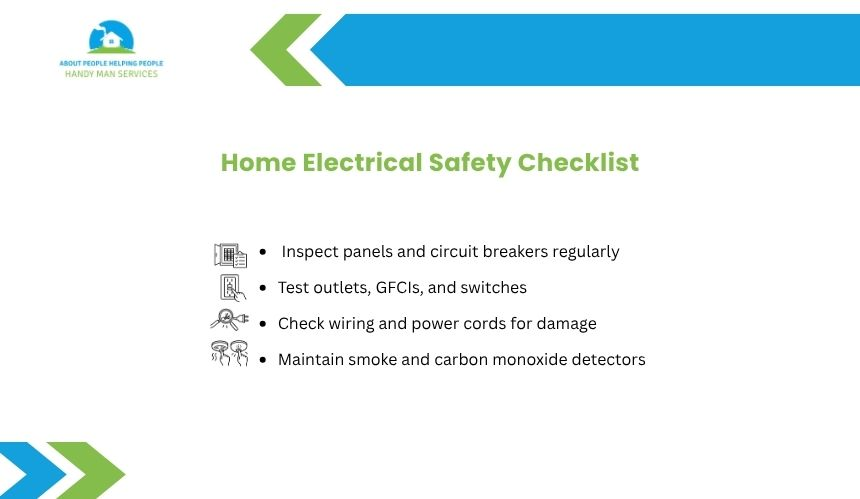
A routine electrical safety checklist helps homeowners monitor the condition of key electrical components before problems develop into serious hazards. While these inspections do not replace professional electrical services, they can help identify visible issues that require further attention. Checking these areas regularly improves safety, supports reliable electrical performance, and reduces the risk of unexpected failures.
Why Should You Inspect the Electrical Panel and Circuit Breakers?
The electrical panel distributes power throughout the home and protects circuits from overloads. Look for frequently tripped breakers, signs of corrosion, unusual noises, burning odors, or visible damage around the panel. Any abnormalities should be evaluated by a licensed electrician.
Why Is It Important to Test Electrical Outlets and GFCIs?
Electrical outlets should be secure, undamaged, and free of discoloration or burn marks. GFCI outlets, commonly installed in kitchens, bathrooms, garages, and outdoor areas, should be tested regularly using their built-in test and reset buttons to verify they are functioning properly.
What Should You Check on Light Switches and Fixtures?
Light switches and fixtures should operate normally without flickering, buzzing, sparking, or excessive heat. Loose switches, damaged fixtures, or lights that frequently fail may indicate an underlying electrical issue that requires inspection.
Why Should Visible Wiring and Power Cords Be Inspected?
Inspect exposed wiring, appliance cords, and power cables for fraying, cracking, loose insulation, or other visible damage. Damaged wiring should never be ignored because it may increase the risk of electrical shock or fire if it remains in service.
Why Should Smoke and Carbon Monoxide Detectors Be Tested Regularly?
Smoke alarms and carbon monoxide detectors provide critical early warning during emergencies. Test these devices regularly, replace batteries when needed, and verify they are operating correctly according to the manufacturer’s recommendations to maintain household safety.
How Should Extension Cords and Surge Protectors Be Used Safely?
Extension cords should be used only for temporary power needs and should never be placed under rugs, through doorways, or in areas where they may become damaged. Surge protectors should not be overloaded, and damaged power strips or extension cords should be replaced promptly rather than repaired.
Important:
A home electrical safety checklist should focus on identifying visible warning signs rather than attempting electrical repairs. If you discover damaged wiring, overheating components, recurring breaker trips, sparking outlets, or other electrical concerns, contact a qualified licensed electrician to inspect and repair the problem safely.
Common Warning Signs of Electrical Problems
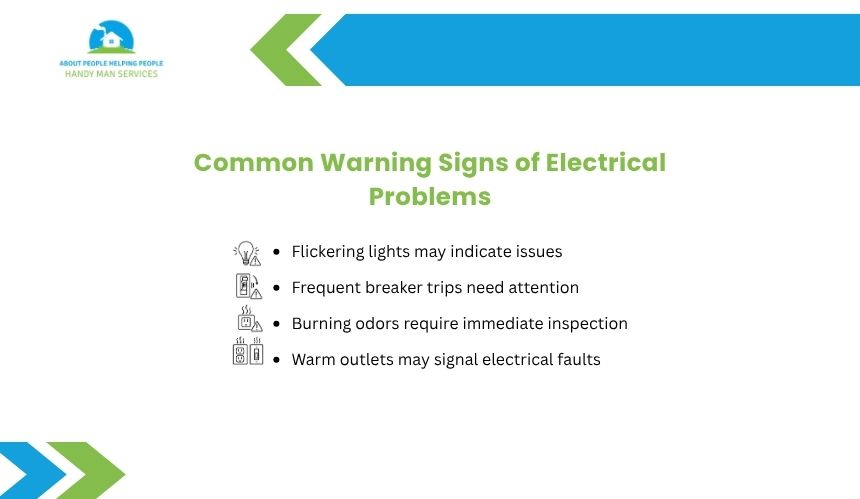
Electrical systems often provide early warning signs before a serious failure occurs. Recognizing these indicators allows homeowners to address potential hazards promptly, helping prevent electrical fires, equipment damage, and costly repairs. If any of these warning signs appear repeatedly, the electrical system should be inspected by a qualified licensed electrician.
Why Are Flickering Lights a Warning Sign?
Lights that flicker or dim regularly may indicate loose electrical connections, overloaded circuits, faulty fixtures, or other electrical problems. While an occasional flicker may have a simple cause, persistent flickering should be investigated to determine whether the issue involves the home’s electrical system.
What Does It Mean if Circuit Breakers Trip Frequently?
Circuit breakers are designed to interrupt power when they detect unsafe electrical conditions. Breakers that trip repeatedly may indicate overloaded circuits, faulty appliances, damaged wiring, or other electrical faults that require professional inspection rather than simply resetting the breaker.
Should You Be Concerned About Burning Odors?
Yes. A burning smell coming from an outlet, switch, electrical panel, or appliance should never be ignored. It may indicate overheating electrical components or damaged wiring, creating a potential fire hazard. If a burning odor is detected, discontinue using the affected circuit or device and have it inspected immediately.
Why Are Warm Outlets or Switches a Problem?
Electrical outlets and switches should normally remain close to room temperature during regular use. If they become noticeably warm or hot, it may indicate excessive electrical resistance, loose connections, overloaded circuits, or internal damage that requires prompt evaluation by a licensed electrician.
Did You Know?
Many serious electrical failures are preceded by subtle warning signs such as flickering lights, recurring breaker trips, warm outlets, or unusual odors. Identifying and addressing these symptoms early can help prevent more significant electrical hazards while protecting both the home and its occupants.
When Should Homeowners Call a Licensed Electrician?
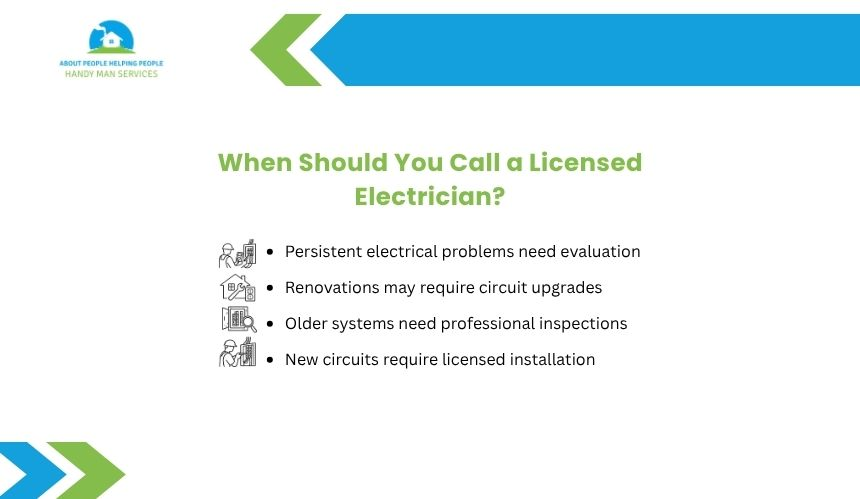
While homeowners can perform basic visual electrical safety inspections, certain electrical issues require professional diagnosis and repair. Attempting to repair wiring, electrical panels, or circuit components without the proper training can create serious safety hazards. Knowing when to contact a licensed electrician helps protect both the home’s electrical system and the people living in it.
Which Persistent Electrical Problems Require Professional Attention?
Electrical issues that continue after basic troubleshooting should always be inspected by a licensed electrician. Recurring problems often indicate underlying faults that require specialized testing and repairs to restore safe operation.
Common examples include:
- Frequently tripped circuit breakers
- Repeatedly flickering lights
- Outlets that stop working
- Persistent burning odors
- Buzzing electrical components
Why Should Electrical Systems Be Evaluated During Home Renovations?
Home renovations often increase the demand on the electrical system. Adding new lighting, appliances, outlets, or other electrical equipment may require circuit upgrades or additional wiring to ensure the home’s electrical system can safely support the increased load.
When Should Older Electrical Systems Be Inspected?
Homes with aging electrical systems may benefit from periodic professional inspections to identify worn wiring, outdated components, insufficient circuit capacity, or other conditions that could affect safety or reliability. An inspection helps determine whether upgrades or repairs are appropriate.
Why Should New Circuits Only Be Installed by a Licensed Electrician?
Installing new circuits involves working with the home’s electrical panel, wiring, and protective devices. Proper installation requires technical knowledge, specialized equipment, and compliance with applicable electrical codes. Having this work completed by a licensed electrician helps ensure the installation is safe and functions correctly.
Important:
Homeowners should never ignore recurring electrical problems or attempt repairs involving electrical panels, wiring, or circuit modifications. Professional electrical inspections and repairs help ensure the home’s electrical system remains safe, reliable, and compliant with applicable safety standards.
Tips for Maintaining Electrical Safety Year-Round
Electrical safety should be part of a home’s ongoing maintenance routine rather than something considered only when a problem occurs. Simple preventive practices performed throughout the year help reduce the risk of electrical hazards, improve system reliability, and identify developing issues before they require major repairs or create safety concerns.
Why Should You Test Safety Devices Regularly?
Smoke alarms, carbon monoxide detectors, GFCI outlets, and AFCI devices play an important role in protecting the home from electrical hazards. Testing these safety devices according to the manufacturer’s recommendations helps ensure they operate properly when needed.
How Can You Avoid Overloading Electrical Circuits?
Plugging too many high-power appliances into a single outlet or circuit can overload the electrical system. Distributing electrical loads appropriately, using outlets as intended, and avoiding excessive reliance on extension cords help reduce unnecessary strain on household circuits.
Why Is It Important to Replace Damaged Electrical Components Promptly?
Damaged outlets, switches, extension cords, plugs, or light fixtures should be replaced as soon as signs of wear appear. Cracks, burn marks, loose connections, or exposed wiring may indicate conditions that increase the risk of electrical shock or fire if left uncorrected.
How Often Should You Schedule Professional Electrical Inspections?
In addition to routine homeowner inspections, periodic evaluations by a licensed electrician can help identify hidden electrical issues that may not be visible during a basic visual inspection. Professional inspections are particularly valuable after major renovations, before purchasing an older home, or whenever recurring electrical problems are observed.
Did You Know?
Electrical safety depends on consistent preventive maintenance rather than reacting to emergencies. Regularly testing safety devices, avoiding overloaded circuits, replacing damaged electrical components, and scheduling professional inspections help keep a home’s electrical system safe, reliable, and prepared for year-round use.
Frequently Asked Questions
How often should a home's electrical system be inspected?
Homeowners should perform routine visual electrical safety checks throughout the year and schedule professional inspections whenever recurring electrical problems occur, after major renovations, when purchasing an older home, or as recommended for the property’s electrical system.
What are the most common electrical hazards in a home?
Common electrical hazards include damaged wiring, overloaded circuits, faulty outlets, worn extension cords, frequently tripped circuit breakers, and improperly functioning electrical devices. Identifying these issues early helps reduce the risk of electrical shock, equipment damage, and electrical fires.
Why are GFCI outlets important?
Ground Fault Circuit Interrupter (GFCI) outlets are designed to quickly disconnect electrical power when they detect a ground fault that could cause an electric shock. They are commonly installed in areas where electricity and water may come into contact, such as kitchens, bathrooms, garages, laundry rooms, and outdoor locations.
Can overloaded outlets cause electrical fires?
Yes. Plugging multiple high-power appliances into a single outlet or circuit can overload the electrical system, generating excessive heat that may damage wiring or electrical components. Distributing electrical loads properly helps reduce this risk.
When should electrical outlets be replaced?
Electrical outlets should be replaced if they are cracked, loose, discolored, produce sparks, feel warm during normal use, or no longer securely hold plugs. These conditions may indicate wear or internal damage that should be evaluated by a licensed electrician.
Why is preventive electrical maintenance important?
Preventive electrical maintenance helps identify worn components, loose connections, damaged wiring, and other developing problems before they become serious safety hazards. Routine inspections and timely repairs improve electrical system reliability while helping protect the home and its occupants.