
- peopleLLC
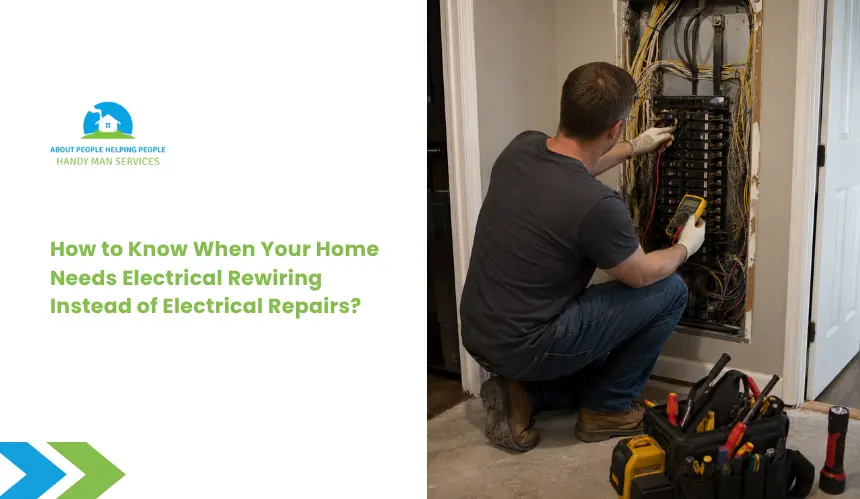
How to Know When Your Home Needs Electrical Rewiring Instead of Electrical Repairs?
Quick Answer A home may need electrical rewiring instead of simple electrical repairs when problems are widespread, recurring, or connected to old wiring, overloaded circuits, outdated panels, missing grounding, aluminum wiring, cloth-insulated wiring, or frequent breaker trips. If several rooms show flickering lights, warm outlets, burning smells, buzzing sounds, or repeated power loss, the issue may be inside the wiring system, not just one device. Electrical repairs usually make sense when the problem is isolated. Rewiring becomes more likely when the system cannot safely support modern electrical demand or when the wiring itself is deteriorated, unsafe, or not grounded properly. |
Authoritative safety sources are clear that recurring electrical symptoms should not be ignored. ESFI lists frequent breaker trips, dimming lights, buzzing outlets, discolored outlets, underpowered appliances, sparks, hot covers, and shocks as signs of home wiring hazards, and recommends electrical inspections for homes 40 years or older, homes with major renovations or new large appliances, and newly purchased older homes.
Electrical problems do not always mean your entire home needs rewiring. A single damaged outlet, loose switch, or faulty fixture may only need a targeted electrical repair. But when problems repeat across rooms, affect multiple circuits, or point to aging wiring behind the walls, repairs may only cover the symptom while the deeper electrical system remains unsafe.
The difference matters because old, overloaded, or damaged wiring can create heat, arcing, voltage drops, shock risks, and fire hazards. Knowing when to repair and when to rewire helps homeowners avoid paying for repeated fixes that never solve the real problem.
Quick Insight
A repair fixes a specific failure point. Rewiring replaces the pathway carrying electricity through the home. If the pathway is outdated, overloaded, or damaged, small repairs may keep failing.
Electrical Repair Vs Electrical Rewiring: What Is The Real Difference?
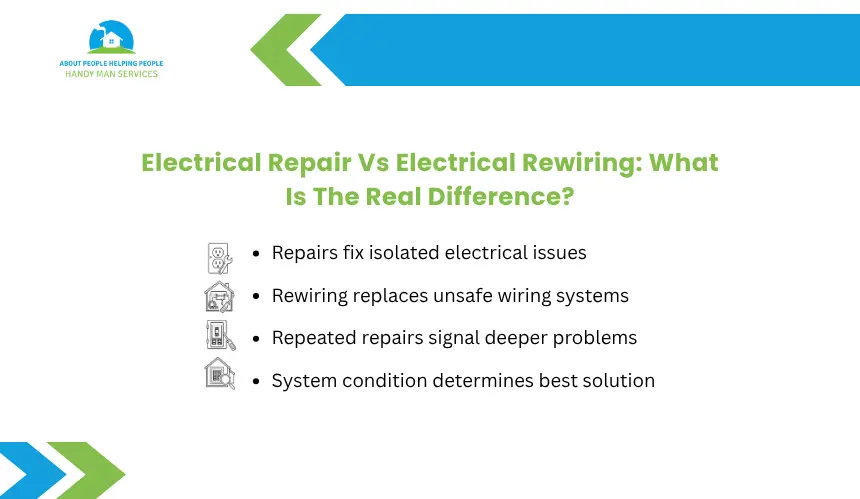
Electrical repairs and rewiring both solve electrical problems, but they address different levels of risk. A repair targets one component. Rewiring addresses the condition, capacity, and safety of the electrical system behind the walls.
What Counts As An Electrical Repair?
An electrical repair usually fixes a specific issue in one location. This may include replacing a damaged outlet, tightening a loose connection, installing a new switch, repairing a light fixture, replacing a faulty breaker, or correcting a small wiring problem inside an accessible box.
Repairs are appropriate when the rest of the system is stable. For example, if one outlet stops working because of a worn receptacle but the wiring is modern, grounded, and properly protected, a repair may be enough.
A repair should still be done carefully because small electrical faults can create heat or arcing. The key difference is that the problem is limited, traceable, and not showing signs of system-wide failure.
What Counts As Electrical Rewiring?
Electrical rewiring means replacing some or all of the electrical wiring in a home. This may include branch circuits, outlets, switches, grounding, junction boxes, wiring to fixtures, and sometimes panel upgrades if the existing service cannot support the new layout.
Rewiring is usually considered when the wiring is outdated, damaged, ungrounded, unsafe, overloaded, or incompatible with the home’s electrical demand. It may be partial, such as rewiring a kitchen or addition, or whole-house, especially in older homes.
A rewire is not just about convenience. It is a safety and capacity upgrade that can reduce overheating risks, improve circuit distribution, support modern appliances, and bring the electrical system closer to current standards.
Why Repeated Repairs Can Signal A Bigger Wiring Problem
If the same circuit keeps failing, replacing one device after another may not solve the issue. Repeated repairs can indicate loose wiring, overloaded circuits, failing insulation, poor grounding, outdated connections, or panel limitations.
A warning pattern may look like this: a breaker trips, then an outlet is replaced, then lights flicker again, then another outlet feels warm, then a different room loses power. At that point, the concern is no longer one outlet. The system needs diagnosis.
Repeated electrical symptoms should be treated as evidence. The more often they happen, the more likely the home needs a deeper inspection instead of another surface-level repair.
Warning Signs Your Home May Need Electrical Rewiring
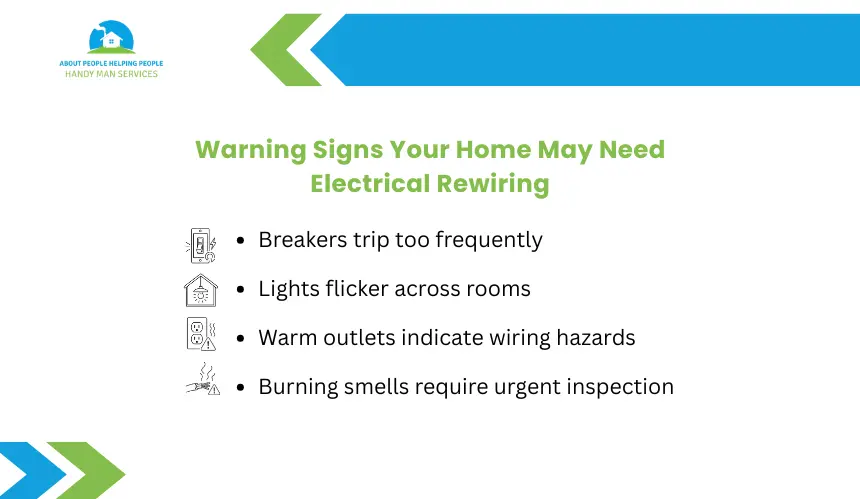
Rewiring becomes more likely when warning signs appear across the home or involve heat, smell, sound, shock, or repeated interruptions. ESFI identifies frequent breaker trips, dimming lights, buzzing sounds, discolored outlets, shocks, sparks, and hot switch plates or receptacle covers as signs of wiring hazards.
Frequent Breaker Trips Or Blown Fuses
A circuit breaker is designed to shut off power when the circuit is overloaded or unsafe. If a breaker trips once during heavy use, the cause may be temporary overload. If it trips repeatedly, the circuit may be carrying more electrical load than it was built to handle.
Repeated breaker trips can also point to short circuits, ground faults, damaged wiring, failing appliances, or loose connections. Replacing the breaker without identifying the cause can be unsafe.
Rewiring may be needed when several circuits trip often, when the panel is outdated, or when the home does not have enough dedicated circuits for appliances, HVAC equipment, kitchen loads, bathroom outlets, office equipment, or modern electronics.
Flickering Or Dimming Lights Across Multiple Rooms
One flickering bulb may be a loose bulb or failing fixture. Flickering lights across multiple rooms can indicate a larger electrical issue, especially when lights dim as appliances start or when flickering happens on different circuits.
This can happen when circuits are overloaded, connections are loose, wiring is aging, or the electrical panel is struggling to distribute power consistently. Loose connections are especially serious because they can create arcing and heat.
If flickering is widespread, recurring, or paired with buzzing, burning smells, or breaker trips, the problem should be inspected by a licensed electrician. A fixture repair may not be enough if the wiring path is unstable.
Warm, Discolored, Buzzing, Or Sparking Outlets
Outlets and switches should not feel hot, buzz, spark heavily, or show brown marks. Heat and discoloration often mean resistance is building at a connection point. That resistance can produce heat inside the wall, which raises the risk of damage or fire.
Buzzing can indicate loose wiring, arcing, overloaded devices, or failing components. Occasional tiny sparks when plugging in a device may happen, but repeated sparks, visible flashes, or scorch marks are warning signs.
If several outlets show heat, discoloration, or looseness, the issue may be larger than replacing one receptacle. The home may need circuit evaluation, wiring correction, or partial rewiring.
Burning Smells Or Hot Insulation Odors
A burning smell near an outlet, panel, switch, fixture, or appliance should be treated as urgent. Overheated wiring can give off an odor similar to hot plastic, burning insulation, or smoky dust.
Turn off the affected circuit if safe to do so and avoid using that area until it is inspected. If smoke, active burning, or strong heat is present, emergency services may be needed.
A repair may solve the issue if one device failed. Rewiring becomes more likely if insulation is deteriorated, multiple areas smell hot, wiring is visibly damaged, or old circuits are overheating under normal use.
Did You Know?
Electrical problems often happen behind walls before visible damage appears. By the time an outlet is discolored or a cover plate feels hot, heat may already be affecting the wiring or connection behind it.
Home Age, Wiring Type, And Electrical Capacity Matter
Some homes need rewiring not because one dramatic failure has happened, but because the system was built for a different era of electrical use. Modern homes depend on HVAC equipment, computers, chargers, large appliances, entertainment systems, kitchen devices, and higher outlet demand than older wiring systems were designed to support.
Homes Over 40 Years Old Should Be Inspected
ESFI recommends electrical inspections for homes that are 40 or more years old, homes that are 10 or more years old after a major renovation, addition, or major appliance installation, and newly purchased previously owned homes.
Older homes may still function, but function does not always mean safety or capacity. Wiring insulation can age, connections can loosen, grounding may be missing, and older panels may not support the way the home is currently used.
A professional inspection can determine whether the home needs small repairs, dedicated circuits, panel work, partial rewiring, or full electrical rewiring.
Outdated Wiring Materials Can Increase Risk
Certain older wiring types may signal a need for closer evaluation. These can include knob-and-tube wiring, cloth-insulated wiring, ungrounded two-wire systems, or aluminum branch-circuit wiring in some homes.
The concern is not only age. Older wiring may lack grounding, have brittle insulation, be modified poorly over time, or run through walls in ways that do not match current electrical demands.
Some wiring can be repaired or managed under specific conditions, but widespread outdated wiring often makes rewiring the more reliable long-term solution. A licensed electrician should inspect the wiring type before homeowners assume it is safe or unsafe.
Missing Grounding Or Two-Prong Outlets
Two-prong outlets often indicate an older ungrounded electrical system. Grounding provides an additional path for fault current and supports safer operation of many modern devices and surge protection systems.
Replacing two-prong outlets with three-prong outlets without proper grounding does not solve the underlying issue. It can create a false sense of safety.
Rewiring may be needed when the home has many ungrounded outlets, sensitive electronics, modern appliances, or renovation plans that require safer and more reliable circuits.
Not Enough Circuits For Modern Electrical Loads
Older homes often have too few circuits for today’s usage. A kitchen may need multiple dedicated circuits. Bathrooms need safe protected outlets. Home offices may need stable power for computers, monitors, printers, and charging stations.
Signs of insufficient capacity include constant reliance on extension cords, overloaded power strips, underpowered appliances, tripping breakers, and dimming lights when large devices start.
In this case, repeated repairs may not help because the core issue is capacity. New circuits or partial rewiring may be needed to distribute electrical load safely.
Quick Insight
A home can have working power and still have an outdated electrical system. Rewiring is often about preventing overload, not waiting for total failure.
When Electrical Repairs Are Enough
Not every electrical problem requires rewiring. Many issues are localized and can be repaired safely after proper troubleshooting. The key is whether the issue is isolated, explainable, and not part of a larger pattern.
One Faulty Outlet, Switch, Or Fixture
If one outlet is loose, one switch fails, or one fixture stops working, a targeted repair may be enough. Devices wear out over time, especially in high-use areas like kitchens, bathrooms, bedrooms, garages, and living rooms.
A licensed electrician may replace the device, correct a loose connection, update the box, or inspect the local wiring. If the wiring behind the device is in good condition, full rewiring is usually unnecessary.
However, if the same area has heat marks, buzzing, repeated failures, or brittle wiring, the problem may extend beyond the visible device.
A Single Appliance Is Causing The Problem
Sometimes the home wiring is not the cause. A failing appliance can trip breakers, cause flickering, or create unusual smells. Large appliances, space heaters, window AC units, microwaves, and power tools can reveal circuit limits or internal defects.
If the problem only happens when one appliance runs, the electrician may test the appliance load, outlet, breaker, and circuit capacity. The solution may be appliance repair, a dedicated circuit, or replacing a faulty device.
Rewiring becomes more likely when several appliances cause problems on different circuits or when the home lacks enough dedicated circuits for normal use.
A Minor Code Upgrade Or Device Replacement
Some repairs involve upgrading devices rather than replacing wiring throughout the home. This may include adding GFCI protection in bathrooms or kitchens, replacing outdated outlets, improving grounding in a specific area, or changing a damaged switch.
These upgrades can improve safety without requiring a full rewire. The electrician should still verify that the existing wiring can support the new device properly.
A small upgrade becomes a larger wiring conversation when the electrician finds missing grounding, overloaded circuits, unsafe splices, or deteriorated insulation.
When Rewiring Is The Safer Long-Term Choice
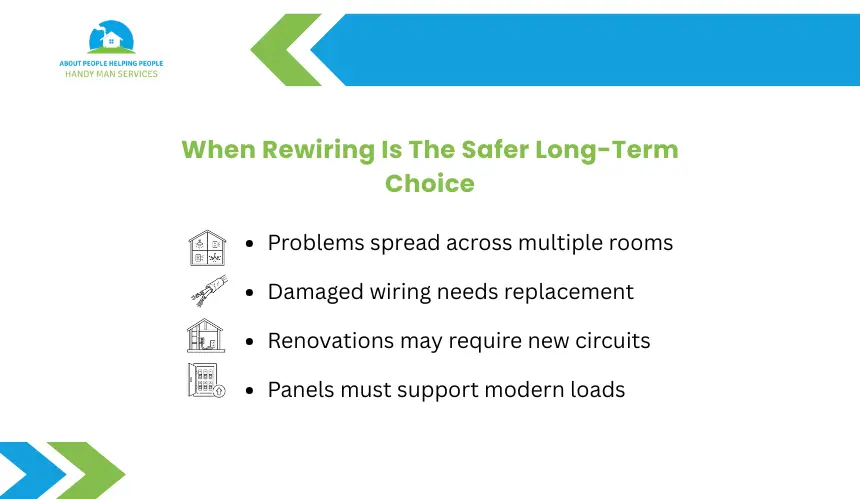
Rewiring is usually the stronger choice when electrical problems are systemic, the wiring is old or unsafe, or the home’s electrical layout no longer supports daily use. In these cases, repeated repairs can become more expensive than solving the root problem.
Problems Appear In Multiple Rooms Or Circuits
When electrical symptoms appear in several rooms, the issue may involve branch circuits, panel connections, grounding, load distribution, or aging wiring. This is especially concerning when lights flicker, breakers trip, outlets heat up, and devices feel underpowered in different parts of the home.
Multiple-room symptoms suggest the system should be evaluated as a whole. Fixing one outlet may temporarily reduce one symptom but leave the underlying hazard unchanged.
A partial or whole-home rewire can create safer circuit distribution and reduce repeated failures.
The Wiring Is Damaged, Brittle, Or Unsafe
Damaged wiring may come from age, rodents, moisture, overheating, old renovations, improper DIY work, or overloaded circuits. Once insulation becomes brittle, cracked, scorched, or compromised, the wiring may no longer protect conductors safely.
Unsafe wiring should not be patched repeatedly without understanding its condition throughout the circuit. If the damage is isolated, a repair may work. If similar wiring exists across the home, rewiring may be the safer plan.
This is especially important inside walls, attics, basements, crawl spaces, and older additions where previous electrical work may have been modified over time.
You Are Planning A Major Renovation
Major renovations are a practical time to consider rewiring because walls, ceilings, or floors may already be open. Rewiring during construction is usually easier than cutting into finished surfaces later.
Renovations also change electrical demand. A kitchen remodel, bathroom addition, finished basement, home office, EV charger, HVAC upgrade, or appliance upgrade may require new circuits, grounded outlets, improved panel capacity, or code-compliant protection.
If the home already has old wiring, renovation is often the right time to upgrade the electrical system instead of connecting new finishes to an aging infrastructure.
The Panel And Wiring Cannot Support The Home
Sometimes the problem is not just the wires or just the panel. The system as a whole may be undersized. Older panels may have limited capacity, outdated breakers, poor labeling, overcrowded circuits, or signs of past modifications.
If the panel cannot safely support added circuits, the home may need a panel upgrade along with rewiring in key areas. This is common when homeowners add major appliances, workshops, HVAC equipment, hot tubs, or EV charging.
A proper electrical plan considers service capacity, panel condition, circuit layout, wire size, grounding, and the actual load of the home.
What A Licensed Electrician Checks Before Recommending Rewiring
A rewiring recommendation should come from evidence, not guesswork. A qualified electrician evaluates symptoms, wiring condition, panel capacity, circuit behavior, and safety risks before deciding whether repair or rewiring makes sense.
Circuit Load And Breaker Behavior
The electrician may check which circuits are overloaded, what devices are connected, how breakers respond, and whether the circuit is properly sized. Breakers that trip frequently should not simply be replaced with larger breakers because the wire may not be rated for higher current.
The circuit must match the breaker and the expected load. If the wire is undersized or the circuit is overloaded, rewiring or adding circuits may be required.
This step helps separate appliance problems from wiring problems.
Outlet, Switch, And Junction Box Conditions
Outlets and junction boxes can reveal heat, loose connections, overcrowding, unsafe splices, missing covers, aluminum wiring, ungrounded conductors, or deteriorated insulation.
The electrician may inspect representative areas across the home, especially where symptoms appear. If several boxes show similar problems, the concern may be system-wide.
This is where a simple repair may turn into a rewiring recommendation. The visible device may be only the easiest place to see a larger issue.
Electrical Panel Condition
The panel is the control center of the home’s electrical system. An electrician may inspect breaker condition, labeling, capacity, corrosion, heat marks, double-tapped breakers, grounding, bonding, and signs of outdated equipment.
A panel issue may require repair, replacement, or upgrade. If the panel is outdated and the wiring is also old, both may need to be addressed together.
Panel condition matters because even new wiring must connect to a safe distribution system.
Safety And Code Requirements
Electrical codes exist to reduce shock, fire, and overload risk. A licensed electrician can identify where a home may need GFCI protection, AFCI protection, dedicated circuits, grounding improvements, proper box fill, or safer wiring methods.
Code requirements can vary by location and project scope, so homeowners should not rely on general internet advice for final decisions.
The safest path is a professional inspection, especially when symptoms include heat, sparks, burning odors, repeated trips, or shocks.
Did You Know?
A breaker that keeps tripping is doing its job. The unsafe response is forcing it to stay on, oversizing it, or ignoring the reason it is opening the circuit.
Frequently Asked Questions
How do I know if I need electrical rewiring instead of a repair?
You may need electrical rewiring if problems are recurring, widespread, or connected to old wiring, overloaded circuits, missing grounding, hot outlets, flickering lights, burning smells, or frequent breaker trips. A simple repair is more likely when the issue is isolated to one device or fixture.
Can flickering lights mean my home needs rewiring?
Flickering lights can come from a loose bulb or faulty fixture, but widespread or recurring flickering may signal overloaded circuits, loose wiring, panel issues, or unstable electrical connections. If flickering affects multiple rooms or happens with buzzing, smells, or breaker trips, professional inspection is needed.
Is it safe to keep repairing old wiring?
It depends on the wiring condition. If the wiring is modern, grounded, and only one device failed, repair may be safe. If the wiring is brittle, ungrounded, overheated, damaged, or repeatedly failing across the home, rewiring is usually safer than repeated patchwork repairs.
Does an older home always need electrical rewiring?
An older home does not always need full rewiring, but it should be inspected, especially if it is over 40 years old, has two-prong outlets, frequent electrical issues, or has undergone renovations. Some homes need targeted upgrades, while others need partial or whole-house rewiring.
What is the biggest warning sign that rewiring may be needed?
The biggest warning sign is a pattern of electrical problems across the home, especially frequent breaker trips, warm or discolored outlets, buzzing sounds, burning smells, shocks, sparks, or lights dimming when appliances run. Multiple symptoms usually indicate a system problem, not just one bad outlet.
If your home keeps showing electrical warning signs, do not keep treating each issue as a separate inconvenience. Schedule a licensed electrical inspection to determine whether targeted electrical repairs are enough or whether electrical rewiring is the safer long-term solution for your home, family, and modern power needs.