
- About People Helping People
What Counts as an Electrical Emergency at Home?
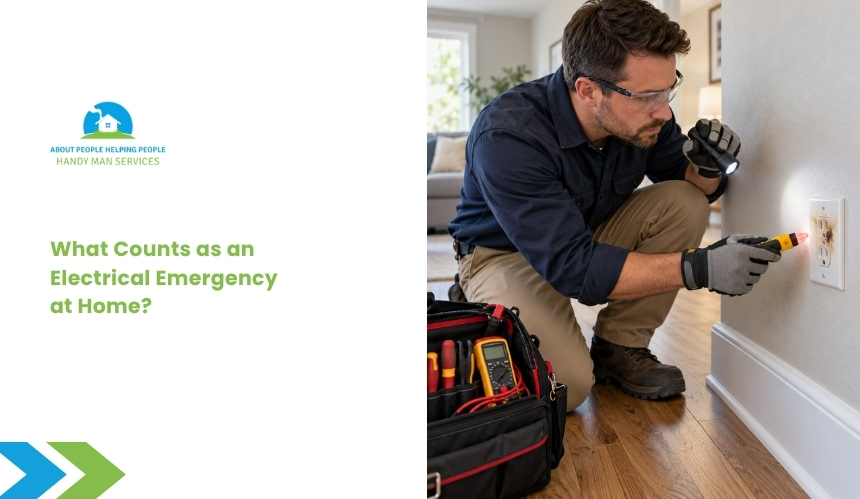
Quick Answer: An electrical problem counts as an emergency when it creates an immediate risk of electrical shock, fire, serious equipment damage, or unsafe exposure to energized components. These situations should not be treated like routine electrical repairs or investigated through repeated testing. Common signs of a home electrical emergency include:
During an electrical emergency, homeowners should avoid touching damaged equipment, exposed wiring, or electrical components near water. If there is smoke, fire, a downed power line, or an immediate threat to people, the area should be avoided and emergency services or the appropriate utility should be contacted as necessary. Minor problems such as a single failed outlet or an isolated breaker trip may not automatically be emergencies. However, heat, smoke, burning odors, shocks, arcing, or repeated abnormal electrical behavior can indicate a situation requiring urgent professional attention. |
Electrical problems can range from minor inconveniences to situations that create an immediate risk of shock, fire, or serious property damage. Knowing the difference matters because some warning signs require urgent action rather than waiting for a routine electrical appointment.
Smoke, burning odors, sparking components, electrical shocks, overheating panels, and water around energized equipment can all indicate potentially dangerous conditions. Other issues, such as an isolated tripped breaker, may be less urgent unless they occur repeatedly or appear alongside additional warning signs.
Understanding what counts as an electrical emergency at home helps homeowners recognize when to keep their distance, shut off power only when it is safe to do so, contact emergency services when necessary, and seek prompt assistance from a qualified electrician.
What Makes an Electrical Problem an Emergency?
An electrical problem becomes an emergency when it creates an immediate or developing risk of fire, electrical shock, serious injury, or unsafe exposure to energized components. The presence of heat, smoke, burning odors, arcing, or contact with water can make prompt action especially important.
When Does an Electrical Issue Create an Immediate Safety Risk?
Immediate concern is warranted when an electrical problem involves visible smoke, fire, repeated or significant sparking, electrical shock, exposed energized wiring, overheating components, or electricity near water.
These conditions should not be investigated by touching, unplugging, resetting, or repeatedly testing the affected equipment when doing so could expose someone to danger.
What Is the Difference Between an Electrical Emergency and a Routine Repair?
A routine electrical problem generally does not present an immediate safety threat. Examples might include a nonworking outlet, a failed light fixture, or an isolated breaker trip without heat, smoke, unusual odors, or other concerning symptoms.
An electrical emergency involves warning signs suggesting that continued use, contact, or delay could create a more immediate hazard. When fire, smoke, shock, or another immediate threat is present, emergency services may be necessary in addition to electrical assistance.
Is Smoke or a Burning Electrical Smell an Emergency?
Yes. Treat smoke or a persistent burning smell from electrical components as an urgent warning sign. It may indicate overheating, damaged insulation, failing connections, or another electrical fault capable of creating a fire hazard.
What Can a Burning or Melting Odor Indicate?
An unusual burning, melting-plastic, or overheated odor near an outlet, switch, appliance connection, wiring, or electrical panel can indicate that an electrical component is becoming excessively hot.
Do not repeatedly test or use the source while the cause remains unknown, especially if the odor is accompanied by heat, discoloration, buzzing, or smoke.
What Should Homeowners Do If Smoke Comes From an Outlet or Electrical Panel?
If an outlet, switch, or electrical panel is smoking, occupants should avoid touching or attempting to inspect the affected component. If there is active fire, heavy smoke, or an immediate threat, people should leave the area and contact emergency services.
Electrical power should only be disconnected when it can be done safely without approaching the smoking, burning, or otherwise hazardous equipment.
Are Sparks From Outlets, Switches, or Panels an Emergency?
Sparks from electrical components can indicate arcing, damaged wiring, loose connections, or another electrical fault. While a tiny, momentary spark can sometimes occur when plugging in certain devices, repeated, large, prolonged, or unexplained sparking requires more urgent attention.
When Are Electrical Sparks a Serious Warning Sign?
Sparking is particularly concerning when it comes directly from an outlet, switch, wiring, or electrical panel rather than briefly occurring at a plug connection. Warning signs such as burning odors, smoke, buzzing, heat, discoloration, or melted material make the situation more serious.
The affected component should not continue to be used or repeatedly tested.
Why Should Repeated or Large Sparks Not Be Ignored?
Repeated or substantial sparking can indicate that electricity is arcing across an unintended path. This can generate significant heat and may damage nearby wiring, insulation, or electrical components.
If sparking is accompanied by smoke, fire, or an immediate threat to occupants, people should keep away from the affected area and contact emergency services as appropriate.
Is an Overheating Electrical Panel an Emergency?
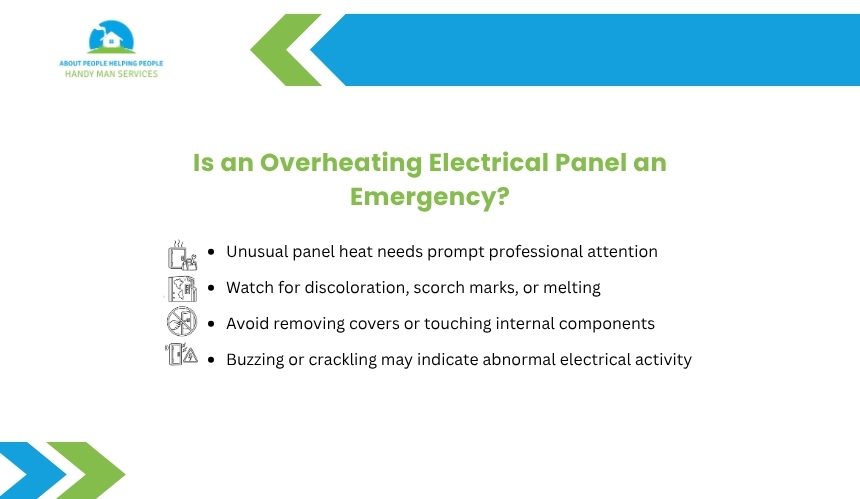
An electrical panel that becomes unusually hot can indicate loose connections, overloaded components, damaged breakers, or other electrical faults generating excessive heat. Because the panel distributes electricity throughout the home, signs of overheating should receive prompt professional attention.
What Warning Signs Can Indicate Excessive Heat?
Warning signs may include unusual warmth around the panel, a burning or melting odor, discoloration, scorch marks, melted components, or visible smoke. Breakers that feel unusually hot alongside other symptoms can also indicate a developing electrical problem.
Homeowners should avoid removing the panel cover or touching internal components to investigate the source.
Why Are Buzzing, Crackling, or Burning Odors Around the Panel Concerning?
Persistent buzzing or crackling can indicate abnormal electrical activity such as arcing or a loose connection, while a burning odor can signal that wiring or other components are overheating.
If the panel is smoking, sparking, or showing signs of fire, occupants should keep away from it and contact emergency services when there is an immediate safety threat.
Are Hot or Discolored Outlets and Switches an Emergency?
An outlet or switch that becomes unusually hot, scorched, melted, or discolored can indicate excessive heat developing within the electrical connection. These warning signs should not be ignored because continued use may allow the underlying electrical problem to worsen.
What Can Scorch Marks or Melted Plastic Indicate?
Darkened areas, scorch marks, melted faceplates, or deformed plastic can indicate that excessive heat or electrical arcing has occurred around the outlet or switch.
The affected component should not continue to be used. A qualified electrician should evaluate the wiring and connections rather than simply replacing the visibly damaged cover or device.
When Does an Unusually Warm Outlet Need Immediate Attention?
An outlet or switch that feels noticeably hot, especially when accompanied by a burning odor, buzzing, crackling, sparking, smoke, or discoloration, requires urgent attention.
If there is active smoke, fire, or another immediate danger, occupants should move away from the affected area and contact emergency services rather than attempting to inspect or repair the electrical component.
Is Repeated Circuit Breaker Tripping an Electrical Emergency?
A circuit breaker is designed to interrupt power when it detects certain unsafe electrical conditions. One isolated trip does not automatically mean there is an emergency, but a breaker that repeatedly trips can indicate an overload, short circuit, ground fault, or another problem requiring investigation.
When Can a Tripped Breaker Be a Routine Electrical Issue?
An occasional breaker trip may occur when too many electrical devices are operating on the same circuit. If the cause is understood and there are no signs of heat, smoke, burning odors, sparking, or damaged wiring, the situation may not require emergency service.
Repeated tripping, however, should not simply be treated as a nuisance.
When Does Repeated Tripping Signal a More Serious Problem?
A breaker that trips immediately after being reset, will not remain on, or repeatedly trips without an obvious cause may indicate an electrical fault that needs professional evaluation.
Urgency increases when repeated tripping occurs alongside buzzing, overheating, burning odors, scorch marks, smoke, or sparking. Repeatedly resetting the breaker without identifying the cause should be avoided.
What Should You Do If You Receive an Electrical Shock at Home?
An electrical shock means electrical current has passed through the body, and the severity may not always be obvious immediately. The electrical source should not be touched again, and the equipment, outlet, switch, or fixture involved should remain unused until the cause has been properly evaluated.
Why Should Even a Small Electrical Shock Be Taken Seriously?
The effects of electrical shock depend on factors such as current, duration of contact, and the path electricity takes through the body. What initially feels like a minor shock can still be associated with burns, muscle injury, or other effects that may require medical assessment.
The electrical source should also be inspected before it is used again.
When Is Emergency Medical Assistance Necessary?
Emergency medical assistance should be sought when a person has severe burns, breathing difficulty, loss of consciousness, confusion, chest symptoms, seizures, or another serious reaction after electrical contact.
If someone remains in contact with an electrical source, others should not touch the person directly until the electrical hazard has been safely disconnected or emergency responders have made the area safe.
Is Water Near Electrical Wiring or Equipment an Emergency?
Water near electrical equipment can create a serious shock and electrocution hazard, particularly when outlets, wiring, appliances, or an electrical panel may still be energized. Flooding, burst pipes, roof leaks, and plumbing failures can all bring water into contact with electrical components.
Why Is Water Around Outlets, Wiring, or Electrical Panels Dangerous?
Water can provide a path for electrical current and may energize wet surfaces or nearby conductive materials. The risk becomes especially serious when water reaches outlets, exposed wiring, extension cords, appliances, or the electrical panel.
People should avoid entering standing water when energized electrical equipment may be present.
What Should Homeowners Do After Flooding or a Major Leak?
If flooding or a significant leak reaches electrical equipment, homeowners should avoid touching affected components or attempting to disconnect power when doing so requires entering a hazardous area.
Power should only be shut off when the disconnect can be reached safely. Electrical equipment exposed to water should be professionally evaluated before it is returned to service.
Do Fallen or Damaged Electrical Service Lines Count as an Emergency?
Yes. A fallen, sagging, or visibly damaged electrical service line can create a severe electrocution and fire hazard. Damaged lines may remain energized even when they appear inactive, so homeowners should never approach, touch, move, or attempt to repair them.
Why Should a Downed Power Line Always Be Treated as Energized?
There is no safe way to determine visually whether a downed electrical line is carrying current. Electricity may also travel through nearby objects, wet ground, fences, vehicles, or other conductive materials.
People should stay well away from the line and anything it is touching rather than attempting to investigate the damage themselves.
Who Should Be Contacted About Damaged Electrical Service Lines?
Downed utility lines should be reported to the local electric utility and emergency services when they present an immediate public safety hazard. People should remain clear of the affected area while waiting for trained personnel.
If damage involves the home’s electrical service equipment rather than the utility-owned line, the utility and a qualified electrician may both need to be involved before electrical service can be safely restored.
Is a Partial or Unusual Power Loss an Electrical Emergency?
A partial power loss is not always an emergency, but unexpected changes in electrical service can indicate a problem with the home’s wiring, electrical panel, service connection, or utility supply. The surrounding warning signs help determine how urgently the problem should be addressed.
What Can Flickering, Dimming, or Intermittent Power Indicate?
Occasional light fluctuations can have several causes, but widespread or persistent flickering, unexpected dimming, or circuits repeatedly losing and regaining power can point to loose connections, circuit problems, or issues with the electrical service.
If multiple areas of the home are affected, the problem deserves prompt investigation rather than being dismissed as a faulty light bulb.
When Should Unusual Power Behavior Receive Urgent Attention?
Urgent attention is warranted when partial power loss or severe flickering occurs alongside burning odors, buzzing or crackling, overheating, sparking, smoke, or visible electrical damage.
If neighboring properties are also without power, the issue may involve the utility supply. If the problem appears limited to the home or includes electrical hazard signs, the affected equipment should not be repeatedly tested while professional assistance is arranged.
What Should You Do During a Home Electrical Emergency?
During a home electrical emergency, the priority is to avoid contact with the electrical hazard and prevent further exposure. The appropriate response depends on whether there is fire, smoke, damaged wiring, water exposure, a downed line, or another immediate danger.
When Is It Safe to Shut Off Electrical Power?
Power may be shut off at the appropriate breaker or main disconnect when it can be reached without approaching smoke, fire, standing water, exposed wiring, or damaged electrical equipment.
If reaching the electrical panel would require entering an unsafe area, occupants should not attempt to disconnect the power themselves.
When Should You Leave the Area and Call Emergency Services?
People should leave the affected area when there is an electrical fire, significant smoke, a downed power line, or another condition presenting an immediate threat to life or property.
Emergency services should be contacted when necessary, and occupants should avoid re-entering a dangerous area until qualified responders indicate that it is safe.
Why Should Damaged Electrical Components Not Be Tested or Repaired Yourself?
Repeatedly resetting breakers, touching damaged outlets, opening electrical panels, or testing exposed wiring can increase the risk of shock, burns, arcing, or further equipment damage.
Once the immediate danger is controlled, a qualified electrician can identify the cause and determine what repairs are required before the affected electrical system is used again.
Frequently Asked Questions
What is considered an electrical emergency in a house?
An electrical emergency is a problem that creates an immediate risk of fire, electrical shock, injury, or unsafe exposure to energized components. Examples include electrical smoke, burning odors, significant sparking, overheating equipment, electrical shocks, downed power lines, and electricity near water.
Is a burning smell from an outlet an emergency?
A persistent burning or melting-plastic smell from an outlet should receive urgent attention, particularly when accompanied by heat, discoloration, buzzing, sparking, or smoke. Do not continue using the outlet or repeatedly test it until a qualified electrician has identified the cause.
Is a sparking outlet an electrical emergency?
Repeated, large, prolonged, or unexplained sparking from an outlet can indicate arcing, damaged wiring, or loose electrical connections. If sparks occur with smoke, burning odors, excessive heat, or visible damage, the outlet should not be used, and urgent professional assistance may be necessary.
Is a breaker that keeps tripping dangerous?
Repeated breaker tripping can indicate an overloaded circuit, short circuit, ground fault, or another electrical problem. A breaker that immediately trips again or repeatedly trips without an obvious cause should be professionally evaluated, especially when heat, buzzing, burning odors, or sparking also occur.
What should you do if an electrical panel is smoking?
Do not touch, open, or approach a smoking electrical panel to investigate it. If there is active fire, significant smoke, or immediate danger, occupants should leave the area and contact emergency services. Disconnect power only when the controls can be reached safely.
Is water near an electrical panel an emergency?
Yes, particularly when water may have reached energized equipment. People should avoid touching the panel, wet electrical components, or standing water nearby. Disconnect power only when it can be done safely, and have water-exposed electrical equipment professionally evaluated before reuse.
When should you call an emergency electrician?
Urgent electrical assistance may be appropriate for burning odors, significant sparking, overheating components, repeated breaker trips with other warning signs, damaged wiring, or unusual power behavior suggesting an electrical hazard. Active fires, heavy smoke, downed utility lines, or life-threatening situations require emergency responders or the utility as appropriate.