
- peopleLLC
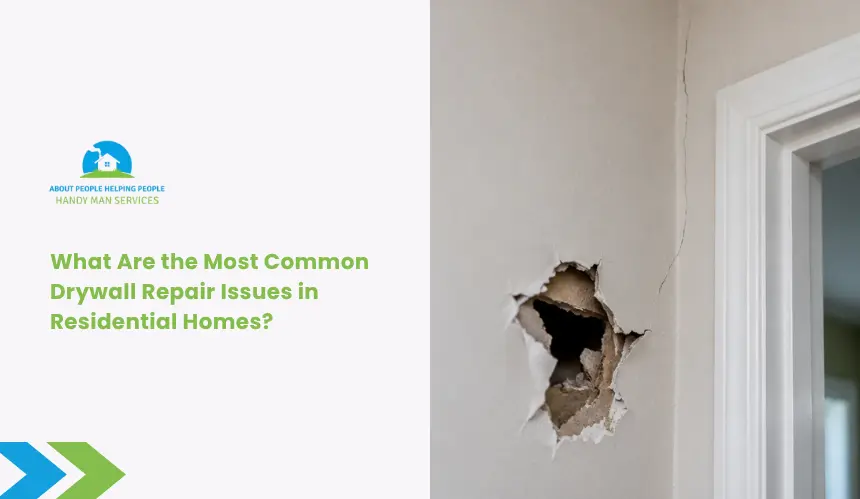
What Are the Most Common Drywall Repair Issues in Residential Homes?
Quick Answer: The most common drywall repair issues in residential homes include cracks, nail pops, holes, visible seams, and water damage. These problems typically result from structural movement, moisture exposure, impact, or installation weaknesses, and they often start small before becoming more noticeable over time. The most frequent drywall issues and what causes them:
Did You Know? Most drywall damage is not caused by the drywall itself but by external factors like structural movement or moisture changes. The wall surface often reflects what is happening behind it. Important Insight: Drywall issues rarely appear all at once. They usually begin as minor imperfections that gradually worsen if the underlying cause is not addressed. Key Takeaway: Identifying the type of drywall damage early helps determine the right repair approach and prevents small surface issues from developing into more complex structural concerns. |
Drywall issues often seem to appear unexpectedly. A smooth wall can suddenly develop cracks, small bumps, or visible lines that affect the overall appearance of a room. For many homeowners, the frustration is not just the damage itself, but the fact that similar problems tend to return even after repairs.
The reason lies in what drywall represents. It is not a structural component but a surface layer that reflects changes happening within the home. Factors such as natural settling, temperature fluctuations, humidity, and everyday impact all influence how drywall behaves over time. When these underlying conditions shift, the drywall responds by showing visible signs of stress.
Did You Know? Hairline cracks and minor surface imperfections are common in most homes, especially as buildings adjust to environmental changes during the first few years.
Understanding drywall damage requires looking beyond the surface. Many issues are symptoms of deeper causes rather than isolated problems. Without addressing those causes, repairs may only provide temporary results.
This article explores the most common drywall repair issues found in residential homes, explains why they occur, and highlights how each problem develops so it can be identified and managed effectively.
Why Drywall Damage Happens in Homes
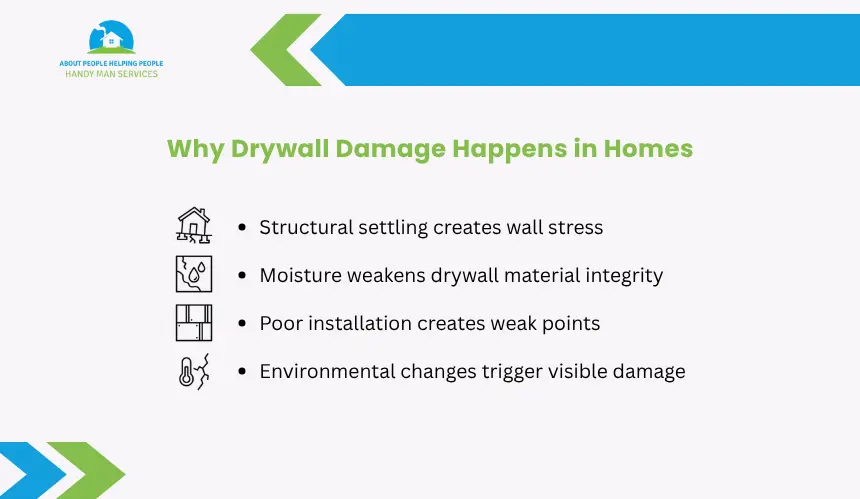
Drywall damage is rarely random. It usually reflects changes in the structure, environment, or installation quality within a home. Because drywall is a rigid surface attached to a flexible structure, even small shifts or imbalances can appear as visible damage on walls and ceilings.
How Structural Settling Affects Walls
All homes experience some level of settling over time. As the foundation adjusts to soil conditions and weight distribution, small movements occur throughout the structure. These shifts place stress on drywall panels, especially around joints, corners, and openings such as doors and windows.
As pressure builds in these areas, the drywall responds by forming cracks or slight separations. These are often seen as hairline fractures that may expand gradually if the underlying movement continues.
Did You Know?
Cracks that appear diagonally near doors or windows are commonly linked to structural settling rather than surface damage.
Why Moisture Causes Drywall Deterioration
Drywall is highly sensitive to moisture because its core material absorbs water easily. When exposed to humidity, leaks, or condensation, it begins to weaken and lose its structural integrity.
Moisture can cause swelling, soft spots, or discoloration, and in some cases, it leads to mold growth within the wall system. Even small amounts of repeated exposure can gradually degrade the material over time.
Important Insight:
Moisture-related drywall damage often develops slowly and may not be visible until the material has already weakened internally.
How Installation Issues Lead to Damage
The way drywall is installed plays a significant role in how it performs over time. Improper fastening, inadequate joint sealing, or uneven framing can create weak points that become visible later.
These weaknesses may show up as nail pops, uneven seams, or cracks that reappear after repair. In many cases, the issue is not the repair itself but the original installation that failed to provide a stable surface.
What Are the Most Common Drywall Repair Issues?
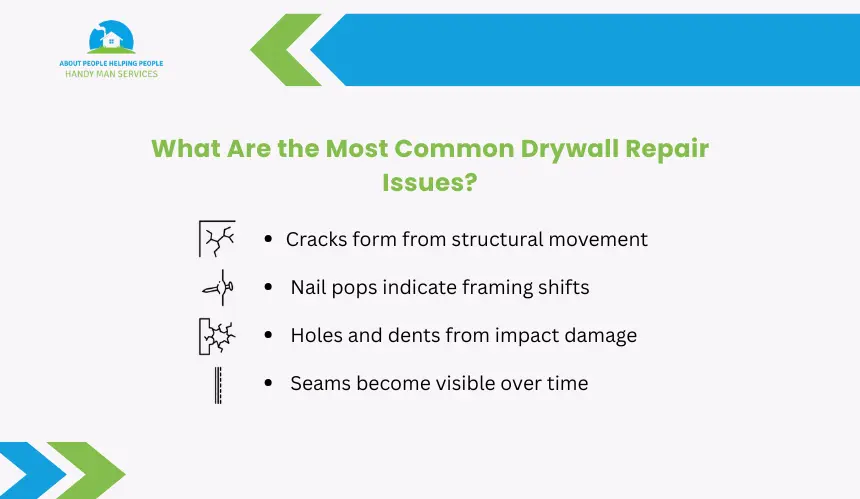
Drywall problems in residential homes tend to follow consistent patterns because they are influenced by similar structural and environmental factors. Each issue may appear different on the surface, but it usually connects to a specific underlying cause that determines how it develops and how it should be repaired.
1. Why Do Cracks Form in Drywall?
Cracks are one of the most frequently observed drywall issues and often appear as thin lines along joints, corners, or around openings. They develop when the structure shifts slightly or when materials expand and contract due to temperature changes.
In many cases, these cracks form where stress is concentrated, such as ceiling-to-wall connections or near door frames. While small cracks may seem minor, they can widen over time if the underlying movement continues.
Did You Know?
Hairline cracks are common in many homes, especially during seasonal changes when materials expand and contract at different rates.
2. What Causes Nail Pops in Walls?
Nail pops occur when fasteners that secure drywall to the framing become loose or shift slightly. This creates small bumps or raised spots on the wall surface, often accompanied by minor cracking around the area.
These issues are typically caused by wood movement within the framing, which pushes the fastener outward. Even slight shifts in the structure can create enough pressure to make these imperfections visible.
Important Insight:
Nail pops are often a sign of movement behind the wall rather than a failure of the drywall surface itself.
3. How Do Holes and Dents Occur?
Holes and dents are usually the result of physical impact rather than structural or environmental factors. Everyday activities such as moving furniture, accidental contact, or door handles hitting the wall can create localized damage.
Unlike cracks or nail pops, these issues are isolated to specific areas and do not usually indicate a broader problem. However, they can affect the appearance of the wall and may worsen if left unrepaired.
4. Why Do Drywall Seams Become Visible?
Drywall seams are areas where panels are joined together using tape and joint compound. Over time, these seams may become visible due to slight movement, improper finishing, or uneven application during installation.
As the structure shifts or materials settle, these joints can expand slightly, making the seam lines noticeable through paint or texture.
Did You Know?
Seam visibility often increases under certain lighting conditions, especially when light hits the wall at an angle, highlighting surface imperfections.
5. How Does Water Damage Affect Drywall?
Water damage is one of the most serious drywall issues because it affects both the surface and the internal structure. Exposure to moisture causes drywall to soften, swell, and lose its strength.
This type of damage often appears as stains, bubbling paint, or sagging sections. If not addressed quickly, it can lead to further deterioration and may require more extensive repair.
How Do These Issues Affect Wall Performance?
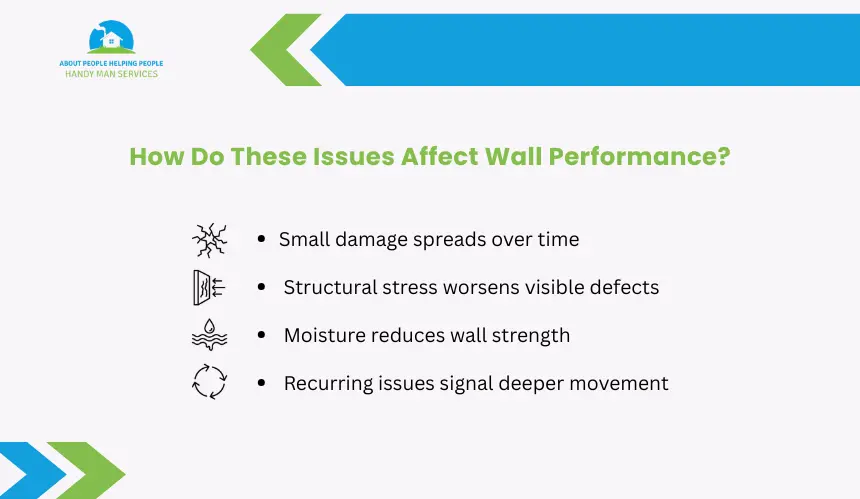
Drywall damage is often seen as a cosmetic problem, but its impact goes beyond appearance. Each issue can influence how the wall performs over time, especially when underlying causes are left unaddressed. As damage progresses, it can affect structural stability, surface durability, and resistance to environmental factors.
Why Surface Damage Can Spread
Small drywall issues rarely remain isolated. Cracks, dents, or weakened areas create points of stress that can expand as the structure continues to shift or respond to environmental changes.
For example, a minor crack can widen or branch out, especially in areas where pressure is uneven. Similarly, small dents or holes can weaken surrounding material, making it more susceptible to further damage.
Did You Know?
Drywall distributes stress across its surface. When one area weakens, nearby sections often absorb additional pressure, increasing the likelihood of further damage.
How Structural Stress Impacts Appearance
When structural movement continues, drywall surfaces begin to reflect these changes more visibly. Cracks may become more pronounced, seams may separate further, and nail pops may reappear even after repair.
This ongoing stress creates a cycle where surface issues return because the underlying movement has not stabilized. Over time, this affects both the uniformity and reliability of the wall.
Important Insight:
Recurring drywall problems often indicate that the structure is still adjusting, which means repairs need to address more than just the visible surface.
Why Moisture Weakens Wall Integrity
Moisture-related damage affects drywall at a deeper level by reducing its strength and stability. When drywall absorbs water, its internal composition softens, making it less capable of supporting its own weight or maintaining a smooth surface.
This can lead to sagging, surface breakdown, or peeling finishes. In addition, prolonged moisture exposure can affect surrounding materials, further weakening the overall wall system.
How Can Common Drywall Issues Be Prevented?
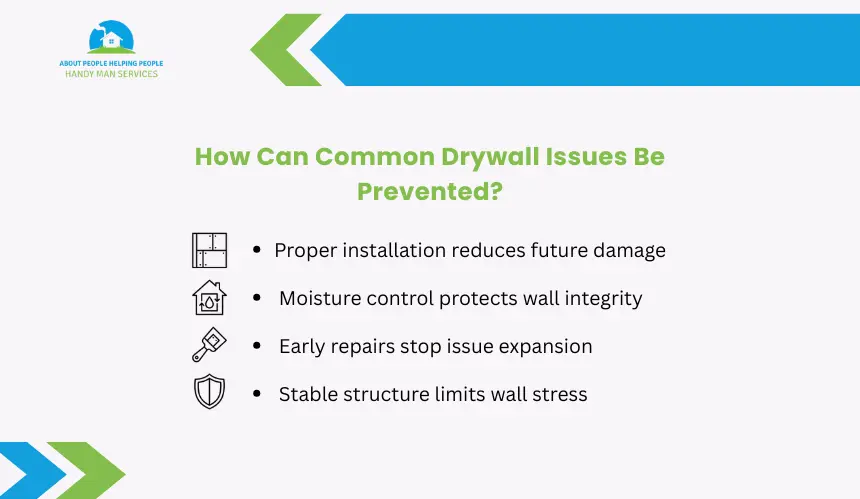
Preventing drywall damage requires controlling the conditions that cause stress on the wall system rather than reacting after issues appear. Since most drywall problems originate from structural movement, moisture exposure, or installation weaknesses, consistent attention to these factors helps reduce the likelihood of recurring damage.
Why Proper Installation Matters
The foundation of long-lasting drywall performance begins with correct installation. Secure fastening, proper spacing, and well-finished joints create a stable surface that can handle minor structural movement without showing visible damage.
When drywall is installed correctly, it distributes stress more evenly across the surface. This reduces the chances of cracks forming, seams becoming visible, or fasteners loosening over time.
Did You Know?
Many recurring drywall issues can be traced back to installation methods rather than environmental conditions alone.
How Moisture Control Reduces Damage
Managing moisture is one of the most effective ways to prevent drywall deterioration. Since drywall is highly absorbent, controlling humidity levels and preventing leaks helps maintain its strength and stability.
Consistent moisture control reduces the risk of swelling, soft spots, and surface damage. It also helps preserve finishes such as paint, which can otherwise peel or bubble when exposed to damp conditions.
Important Insight:
Moisture problems often begin in hidden areas like behind walls or near ceilings. Early detection and control prevent damage from becoming visible and widespread.
Why Early Repairs Prevent Bigger Problems
Addressing drywall issues as soon as they appear prevents them from expanding into larger areas. Small cracks, minor dents, or early signs of stress can often be corrected quickly before they affect surrounding sections.
Early intervention also reduces the impact of underlying causes by limiting how far the damage can spread. This helps maintain both the appearance and structural performance of the wall.
Frequently Asked Questions
What are the most common drywall repair issues in residential homes?
The most common drywall repair issues include cracks, nail pops, holes, dents, visible seams, tape separation, and water damage. These problems are often caused by structural movement, moisture exposure, impact, or installation deficiencies.
Are drywall cracks normal in a house?
Yes. Small drywall cracks are often a normal result of house settling, seasonal expansion and contraction, and minor structural movement. However, cracks that continue to widen or reappear may require further evaluation.
What causes nail pops in drywall?
Nail pops occur when drywall fasteners loosen or shift due to wood movement, settling, or installation issues. They usually appear as small bumps or raised areas on walls and ceilings.
How can water damage affect drywall?
Water damage can cause drywall to soften, swell, discolor, sag, and lose structural strength. If moisture exposure continues, the damage may spread and require more extensive repairs.
Why do drywall seams become visible over time?
Drywall seams can become visible when joint compound deteriorates, panels shift slightly, or installation imperfections become more noticeable. Lighting conditions can also make seam lines easier to see.
Can small drywall issues become larger problems?
Yes. Minor cracks, dents, and weakened areas often spread over time if the underlying cause is not addressed. Early repairs help prevent damage from expanding and affecting larger portions of the wall.
How can homeowners help prevent drywall damage?
Preventative measures include controlling indoor moisture, addressing leaks quickly, ensuring proper drywall installation, and repairing minor damage before it worsens. Regular maintenance helps preserve wall appearance and performance.