

- About People Helping People
Ceiling Fan Size Guide for Different Rooms
|
Quick Answer: Choosing the correct ceiling fan size is essential for maintaining comfortable airflow and energy-efficient performance. The ideal fan size depends primarily on the room’s dimensions and ceiling height. A fan that is too small may not circulate enough air, while one that is too large can create excessive airflow and look out of proportion. Measuring the room before selecting a fan helps ensure balanced air circulation and optimal comfort. General ceiling fan size recommendations include:
Did You Know? A larger ceiling fan does not always provide better comfort. Properly matching the fan’s blade span and airflow capacity to the room’s size helps distribute air more evenly, improving comfort while allowing the fan to operate more efficiently. |
Choosing a ceiling fan is not simply about selecting a style that matches the room. The size of the fan plays a major role in how effectively it circulates air, influences comfort, and supports energy efficiency. A fan that is too small may leave parts of the room feeling warm and stagnant, while one that is too large can create excessive airflow and overwhelm smaller spaces. Selecting the right ceiling fan size helps achieve balanced, consistent air circulation throughout the room.
The ideal ceiling fan depends on more than just its blade span. Room dimensions, ceiling height, mounting method, and airflow capacity all work together to determine how well the fan performs. Taking these factors into account before purchasing a fan helps ensure better comfort, quieter operation, and more efficient airflow for everyday use.
Important: The best ceiling fan is not necessarily the biggest one. Matching the fan’s size and installation height to the room’s dimensions is one of the most important steps for achieving safe installation, effective air circulation, and long-term performance.
Why Choosing the Right Ceiling Fan Size Matters
Selecting the correct ceiling fan size is about more than appearance. A properly sized fan improves air circulation, enhances comfort, and helps the room feel more comfortable throughout the year. When the fan matches the room’s dimensions, it can move air efficiently without creating insufficient or excessive airflow. Choosing the right size before installation also helps maximize the fan’s overall performance and energy efficiency.
How Does the Right Fan Size Improve Airflow?
A ceiling fan is designed to circulate air evenly throughout a room. If the fan is too small, it may not move enough air to create a comfortable environment. If it is too large, it can generate excessive airflow that may be uncomfortable in smaller spaces. Selecting the appropriate blade span helps provide balanced air circulation.
Why Does Proper Fan Sizing Improve Energy Efficiency?
An appropriately sized ceiling fan distributes air more effectively, allowing occupants to feel comfortable while reducing reliance on heating or air conditioning. Efficient airflow helps improve overall comfort without requiring the fan to work harder than necessary.
How Does Ceiling Fan Size Affect Room Comfort?
Proper fan sizing creates more consistent airflow across the room, reducing hot and cool spots that can occur with poor air circulation. Matching the fan to the room’s size helps maintain a comfortable indoor environment whether the fan is used alone or alongside the home’s heating and cooling system.
Did You Know?
Ceiling fan performance depends on both blade span and airflow capacity, not simply the overall size of the fan. A properly sized fan positioned correctly within the room provides more balanced air circulation and better overall comfort than choosing the largest fan available.
How to Measure Your Room for a Ceiling Fan
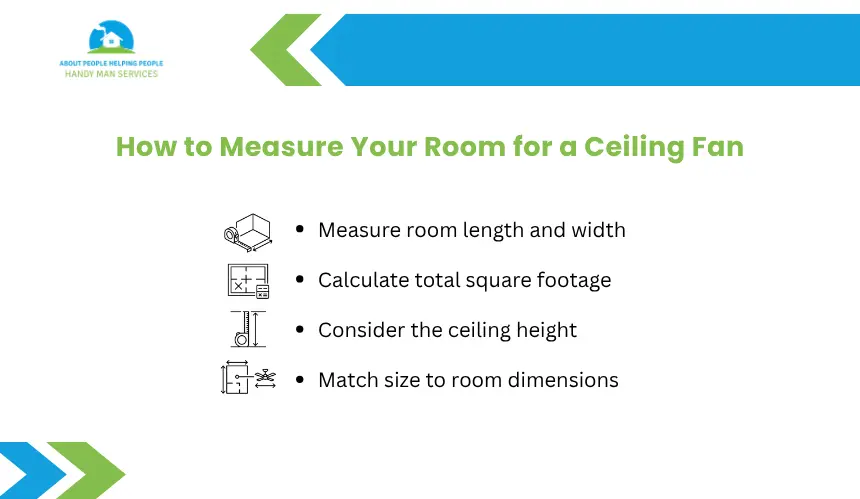
Measuring the room before purchasing a ceiling fan helps ensure the fan provides the appropriate airflow for the space. Room dimensions and ceiling height are the primary factors that determine the ideal fan size. Taking a few simple measurements before installation makes it easier to choose a fan that delivers balanced air circulation and fits the room proportionally.
How Do You Measure the Length and Width of a Room?
Begin by measuring the room’s length and width using a tape measure. For rectangular rooms, measure the longest wall and the adjacent wall. If the room has an irregular layout, divide it into smaller sections, measure each area separately, and combine the measurements to estimate the total floor space.
Why Should You Calculate the Room's Square Footage?
The total square footage helps determine the recommended ceiling fan blade span for the room. Multiplying the room’s length by its width provides the floor area, making it easier to select a fan designed to circulate air efficiently throughout the space.
Why Does Ceiling Height Matter When Choosing a Fan?
Ceiling height affects both fan placement and mounting style. Standard ceilings often use standard mounting hardware, while higher ceilings may require a downrod to position the fan at an effective height for air circulation. Lower ceilings may require a flush-mount fan to maintain proper clearance from the floor.
Important:
Accurate room measurements are the foundation of proper ceiling fan sizing. Measuring the room’s dimensions, calculating its floor area, and considering ceiling height before purchasing a fan help ensure efficient airflow, comfortable air circulation, and a safe installation.
Ceiling Fan Size Guide by Room
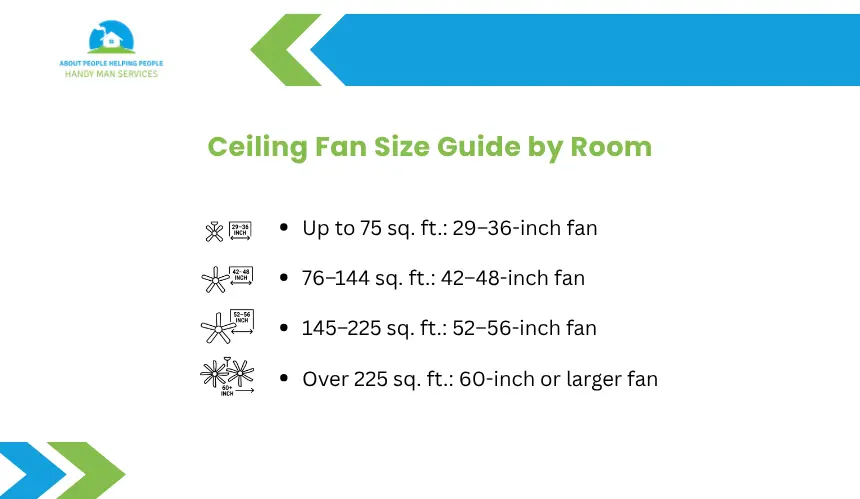
After measuring the room, the next step is matching those dimensions with an appropriately sized ceiling fan. Different room sizes require different blade spans to circulate air efficiently. Selecting a fan that fits the space helps provide balanced airflow, improves comfort, and prevents the fan from being either undersized or oversized for the room.
What Size Ceiling Fan Is Best for Small Rooms?
Small rooms such as home offices, laundry rooms, guest bedrooms, or breakfast nooks generally require smaller ceiling fans that provide comfortable airflow without overwhelming the space.
General recommendation:
- Up to 75 sq. ft.: 29–36-inch ceiling fan
What Size Ceiling Fan Should You Choose for Medium Rooms?
Medium-sized rooms, including most bedrooms, kitchens, dining rooms, and home offices, benefit from fans that provide wider air coverage while maintaining balanced circulation.
General recommendation:
- 76–144 sq. ft.: 42–48-inch ceiling fan
What Size Ceiling Fan Works Best for Large Rooms?
Large bedrooms, family rooms, living rooms, and entertainment areas require larger blade spans to distribute air evenly throughout the space.
General recommendation:
- 145–225 sq. ft.: 52–56-inch ceiling fan
What Is the Best Ceiling Fan Size for Great Rooms and Open Spaces?
Open-concept living areas, great rooms, vaulted spaces, and large covered patios often require fans with a larger blade span or multiple fans to provide consistent airflow across the entire area.
General recommendation:
- More than 225 sq. ft.: 60-inch or larger ceiling fan, or multiple appropriately sized fans depending on the room layout.
Did You Know?
For very large or unusually shaped rooms, installing two properly sized ceiling fans often provides more even air circulation than relying on a single oversized fan. Proper fan placement is just as important as selecting the correct blade span for achieving balanced airflow.
Other Factors to Consider When Choosing a Ceiling Fan
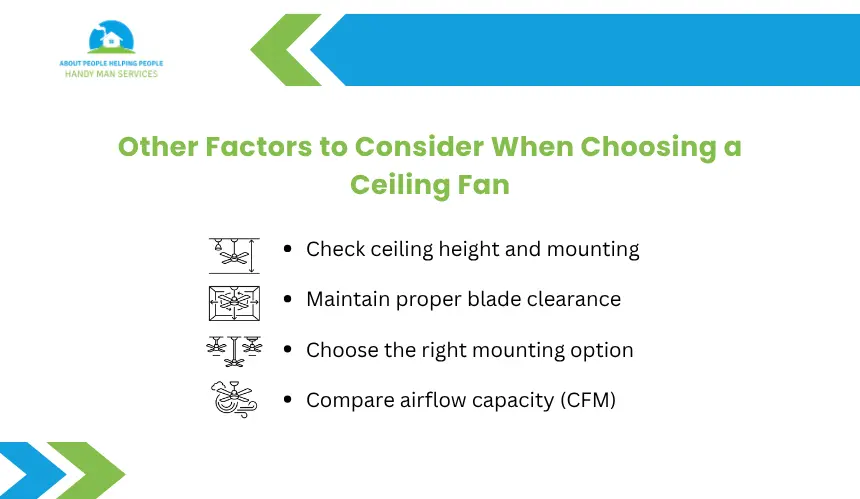
While room size is the primary factor in selecting a ceiling fan, it is not the only consideration. Ceiling height, blade clearance, mounting style, and airflow performance all influence how effectively a fan circulates air. Taking these factors into account helps ensure the fan operates safely, efficiently, and provides consistent comfort throughout the room.
How Does Ceiling Height Affect Ceiling Fan Performance?
Ceiling height determines how the fan should be mounted to provide effective airflow. Standard ceilings typically accommodate standard mounting, higher ceilings often require a downrod to position the fan at the proper height, and lower ceilings may need a flush-mount design to maintain safe clearance from the floor.
Why Is Proper Blade Clearance Important?
Adequate clearance allows the fan to move air efficiently while maintaining safe operation. The fan blades should have sufficient distance from walls, furniture, and the floor to prevent obstructions and promote balanced airflow throughout the room.
Which Ceiling Fan Mounting Option Is Best?
The appropriate mounting method depends on the ceiling’s height and design. Standard mounts work well for typical ceiling heights, downrods improve airflow in rooms with high or vaulted ceilings, and flush-mount fans are commonly used where ceiling height is limited.
Why Should You Consider Airflow (CFM) Instead of Size Alone?
A ceiling fan’s airflow rating, commonly measured in Cubic Feet per Minute (CFM), indicates how much air the fan can circulate. While blade span is important, comparing the fan’s CFM helps ensure it can deliver sufficient airflow for the room. A well-designed fan with an appropriate CFM rating often performs better than simply choosing the largest available model.
Important:
The ideal ceiling fan combines the correct blade span, proper mounting height, adequate blade clearance, and suitable airflow capacity. Considering all of these factors together helps maximize comfort, improve energy efficiency, and ensure the fan performs effectively in the intended space.
Common Ceiling Fan Sizing Mistakes to Avoid
Choosing the correct ceiling fan involves more than selecting a style that matches the room. Common sizing mistakes can reduce airflow, affect comfort, and limit the fan’s overall efficiency. Understanding these errors helps homeowners select a fan that performs well and provides balanced air circulation for years to come.
What Happens if You Choose a Ceiling Fan That Is Too Small?
A fan with a blade span that is too small may not circulate enough air throughout the room. This often results in uneven airflow, leaving certain areas feeling warmer while reducing the overall effectiveness of the fan, especially in larger spaces.
Why Is Installing the Fan Too High or Too Low a Problem?
Even a properly sized fan may not perform efficiently if it is installed at the wrong height. A fan mounted too close to the ceiling or too far above the occupied space may circulate air less effectively, while one installed too low can create safety concerns. Following the recommended mounting height helps maximize airflow and maintain proper clearance.
Why Shouldn't You Ignore Ceiling Height?
Ceiling height determines the appropriate mounting method. Using a standard mount on a very high ceiling or installing a downrod where it is not needed can reduce airflow efficiency. Matching the mounting option to the ceiling height helps position the fan where it can circulate air most effectively.
Why Is Performance More Important Than Appearance?
A ceiling fan should complement the room’s design, but appearance should not take priority over performance. Selecting a fan based only on its style or size without considering room dimensions, airflow (CFM), ceiling height, and installation requirements may result in reduced comfort and less efficient air circulation.
Did You Know?
The most effective ceiling fan is not always the largest or the most decorative. A properly sized fan with the correct airflow rating, appropriate mounting height, and suitable installation location typically provides better comfort and energy efficiency than a fan chosen primarily for its appearance.
Frequently Asked Questions
What size ceiling fan is best for a bedroom?
The ideal ceiling fan size depends on the bedroom’s dimensions rather than the room type alone. Most standard bedrooms are well suited to a 42–48-inch ceiling fan, while larger bedrooms may benefit from a 52–56-inch model for more even air circulation.
Can a ceiling fan be too large for a room?
Yes. A ceiling fan that is too large may create excessive airflow, feel uncomfortable, and appear out of proportion to the room. Selecting a fan based on the room’s size helps provide balanced air circulation and improved comfort.
How do I measure a room for a ceiling fan?
Measure the room’s length and width, then multiply those measurements to calculate the total square footage. This measurement, together with the ceiling height, helps determine the recommended ceiling fan size and the appropriate mounting method.
Does ceiling height affect ceiling fan size?
Ceiling height primarily affects how the fan should be mounted rather than the blade span itself. Standard ceilings typically use standard mounting, while higher ceilings often require a downrod and lower ceilings may need a flush-mount fan to maintain safe blade clearance.
What is CFM in a ceiling fan?
CFM, or Cubic Feet per Minute, measures how much air a ceiling fan can move. A higher CFM generally indicates greater airflow, making it an important specification to consider alongside blade span when selecting a fan for a particular room.
Should I install one large fan or two smaller fans?
For very large, open-concept, or unusually shaped spaces, two properly sized ceiling fans often provide more consistent air circulation than a single oversized fan. The best choice depends on the room’s layout, dimensions, and airflow requirements.