
- About People Helping People
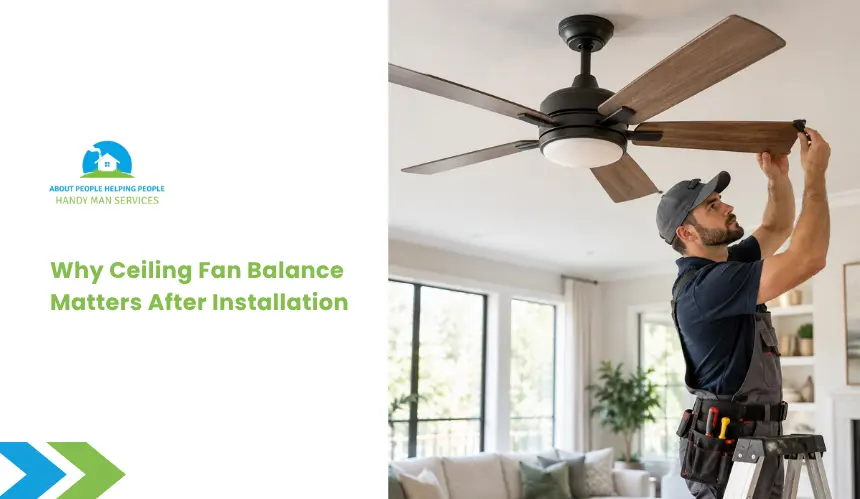
Why Ceiling Fan Balance Matters After Installation
Quick Answer: Ceiling fan balance matters after installation because the blades and rotating components need to move evenly around the fan’s center. When something is misaligned, loose, warped, or positioned unevenly, the fan may wobble, vibrate, or produce unnecessary noise during operation. Common reasons balance matters include:
However, ceiling fan wobble is not always caused by blade imbalance. Loose mounting hardware, an unsuitable or improperly secured electrical box, damaged blade holders, warped blades, or installation problems can produce similar symptoms. If a newly installed fan has persistent or excessive movement, identify the cause rather than assuming a balancing kit alone will solve the problem. |
A newly installed ceiling fan should rotate smoothly without excessive shaking, vibration, or distracting noise. However, small differences in blade alignment, loose hardware, or mounting problems can affect ceiling fan balance, sometimes becoming more noticeable as the fan reaches higher speeds.
Proper balance is about more than appearance. Repeated wobbling can create unwanted vibration and noise while placing unnecessary movement on the fan’s blades, fasteners, and mounting components. It may also signal an installation issue that should be identified rather than ignored.
Checking ceiling fan balance after installation helps confirm that the blades are rotating evenly, the mounting system is secure, and the fan is ready for smooth, consistent operation.
What Does Ceiling Fan Balance Mean?
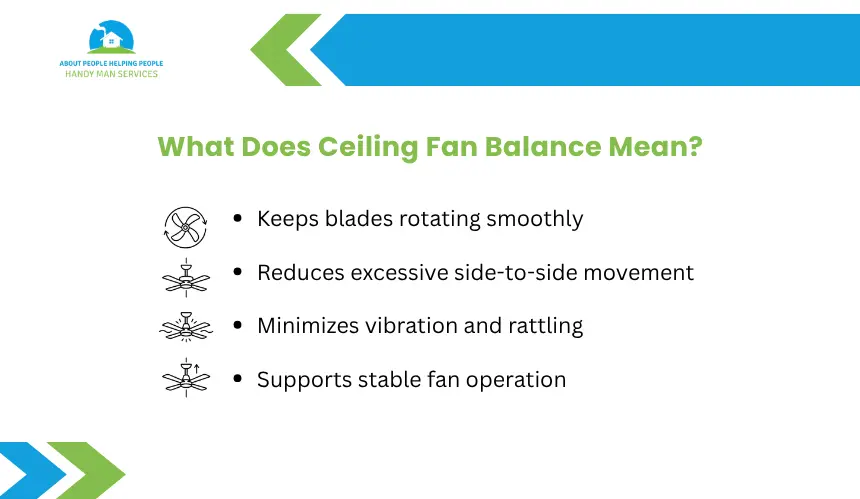
Ceiling fan balance refers to how evenly the blades and rotating assembly move around the fan’s center during operation. When the blades are properly aligned and securely attached, the fan should rotate smoothly without excessive side-to-side movement or vibration.
How Should a Properly Balanced Ceiling Fan Operate?
A properly balanced fan should maintain relatively smooth, consistent rotation across its normal speed settings. The motor housing should remain stable rather than visibly shifting back and forth as the blades rotate.
Smooth operation also helps minimize vibration-related rattling, clicking, or other distracting noises.
What Happens When the Fan Blades Rotate Unevenly?
If one or more blades differ in position, angle, weight, or alignment, the rotating assembly can become uneven. This may cause the fan to wobble, vibrate, or move rhythmically as it operates.
The effect may become more noticeable at certain fan speeds because the imbalance repeats with every rotation.
Is Slight Ceiling Fan Movement Always a Balance Problem?
No. A small amount of movement does not automatically mean the blades are improperly balanced. Fan design, mounting configuration, blade span, and operating speed can influence how much movement is visible.
However, persistent, excessive, or newly developing wobble should be investigated, especially when accompanied by unusual noise, loose components, or noticeable movement at the ceiling connection.
Why Can a Ceiling Fan Become Unbalanced After Installation?
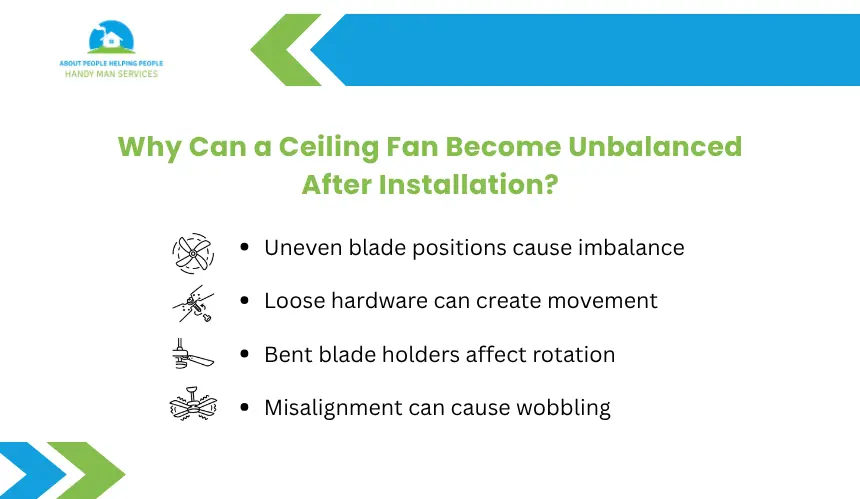
A ceiling fan can become unbalanced when its blades or supporting components do not sit in consistent positions around the motor. Even when the fan has just been installed, differences in blade alignment, loose hardware, or mispositioned components can cause uneven rotation.
Can Uneven Blade Position Cause Fan Wobble?
Yes. If one blade sits higher or lower than the others, the rotating assembly may no longer move evenly. Differences in blade position can create a repeating imbalance that causes visible side-to-side movement.
Checking whether the blades maintain consistent positions can help identify this source of ceiling fan wobble after installation.
How Do Loose Blade Hardware and Connections Affect Balance?
Loose screws or blade attachment hardware can allow individual blades to move differently during rotation. Even a small amount of unwanted movement can contribute to vibration, rattling, or wobbling.
Hardware should therefore be properly secured according to the fan manufacturer’s installation instructions before assuming additional balancing is necessary.
Can Bent or Misaligned Blade Holders Create Uneven Rotation?
Yes. Blade holders keep each blade in its intended position and angle. If one is bent, incorrectly installed, or misaligned, its blade may travel through a different path from the others.
This uneven movement can disrupt ceiling fan balance, and adding balancing weights alone may not correct the underlying alignment problem.
Why Does Blade Alignment Matter for Ceiling Fan Balance?
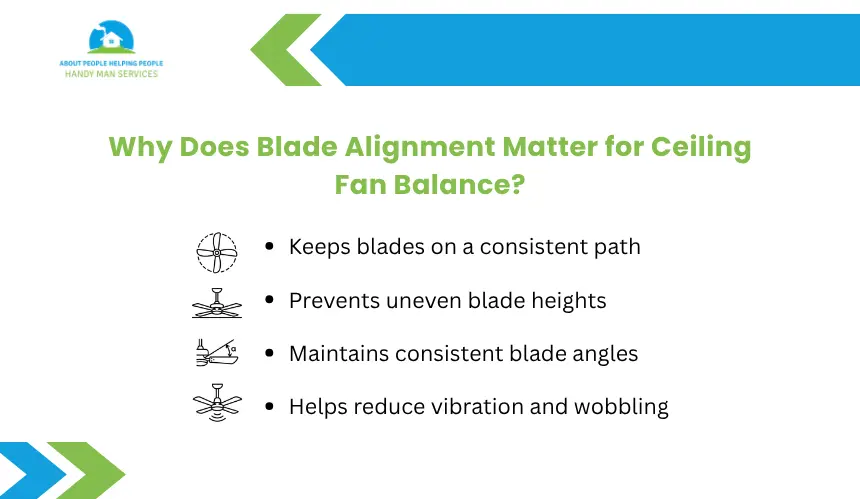
Blade alignment helps each ceiling fan blade follow a consistent path as the fan rotates. When one blade sits at a different height or angle, the rotating assembly can become uneven, contributing to wobble, vibration, or inconsistent movement after installation.
What Happens When Fan Blades Sit at Different Heights?
If one blade hangs noticeably higher or lower than the others, its path through each rotation differs from the rest. This variation can disturb the fan’s balance and create repetitive movement that becomes visible while the fan is running.
Consistent blade height is therefore an important part of checking a newly installed fan.
Can Differences in Blade Angle Affect Rotation?
Yes. Fan blades are designed to operate at specific positions and angles. A bent, mispositioned, or unevenly attached blade holder can change one blade’s angle relative to the others.
That difference may contribute to uneven rotation, vibration, or ceiling fan wobbling instead of smooth operation.
Why Should Blade Position Be Checked After Installation?
Installation involves attaching and securing multiple blades and blade holders, so checking their alignment afterward can reveal differences that were not obvious during assembly.
If one blade is visibly out of position, identifying the alignment issue first is more useful than immediately adding balancing weights without determining the actual cause of the wobble.
How Does an Unbalanced Ceiling Fan Affect Performance?
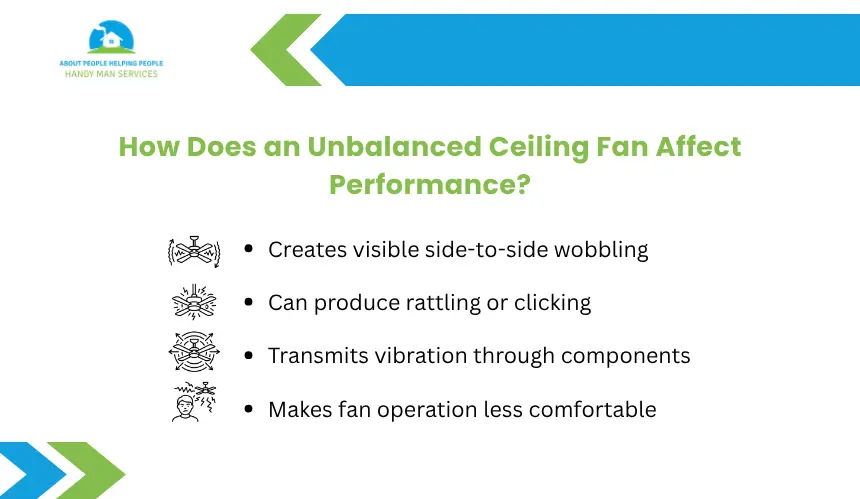
An unbalanced ceiling fan may still move air, but uneven rotation can make its operation noticeably less smooth. Wobbling, vibration, and repetitive noise can become distracting and may indicate that the blades, hardware, or mounting system need closer inspection.
Can Imbalance Cause Visible Wobbling?
Yes. When the rotating components are not evenly balanced, the fan may move from side to side as the blades turn. The amount of wobble can vary with fan speed and the severity of the imbalance.
Persistent movement should be investigated rather than considered a normal part of fan operation.
Why Can an Unbalanced Fan Create Noise or Vibration?
Uneven rotation can transmit vibration through the motor housing, blade hardware, and mounting components. This movement may contribute to rattling, clicking, humming, or other vibration-related sounds, particularly if hardware is also loose.
Identifying the source helps distinguish a simple blade-balance issue from another installation problem.
Can Excessive Movement Affect Comfortable Fan Operation?
Yes. A ceiling fan that visibly shakes or produces repetitive vibration and noise can become distracting, even if it continues circulating air.
Proper ceiling fan balance supports smoother, quieter operation and helps ensure noticeable wobbling isn’t masking loose hardware, blade misalignment, or a mounting-related problem.
Can Ceiling Fan Imbalance Put Stress on Fan Components?
Yes. Persistent imbalance creates repeated movement and vibration throughout the ceiling fan assembly. Over time, this motion can place unnecessary stress on blade hardware, fasteners, mounting components, and other connections that are intended to remain secure during normal operation.
How Can Repeated Vibration Affect Fasteners and Hardware?
An unbalanced fan can transmit vibration through blade screws, blade holders, housing components, and other hardware whenever it operates. If any connection is already loose or improperly secured, continued vibration may make the movement more noticeable.
Unusual rattling or increasing wobble can therefore indicate that hardware should be inspected.
Can Wobbling Place Additional Stress on the Mounting System?
Yes. Excessive side-to-side movement can transfer repeated forces through the downrod, mounting bracket, and ceiling connection. A properly installed mounting system is designed to support the fan, but persistent abnormal movement should not simply be ignored.
The mounting hardware and fan-rated electrical box may need to be checked if movement appears excessive or originates near the ceiling.
Why Should Persistent Movement Be Investigated?
Persistent wobbling may result from blade imbalance, but it can also point to loose hardware, misaligned components, damaged blades, or mounting problems. Adding balancing weights without identifying the source can leave the installation issue unresolved.
Determining the cause helps ensure that the appropriate correction is made rather than treating every wobble as the same balance problem.
Is Ceiling Fan Wobble Always Caused by Blade Imbalance?
No. A wobbling ceiling fan is not automatically an unbalanced ceiling fan. Movement can also result from loose mounting hardware, an improperly secured ceiling connection, damaged blades, bent blade holders, or other installation-related problems.
Can a Loose Mounting System Cause Similar Movement?
Yes. If the mounting bracket, downrod connection, or other supporting hardware is not properly secured, movement can occur even when the blades themselves are balanced.
Wobbling that appears to originate near the ceiling connection should therefore prompt inspection of the mounting system rather than adjustment of blade balance alone.
How Can Blade Damage or Warping Affect Rotation?
A warped, cracked, bent, or otherwise damaged blade may not follow the same rotational path as the remaining blades. This difference can create uneven movement that resembles a conventional balance problem.
Replacing or correcting a damaged component may be necessary because balancing weights cannot fix every physical blade defect.
Why Should Installation Issues Be Ruled Out Before Balancing?
A balancing kit is intended to correct certain blade-weight differences, but it cannot fix loose mounting hardware, bent blade holders, damaged blades, or an improperly secured fan support.
Identifying the actual cause first prevents a balance adjustment from masking a more important installation problem that still requires correction.
Why Should Ceiling Fan Balance Be Checked After Installation?
A post-installation balance check helps confirm that the fan rotates smoothly, the blades remain properly aligned, and no unexpected movement develops once the fan is operating. Problems that are difficult to notice during assembly can become obvious as soon as the blades begin rotating.
What Can an Initial Test Run Reveal?
Running the fan after installation can reveal visible wobbling, vibration, unusual noise, or inconsistent blade movement. These symptoms may point to blade alignment, loose hardware, damaged components, or mounting concerns.
An initial test gives the installer an opportunity to identify these problems before the fan enters regular use.
Why Should the Fan Be Observed at Different Speed Settings?
Some balance problems become more noticeable at particular operating speeds. A fan may appear relatively stable at a low setting but develop increased vibration or wobbling as rotational speed changes.
Observing the fan across its normal speed settings provides a clearer picture of whether ceiling fan balance remains consistent during operation.
What Problems Can Be Identified Before Regular Use?
A post-installation check may reveal:
- Uneven blade alignment
- Loose blade or mounting hardware
- Bent or damaged blade holders
- Warped or damaged blades
- Excessive vibration or noise
- Abnormal movement near the ceiling connection
Identifying these conditions early allows you to correct the underlying issue rather than letting persistent wobbling become part of normal fan operation.
When Does a Ceiling Fan Need Professional Attention After Installation?
A newly installed fan should receive professional attention when wobbling, vibration, unusual noise, or movement at the mounting point remains excessive or cannot be traced to a simple blade-balance issue. Persistent problems may indicate that installation or supporting components need closer inspection.
When Is Fan Wobble More Than a Minor Balance Issue?
Wobble deserves closer attention when it is pronounced, worsens at certain speeds, develops alongside unusual noises, or causes noticeable movement near the ceiling connection.
These symptoms can indicate more than small blade-weight differences and should not automatically be addressed by adding balancing weights.
What If Tightening or Basic Balancing Does Not Correct the Problem?
If properly securing accessible blade hardware and following the manufacturer’s balancing procedure do not resolve the movement, another condition may be responsible.
Bent blade holders, warped blades, mounting problems, or improperly positioned components may require further inspection rather than repeated balance adjustments.
When Could the Mounting or Electrical Installation Need Inspection?
Professional inspection is appropriate when movement appears to originate at the mounting bracket or ceiling connection, the fan support seems unstable, or you’re unsure whether the electrical box and mounting system can support a ceiling fan.
If electrical connections or concealed mounting components need examination, a qualified professional should switch off the fan and evaluate it rather than disassemble it while energized.
Frequently Asked Questions
Why does a ceiling fan wobble after installation?
A ceiling fan may wobble because of uneven blade alignment, loose blade hardware, bent blade holders, warped blades, or mounting problems. Identifying where the movement originates is important because not every wobbling fan can be corrected with blade balancing alone.
Is a slightly wobbling ceiling fan normal?
A small amount of movement may occur depending on the fan design, blade span, mounting configuration, and operating speed. However, persistent or excessive wobbling should be investigated, especially if it’s accompanied by unusual noise, vibration, loose hardware, or movement near the ceiling connection.
How can you tell if ceiling fan blades are unbalanced?
An unbalanced fan may show repetitive side-to-side movement or vibration while rotating. Comparing blade alignment and observing the fan at different speeds can help identify inconsistencies. Also rule out loose hardware, damaged components, and mounting problems before balancing.
Can loose fan blades cause wobbling?
Yes. Loose screws or blade attachment hardware can allow individual blades to move differently during rotation, contributing to wobble, vibration, or rattling. Properly securing the hardware according to manufacturer instructions should be part of the inspection before additional balancing adjustments are attempted.
Can an unbalanced ceiling fan damage the fan?
Persistent imbalance can create repeated vibration and movement through blade hardware, fasteners, and mounting components. Rather than assuming the wobble is harmless, identify the underlying cause, especially if the movement becomes more noticeable or unusual noises develop.
Why does a ceiling fan wobble more at higher speeds?
Higher fan speeds increase the frequency of blade rotation, which can make existing differences in blade alignment or balance more noticeable. However, speed-related wobbling can also involve loose hardware or mounting issues, so increased movement shouldn’t automatically be blamed on blade balance.
When should a wobbling ceiling fan be professionally inspected?
Professional inspection is appropriate when wobbling is excessive, persists after basic manufacturer-recommended checks, originates near the ceiling connection, or occurs with unusual noise or unstable mounting. A qualified professional can determine whether blade, hardware, mounting, or installation problems are responsible.