
- About People Helping People
What to Do If You Smell Burning Near an Outlet
Quick Answer: If you smell burning near an electrical outlet, stop using the outlet and treat the odor as a potential electrical hazard. A burning or melting smell can indicate overheating, damaged wiring, loose connections, electrical arcing, or a failing receptacle. Take these precautions:
If there is visible smoke, active fire, significant sparking, or another immediate threat, move away from the affected area and contact emergency services. Even if the burning smell from the outlet eventually disappears, that does not confirm the electrical problem has resolved. Identify the source of the overheating or odor before returning the outlet to normal use. |
A burning smell near an electrical outlet is more than an unpleasant odor. It can be a warning that wiring, connections, insulation, or the receptacle itself is overheating. In some cases, the smell may appear before visible smoke, scorching, or other obvious signs of electrical damage.
Because the source is often hidden behind the outlet or inside the electrical box, homeowners cannot determine the severity simply by looking at the receptacle. Continuing to use the outlet or repeatedly testing it may allow the underlying problem to worsen.
Knowing what to do if you smell burning near an outlet helps reduce unnecessary exposure to electrical hazards and makes it easier to recognize when power should be disconnected, emergency assistance is necessary, or a qualified electrician should inspect the problem.
Why Is a Burning Smell Near an Outlet a Warning Sign?
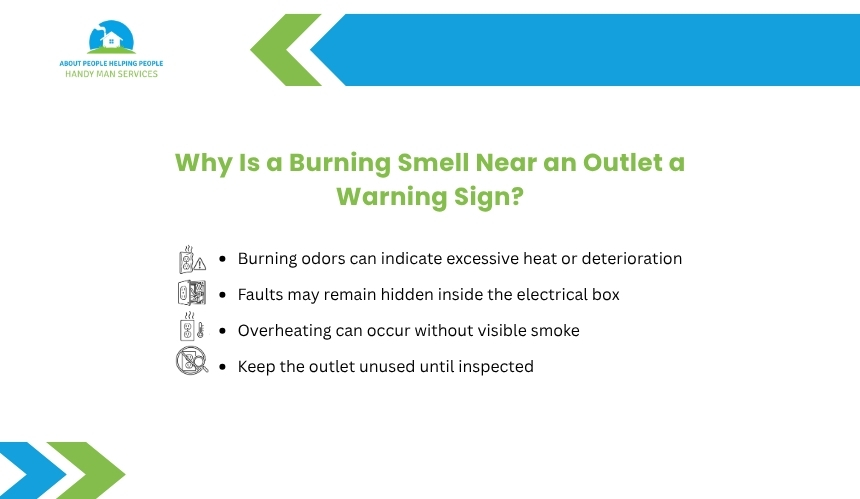
A burning odor near an outlet can indicate that an electrical component is generating excessive heat or beginning to deteriorate. The problem may involve the receptacle, wire connections, insulation, or wiring located inside the electrical box and may not always be visible from the outside.
What Can Create an Electrical Burning Smell?
Electrical overheating can produce odors when plastic components, wire insulation, or other materials become excessively hot. Possible causes include loose connections, damaged wiring, electrical arcing, overloaded connections, or a deteriorating receptacle.
The exact cause can’t be reliably identified from the smell alone, so the affected outlet should remain unused until it is inspected.
Why Should the Odor Not Be Ignored Even Without Smoke?
Visible smoke is not required for an electrical overheating problem to exist. A burning or melting odor may develop while the source of excessive heat remains hidden behind the outlet cover or inside the electrical box.
Ignoring the smell and continuing to use the outlet could cause additional overheating or damage.
What Should You Do Immediately If an Outlet Smells Like It Is Burning?
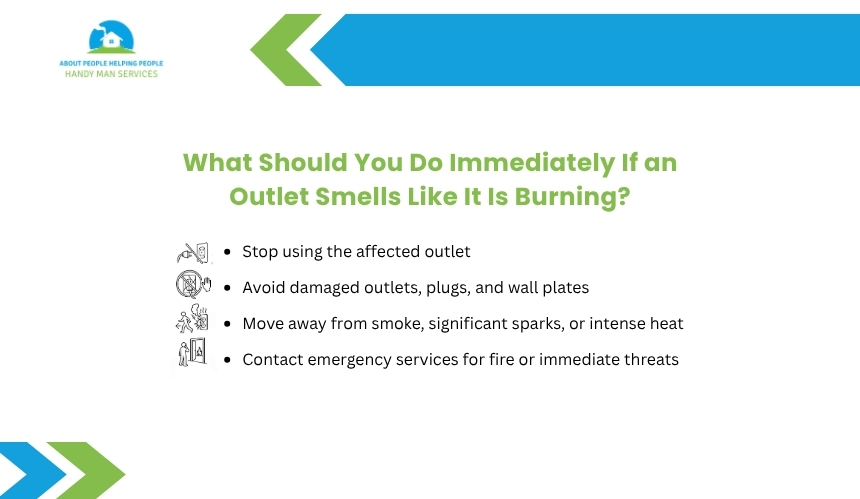
The first response should be to stop using the affected outlet and avoid actions that could expose someone to overheated or damaged electrical components. The appropriate next step depends on whether the situation involves only an odor or additional warning signs such as smoke, sparks, or visible heat damage.
Should You Stop Using the Outlet?
Yes. Do not plug additional devices into the outlet or continue operating equipment connected to it. Continued electrical demand could worsen overheating if the problem involves a loose connection, damaged receptacle, or deteriorating wiring.
Leave the outlet unused until you identify the cause of the burning smell.
When Should You Move Away From the Area?
Move away when the outlet produces visible smoke, significant sparking, crackling, intense heat, or signs that nearby materials are beginning to burn. Avoid touching the outlet, wall plate, connected plug, or surrounding electrical components when damage is visible.
Keep other occupants away from the affected area.
When Should Emergency Services Be Contacted?
Contact emergency services when there is an active electrical fire, significant smoke, or another immediate threat to people or property. Occupants should leave the affected area rather than attempting to investigate or repair the outlet themselves.
A burning odor without an active emergency still requires the outlet to remain unused and receive appropriate electrical inspection.
Should You Turn Off Power to a Burning-Smelling Outlet?
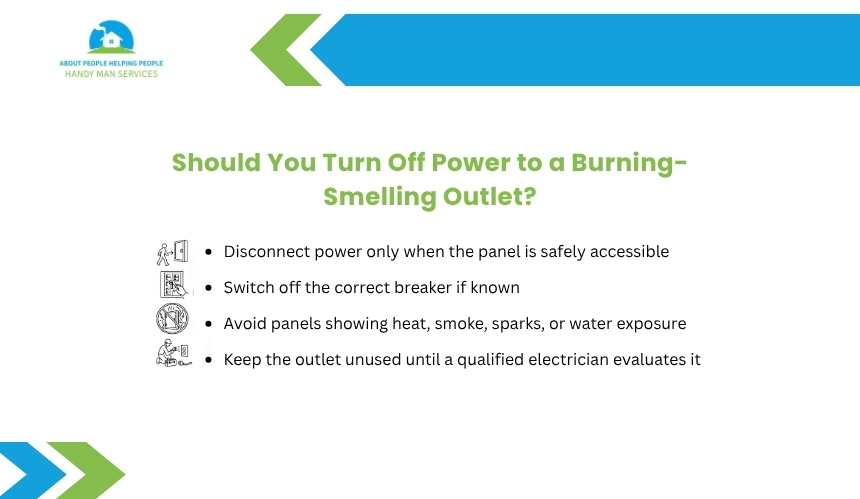
Turning off power to the affected circuit can help prevent continued electrical activity at an outlet with a suspected fault. However, power should only be disconnected when the electrical panel can be reached and operated without approaching smoke, fire, water, or another electrical hazard.
When Can the Circuit Breaker Be Safely Turned Off?
If the correct circuit breaker is known and the electrical panel is in a safe, unaffected location, the breaker supplying the outlet can be switched off.
After power is disconnected, the outlet should remain unused until a qualified electrician determines what caused the electrical burning smell and whether wiring or components require repair.
When Should You Avoid Approaching the Electrical Panel?
Do not approach or operate the panel if it is smoking, sparking, unusually hot, making abnormal crackling sounds, exposed to water, or showing signs of fire or electrical damage.
When reaching the panel itself would create a safety risk, occupants should keep away from the hazardous area and contact emergency services when there is an immediate threat.
What Can Cause a Burning Smell From an Electrical Outlet?
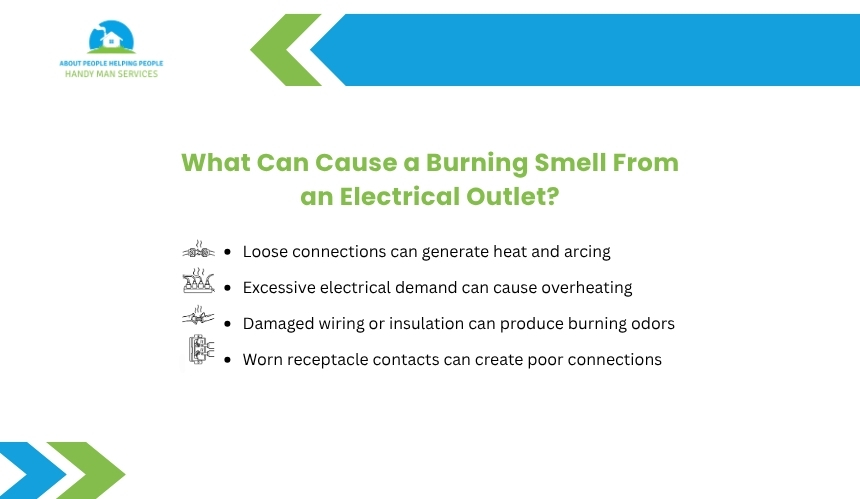
A burning smell can develop when excessive heat damages the outlet, electrical connections, wiring, or insulation behind it. Several electrical faults can produce similar odors, so identify the exact cause before returning the receptacle to service.
Can Loose Electrical Connections Cause Overheating?
Yes. A loose connection can increase electrical resistance and generate heat at the connection point. It may also contribute to arcing, which can further damage terminals, wiring, or surrounding materials.
Because these connections are often hidden inside the electrical box, the problem may not be visible from the front of the outlet.
Can an Overloaded Outlet Produce Excessive Heat?
Connecting more electrical demand than a receptacle, circuit, or attached equipment can safely handle may contribute to overheating. Warning signs can include unusual warmth, discoloration, melted plastic, or a burning odor.
Extension cords, adapters, and power strips can also create problems when used beyond their rated capacity.
Can Damaged Wiring or Insulation Create a Burning Odor?
Damaged conductors, deteriorated insulation, or faulty connections can generate heat that affects surrounding insulating materials. As insulation overheats or deteriorates, it may produce a noticeable electrical or melting-plastic odor.
Do not disturb the affected wiring or test it by repeatedly energizing the outlet.
Can a Worn or Damaged Outlet Overheat?
Yes. Worn receptacle contacts, damaged terminals, or deteriorated internal components can create poor electrical connections and excessive heat.
An outlet that is loose, scorched, melted, unusually hot, or unable to hold plugs securely should remain out of service until the receptacle and associated wiring have been properly inspected.
What Warning Signs Make a Burning Outlet More Urgent?
A burning odor is already a reason to stop using an outlet, but certain additional symptoms can indicate more significant overheating, arcing, or electrical damage. Smoke, visible scorching, unusual heat, and abnormal sounds make prompt action especially important.
What Do Scorch Marks or Discoloration Mean?
Brown or black marks, darkened areas, melted plastic, or discoloration around the receptacle can indicate that excessive heat has already affected the outlet or surrounding materials.
The outlet should remain unused rather than simply replacing the damaged wall plate or cleaning away visible marks.
Why Are Buzzing, Crackling, or Sparking Concerning?
Buzzing, crackling, or repeated sparking can indicate abnormal electrical activity, including loose connections or electrical arcing. When these symptoms occur alongside a burning smell, continued use could allow further heat and damage to develop.
Homeowners should not repeatedly plug in devices to determine whether the symptoms continue.
What If the Outlet or Wall Feels Unusually Hot?
Noticeable heat around an outlet can indicate overheating within the receptacle, wiring connections, or electrical box. A hot outlet combined with a burning smell, discoloration, or abnormal sounds deserves urgent professional attention.
Avoid repeatedly touching the outlet or removing its cover to investigate where the heat originates.
What Does Visible Smoke Indicate?
Visible smoke indicates that the situation has progressed beyond an unexplained odor and may involve actively overheating or burning electrical materials.
Occupants should keep away from the affected area. If there is an active fire, significant smoke, or an immediate threat to people or property, emergency services should be contacted.
Should You Unplug a Device From an Outlet That Smells Burned?
Not automatically. If an outlet or connected plug shows signs of overheating, melting, scorching, sparking, or significant heat, touching the plug to disconnect it could create additional exposure to damaged electrical components. Safety should take priority over removing the connected device.
When Could Touching the Plug or Outlet Be Unsafe?
Avoid touching the plug or receptacle when there is visible smoke, sparking, melted plastic, severe discoloration, or noticeable heat. A damaged connection may be unstable, and moving the plug could disturb overheated or compromised components.
If you can safely disconnect power from an unaffected electrical panel, de-energize the circuit before having a professional evaluate the problem.
Why Should a Hot or Damaged Outlet Be Left Alone?
A hot, melted, or visibly damaged outlet may have problems extending beyond its exterior surface. Wiring, terminals, or insulation inside the electrical box could also be affected.
Rather than pulling plugs, removing the cover, or manipulating the receptacle, homeowners should leave the damaged outlet unused and arrange for a qualified electrical inspection.
Can You Keep Using an Outlet After the Burning Smell Stops?
No. The disappearance of a burning smell does not necessarily mean the electrical problem has resolved. Overheating may stop temporarily when electrical demand changes, while a loose connection, damaged receptacle, deteriorated insulation, or another underlying fault can remain.
Why Does a Disappearing Odor Not Confirm the Problem Is Gone?
Electrical overheating can be intermittent. The smell may fade when an appliance stops operating, the circuit carries less current, or an overheated component cools down.
Using the outlet again could recreate the conditions that produced the odor and potentially cause additional heat or electrical damage.
What Should Be Checked Before the Outlet Is Used Again?
A qualified electrician may need to inspect the receptacle, terminals, wire connections, wiring insulation, and electrical box for evidence of overheating or damage. The circuit may also require evaluation when the cause is not limited to the outlet itself.
Leave the affected outlet unused until you identify the source of the burning smell and complete any necessary repairs.
Why Should You Avoid Testing or Repairing a Burning Outlet Yourself?
A burning smell can indicate hidden heat damage, loose connections, deteriorated wiring, or electrical arcing inside the outlet box. Testing or dismantling the receptacle without identifying the electrical condition can expose someone to shock, burns, or additional electrical damage.
Why Is Repeatedly Plugging Something In a Bad Way to Test the Outlet?
Plugging an appliance back into the outlet restores electrical demand to a connection that may already be damaged. If overheating or arcing caused the original smell, repeated testing could cause the problem to occur again or worsen.
An outlet that has produced a burning odor should remain unused until properly inspected.
Why Can Removing an Outlet Cover Be Dangerous?
Removing the wall plate can bring someone closer to energized terminals, damaged conductors, or overheated wiring inside the electrical box. Visible damage at the front of the receptacle may represent only part of the problem.
Rather than opening or manipulating the outlet, homeowners should leave electrical diagnosis and repair to a qualified electrician.
When Should an Electrician Inspect a Burning-Smelling Outlet?
A qualified electrician should inspect an outlet after a burning or melting odor, unexplained overheating, discoloration, sparking, or other evidence of electrical damage. Even when the receptacle looks normal from the outside, the source of the problem may be hidden inside the electrical box.
What Should Be Inspected Behind the Outlet?
Inspection may involve checking the receptacle terminals, wire connections, conductor condition, insulation, and electrical box for evidence of loose connections, arcing, overheating, or heat-related damage.
The electrician can determine whether the receptacle itself has failed or whether another part of the circuit is contributing to the problem.
Why Might the Problem Extend Beyond the Receptacle?
The outlet may only be where the symptoms become noticeable. Loose wiring, damaged conductors, deteriorated connections, or other circuit problems can sometimes exist elsewhere along the electrical path.
A proper inspection therefore focuses on identifying the actual source of the burning smell, rather than assuming that replacing the visible receptacle alone will resolve the issue.
How Can Burning Outlet Problems Be Prevented?
Not every electrical fault can be predicted, but homeowners can reduce avoidable risks by using outlets within their intended capacity and responding early to signs of heat or deterioration. Inspect electrical components that show abnormal changes rather than using them until the problem becomes more severe.
Avoid Overloading Outlets and Power Connections
Avoid connecting excessive electrical loads through a single receptacle, adapter, extension cord, or power strip. Use electrical accessories within their rated capacity and follow the manufacturer’s instructions.
If normal appliance use repeatedly causes overheating, odors, or breaker trips, evaluate the underlying electrical condition.
Pay Attention to Heat, Odors, and Discoloration
A developing problem may first appear as an unusual burning smell, excessive warmth, buzzing, discoloration, or intermittent sparking. Recognizing these symptoms early allows you to take the affected outlet out of service before additional damage develops.
These warning signs are not normal characteristics of an aging outlet.
Replace Damaged Electrical Components Promptly
Loose receptacles, cracked faceplates, outlets that no longer hold plugs securely, and components showing scorch marks or heat damage should receive appropriate attention.
Replacing visibly damaged components is important, but the wiring and connections behind the outlet may also need inspection when overheating, burning odors, or electrical arcing have occurred.
Frequently Asked Questions
Why does my electrical outlet smell like it is burning?
A burning smell can develop when an outlet, wire connection, or nearby insulation becomes excessively hot. Possible causes include loose connections, electrical arcing, damaged wiring, overloaded connections, or a deteriorating receptacle. Leave the outlet unused until you identify the source.
Is a burning smell from an outlet an emergency?
It can be, particularly when the odor is accompanied by smoke, significant sparking, intense heat, melting, or visible fire. Even without these signs, a persistent electrical burning smell should not be ignored. Stop using the outlet and arrange for professional inspection.
Should I turn off the breaker if an outlet smells burned?
If you know the correct breaker and can safely reach the electrical panel, turning off the affected circuit can prevent continued electrical activity. Do not approach the panel if it is smoking, sparking, exposed to water, unusually hot, or otherwise hazardous.
Can an outlet overheat without tripping the breaker?
Yes. Some electrical problems, including loose or deteriorated connections, can create localized heat without immediately tripping the circuit breaker. A burning smell, discoloration, buzzing, melting, or unusual warmth should therefore receive attention even when the breaker remains on.
Is it safe to use an outlet after the burning smell disappears?
No. A disappearing odor does not confirm that the underlying problem has resolved. The component may simply have cooled after electrical demand decreased. Do not use the outlet until a qualified electrician has properly evaluated the receptacle, connections, and associated wiring.
What does a burned electrical outlet look like?
Possible signs include brown or black discoloration, scorch marks, melted or warped plastic, damaged plug openings, and heat-damaged wall plates. However, an outlet can overheat or have wiring problems without obvious exterior damage, so professional inspection is important after a burning odor.
When should an electrician inspect a burning outlet?
An electrician should inspect an outlet after a burning or melting odor, unexplained heat, discoloration, buzzing, crackling, or sparking occurs. Inspection becomes especially important because the source may involve connections or wiring hidden behind the receptacle rather than the outlet alone.