
- peopleLLC
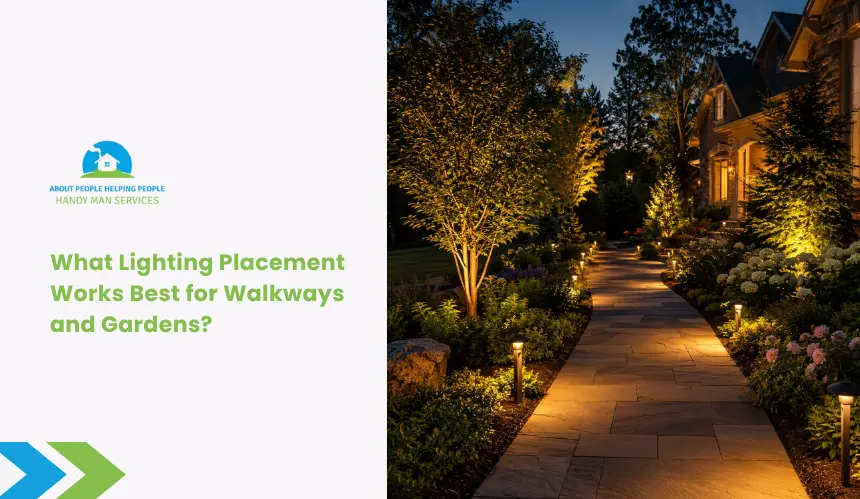
What Lighting Placement Works Best for Walkways and Gardens?
Quick Answer: The best lighting placement for walkways and gardens focuses on strategic positioning, spacing, and light direction rather than simply adding more fixtures. Walkway lights should be placed along edges in a staggered pattern for balanced visibility, while garden lighting should highlight focal points using layered placement to create depth and contrast. Core placement strategies that work effectively:
Did You Know? Important Insight: Key Takeaway: |
Outdoor lighting often falls short not because of the fixtures used, but because of where and how those lights are placed. A walkway may still feel unevenly lit, or a garden may appear flat and uninviting, even when multiple lights are installed. The issue usually lies in placement strategy rather than lighting quantity.
Walkways require clear, guided illumination to support safe movement, while gardens depend on depth and contrast to highlight natural features. When lights are placed without a structured approach, they can create glare, leave dark gaps, or produce a harsh, artificial look that reduces both function and visual appeal.
Did You Know?
Perfectly aligned lights along a path can actually reduce visibility by creating repetitive bright spots and shadow gaps, making it harder for the eye to adjust naturally.
Effective lighting placement works by controlling how light interacts with space. It considers spacing, angles, and positioning to guide movement along walkways and draw attention to key elements in gardens. Instead of lighting everything evenly, it focuses on creating balance between light and shadow.
This guide explains the most effective placement strategies for walkway and garden lighting, showing how proper positioning improves safety, enhances visibility, and creates a more natural and visually appealing outdoor environment.
Why Lighting Placement Matters More Than Light Type
Lighting performance outdoors is determined less by the fixture itself and more by how it is positioned within the space. The same light can either improve visibility and aesthetics or create glare and uneven coverage depending on its placement. This is why placement strategy directly controls how effective the lighting will be.
How Placement Controls Visibility and Safety
Walkway lighting is meant to guide movement, not just illuminate the ground. When lights are placed at the correct intervals and angles, they create a continuous visual path that helps people navigate safely.
Poor placement, such as lights that are too far apart or incorrectly angled, can leave dark gaps or overly bright spots. These inconsistencies force the eye to constantly adjust, reducing overall visibility rather than improving it.
Did You Know?
Human vision adjusts better to gradual changes in light rather than sudden bright and dark contrasts, which is why evenly distributed placement improves safety more than intense lighting.
Why Light Positioning Shapes Depth and Ambience
In garden spaces, lighting placement determines how depth and dimension are perceived. When lights are positioned to highlight specific features, such as plants or textures, they create layers of light and shadow that add visual interest.
If lights are placed uniformly without variation, the space appears flat and lacks definition. Strategic positioning, on the other hand, allows certain areas to stand out while others remain softly illuminated, creating a more natural and balanced look.
Important Insight:
Outdoor lighting is not about making everything equally bright. It is about controlling focus and contrast to guide attention through the space.
How Poor Placement Reduces Effectiveness
Incorrect placement can reduce the effectiveness of even high-quality lighting. Lights positioned too high can cause glare, while those placed too close together can create excessive brightness without improving coverage.
Similarly, lights that face directly into the line of sight can reduce visibility rather than enhance it. This is especially important for walkways, where glare can interfere with safe movement.
What Is the Ideal Placement Strategy for Walkway Lighting?
Walkway lighting works best when it guides movement naturally while maintaining consistent visibility. The goal is not to fully illuminate the entire path but to create a balanced pattern of light that helps users see direction, edges, and changes in elevation without glare or distraction.
Where Should Path Lights Be Positioned Along a Walkway?
Lights should be placed along the edges of the walkway rather than directly in the center. Positioning them slightly offset from the path boundary creates a natural guiding line that helps define the walkway without obstructing movement.
Placing lights too close to the center can create visual clutter and reduce walking space, while edge placement keeps the path clear and visually organized.
Did You Know?
Edge lighting helps the eye detect boundaries more effectively than central lighting, which is why it is commonly used in pathways and outdoor navigation areas.
How Far Apart Should Walkway Lights Be Placed?
Spacing is one of the most important factors in placement. Lights that are too far apart create dark gaps, while lights that are too close together can produce excessive brightness without improving visibility.
- Narrow walkways generally require closer spacing to maintain consistent coverage
- Wider paths allow for slightly increased spacing without losing visibility
- Light intensity and beam spread influence how far apart fixtures should be placed
Proper spacing ensures that light overlaps slightly, creating a smooth transition rather than isolated bright spots.
Important Insight:
Spacing should be adjusted based on how light spreads, not just measured distance. Overlapping light coverage creates a more continuous and comfortable visual experience.
Why Staggered Placement Works Better Than Straight Lines
Instead of placing lights in a straight, symmetrical line on both sides, a staggered arrangement creates a more natural flow of light. Alternating sides reduces repetitive patterns and prevents the “runway effect,” where evenly aligned lights create a rigid and unnatural appearance.
Staggered placement also improves coverage by allowing light from one side to fill gaps on the opposite side, resulting in more balanced illumination.
What Height and Angle Should Walkway Lights Be Installed At?
Walkway lights should be installed at a low height and angled downward to focus illumination on the path surface. This minimizes glare and ensures that light is directed where it is needed most.
Higher placement can cause light to spread too widely and enter the line of sight, while proper angling keeps visibility clear and comfortable.
How Should Garden Lighting Be Strategically Placed?
Garden lighting is less about uniform coverage and more about highlighting key elements through intentional positioning. Unlike walkways, which require consistent guidance, gardens benefit from contrast, depth, and focal emphasis. Proper placement transforms the space by directing attention rather than illuminating everything evenly.
Where Should Lights Be Positioned for Plants and Features?
Lights should be placed based on what needs to be highlighted. Positioning at different angles creates different visual effects, which helps define textures, shapes, and layers within the garden.
- At the base of plants or trees: Creates upward lighting that emphasizes height and structure
- In front of features: Produces soft illumination that reveals natural colors and details
- Behind plants or objects: Creates silhouettes that add contrast and visual depth
Did You Know?
Lighting from behind a plant can make it stand out more dramatically than lighting it from the front, because it separates the object from the background.
How Does Layered Placement Improve Garden Lighting?
A well-lit garden uses layers instead of a single level of brightness. Placement should be distributed across different depths to create a natural visual flow.
- Foreground lighting: Low-level lights that define edges and nearby elements
- Midground lighting: Focused lights that highlight plants or decorative features
- Background lighting: Soft illumination that prevents the space from appearing dark or flat
Layered placement ensures that the garden feels balanced rather than overly bright in one area and dark in another.
Important Insight:
Depth in garden lighting comes from variation, not intensity. Multiple layers of light create a more natural and visually engaging environment.
How to Space Garden Lights Without Overcrowding
Garden lighting should avoid uniform spacing. Instead of placing lights at equal distances, they should be positioned based on focal points and visual importance.
Overcrowding lights can flatten the space and reduce contrast, making the garden appear overly lit and less dynamic. Strategic gaps between lights allow shadows to form, which enhances depth and realism.
How Do Beam Angles and Light Direction Affect Placement?
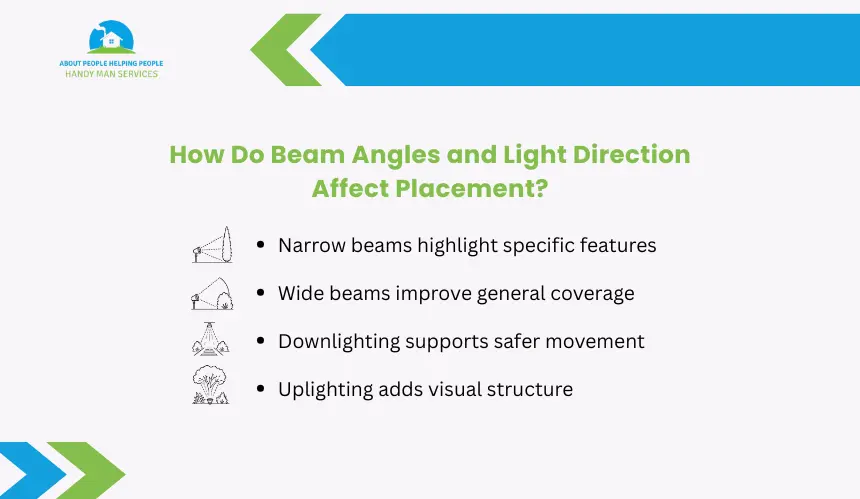
Lighting placement is not only about where fixtures are installed but also how light is distributed from each position. Beam angle and direction determine how far light spreads, how intense it appears, and how it interacts with surrounding surfaces. Without considering these factors, even correctly spaced lights can produce uneven or ineffective results.
Why Narrow vs Wide Beam Placement Changes Coverage
Beam angle controls how concentrated or spread out the light is. A narrow beam focuses light on a specific area, while a wider beam covers a broader surface with less intensity.
Narrow beams are best used when highlighting specific features such as plants, statues, or architectural details. Wider beams are more effective for general illumination, especially along walkways where consistent coverage is needed.
Did You Know?
Two lights placed at the same distance can produce completely different results depending on beam angle, with narrow beams creating sharp highlights and wide beams producing softer coverage.
How Downlighting vs Uplighting Impacts Visual Effect
Light direction changes how objects and surfaces are perceived. Downlighting directs light from above or slightly elevated positions toward the ground, making it ideal for walkways and general visibility.
Uplighting, on the other hand, projects light upward from the base of objects. This technique is commonly used in gardens to emphasize height, texture, and structure.
Important Insight:
Downlighting improves function and safety, while up lighting enhances visual appeal. Combining both strategically creates a balanced outdoor lighting design.
How to Position Lights to Avoid Harsh Shadows
Shadows are a natural part of lighting, but poor placement can create harsh or distracting contrasts. Lights positioned at extreme angles or too close to objects can produce sharp shadows that reduce visibility and visual comfort.
To maintain balance, lights should be placed so that their beams overlap slightly. This softens shadow edges and creates a smoother transition between light and dark areas.
How Should Walkway and Garden Lighting Work Together?
Walkway and garden lighting should not function as separate systems. When planned together, their placement creates a continuous flow that connects movement and visual interest across the outdoor space. The goal is to ensure that lighting transitions smoothly from functional path illumination to decorative garden highlighting without abrupt changes.
How to Create Smooth Transitions Between Path and Garden
Lighting should gradually shift from structured walkway placement to more flexible garden positioning. Near pathways, lights are typically lower and evenly spaced for guidance. As the space moves into the garden, placement becomes more selective, focusing on features rather than uniform coverage.
This transition prevents sudden changes in brightness or direction that can disrupt visual flow. Instead, it creates a natural progression where the eye moves comfortably from one area to another.
Did You Know?
Abrupt lighting changes can make spaces feel disconnected. Gradual transitions help maintain visual continuity and improve overall perception of the landscape.
Why Consistent Light Levels Matter
Even though placement strategies differ between walkways and gardens, the overall light intensity should remain balanced. If one area is significantly brighter than the other, it can create contrast that feels uncomfortable and reduces visibility.
Maintaining consistent light levels ensures that both areas feel connected and that neither overpowers the other. This balance supports both safe navigation and visual appeal.
Important Insight:
Balanced lighting is achieved through placement and intensity control, not by increasing the number of fixtures.
How to Avoid Overlapping or Conflicting Light Zones
Improper placement can cause different lighting zones to overlap in a way that creates confusion or glare. For example, a garden light aimed toward a walkway can interfere with path visibility, while overly bright walkway lights can reduce the effectiveness of subtle garden lighting.
To avoid this, each light should have a clear purpose and direction. Walkway lights should focus on the path, while garden lights should highlight features without spilling excessively into adjacent areas.
What Placement Mistakes Should Be Avoided?
Even with the right fixtures, poor placement can reduce the effectiveness of outdoor lighting. Many common mistakes come from focusing on symmetry or brightness instead of how light actually interacts with space. Avoiding these errors ensures that both walkways and gardens remain functional and visually balanced.
Why Symmetrical Placement Looks Artificial
Placing lights evenly on both sides of a walkway may seem organized, but it often creates a rigid and unnatural appearance. This layout can produce repetitive bright spots and shadow gaps, making the path feel more like a runway than a natural outdoor space.
Staggered placement, by contrast, creates a smoother visual flow and distributes light more evenly across the path.
Did You Know?
Human vision prefers variation over perfect symmetry in outdoor environments, which is why staggered layouts feel more natural and comfortable.
How Overlighting Reduces Visual Appeal
Adding too many lights or placing them too close together can make a space overly bright and flat. Instead of enhancing visibility, excessive lighting removes contrast and eliminates the shadows that give depth to the environment.
In garden areas, overlighting can wash out textures and reduce the impact of focal points. In walkways, it can create unnecessary glare and reduce visual comfort.
Important Insight:
Effective lighting is not about maximum brightness. It is about placing the right amount of light in the right locations to guide and highlight.
Why Incorrect Angles Cause Glare and Blind Spots
Light direction plays a key role in visibility. Fixtures that are angled incorrectly can shine directly into the line of sight, causing glare that makes it harder to see the path or surrounding features.
Similarly, poorly angled lights can leave areas under-illuminated, creating blind spots that reduce safety. Proper placement ensures that light is directed toward surfaces rather than into the eyes.
Frequently Asked Questions
How far apart should walkway lights be placed?
Walkway lights are typically spaced between 4 to 8 feet apart, depending on path width and light intensity. The goal is to create overlapping light coverage so there are no dark gaps while avoiding excessive brightness from placing fixtures too close together.
Should pathway lights be staggered or symmetrical?
Staggered placement is generally more effective because it distributes light evenly and avoids the rigid “runway” effect created by symmetrical layouts. Alternating sides also helps fill shadows and creates a more natural visual flow along the path.
What is the best height for path lights?
Path lights are usually installed at a low height, often between 14 and 24 inches. This keeps illumination focused on the walkway surface while reducing glare and preventing light from shining directly into the eyes.
Can solar lights provide enough brightness?
Solar lights can provide sufficient illumination for walkways and garden features when placed correctly and used in areas with adequate sunlight exposure. Their effectiveness depends more on placement and spacing than on brightness alone.
How many lights are needed for a garden?
The number of lights depends on the size of the garden and the features being highlighted. Instead of uniform coverage, lights should be placed strategically around focal points, allowing some areas to remain darker to create depth and contrast.