
- About People Helping People
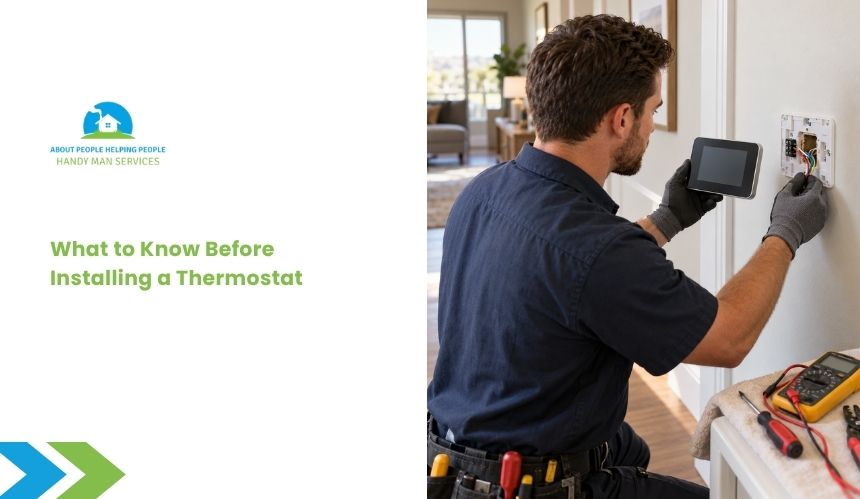
What to Know Before Installing a Thermostat
Quick Answer: Before installing a thermostat, homeowners should confirm that the new thermostat is compatible with the existing HVAC system, wiring, and power requirements. Thermostats are not universally interchangeable, and differences in equipment type or wiring can affect whether a particular model will work correctly. Important checks before thermostat installation include:
If the wiring is unfamiliar, compatibility is uncertain, or the system uses heat-pump, multi-stage, line-voltage, or specialized controls, professional installation may be appropriate. Checking these details first helps prevent purchasing an incompatible thermostat or discovering wiring and system limitations after installation has already begun. |
Installing a new thermostat may seem like a straightforward upgrade, but compatibility, wiring, HVAC configuration, power requirements, and placement all need to be understood before installation begins. A thermostat that works with one heating and cooling system may not support another.
These differences become especially important with smart thermostats, heat pumps, multi-stage equipment, and systems with specific wiring or power requirements. Even the thermostat’s location can influence how accurately it senses indoor temperature and controls the HVAC system.
Knowing what to check before installing a thermostat helps homeowners avoid compatibility problems, unexpected wiring complications, and inaccurate temperature control while determining whether the installation is straightforward or better handled by a qualified professional.
Why Does Thermostat Compatibility Need to Be Checked First?
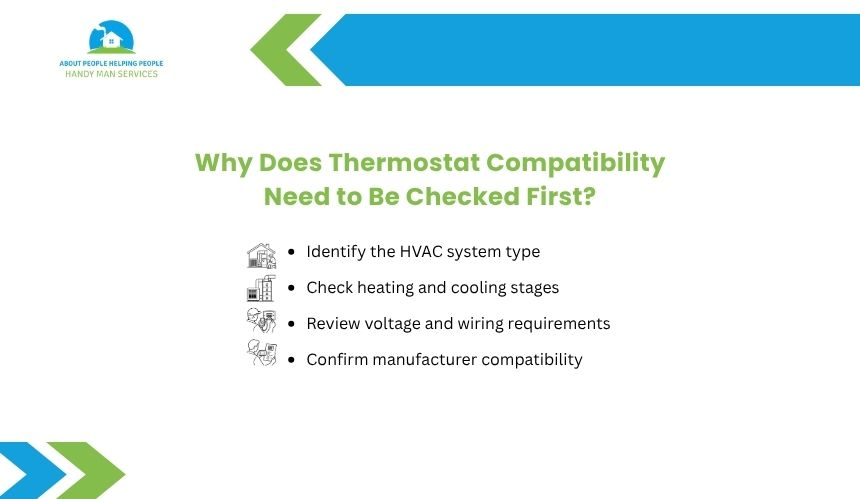
Thermostat compatibility determines whether the new control can communicate properly with the existing heating and cooling equipment. Before installation, the HVAC system type, number of heating and cooling stages, voltage, wiring configuration, and thermostat requirements should be identified.
Does Every Thermostat Work With Every HVAC System?
No. Thermostats are designed to support specific types of equipment and control configurations. A thermostat intended for a conventional furnace and air conditioner may have different requirements from one designed to control a heat pump or multi-stage system.
Choosing a thermostat based only on features or appearance can therefore lead to compatibility problems.
How Does the Type of Heating and Cooling System Affect Compatibility?
Different HVAC systems require different control signals. A home may have a conventional furnace and air conditioner, a heat pump with auxiliary heat, or equipment with multiple heating or cooling stages.
The thermostat must support the specific system configuration and required functions rather than simply matching the number of visible wires.
Why Should the Thermostat Manufacturer’s Requirements Be Reviewed?
Manufacturer compatibility information identifies which HVAC configurations, voltage ranges, wiring arrangements, and power requirements the thermostat supports. Smart models may also have additional requirements, such as continuous power or specific terminal connections.
Reviewing these requirements before removing the existing thermostat helps confirm whether the selected model is suitable and identifies potential installation complications early.
What Type of Thermostat Is Right for the HVAC System?
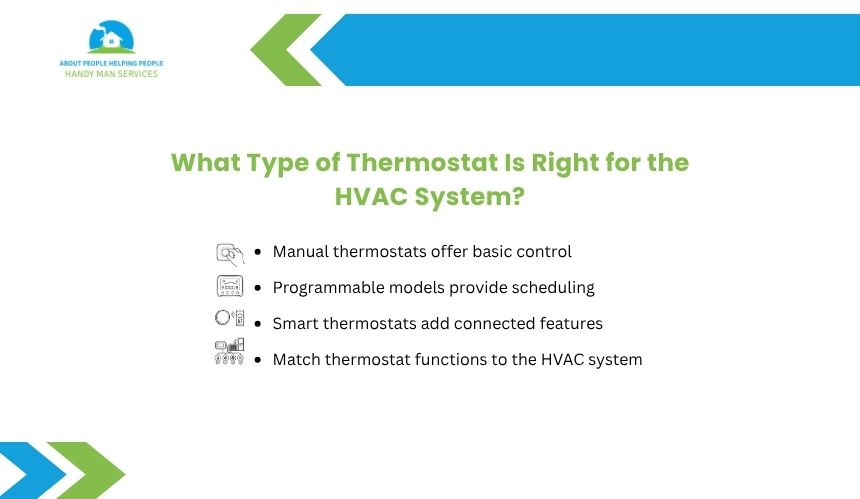
The right thermostat depends on the HVAC equipment it needs to control and the level of scheduling or automation the homeowner wants. Manual, programmable, and smart thermostats offer different features, but compatibility with the existing system should remain the first consideration.
What Is the Difference Between Manual, Programmable, and Smart Thermostats?
A manual thermostat requires temperature adjustments directly at the device. Programmable models allow homeowners to create schedules that automatically change temperature settings at selected times.
Smart thermostats add connected features that may include remote control, automated scheduling, energy-use information, occupancy-based adjustments, or integration with compatible home systems.
When Does a Smart Thermostat Make Sense?
A smart thermostat may be useful when homeowners want remote access, flexible scheduling, automation, or additional control over heating and cooling settings. However, these features are only beneficial when the thermostat is compatible with the HVAC equipment and available wiring.
Power requirements, including possible C-wire needs, should also be checked before selecting a smart model.
Why Should Features Be Matched to the Existing HVAC Equipment?
A thermostat must be capable of controlling the functions the HVAC system actually uses. For example, equipment with multiple heating or cooling stages or a heat pump with auxiliary heat may require specific thermostat capabilities.
Selecting unsupported features does not expand what the HVAC equipment can do, while choosing a thermostat that lacks necessary controls can prevent the system from operating as intended.
Why Should Existing Thermostat Wiring Be Identified Before Installation?
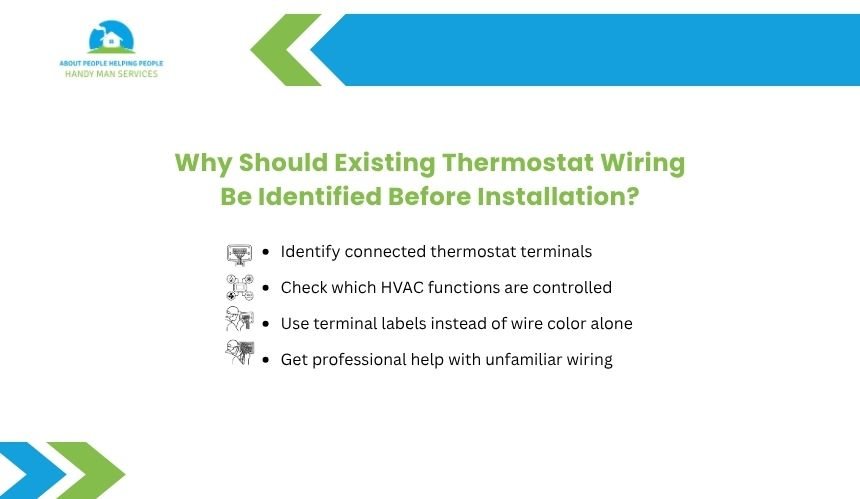
Existing wiring helps reveal how the thermostat communicates with the HVAC equipment and which functions the current system uses. Identifying the connected terminals before installing a replacement makes it easier to evaluate compatibility and recognize wiring requirements that may complicate installation.
What Can Existing Wiring Reveal About System Compatibility?
The connected thermostat terminals can provide information about functions such as heating, cooling, fan control, heat-pump operation, auxiliary heat, and common-wire power.
Comparing these connections with the new thermostat’s requirements helps determine whether it supports the existing HVAC configuration.
Why Should Wire Colors Not Be the Only Guide?
Wire colors can be helpful references, but terminal labels and actual connections are more important than color alone. Previous installations may not always follow expected color conventions, and assuming a wire’s function solely from its insulation color can lead to incorrect connections.
Documenting where each existing wire is connected provides a more reliable reference.
When Can Unfamiliar Wiring Require Professional Help?
Professional assistance may be appropriate when terminal labels are unclear, wiring does not match the new thermostat’s documentation, multiple wires serve unfamiliar functions, or the HVAC configuration cannot be confidently identified.
Rather than guessing at connections, the system and wiring should be properly evaluated before proceeding with the thermostat installation.
Does a New Thermostat Need a C-Wire?
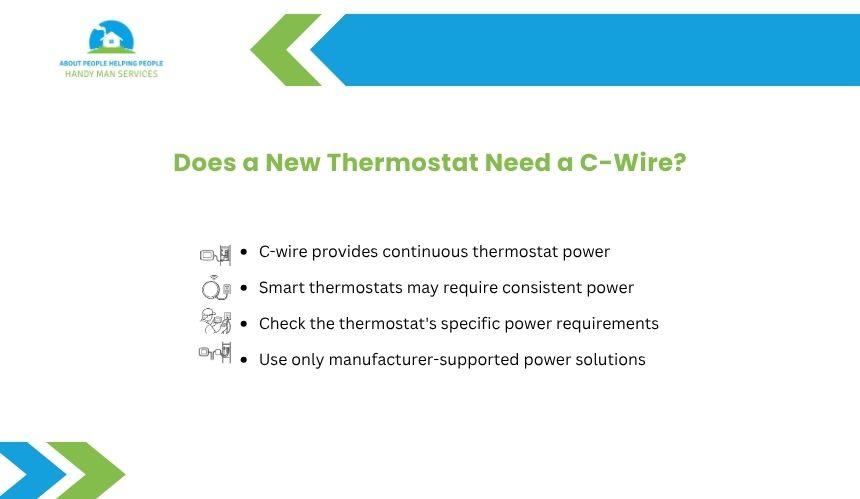
Not every thermostat requires a C-wire, but many smart thermostats need a reliable source of continuous power for displays, Wi-Fi connectivity, sensors, and other electronic features. Whether a C-wire is necessary depends on the thermostat model and the existing HVAC control system.
What Does a C-Wire Do?
The C-wire, or common wire, provides a return path that allows compatible low-voltage thermostats to receive continuous power from the HVAC control system.
Traditional thermostats may operate without this connection, while more feature-rich electronic thermostats can have different power requirements.
Why Do Many Smart Thermostats Need Continuous Power?
Smart thermostats may continuously operate Wi-Fi radios, digital displays, processors, sensors, and connected features. These components can require more consistent power than simpler thermostats.
A compatible C-wire can provide this continuous power without relying solely on batteries or other thermostat-specific power methods.
What If the Existing Thermostat Does Not Have a C-Wire?
The absence of a connected C-wire does not automatically rule out a smart thermostat. Depending on the HVAC system and thermostat manufacturer, options may include an unused compatible wire, an approved power adapter, or another manufacturer-supported solution.
Because requirements vary between systems, compatibility should be confirmed before modifying wiring or selecting an alternative power method.
Why Does HVAC System Type Matter Before Replacing a Thermostat?
The HVAC system determines which controls the thermostat must support and how those controls operate. Conventional systems, heat pumps, multi-stage equipment, and line-voltage heating can have different thermostat requirements, making system identification essential before choosing or installing a replacement.
How Do Conventional Heating and Cooling Systems Differ From Heat Pumps?
Conventional systems commonly control separate heating and cooling equipment, while heat pumps use refrigerant-based operation for both heating and cooling and may include auxiliary or emergency heat.
Because their control requirements differ, a thermostat designed only for conventional equipment may not provide the functions required by a heat-pump system.
Can Multi-Stage Equipment Require a Compatible Thermostat?
Yes. Multi-stage HVAC equipment can operate at different heating or cooling output levels. The thermostat needs to support the appropriate number of stages if it is responsible for controlling those functions.
Checking both the equipment configuration and thermostat specifications helps prevent selecting a model that lacks the required controls.
Why Do Line-Voltage Systems Need Special Attention?
Line-voltage heating systems operate differently from the low-voltage control systems commonly used with central HVAC equipment. A thermostat designed for low-voltage wiring should not be assumed compatible with line-voltage heating.
The system voltage and thermostat rating should be confirmed before installation. When the voltage or wiring configuration is uncertain, a qualified professional should identify the system rather than relying on assumptions.
Where Should a Thermostat Be Installed?
Thermostat placement matters because the device uses the temperature around it to determine when the heating or cooling system should operate. A location affected by unusual heat, cold, sunlight, or airflow may produce readings that do not accurately represent conditions throughout the living space.
Why Should Direct Sunlight and Heat Sources Be Avoided?
Direct sunlight can warm the thermostat independently of the surrounding room, while nearby lamps, appliances, fireplaces, or other heat sources can create similar effects.
These localized temperature changes may cause the thermostat to respond to conditions near the device rather than the temperature experienced throughout the room.
How Can Drafts Affect Thermostat Temperature Readings?
Air leaking around doors, windows, exterior walls, or nearby openings can expose the thermostat to temperatures that differ from the rest of the space. Supply registers or other strong airflow sources can also influence readings.
Avoiding these areas helps the thermostat sense a more representative indoor temperature.
Why Does Interior Wall Placement Matter?
A centrally located interior wall in a regularly occupied area can provide a more representative location than spaces affected by exterior temperatures or unusual airflow.
The thermostat should also have normal room air circulation around it and be positioned according to the manufacturer’s installation guidance so its sensors can measure indoor conditions effectively.
Why Should Power Be Turned Off Before Thermostat Installation?
Thermostat wiring is part of the HVAC control system, so power should be properly shut off before existing wires are disconnected or new connections are made. This helps protect the person performing the work and reduces the risk of damaging sensitive HVAC control components.
Why Is Switching Off the HVAC System at the Thermostat Not Enough?
Setting the thermostat to “off” generally tells the HVAC equipment not to run, but it does not necessarily disconnect electrical power from the system or thermostat wiring.
Power should instead be shut off at the appropriate electrical disconnect or circuit breaker according to the equipment and manufacturer instructions before wiring is handled.
How Can Incorrect Wiring Affect HVAC Controls?
Incorrect connections or accidentally shorting thermostat wires can interfere with control signals and may damage components such as a control-board fuse or other low-voltage HVAC controls.
This is why existing connections should be documented and the new thermostat’s wiring instructions reviewed before any wires are moved.
When Should Electrical Work Be Left to a Professional?
Professional assistance is appropriate when the system voltage is uncertain, wiring cannot be confidently identified, compatibility is unclear, or installation requires modifications beyond straightforward thermostat replacement.
Line-voltage systems and unfamiliar HVAC controls deserve particular caution. Rather than experimenting with connections, a qualified professional can identify the system and complete the installation appropriately.
What Should Be Checked Before Removing the Existing Thermostat?
Before taking the old thermostat off the wall, homeowners should document its wiring, terminal connections, and system configuration. These details provide an important reference for confirming compatibility and connecting the replacement thermostat correctly.
Why Should Existing Wire Connections Be Documented?
Taking a clear photo of the existing wiring before disconnecting anything creates a visual record of where each wire was originally connected. Labels can also be added to individual wires when appropriate.
This reference becomes especially useful if several wires have similar colors or the new thermostat uses a different terminal layout.
Why Should Terminal Labels Be Identified Before Disconnecting Wires?
Terminal markings indicate the function assigned to each connection, making them more reliable than wire color alone. Identifying labels such as heating, cooling, fan, common, or heat-pump control terminals helps establish how the existing HVAC system is configured.
The old terminal designations can then be compared with the new thermostat manufacturer’s instructions.
What Other System Information Should Be Confirmed First?
Before removal, it is useful to confirm:
- The HVAC system type
- Heating and cooling stages
- Whether the system uses a heat pump
- Available thermostat terminals
- C-wire availability when relevant
- Thermostat and system voltage requirements
- Manufacturer compatibility requirements
Collecting this information before installing a thermostat reduces guesswork and can reveal whether the replacement is straightforward or requires professional assistance.
When Is Professional Thermostat Installation the Better Choice?
Professional installation is appropriate when thermostat compatibility, wiring, voltage, or HVAC controls are more complex than a straightforward replacement. A qualified technician can identify the system configuration and verify that the thermostat is connected and configured for the equipment it needs to control.
What If the New Thermostat Is Not Clearly Compatible?
If the thermostat manufacturer’s compatibility information does not clearly match the existing HVAC system, installation should not rely on guesswork. Differences in system type, stages, voltage, or control functions can affect whether the thermostat will operate correctly.
A professional can confirm compatibility before wiring changes are made.
When Can Wiring or Power Requirements Complicate Installation?
Installation may become more complicated when existing wires are unidentified, a required C-wire is unavailable, terminal configurations differ, or an alternative power solution is needed.
Professional help is also appropriate when the system voltage is uncertain or modifications beyond a standard thermostat replacement would be required.
Why Might Heat Pumps or Multi-Stage Systems Need Additional Attention?
Heat pumps and multi-stage systems can require additional thermostat terminals and configuration settings to control functions such as reversing valves, auxiliary heat, emergency heat, or multiple heating and cooling stages.
If these controls are incorrectly identified or configured, the HVAC system may not operate as intended. Professional installation can help ensure the thermostat is matched and configured for the specific equipment.
Frequently Asked Questions
Can you install any thermostat with any HVAC system?
No. Thermostat compatibility depends on the HVAC system type, voltage, wiring, heating and cooling stages, and required control functions. A thermostat designed for conventional equipment may not support a heat pump, multi-stage system, or line-voltage heating system.
How do you know if a thermostat is compatible?
Start by identifying the HVAC system type and existing thermostat terminal connections. Then compare those details with the new thermostat manufacturer’s compatibility requirements. System voltage, heating and cooling stages, heat-pump controls, and power requirements should all match before installation begins.
Does every smart thermostat need a C-wire?
No. C-wire requirements vary between thermostat models and HVAC systems. Many smart thermostats use a common wire for continuous power, while others support manufacturer-approved alternatives. The specific thermostat requirements and existing wiring should be checked rather than assuming a C-wire is always necessary.
Can an old thermostat be replaced with a smart thermostat?
Often, but compatibility should be confirmed first. The existing HVAC system must support the smart thermostat’s control and power requirements. Wiring configuration, system voltage, C-wire availability, heating and cooling stages, and heat-pump functions can all influence whether replacement is straightforward.
Where should a thermostat be located in a house?
A thermostat should generally be positioned where it can sense representative indoor conditions. Locations affected by direct sunlight, drafts, exterior doors, windows, or nearby heat sources should be avoided because these influences can distort temperature readings and affect HVAC operation.
Should HVAC power be turned off before replacing a thermostat?
Yes. Simply setting the thermostat to “off” does not necessarily disconnect electrical power. Power should be shut off at the appropriate breaker or disconnect according to equipment and manufacturer instructions before thermostat wires or HVAC control connections are handled.
When should a thermostat be professionally installed?
Professional installation is appropriate when compatibility is uncertain, wiring cannot be identified confidently, voltage is unclear, or modifications are required. Heat pumps, multi-stage equipment, line-voltage systems, and unfamiliar control configurations can also make professional installation the more appropriate choice.